The U.S. Army has never treated the handgun as a glamour weapon. A sidearm has usually been a backup, a specialist’s tool, or an institutional compromise carried when rifles, crew-served weapons, vehicles, or cramped workspaces made something smaller necessary. That is exactly why Army handguns matter. The pistols that lasted were rarely the flashiest designs of their day. They were the ones that solved a stubborn problem involving reliability, ammunition, training burden, production capacity, or the simple fact that soldiers do not all use a pistol the same way.
1. Colt Single Action Army
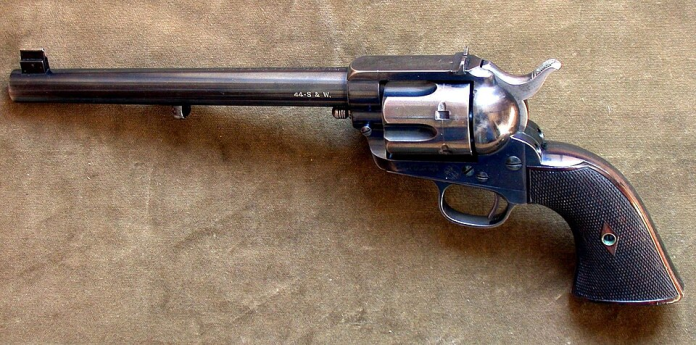
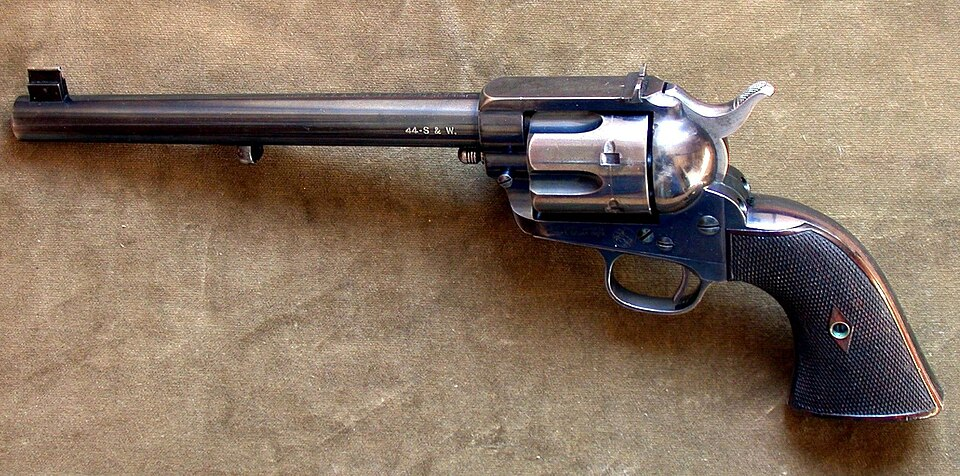
The Colt Single Action Army helped define the Army’s earliest durable sidearm formula: mechanical simplicity first, everything else second. Adopted in 1873, it fit an era in which mounted troops and frontier units operated far from depots, armorers, and replacement parts. In that environment, a sturdy frame and straightforward manual of arms mattered more than fast reloads or high ammunition capacity.
The revolver’s significance is larger than its frontier image. Army issue records cited in retrospective accounts place the total at 37,063 Single Action Armies between 1873 and 1891. What the Army was really standardizing was a philosophy: field toughness outranked mechanical sophistication when support was thin and abuse was constant. That logic never fully disappeared. Even later self-loading pistols were judged against the same baseline question the Single Action Army answered so well: would it keep working when maintenance was irregular and conditions were poor?
2. Colt M1911 and M1911A1
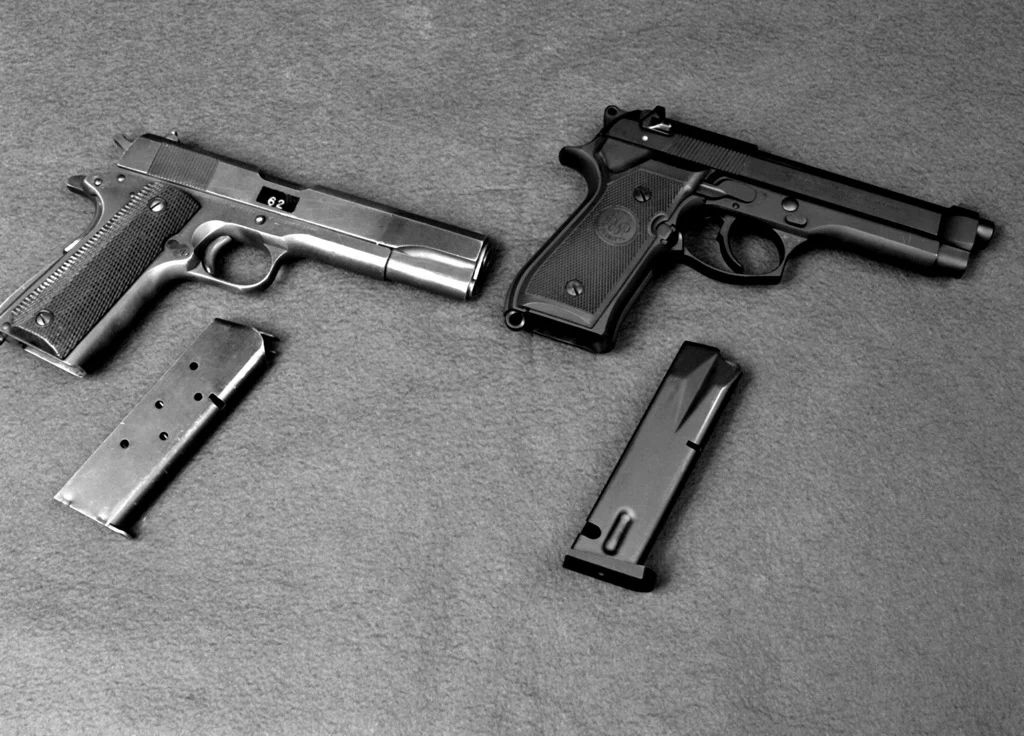
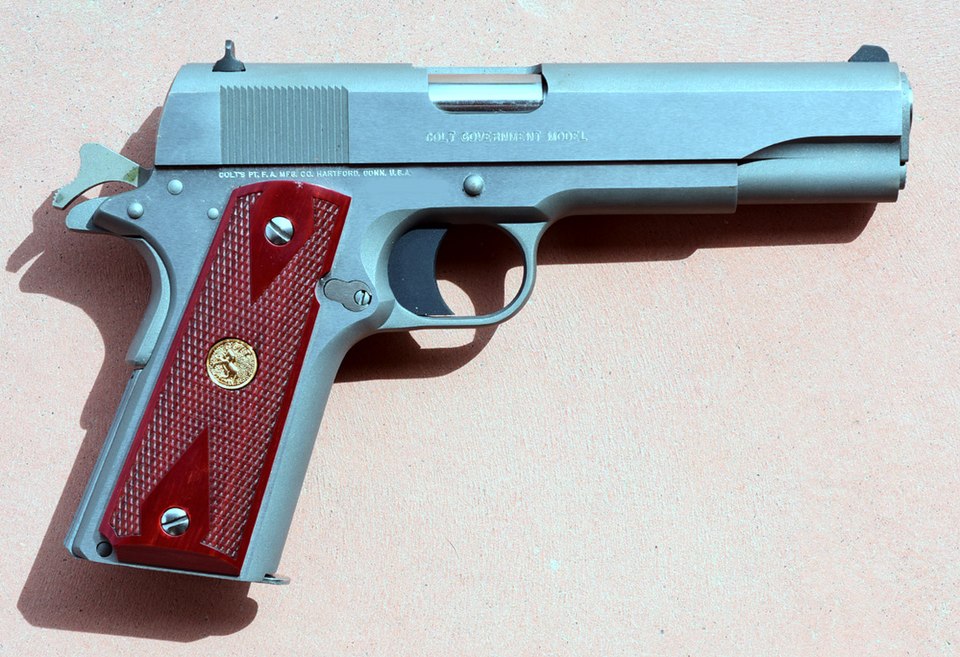
The M1911 marked the Army’s decisive break from the revolver era. It emerged from dissatisfaction with .38-caliber revolvers and from a demand for a more effective fighting pistol after hard experience in the Philippines sharpened concern about handgun performance. What followed was not a style choice, but a doctrinal reset toward a heavy cartridge and a self-loading design that could deliver it consistently.
The pistol’s reputation was cemented in testing as much as in combat memory. In the final endurance trial, 6,000 rounds were fired with no failures from the Colt entry, a result that gave the Army a rare combination of power, reliability, and repeatable engineering. Just as important, Browning’s design provided features that became the modern template: detachable box magazine, short-recoil operation, manual safety, grip safety, and practical field stripping.
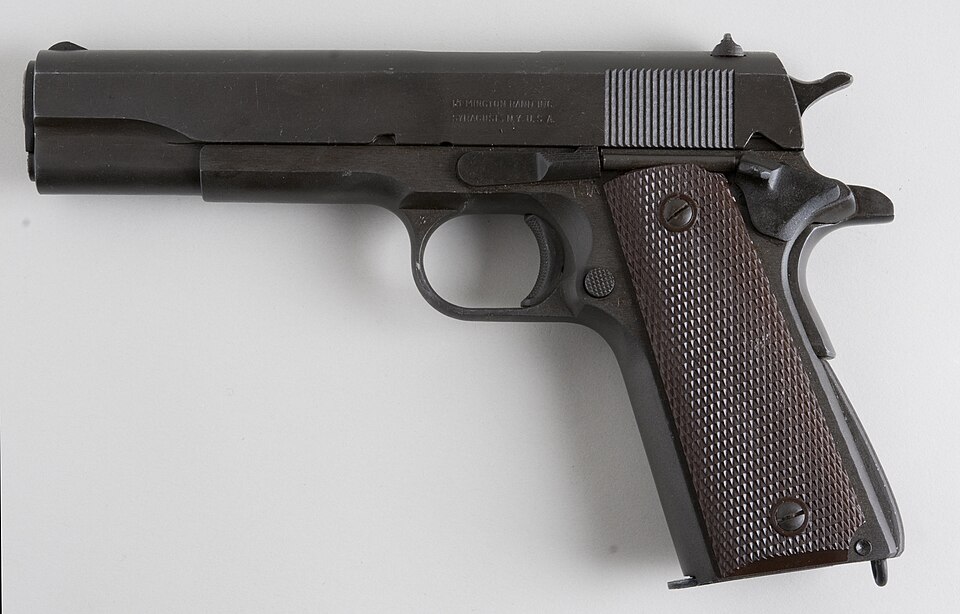
The later M1911A1 showed another Army habit that still holds: improve the interface before abandoning the platform. The shorter trigger, wider front sight, arched mainspring housing, and longer grip safety spur did not reinvent the pistol. They reflected a growing recognition that shootability and ergonomics mattered alongside ruggedness. The Army was learning that a service pistol had to fit more than a narrow slice of shooters.
3. Colt and Smith & Wesson M1917 Revolvers
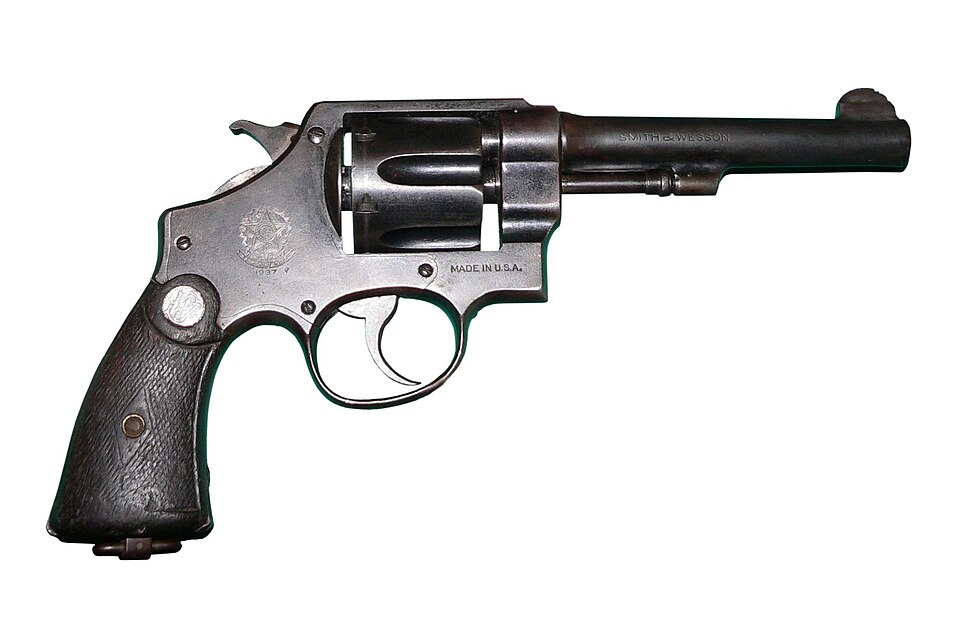
The M1917 revolvers remain one of the clearest examples of procurement realism in Army handgun history. When U.S. entry into World War I created more demand than M1911 production could satisfy, the answer was not a brand-new sidearm family. It was a stopgap built around existing manufacturing capacity and a shared ammunition type.
Both Colt and Smith & Wesson adapted revolvers to fire .45 ACP with half-moon clips, preserving ammunition commonality while expanding output fast. Production totals underscore how serious the shortage was: more than 150,000 Colt M1917s were built, while Smith & Wesson produced more than 153,000 in the same period. The technical lesson was equally lasting. Rimless pistol ammunition could be made workable in a revolver if the loading and extraction system was designed around it. For doctrine, the bigger point was institutional. A satisfactory pistol available in huge numbers can matter more than a perfect pistol that cannot be built quickly enough.
4. Beretta M9
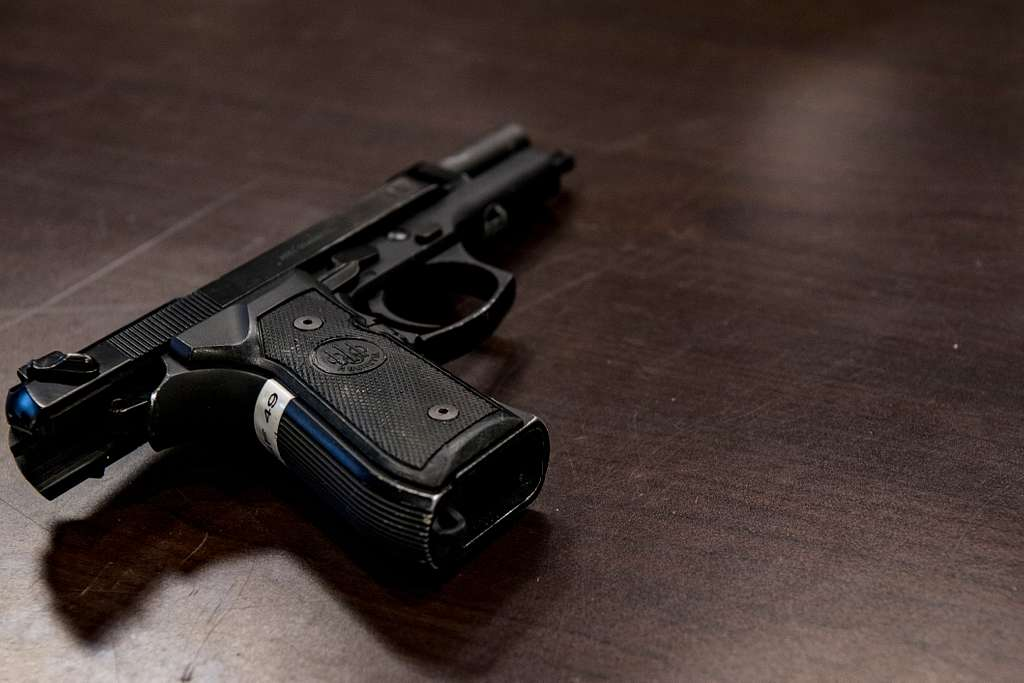
The M9 represented a different kind of Army decision. It was less about raw ballistic power and more about standardization, capacity, and alliance logistics. The Army moved to 9×19 mm NATO during a period when handgun policy was being shaped by interoperability, inventory simplification, and late Cold War expectations about safety systems and sustainment.
Official adoption came after the XM9 trials, when the Beretta 92F was selected as the M9 in 1985. The pistol brought a 15-round magazine, a double-action/single-action trigger system, and a design built for a very different Army than the one that had carried rebuilt .45s for decades. It also exposed a recurring truth: a service sidearm is never just the gun. Its reputation rises or falls with magazines, ammunition quality, parts replacement intervals, and training standards.
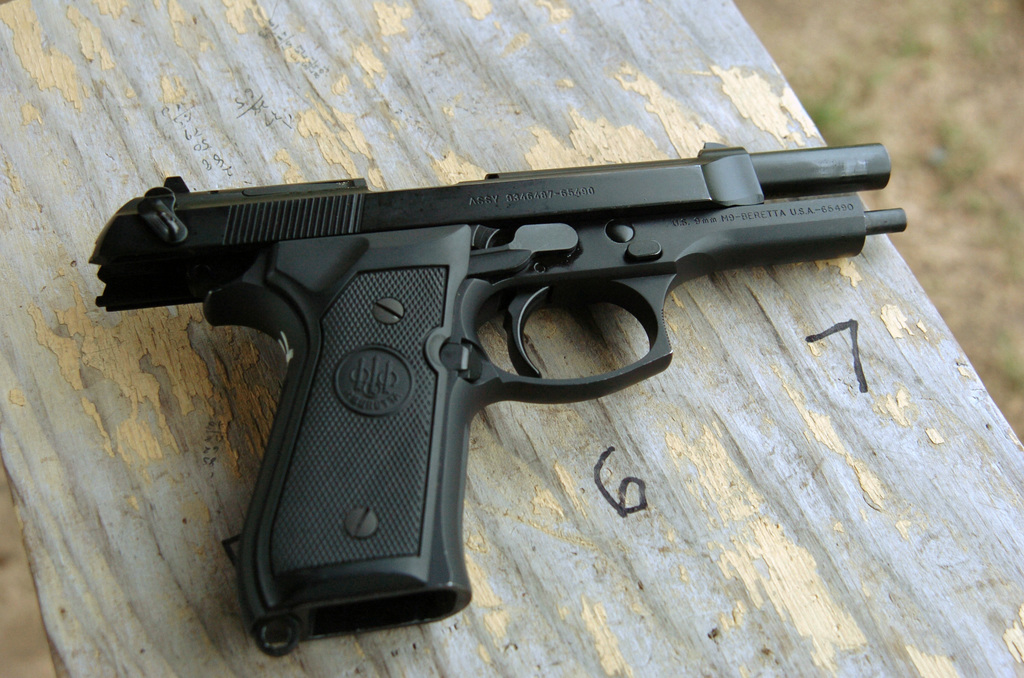
The later M9A1 added a rail and more durable magazines for harsh environments, but the larger takeaway was already clear. The Army had shifted from asking only whether a pistol was powerful enough to asking whether it fit a broader support system stretching from NATO stocks to armorer benches.
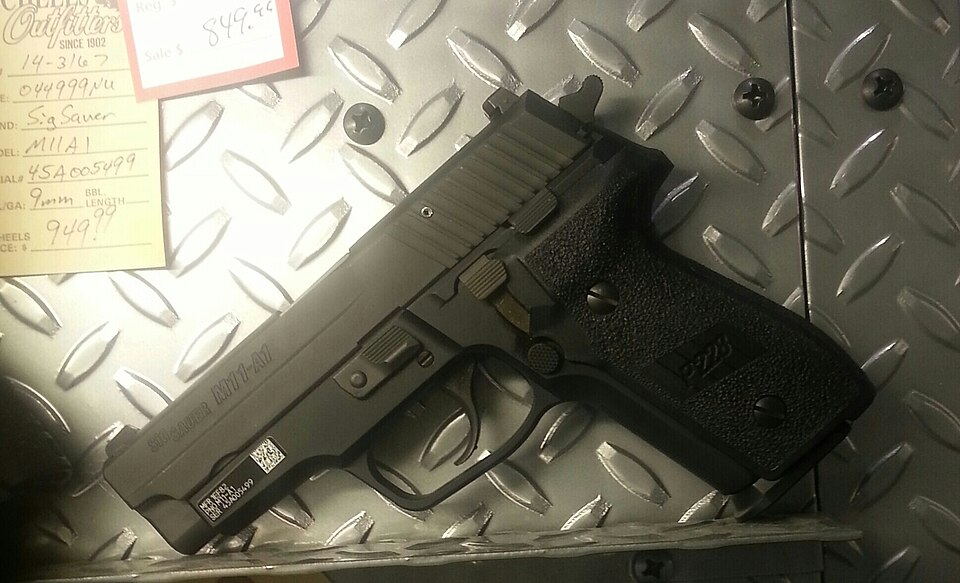
5. SIG Sauer M11 and the M17/M18 Modular Shift
The compact M11, based on the P228, quietly signaled that universal issue was not the same as universal suitability. Aircrews, investigators, and other specialized users needed a smaller handgun that was easier to carry in vehicles, cockpits, and close workspaces. The M11 kept the Army inside the 9 mm logistics framework while acknowledging that mission profile matters.
That idea reached its full form with the Modular Handgun System. When the Army began replacing the aging M9, the emphasis moved beyond caliber and into adaptability, longevity, accessory mounting, and human fit. Army reporting from Fort Leonard Wood described M9 fleets firing 20,000 to 30,000 rounds and encountering serviceability problems, while the newer system was fielded with interchangeable grip modules because, as one instructor put it, “One size does not fit all.”
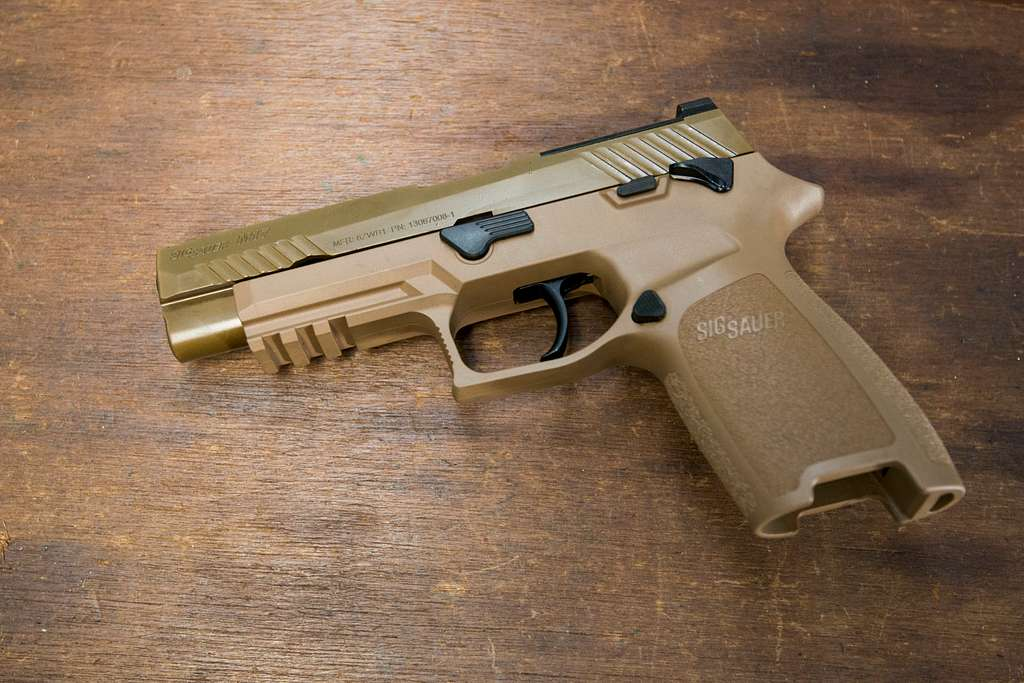
That line could stand as the summary of modern Army handgun doctrine. The sidearm is no longer just a single model in a holster. It is a training package, a maintenance program, and a configurable tool for very different users. The M11 hinted at that future. The M17 and M18 made it the standard.
Look across these five sidearms and the pattern is hard to miss. The Army’s handgun choices have repeatedly turned on the same tradeoffs: durability versus sophistication, power versus controllability, common ammunition versus specialized roles, and ideal design versus production reality.
That is why old service pistols still explain current doctrine. The names and mechanisms changed, but the Army keeps asking the same question: what sidearm best fits the institution that has to buy it, maintain it, train with it, and trust it when the primary weapon is no longer enough?


