The search for company in the cosmos has broadened into two very different investigations. One looks for chemistry that may belong to biology. The other looks for engineering so vast that a star itself becomes part of the machine.
Recent attention around K2-18b and renewed work on Dyson sphere candidates has pushed both ideas back into the same conversation. Rather than treating them as a single story, the stronger view is that they represent separate paths in the wider hunt for technosignatures and biosignatures.

1. K2-18b keeps attention fixed on atmospheric clues
K2-18b sits about 120 light-years from Earth and orbits in the habitable zone of a cool red dwarf star. It is not an Earth twin. NASA describes it as a sub-Neptune with a mass about 8.6 times that of Earth and a radius roughly 2.6 times larger, placing it in a planetary class that does not appear in the solar system. That difference matters because astronomers are still working out what such worlds are really like. Some models describe K2-18b as a possible “Hycean” planet, meaning a world with a hydrogen-rich atmosphere above a global ocean. Other interpretations allow for far less hospitable conditions, including deep high-pressure layers or a very hot environment that would weaken the case for habitability.
2. Webb’s spectrum made the planet far more interesting
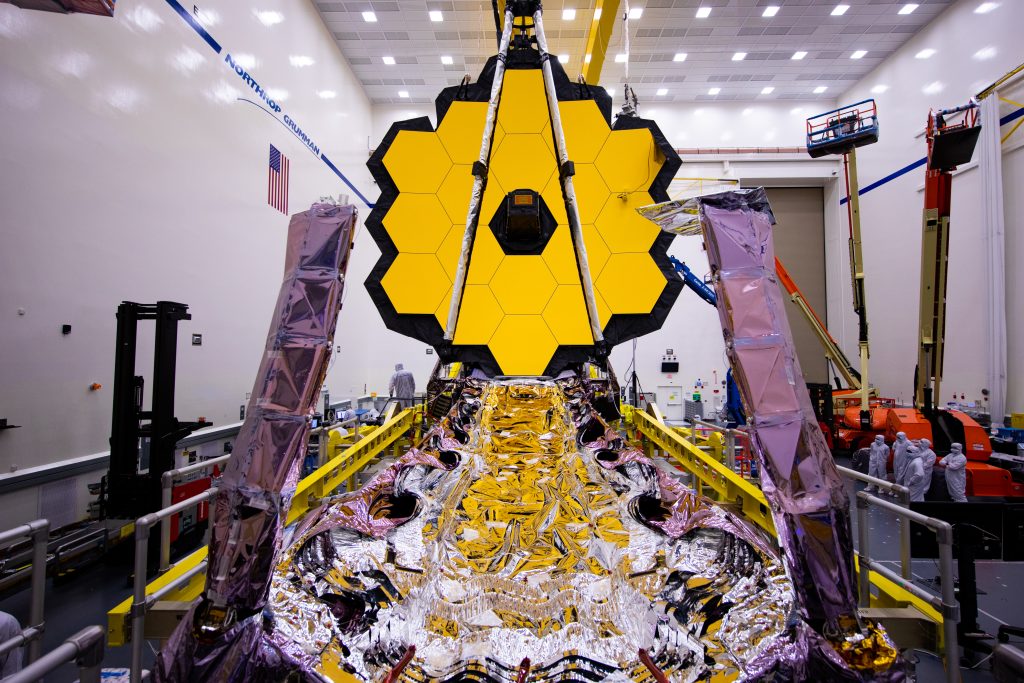
The James Webb Space Telescope examined the planet during transits, when starlight passes through its atmosphere. That method, transmission spectroscopy, revealed methane and carbon dioxide in its atmosphere, while ammonia appeared scarce. Those molecular patterns are important because they fit one possible picture of an ocean beneath a hydrogen-rich atmosphere. Nikku Madhusudhan said, “Our findings underscore the importance of considering diverse habitable environments in the search for life elsewhere.” The broader engineering relevance is clear: better instruments are no longer just finding exoplanets, but beginning to profile their atmospheres with enough detail to test competing planetary models.+

3. The dimethyl sulfide signal is compelling, but not settled
The most discussed clue is the possible presence of dimethyl sulfide, or DMS, and perhaps dimethyl disulfide. On Earth, DMS is strongly associated with life, especially marine microbes and biological processes tied to the oceans. That is why the claim drew immediate interest. The Planetary Society described it as a possible strongest hint yet, but also emphasized that the signal still needs confirmation. Earlier planetary detections elsewhere have faded under reanalysis, and even K2-18b’s own atmospheric interpretation has changed before. A previous water-vapor reading from Hubble was later understood to be methane instead, a reminder that remote sensing of distant atmospheres is vulnerable to overlap between spectral features.

4. Biosignatures and technosignatures answer different questions
K2-18b belongs to the biosignature side of the debate: it asks whether chemistry can reveal living processes. Dyson sphere searches belong to the technosignature side: they ask whether astronomy can reveal large-scale energy use by an advanced civilization. These approaches are often mentioned together because both depend on indirect evidence. Neither expects a message. Each looks for anomalies that natural processes struggle to explain. In practice, that means one field studies atmospheric molecules while the other studies excess infrared radiation, altered stellar output, and unusual placement on stellar diagrams.
5. Dyson spheres remain theoretical, but the search has become more disciplined
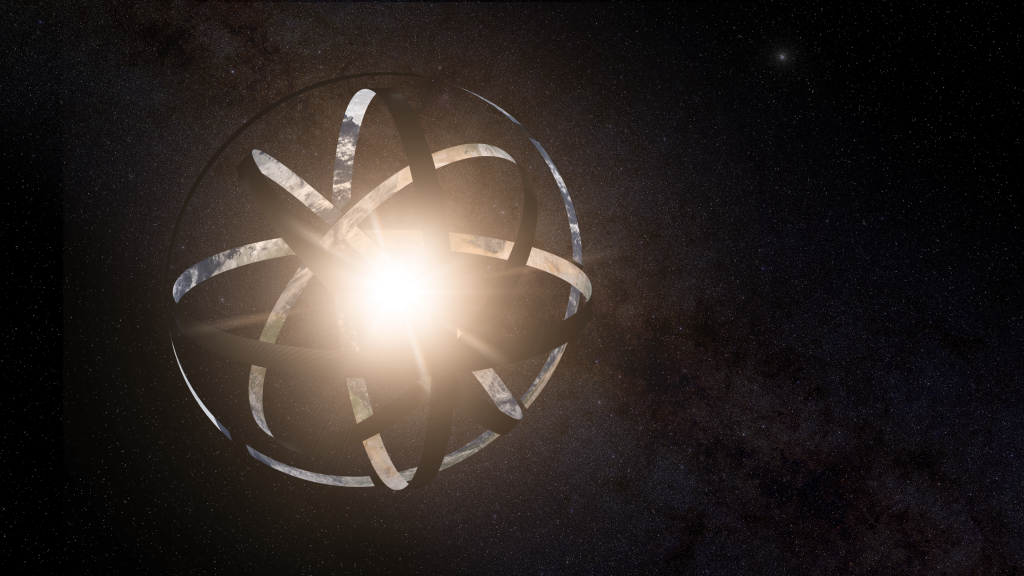
Freeman Dyson’s 1960 idea described a civilization collecting a substantial share of a star’s power with orbiting structures rather than a literal solid shell. Modern papers usually discuss Dyson swarms, a more physically plausible arrangement of many collectors or habitats. A recent study highlighted red dwarfs as especially interesting hosts because they are common and long-lived. The analysis places potential swarms around these stars at roughly 0.05 to 0.3 astronomical units, where a structure intercepting starlight would reradiate energy in the infrared. That shift is central to the search. A star partially hidden by collectors should look cooler in certain observations while keeping the same overall energy budget.
6. Red dwarfs and white dwarfs are attractive for different reasons
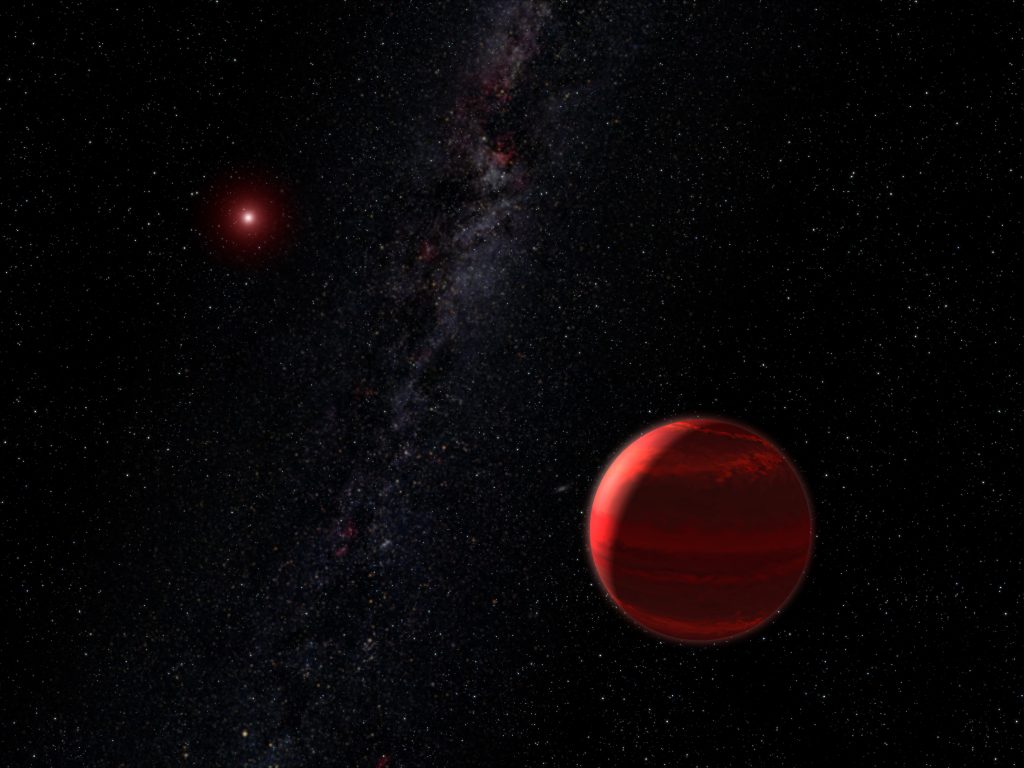
Red dwarfs dominate the galaxy by number and burn their fuel slowly, giving any hypothetical civilization immense spans of time to build around them. Their lower luminosity also reduces material demands compared with a Sun-like star. White dwarfs present a different case. Their tiny size means a swarm could orbit much closer to the star while still receiving strong energy flux. In both scenarios, the expected observational signature is not a dramatic science-fiction silhouette but a mismatch between visible light and infrared emission, especially if the collectors behave like warm blackbodies radiating waste heat.
7. Infrared surveys are where the technology debate becomes testable
The strongest practical connection between these stories is instrumentation. Webb can dissect exoplanet atmospheres, while infrared surveys can flag stars whose energy appears redistributed rather than naturally emitted. Searches discussed in recent coverage include seven potential Dyson sphere candidates among five million stars, with one candidate later dropped because of alignment with a background source. That does not establish artificial structures. It does show that astronomers now have filtering methods, candidate lists, and follow-up strategies instead of only thought experiments.

8. False positives are the real engine of caution
This field advances by eliminating alternatives. Dust can mimic infrared excess. Background objects can contaminate a target. Atmospheric spectra can blend one molecule into another. Planetary environments can produce chemistry that looks familiar but forms through unfamiliar pathways. Bruce Betts of The Planetary Society framed that standard clearly: “Searching for life beyond Earth is one of the great, profound pursuits of humankind. But any claim of life out there will require thorough study by the scientific community as a whole before we have confidence in the results.” The same discipline applies to claims of alien engineering.

Extraordinary interpretations remain downstream of repeated observation, independent analysis, and the removal of more ordinary explanations. Taken together, K2-18b and Dyson sphere candidate work have not delivered proof of alien life or alien machinery. They have done something more durable: they have clarified where modern astronomy is most capable of testing old questions. One path follows molecules in distant skies. The other follows waste heat around distant stars. Both depend on better spectra, cleaner infrared catalogs, and a willingness to let extraordinary ideas survive only if the data does.


