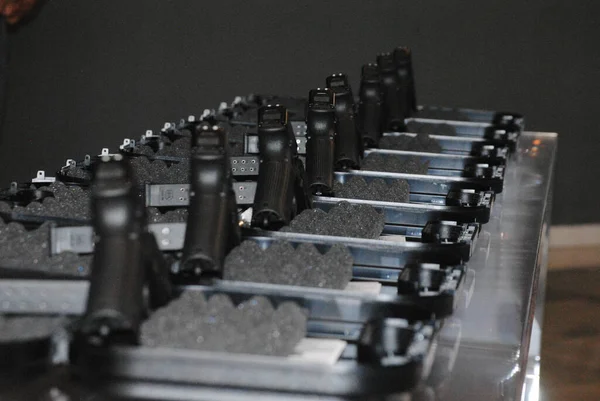
Glock spent decades building one of the most predictable product families in the handgun world. That consistency helped the company dominate law-enforcement holsters, commercial counters, and the aftermarket parts business at the same time. That is why the current model reduction matters beyond a simple catalog cleanup. The move points to a broader engineering reset: fewer overlapping pistols, stronger emphasis on optics-ready architecture, and a platform strategy shaped as much by manufacturing logic as by mounting legal pressure around illegal conversion devices.

1. Too Many Variants Were Slowing the Factory Down
Large handgun catalogs can look impressive, but they create friction everywhere else. Multiple generations, niche calibers, and overlapping frame-slide combinations all add setup changes, inventory complexity, service-part planning, and forecasting risk. Glock’s own language made that clear when it described a strategic decision to reduce its current commercial portfolio so it could focus on products tied to future growth. In practical terms, cutting lower-volume variants frees machining time for the pistols that move fastest and are easiest to support at scale. That matters for a company whose reputation has long depended on parts commonality and production consistency.

2. Red-Dot Optics Are No Longer a Side Option
One of the strongest forces behind the reset is the simple fact that slide-mounted optics have moved into the mainstream. What started as a specialist feature now shapes duty-gun procurement, training standards, and buyer expectations. Glock recognized this years ago with the MOS system, which used a shallow slide cut and interchangeable plates so optics could sit lower while preserving slide strength. The concept was built around interchangeable mounting plates rather than tall add-on mounts that would raise the sight line too far above the bore. That early move helped normalize optics-ready pistols, but it also left Glock maintaining older non-optics slides alongside newer configurations. As optics-ready pistols become standard, legacy models without that pathway make less sense in a consolidated lineup.

3. The Market Has Shifted Hard Toward 9mm Duty Pistols
SKU reduction becomes easier when the center of the market is narrower than it used to be. Over the past decade, duty and defensive demand has pulled strongly back toward 9mm, while calibers such as .357 SIG and .45 GAP have become far less central to mainstream procurement. A broad law-enforcement market review noted that the industry-wide return to 9mm was accelerated by the FBI’s 2015 ammunition decision and by modern bullet performance that closed much of the old terminal-effect debate. The same report described the wider rise of optics-ready sidearms and estimated that Glock still holds over 65% of the law-enforcement market share in the United States. For a company with that kind of installed base, concentrating on the most common duty format is not only a sales decision. It is also a logistics decision.

4. Illegal Conversion Devices Have Turned Into a Design Problem
Much of the current pressure on Glock centers on illegal conversion devices, often called switches, that can be fitted to certain pistols. That issue has moved beyond criminal misuse and into engineering scrutiny, court arguments, and compliance planning. One often-cited figure is the 570% increase in recoveries of conversion parts between 2017 and 2021 compared with the previous five-year span. That trend has helped push regulators and plaintiffs to focus on whether a pistol is readily convertible, not just whether a device is illegal. For manufacturers, that changes the design brief. Resistance to tampering becomes part of the platform requirement, which makes old slide and internal geometries harder to justify keeping in full production.
5. The V Series Looks Like a Baseline, Not a Cosmetic Refresh
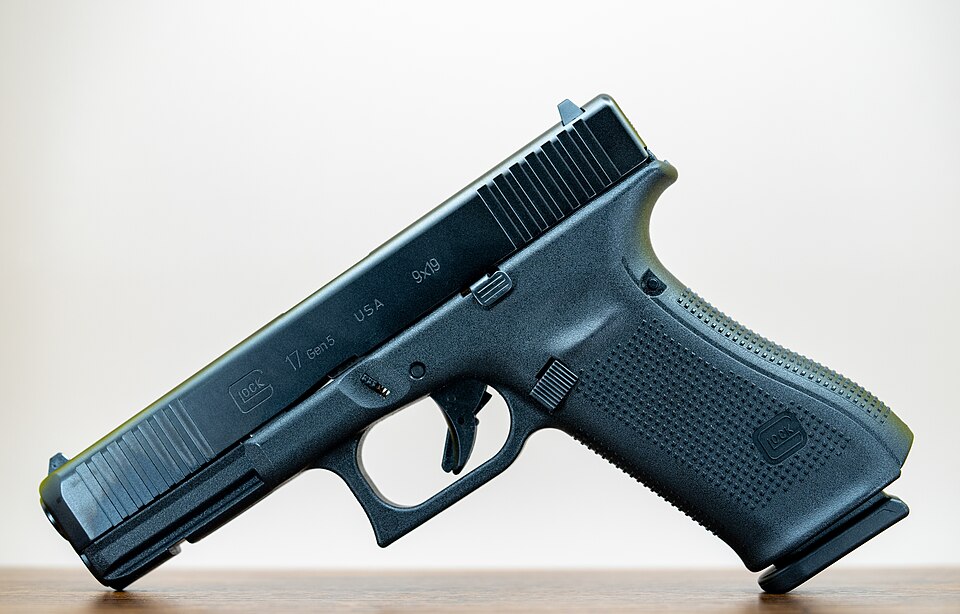
Reports surrounding Glock’s V-series transition point to a larger purpose than renaming models. The goal appears to be a cleaner mechanical baseline that can replace multiple outgoing generations while addressing convertibility concerns. Coverage of the transition described the V line as a family built to simplify production and unify the range. It also pointed to more than thirty legacy variants being discontinued ahead of the rollout. That kind of reset suggests Glock is trying to avoid supporting too many parallel architectures at once. Even if the handling remains familiar, the internal standard matters because armorers, distributors, and parts suppliers all depend on repeatable geometry.
6. Generation-to-Generation Compatibility Is Getting Harder to Preserve
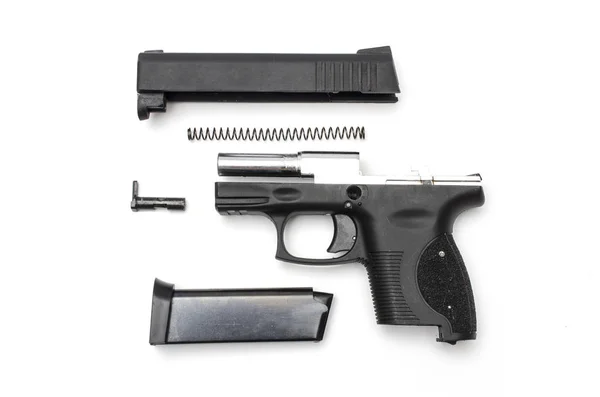
Glock’s appeal always rested partly on interchangeability. That promise weakens as generations drift farther apart in recoil systems, slide dimensions, trigger components, and optics interfaces. Gen 3 built a giant aftermarket partly because it stayed around so long and became the basis for countless compatible parts.

Gen 4 introduced recoil and frame changes that already complicated mixing components, and Gen 5 pushed the platform further into generation-specific geometry. The newer the baseline becomes, the less practical it is to keep every older branch alive without multiplying support burdens. For owners, that means the Glock ecosystem is still large, but it is no longer one seamless parts universe.

7. Discontinuations Change Dealer Shelves and Collector Interest Overnight
Whenever a major manufacturer trims a lineup, certain pistols immediately stop feeling ordinary. Long-slides, unusual chamberings, and favored legacy generations often gain attention simply because routine replenishment is no longer guaranteed. That effect matters with Glock because the brand was built on continuity rather than scarcity. Once continuity is broken, buyers, dealers, and armorers start thinking differently about what counts as current, what counts as legacy, and what is worth stocking deeply. The pistols may still be serviceable for years, but the psychology changes as soon as the lineup itself gets narrower.

Seen as a whole, Glock’s model reduction is not a retreat from its core formula. It is a sign that the company now values standardized production, optics-centered design, and conversion-resistant engineering more than maintaining every branch of a sprawling back catalog For the broader handgun market, that may be the real story: the age of endless variant sprawl is giving way to tighter, more deliberate platform families.


