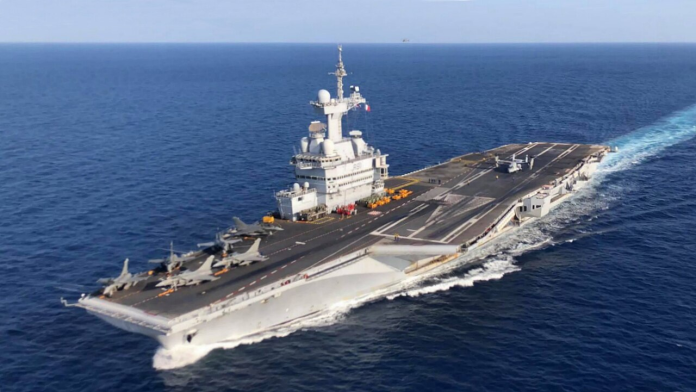
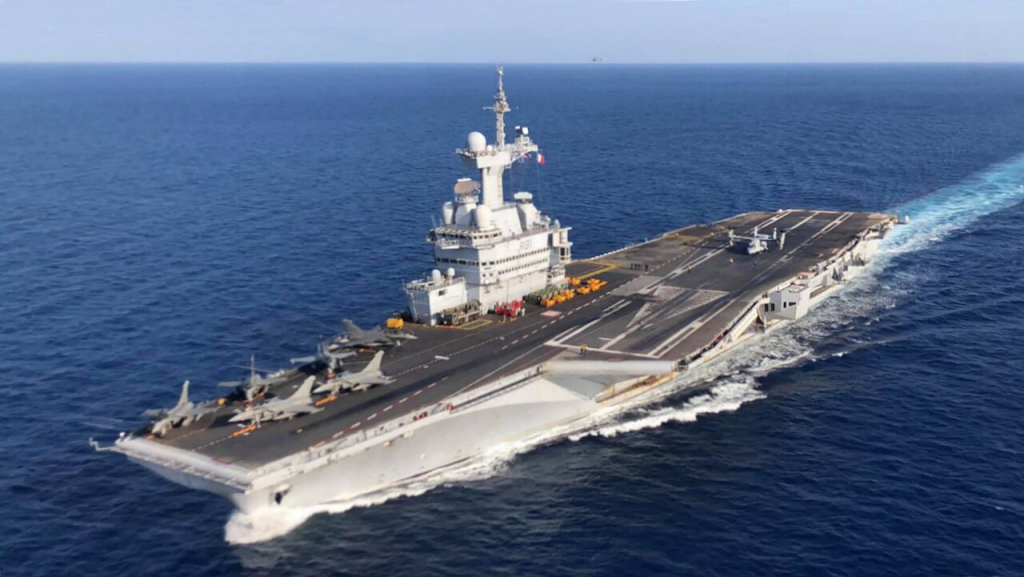
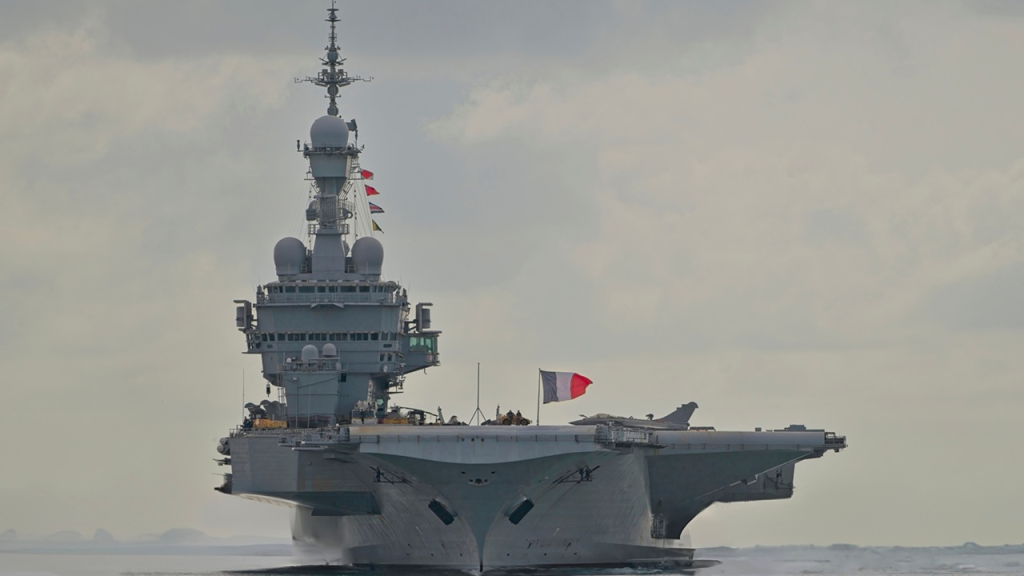
France’s Charles de Gaulle is not a smaller copy of an American supercarrier. It is a different answer to the same problem: how to keep fixed-wing naval aviation credible when only one carrier is available, maintenance windows are long, and every deployment has to count.
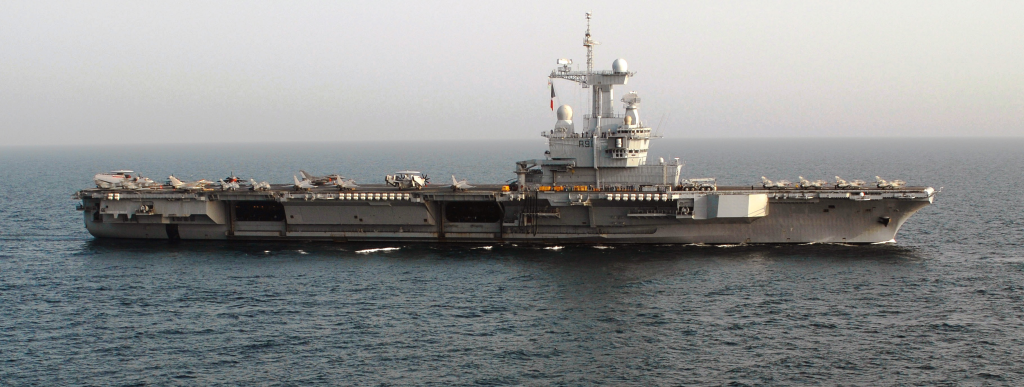
That makes the ship unusually useful as a design case study. The French carrier combines nuclear propulsion, catapult launches, airborne early warning aircraft, and coalition-ready procedures in a hull far smaller than a Nimitz or Ford class ship, yet it still preserves capabilities that many other non-U.S. carriers do not.
1. A single carrier can still preserve full catapult aviation
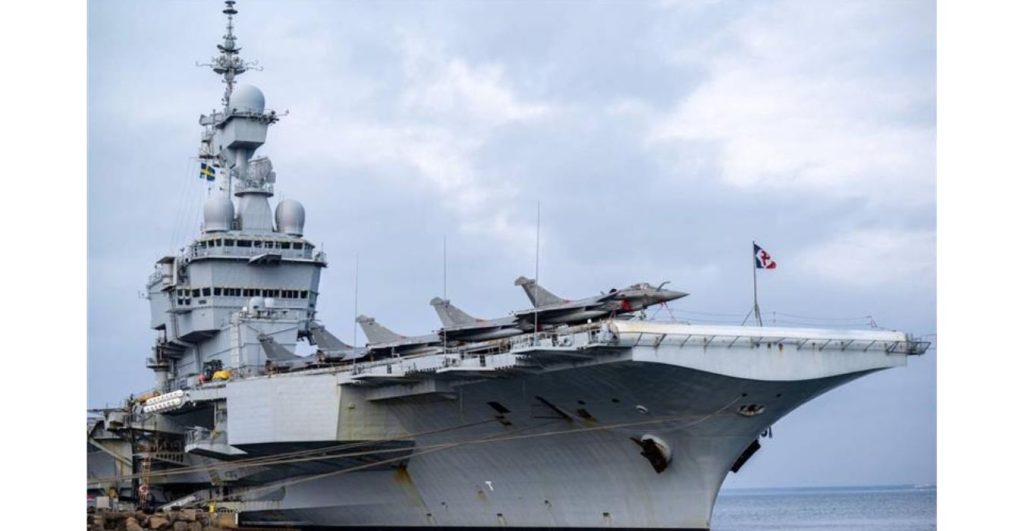
Charles de Gaulle remains the only operational nuclear-powered aircraft carrier outside the United States and one of the very few non-American carriers built around catapult launch and arrested recovery. Its 42,000-ton hull is small by supercarrier standards, but the design choice matters more than the size. CATOBAR operations allow heavier aircraft to launch with more fuel and payload than ski-jump or STOVL decks typically support.
The ship uses U.S. derived steam catapults and arresting gear, which helps explain why it fits more easily into allied carrier procedures. Even in a compact layout, that deck architecture gives France access to the kind of naval air operations usually associated with much larger fleets.
2. The reactors matter less for prestige than for deck tempo
Two K15 pressurized-water reactors drive the ship’s steam turbines and support the energy demands of launch and recovery cycles. Nuclear power does not remove every operational limit, since food, maintenance, and escort support still shape deployments, but it does reduce dependence on conventional marine fuel for propulsion.
A key benchmark is the ship’s 27-knot speed, which supports wind-over-deck requirements during flight operations. That figure became more important after earlier technical problems and later overhaul work, including propulsion improvements and refueling during the carrier’s midlife modernization. In a carrier, propulsion is not just about transit speed; it directly supports aviation performance.

3. Fixed-wing radar coverage gives the ship a bigger combat footprint
The ship’s air wing is built around Rafale M fighters, but the more revealing capability is its E-2C Hawkeye component. Fixed-wing airborne early warning extends radar coverage far beyond shipboard sensors and gives the strike group a stronger command-and-control node.
That is one of the sharpest dividing lines between Charles de Gaulle and many European carrier designs. A STOVL carrier can generate useful aviation output, but it does not automatically gain the same long-range airborne surveillance and battle-management structure that comes with Hawkeye operations. On Charles de Gaulle, the air wing is not just a strike package; it is a sensor and coordination network.
4. The ship has shown that compact does not always mean small air group
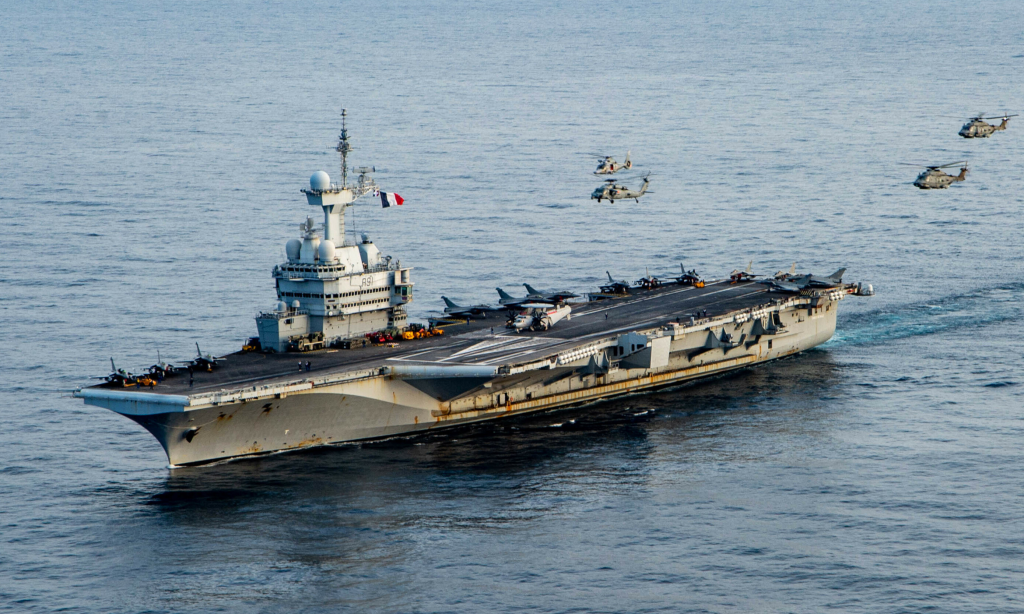
Routine deployments do not always push the carrier to its physical limit, but the deck and hangar arrangement have shown more elasticity than the ship’s size suggests. During a 2019 workup, Charles de Gaulle operated a record 35 aircraft, including 30 Rafale M fighters, two E-2C Hawkeyes, and three helicopters.
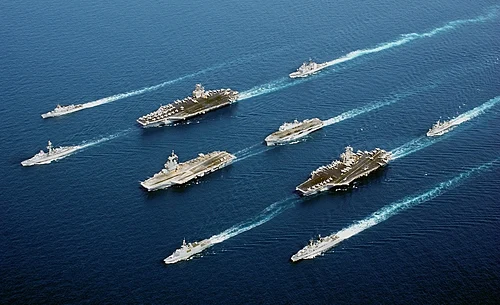
That matters because sortie generation depends on more than headline displacement. Aircraft spotting, maintenance flow, weapons handling, and launch-recovery rhythm all shape what a carrier can actually do. Charles de Gaulle cannot match an American supercarrier’s surge volume, but it demonstrates how much combat utility can be extracted from a much smaller deck when the aviation system is designed coherently.
5. Interoperability on this carrier is procedural, not just technical
The French carrier’s long-standing ability to cross-deck with U.S. Navy aircraft is one of its most consequential traits. Compatibility is not limited to hardware. French landing signal officers train in the United States, and the ship has repeatedly operated inside allied command structures rather than merely alongside them.
That pattern became more visible during a first deployment period under NATO command. It means the ship can serve both national autonomy and coalition integration without being locked into only one model. For carrier operations, that human and procedural alignment is often more valuable than a narrow platform comparison.
6. The next French carrier shows what Charles de Gaulle could not scale to
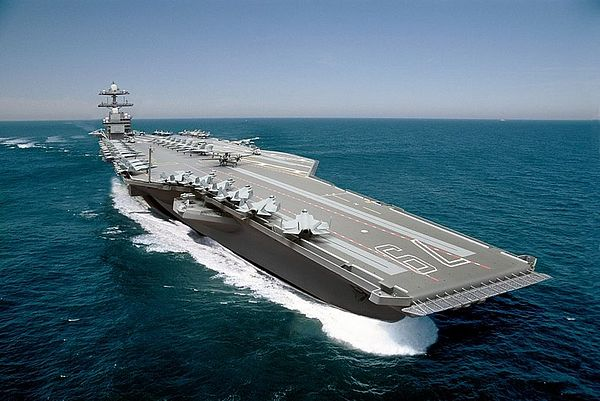
The successor program now known as France Libre, previously PANG, reveals the practical limits of the current ship. The future carrier is planned at roughly 78,000 to 80,000 tons, with three EMALS catapults and three AAG systems, a larger flight deck, and room for heavier future aircraft and drones.
It is also set to use two K22 nuclear reactors producing 220 megawatts each, a major step beyond Charles de Gaulle’s power margin. In effect, France is not replacing a failed concept. It is enlarging a proven one: nuclear propulsion, catapults, fixed-wing airborne warning, and sovereign sea-based airpower, but with more deck space, more electrical capacity, and more room for future aircraft.
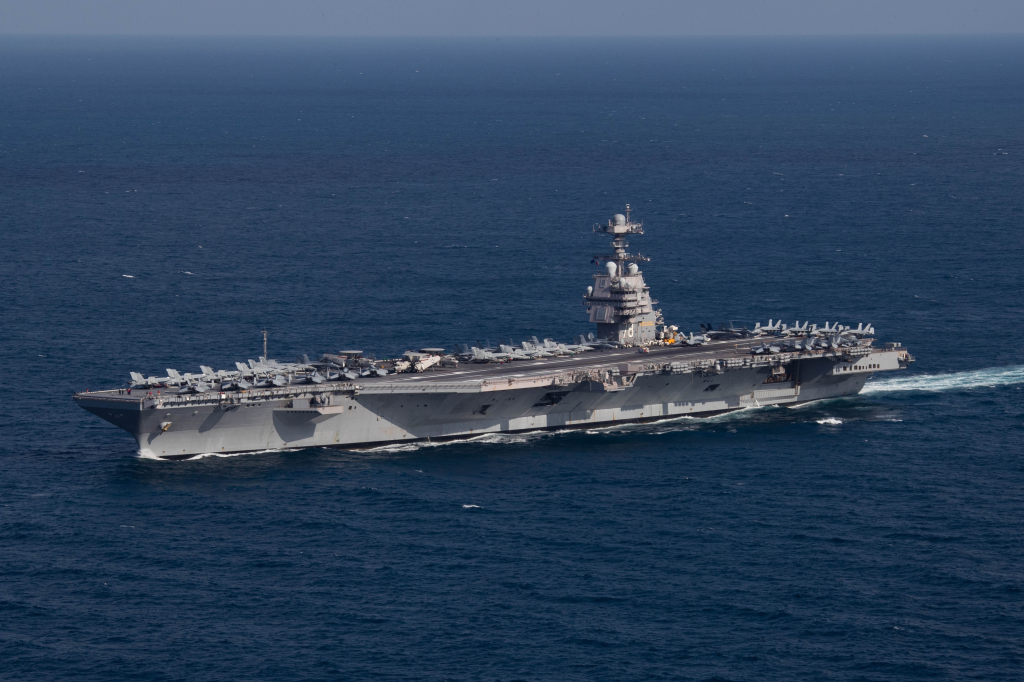
Charles de Gaulle therefore remains significant not because it rivals a U.S. supercarrier ship for ship, but because it proves a different force-design logic. One carrier, if built around catapults, AEW aircraft, and coalition-ready procedures, can deliver far more strategic value than its size suggests.


