Modern 9mm pistols can look wildly different from one another, but inside the slide they usually share the same basic trick. In most cases, the barrel and slide lock together for a short distance, then the barrel cams downward and the slide continues rearward on its own.
That layout is commonly traced to John Browning’s locked-breech work and the later refinements that shaped today’s linkless versions. The reason it dominates is not fashion. It solves several engineering problems at once while fitting the size, weight, and reliability demands that define the modern service pistol.
1. It keeps pressure contained at the right moment
A 9mm service cartridge produces more energy than a simple straight-blowback compact pistol handles gracefully. In a Browning-type short-recoil system, the slide and barrel begin moving together while still locked, delaying separation until pressure has dropped to a safer level for extraction. That brief delay is the core advantage of the locked breech design. Because the pistol is still locked when the bullet exits, the barrel is not firing in its tilted position. The unlocking movement happens after the shot has effectively left the system, which is why this layout became practical for compact 9mm handguns without demanding oversized slides.
2. It allows a smaller pistol than blowback designs
Direct-blowback pistols rely heavily on slide mass and spring force to resist rearward motion. For low-pressure cartridges, that can work well enough. For 9mm, it usually leads to heavier slides, stiffer springs, and bulkier packaging. The Browning-style arrangement avoids that penalty. Since the action stays locked during the highest-pressure phase, the pistol does not need the same amount of brute-force slide mass to stay closed. That is a major reason compact and duty-size 9mm pistols became easier to build, carry, and cycle by hand.
3. It spreads recoil over time
One of the more useful mechanical advantages is how the moving parts share recoil. In a short-recoil pistol, the barrel and slide initially move together, then stop at different points in the cycle. That means the energy is not dumped into one heavy part stopping all at once. As one technical explanation in the reference discussion put it, “the energy required to stop them is spread out.” That helps explain why locked-breech pistols often feel less abrupt than similarly chambered blowback guns. Lower slide mass and a staged motion profile can make the recoil impulse feel longer and less snappy, even when cartridge power is unchanged.
4. It improves feeding geometry in a compact frame
The tilting barrel does more than unlock the action. As the rear of the barrel drops, the feed ramp moves into a friendlier relationship with the magazine and the incoming round. That changing geometry helps a compact pistol feed reliably without requiring the magazine to sit perfectly in line with the chamber. This matters because modern 9mm pistols are expected to feed a wide range of bullet shapes, from round nose training loads to defensive hollow points. A system that helps guide cartridges upward into the chamber while keeping the gun short is difficult for designers to ignore.
5. It supports reliable extraction and ejection
Once the barrel unlocks and stops, the slide continues rearward with the spent case under extractor control. The timing of that handoff is one reason the system has been so durable across generations of pistols. Unlock too early and the cycle becomes violent; unlock too late and the pistol gives up speed and packaging efficiency. The dropping-barrel pattern gives designers a repeatable way to manage that sequence. Reliable ejection is not just about the extractor and ejector. It is also about when the case is released from chamber support and how fast the slide is moving when that happens.
6. It is cheaper and easier to manufacture than many alternatives
Not every effective locking system became a standard. Some alternatives are smoother, some are elegant, and some are technically fascinating. But the Browning-derived linkless system is efficient to produce at scale, which matters enormously in military, police, and commercial handgun markets. That cost advantage was stated directly in one of the reference discussions: “The browning type action is cheaper to manufacture than most other recoil operated actions.” Modern machining, forged or machined barrel cams, and simple slide cuts all favor a system that offers high performance without unusual parts count or complex fitting.
7. It proved adaptable long after Browning’s original versions
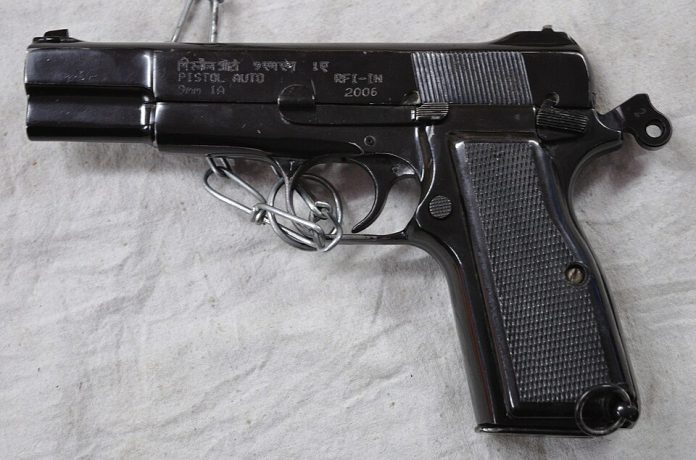
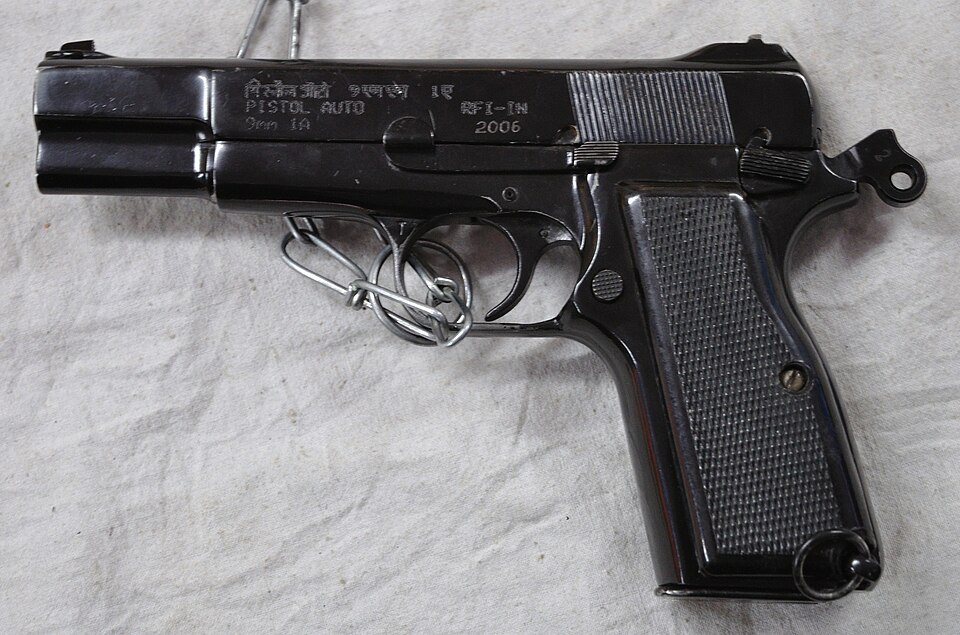
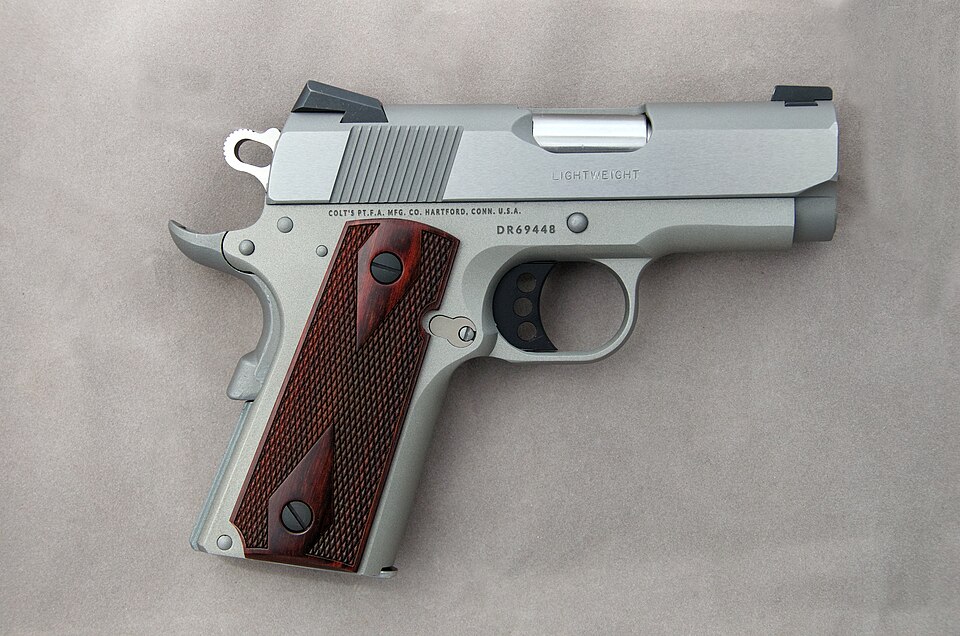
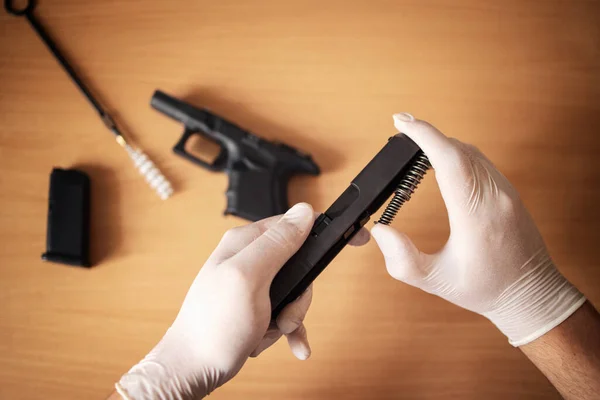
The system used in current pistols is not a museum copy of any single early handgun. The 1911 used a swinging link, while many later pistols adopted cam surfaces associated with later development and Hi-Power-era evolution. That distinction matters because the modern standard is really a family of mechanisms, not one frozen blueprint. Designers kept the idea because it tolerated change. Barrel hood lockup, cam-block geometry, feed-ramp shapes, and frame materials all evolved around the same fundamental short-recoil principle. Polymer-framed striker pistols, alloy duty pistols, and steel competition guns all use versions of it because the architecture scales well.

8. It delivers accuracy without demanding a fixed barrel
A moving barrel can sound like a compromise, but in practice it has not prevented excellent mechanical precision. The barrel locks into the slide in the same firing position, then unlocks only after the bullet exits. Good lockup consistency at the hood, muzzle, and cam surfaces matters more than the simple fact that the barrel tilts during cycling. That is why the old question of whether tilt hurts accuracy has largely faded from modern pistol design. In service-grade 9mm pistols, the system has shown that repeatable lockup and practical precision can coexist with compact packaging and fast cycling.
9. Competing systems never displaced it at scale
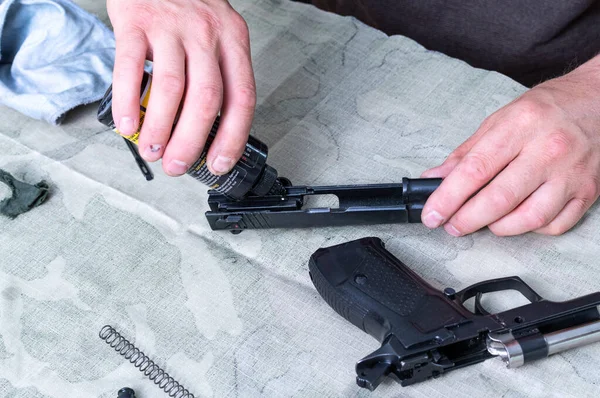
Fixed-barrel blowback, rotating barrels, locking blocks, gas-delayed actions, and other mechanisms all have strong engineering logic behind them. Some reduce muzzle disturbance. Some can feel exceptionally smooth. Some simplify one part of the design while complicating another.
But few alternatives matched the full package. The Browning-type short-recoil system combines compact size, manageable recoil, broad ammunition tolerance, durable timing, and manufacturing efficiency in one familiar layout. That is why it became the default rather than just one option among many. Even pistols that do not literally copy Browning usually compete against the benchmark established by the dropping-barrel lock.
Nearly every modern 9mm pistol uses this system because it answers the same engineering brief: keep the gun compact, keep it reliable, keep recoil manageable, and keep production realistic. Very few handgun mechanisms check all of those boxes as cleanly. That is why so many different pistols end up looking mechanically alike once the slide comes off. The dominance of the design is less about tradition than about repeated proof that it works.


