American service rifles have often done more than arm infantry. At key moments, they exposed flaws in doctrine, logistics, training, and even the Army’s idea of what a rifleman was supposed to do on the battlefield.
Some proved that volume of fire mattered more than inherited theories about long-range marksmanship. Others showed that a technically successful rifle could still push the Army down the wrong path for decades. Together, these six rifles chart a long argument over range, recoil, magazine capacity, controllability, and mobility.
1. M1903 Springfield
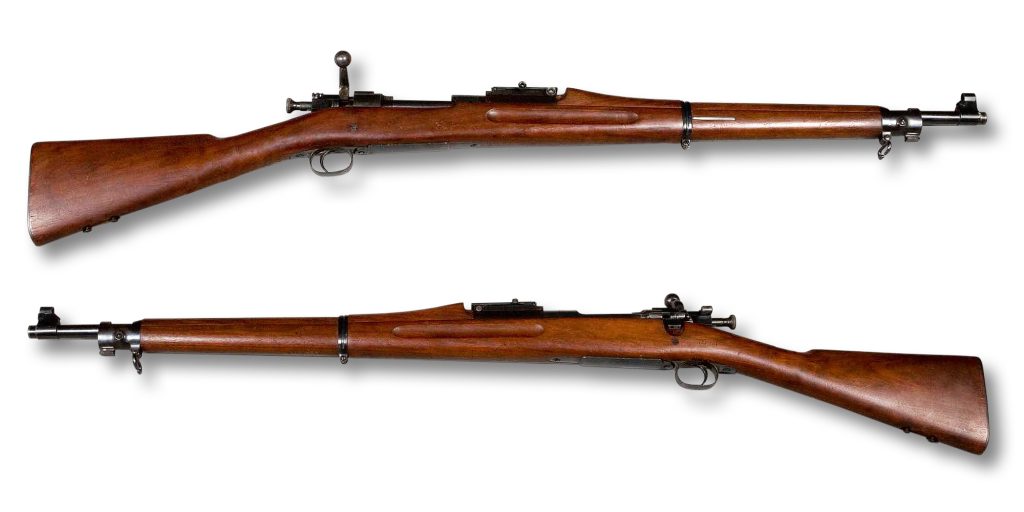
The M1903 Springfield represented the Army’s early 20th-century fixation on precision and distance. Chambered in .30-06, it embodied an era when leaders still imagined riflemen engaging targets at extreme ranges, and its doctrine reflected lessons drawn from the Spanish-American War, when U.S. troops felt outclassed by Spanish Mausers. That mindset mattered because it set the problem every later rifle had to solve. The Springfield was accurate and powerful, but its five-round bolt-action system limited how much fire an infantryman could deliver once combat collapsed into closer, faster engagements. World War I drove that point home. In trench fighting, soldiers rarely had the luxury of calm, long-range marksmanship, and the Army gradually recognized that suppressive fire and rapid follow-up shots were becoming more important than textbook accuracy at 1,000 yards. The Springfield did not fail mechanically. It forced a doctrinal reckoning.
2. M1 Garand
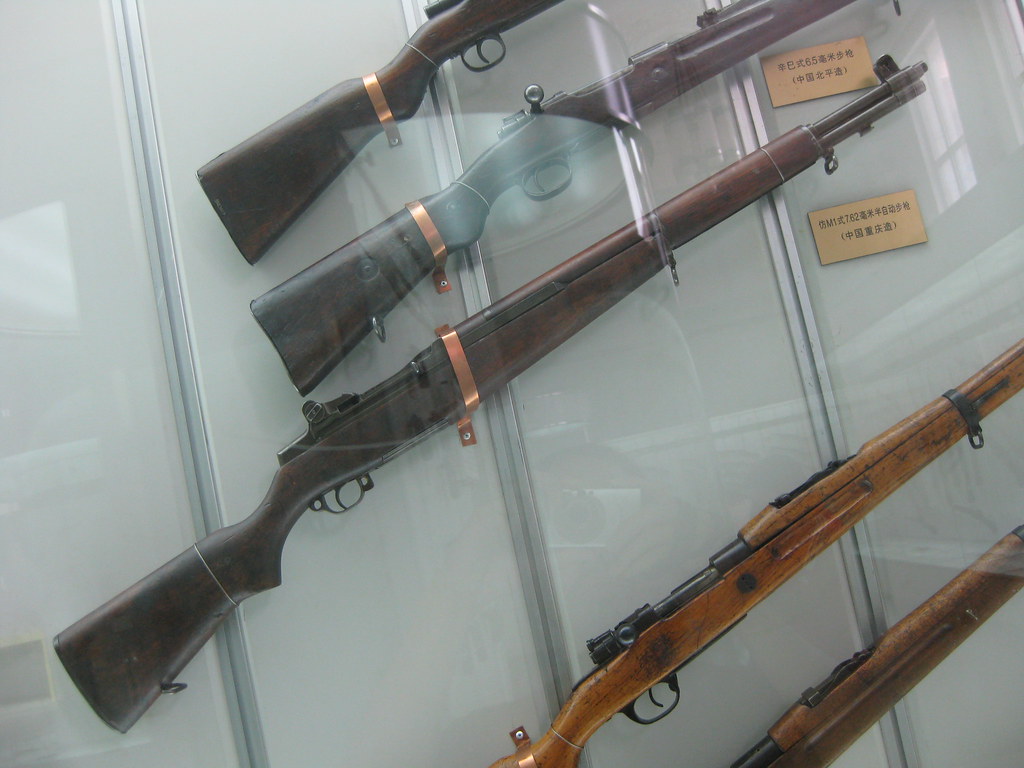
The M1 Garand changed the standard completely. Officially adopted in 1936, it became the first semi-automatic rifle broadly issued as a standard infantry arm by any major power in World War II, giving U.S. troops a major increase in sustained individual firepower. Its advantage was simple and profound: the shooter no longer had to work a bolt between shots. That meant faster aimed fire, less disruption to sight picture, and more effective engagement of fleeting targets. General George S. Patton’s famous verdict, “the greatest battle implement ever devised,” captured the rifle’s reputation, even if the line has long overshadowed the more practical reasons troops valued it. In jungle conditions and hard field use, it earned praise for sturdiness, manageable recoil, and better combat tempo than the bolt-action rifles it replaced. But the Garand also created new questions. Its eight-round en bloc clip could not be conveniently topped off in combat, and a loaded rifle weighed about 10 pounds. More importantly, the Army’s insistence on retaining .30-06 meant the rifle delivered power and range well beyond what many battlefield engagements actually required. The M1 won admiration, but it also reinforced the Army’s attachment to a full-power battle rifle long after combat realities were moving in another direction.
3. M1 Carbine
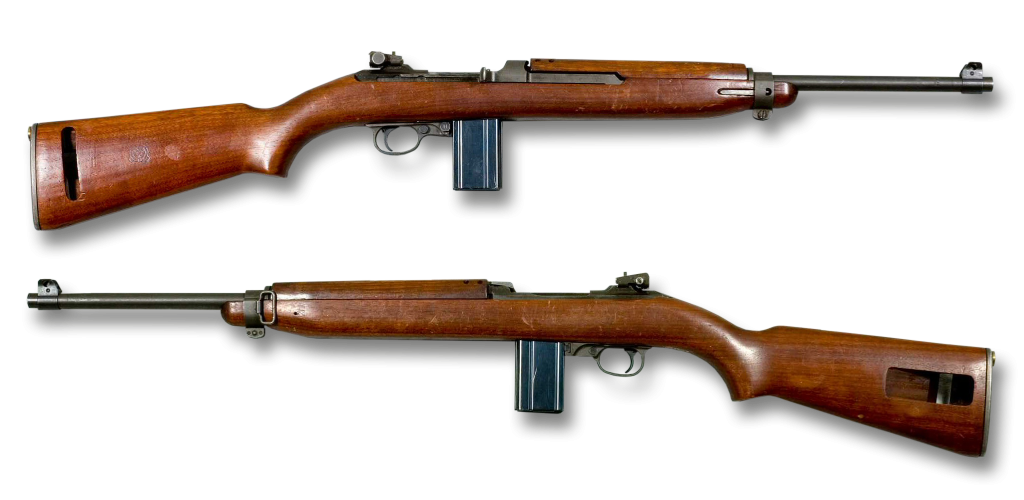
The M1 Carbine arrived from a different angle. It was lighter, handier, and easier to carry than the Garand, built for officers and support troops who needed more than a pistol but less burden than a full rifle. At roughly half the Garand’s weight, it hinted at a future where mobility and controllability could matter as much as raw ballistic reach. Its importance was less about replacing the main service rifle than about exposing a gap in Army thinking. With a detachable magazine and a practical envelope around a few hundred meters, the carbine came close to a modern infantry concept without fully becoming one. Its weakness was the cartridge: useful for its intended role, but too limited to replace a standard rifle. In hindsight, it showed that the Army could imagine a lighter, faster-firing weapon, yet still stop short of embracing an intermediate-power service rifle.
4. M14
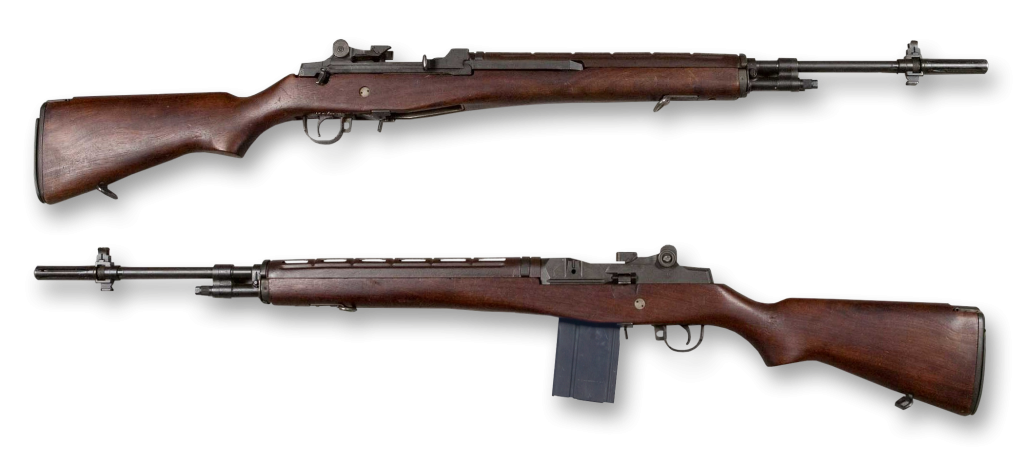
The M14 was supposed to modernize the Garand formula. Instead, it demonstrated how hard it was for the Army to break from established assumptions. Adopted in 1959, it added a detachable 20-round magazine and select-fire capability, but it still fired a full-power 7.62×51mm NATO round and remained, in effect, a refined battle rifle rather than a true assault rifle.
That choice carried consequences. The rifle preserved reach and power, but automatic fire with such a strong cartridge was difficult to control, especially in the kind of short-range, high-pressure engagements becoming more common. Rather than solving the problem of infantry firepower, the M14 exposed how much the Army still prioritized range and tradition over practical controllability. It was a transitional rifle that made the limits of the old philosophy impossible to ignore.
5. M16
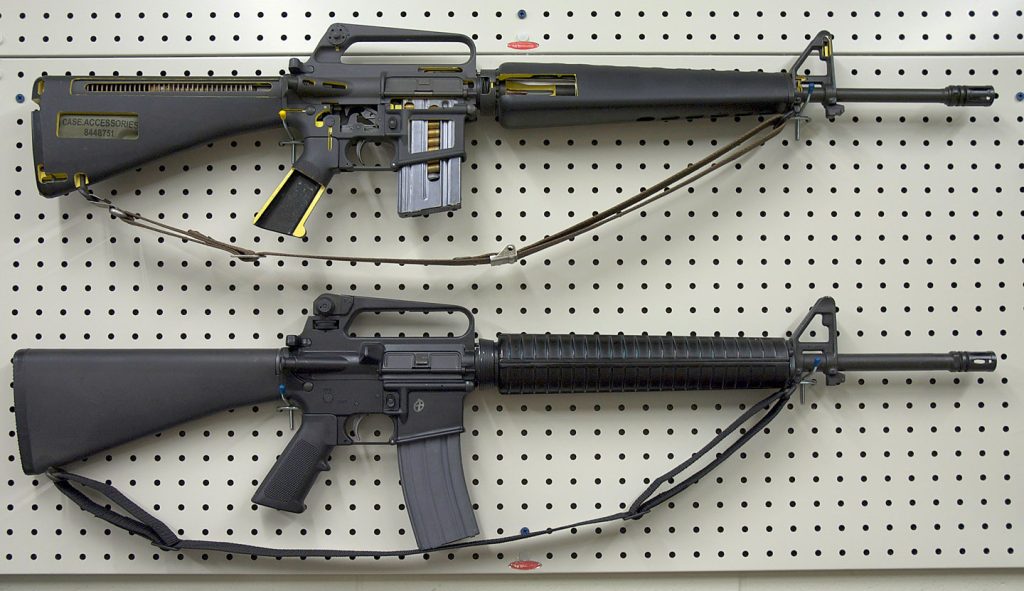
The M16 marked the sharpest break in the Army’s rifle thinking. Fielded in the mid-1960s, it pushed the service decisively toward a lighter weapon firing a smaller, high-velocity cartridge. That meant more ammunition could be carried, recoil dropped dramatically, and automatic or rapid semiautomatic fire became far easier to manage.
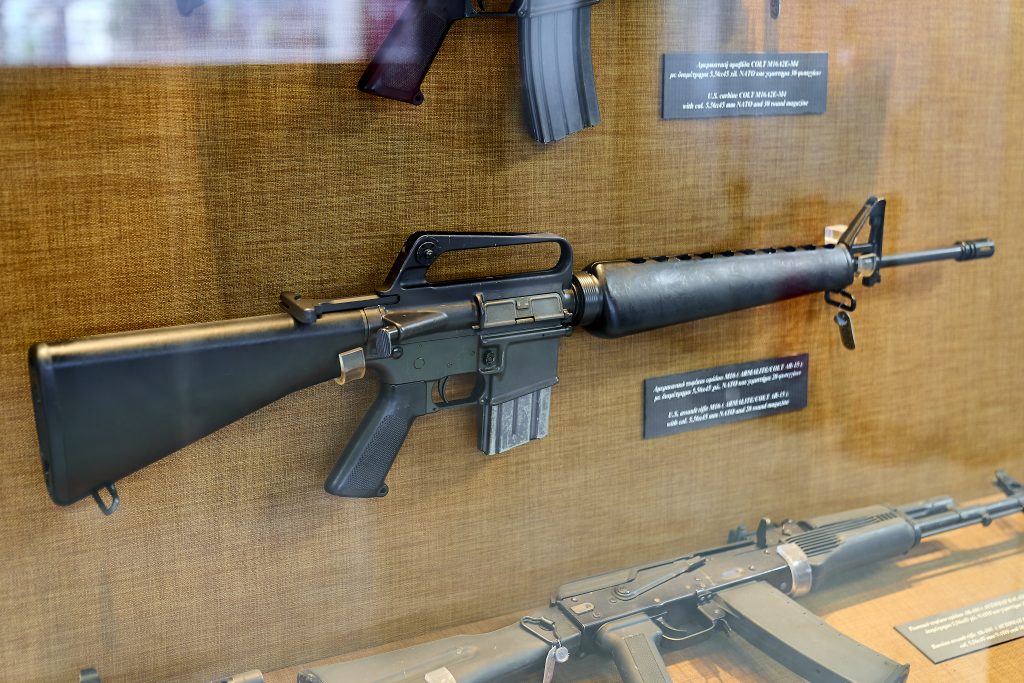
The larger implication was even more important than the hardware. The M16 validated the idea that most infantry combat did not require a heavy rifle optimized for very long range. It also confirmed that firepower was not just about cartridge power; it was about how many effective shots a soldier could place, how quickly, and for how long. The Army had spent decades resisting that conclusion. The M16 forced it into the open.
6. M4 Carbine
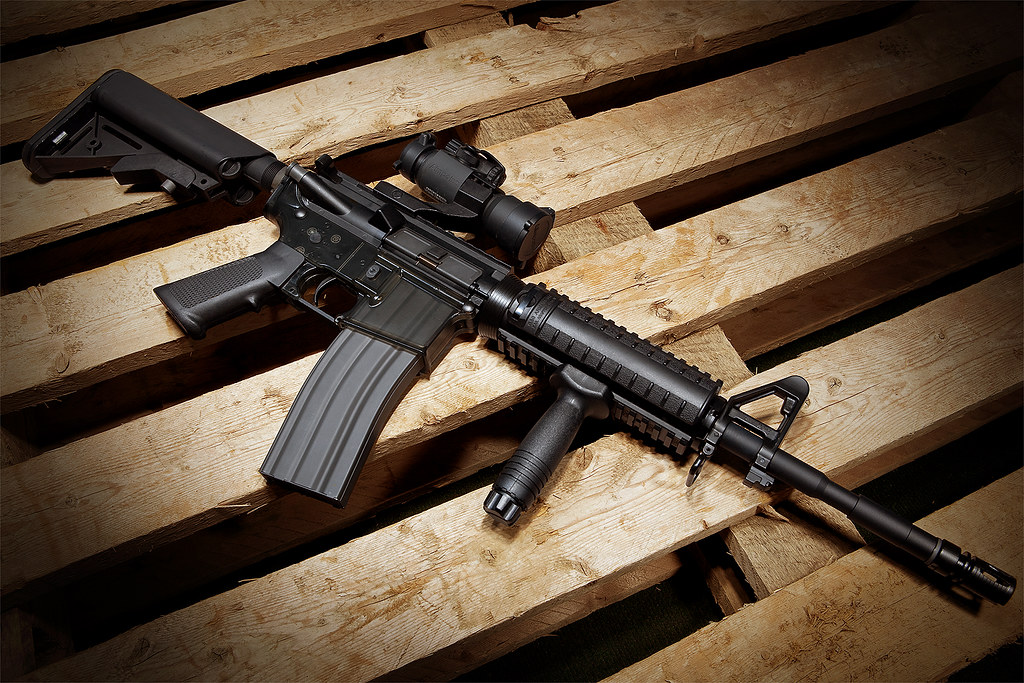
The M4 carbine redefined what the standard rifle needed to be in an era of vehicles, urban operations, and modular equipment. Shorter than the M16 and far easier to handle in confined spaces, it reflected a battlefield where maneuverability had become inseparable from lethality. The Army eventually pushed much of its fleet to the M4A1 standard, adding fully automatic fire, a heavier barrel, and an ambidextrous selector. Those updates were a reminder that even a successful rifle has to evolve with use. The M4’s design also embraced modularity in a way earlier service rifles never had, allowing optics, lights, lasers, and other accessories to shape how the weapon functioned in practice.
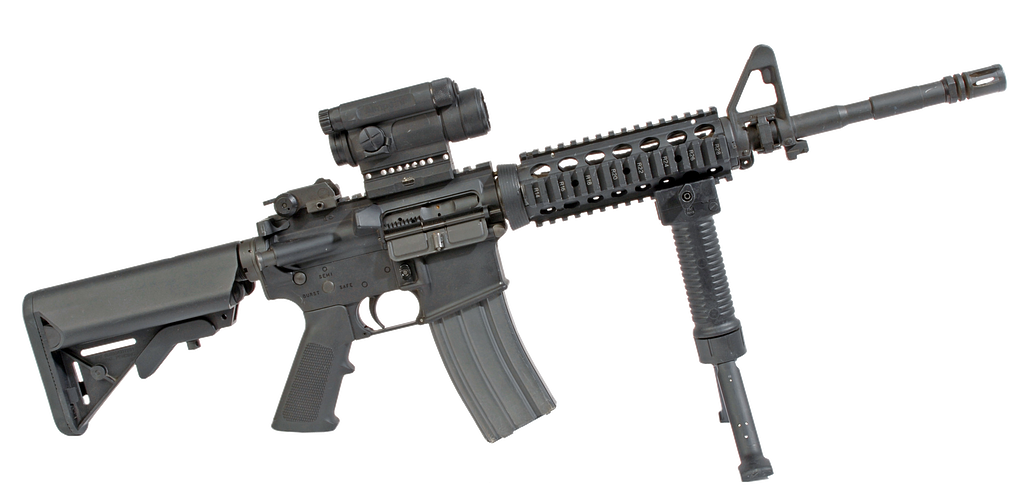
In that sense, it forced the Army to rethink firepower yet again: not just as cartridge and rate of fire, but as a complete fighting system built around adaptability. Across more than a century, these rifles did not just replace one another. Each one exposed a changing answer to the same question: what gives an infantry soldier the most useful firepower in real combat? The Army’s answers shifted from long-range precision to semi-automatic speed, from heavy battle rifles to lightweight high-capacity carbines. The rifles changed, but the deeper story was the institution learning sometimes slowly that battlefield effectiveness depends less on tradition than on matching the weapon to the fight.


