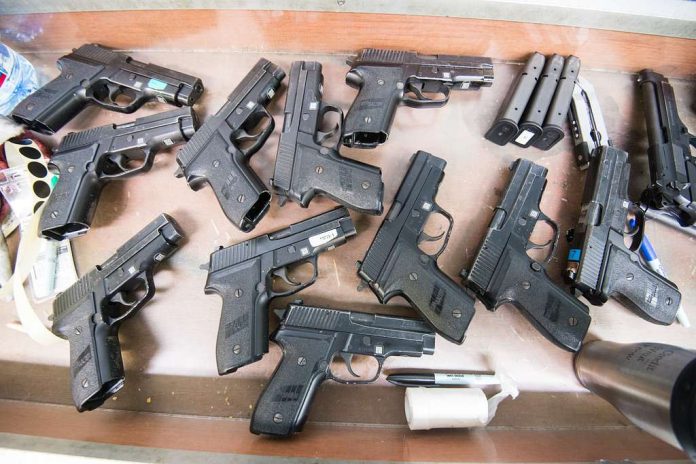
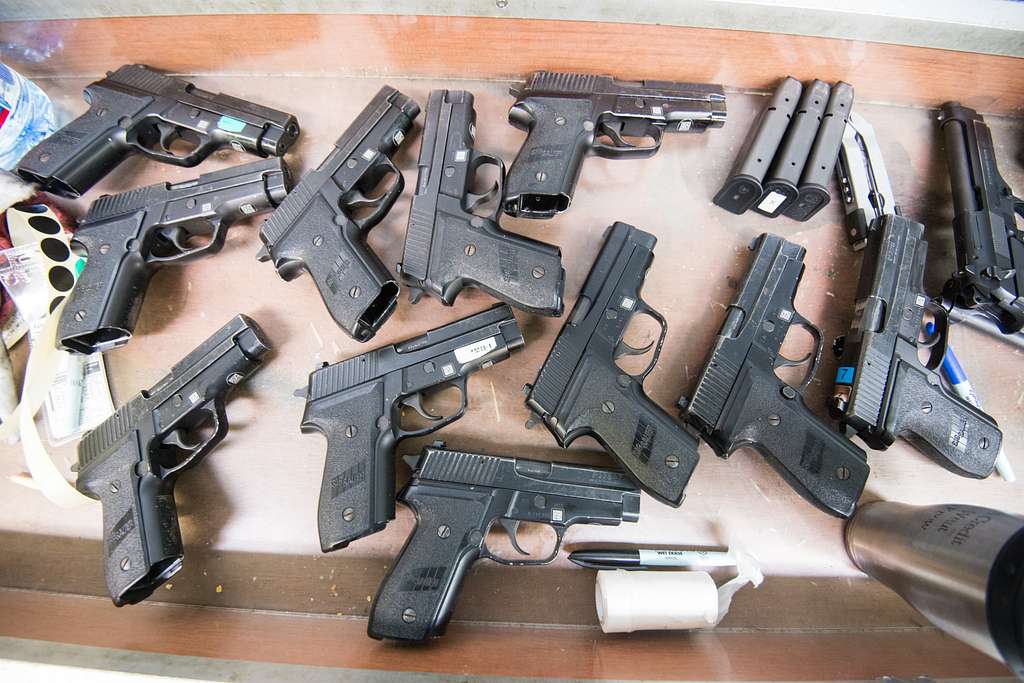
Army sidearms rarely carry the headline role, but they leave a deep mark on doctrine, training, and trust. A service pistol has to work when a primary weapon is unreachable, when a crewman is confined by steel and machinery, or when a specialist needs something smaller than a rifle but more capable than a gesture of last resort.
Across nearly 150 years of Army issue, a few handguns stand above the rest not because they were fashionable, but because they answered a specific problem at exactly the right time. Some fixed a caliber mistake. Some standardized a sprawling inventory. Others introduced new ideas about modularity, compact carry, or ammunition commonality.
1. Colt M1911 and M1911A1
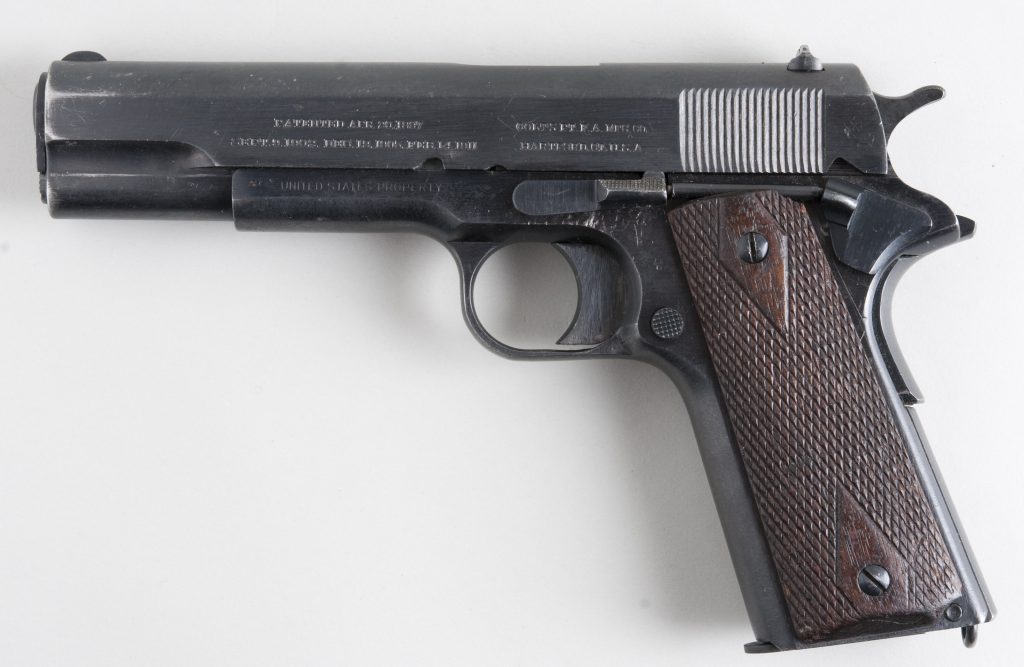
The M1911 became the Army’s benchmark for what a fighting pistol should be after earlier .38-caliber revolvers failed to inspire confidence. That shift was reinforced by the Thompson-LaGarde recommendation for a larger handgun cartridge, and Browning’s .45 ACP design emerged as the clear answer when the Colt test pistol completed 6,000 rounds with no failures or breakages.
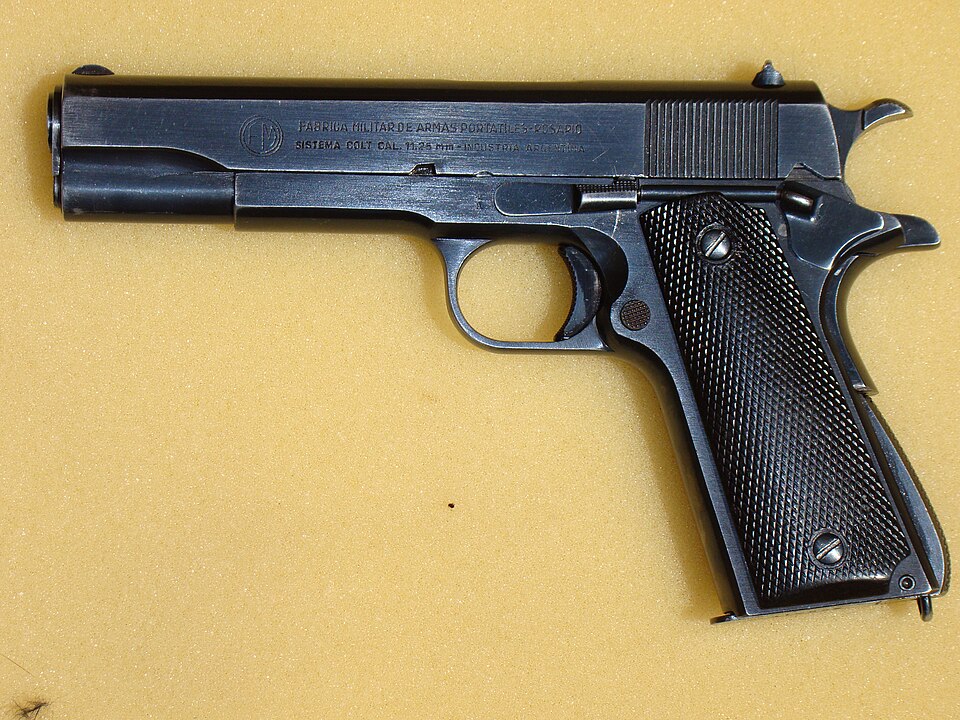
The later M1911A1 did not replace the original concept so much as refine it. Changes to the trigger, sights, hammer, and grip geometry made it easier to run under stress while preserving the same locked-breech, single-action system that had already proved itself. More than a century later, the design still defines service-pistol durability in American memory.
2. Beretta M9
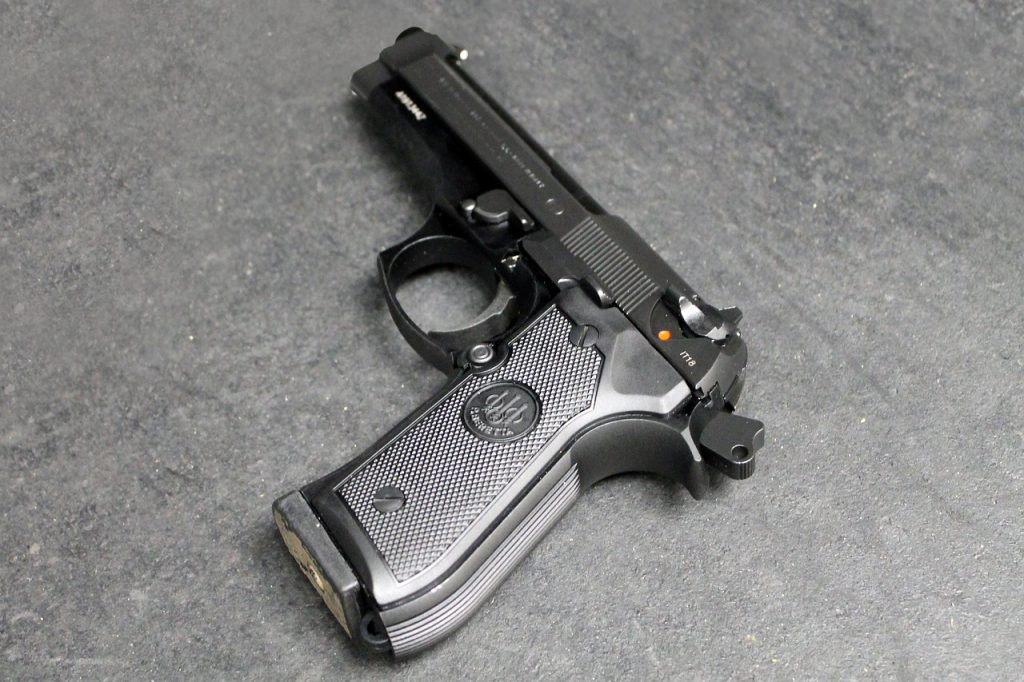
The M9 represented a major Army turn away from .45-caliber tradition and toward standardization. The pistol was adopted in 1985 as part of a broader Department of Defense push for a common sidearm and a NATO-standard 9mm cartridge, replacing worn M1911A1 inventories with a higher-capacity platform. The Beretta also brought a different handling philosophy: a 15-round magazine, double-action first shot, ambidextrous safety-decocker, and a design modified for interchangeability across large military stocks. Trials exposed it to mud, sand, snow, saltwater, and severe temperature swings, while later Army experience showed that the pistol’s reputation often rose or fell with magazine quality and maintenance discipline more than with the core design itself.
3. SIG Sauer P228 (M11)
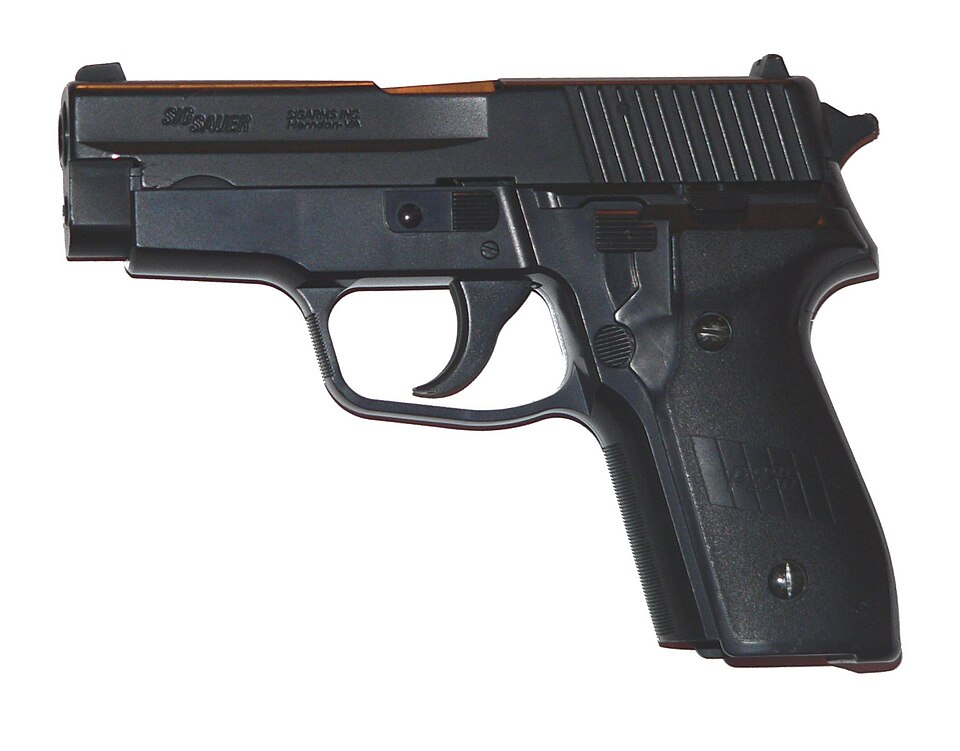
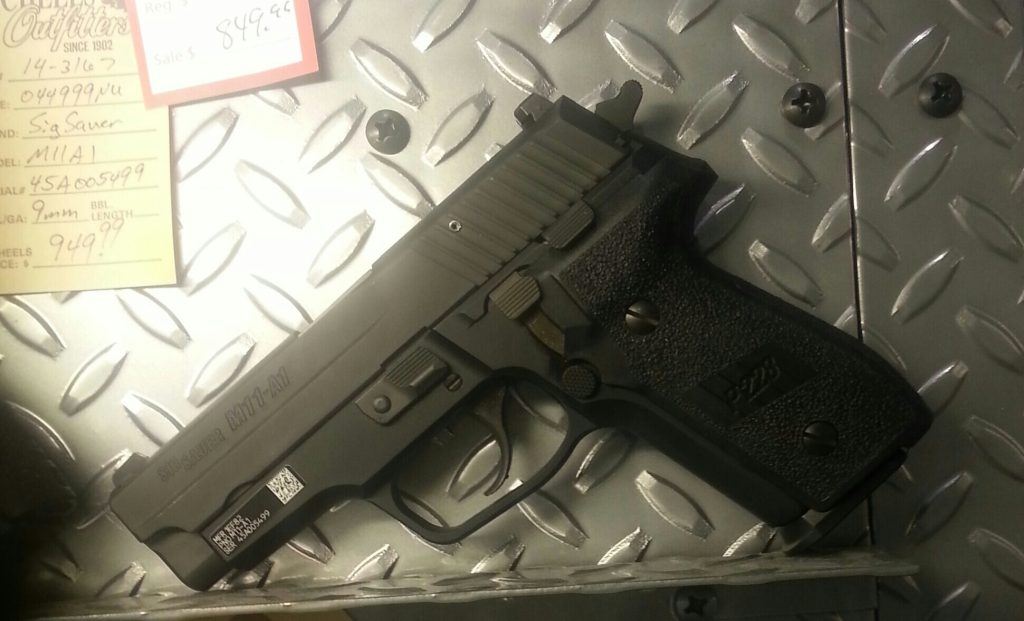
The M11 mattered because the Army never truly stopped needing a smaller pistol. Investigators, aircrews, and other personnel operating in tight spaces required something more compact than the M9, and the P228 filled that niche with unusual staying power. Army testing recorded 15,000 rounds with one malfunction, a result that explains why the compact SIG remained relevant for years after the full-size M9 became standard. It quietly proved that sidearm doctrine is rarely solved by one size alone.
4. Colt Single Action Army
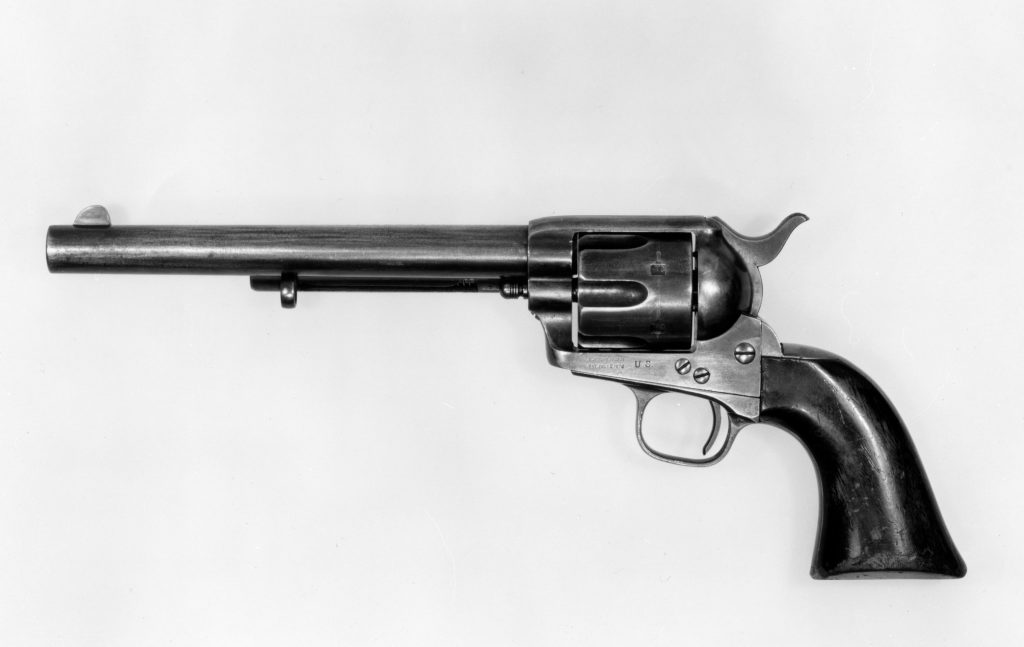
The 1873 Colt Single Action Army was a revolver with a simple job: be stronger and more durable than what came before. Its solid frame answered concerns raised by earlier open-top designs, and that mechanical confidence helped secure its Army place. Its official reception also came with unusually direct praise. Capt. John R. Edie wrote, “I have no hesitation in declaring the Colt revolver superior in all aspects, and much better adapted to the wants of the Army than the Smith & Wesson.” Long after its formal issue era, the revolver’s straightforward mechanism and robust construction kept it lodged in the American military imagination.
5. Colt and Smith & Wesson M1917 Revolvers
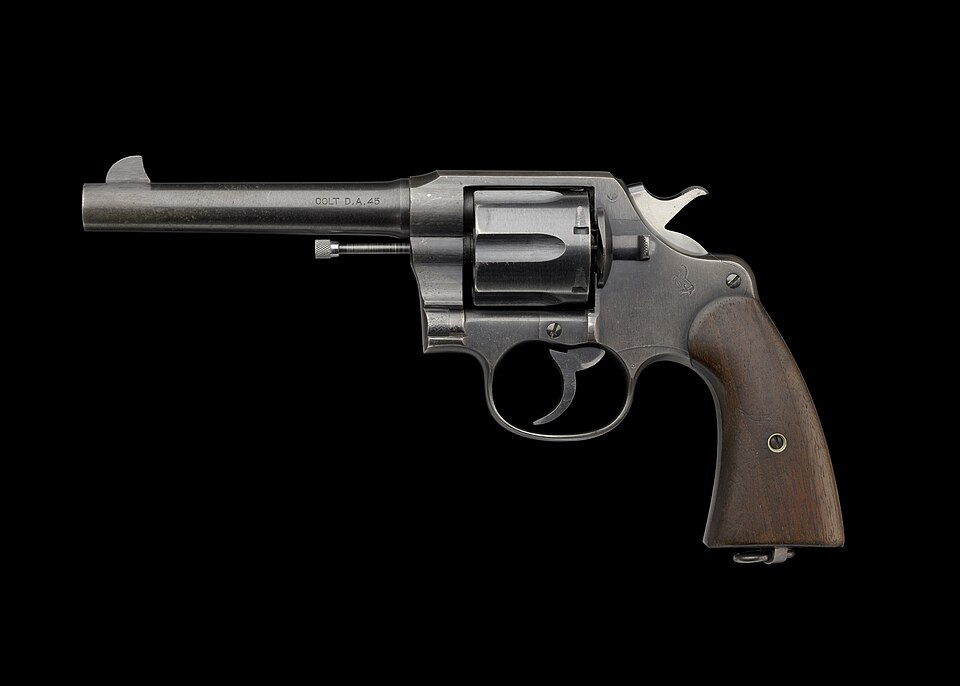
The M1917 revolvers were wartime improvisation done properly. When M1911 production could not keep pace, the Army turned to large-frame revolvers adapted to fire .45 ACP with half-moon clips, preserving ammunition commonality without waiting for pistol output to catch up. The scale was substantial: Colt delivered more than 150,000 and Smith & Wesson more than 153,000 between 1917 and 1919. Their real engineering legacy was not elegance, but the proof that a rimless automatic-pistol cartridge could be made practical in a revolver through smart clip design.
6. SIG Sauer M17 and M18
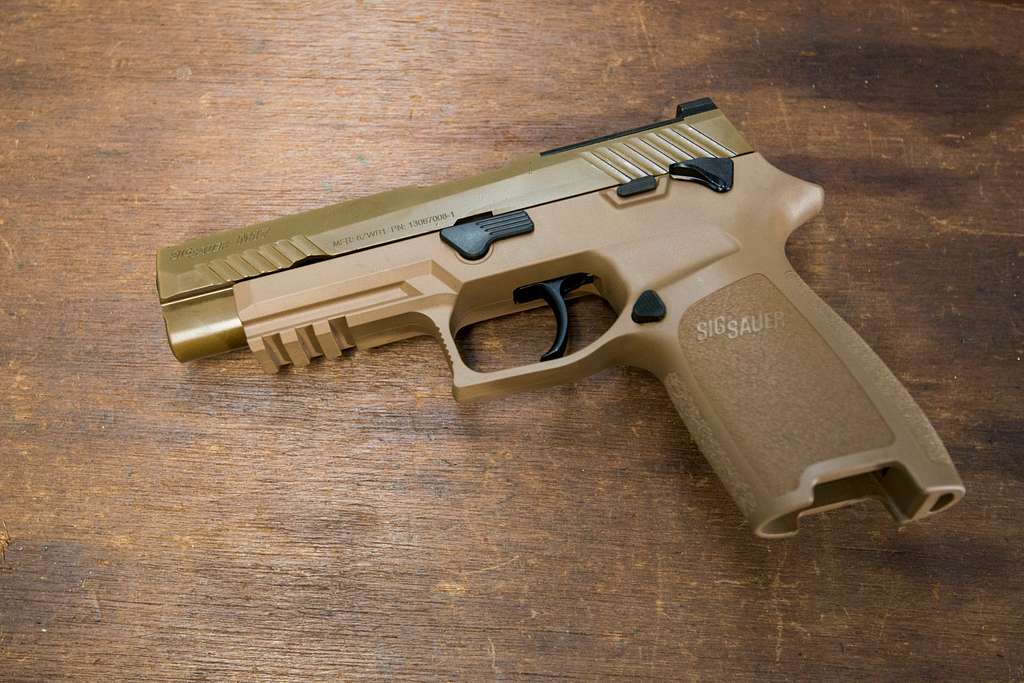
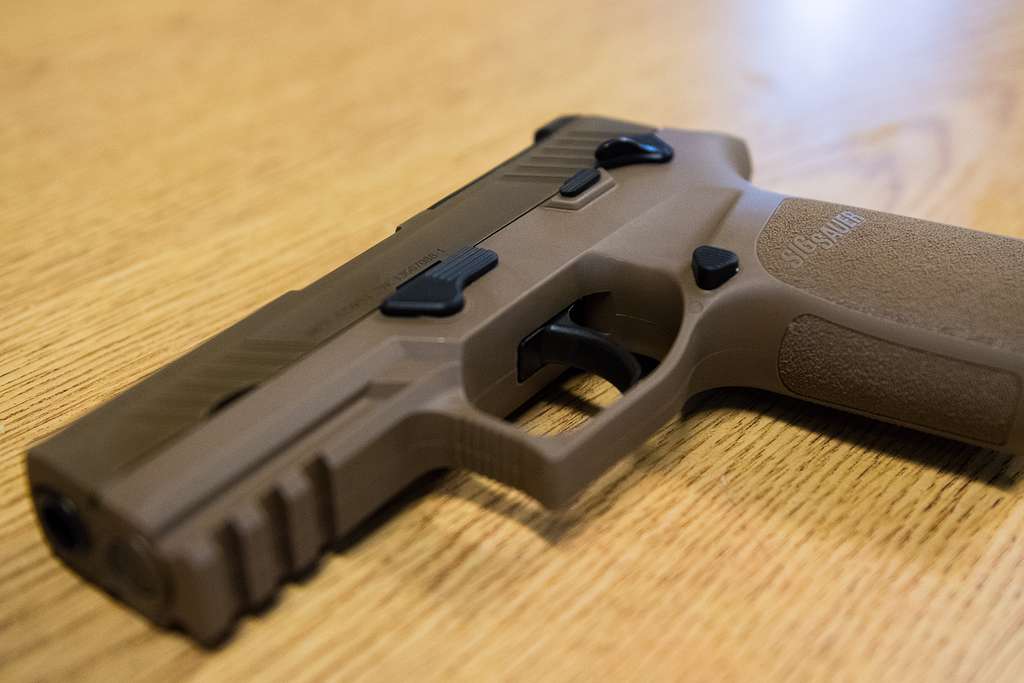
The Army’s current sidearm family shifted the conversation from one handgun to one serialized core that can support multiple configurations. Officially, the system fields both full-size and compact variants, and the Army identifies the M18 as the M11’s replacement while the larger M17 covers standard issue roles. That modular approach is the real story. The M17 uses a 17-round standard magazine, while the family’s removable fire control unit and swappable grip modules changed how the Army thinks about fit, sustainment, and role-specific setup. More recent Army-approved enhancements built around the Fire Control Unit have pushed the platform even further toward configurable service use rather than fixed-form issue.
7. The Army’s Compact-Pistol Requirement
One of the clearest patterns in Army handgun history is that compact carry keeps returning, even when the official service pistol changes. Vehicle crews, aviators, investigators, and senior leaders have repeatedly driven the same requirement: a sidearm that is easier to carry in confined spaces without abandoning service-grade capability. That pattern links the M11 directly to the M18 and shows how Army handgun evolution often comes down to mission fit rather than nostalgia. The Army has repeatedly treated compact dimensions as a real operational category, not a reduced version of the main gun.
These seven entries trace more than a sequence of pistols. They show the Army adjusting to hard lessons about caliber, ergonomics, logistics, capacity, and maintainability, then turning those lessons into issue decisions that lasted for decades. The iconic Army handgun is usually the one that solved a problem the institution could not ignore. That is why some revolvers became legends, why the 1911 became a standard, why the M9 defined an era, and why the M17/M18 family now represents the Army’s most flexible answer yet.


