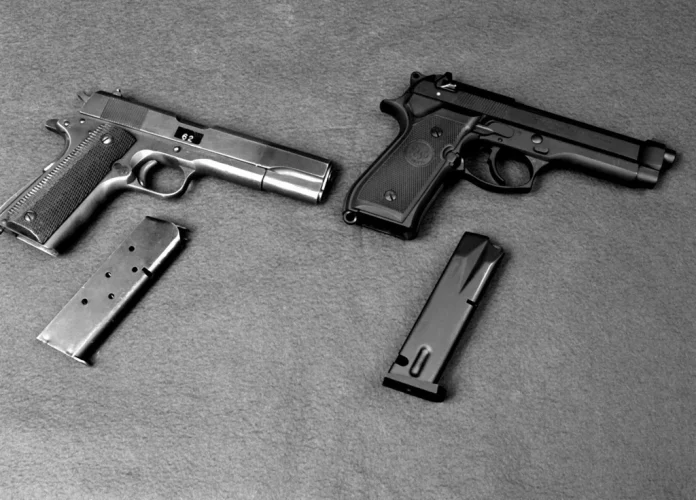
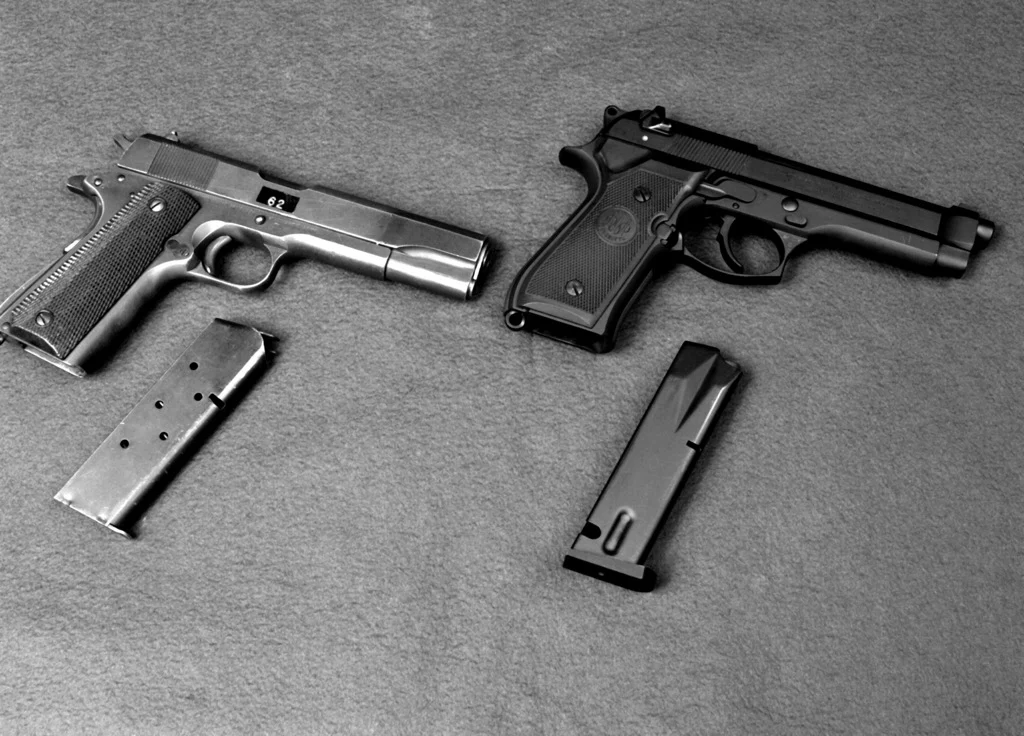
Army sidearms are often remembered by caliber, silhouette, or the wars they accompanied. The more revealing measure is influence: which pistols changed how armies tested, maintained, issued, and standardized handguns afterward. A few designs stand above the rest because they forced hard institutional lessons. Some won on durability, some on logistics, and some by exposing weaknesses that later procurement systems had to fix.
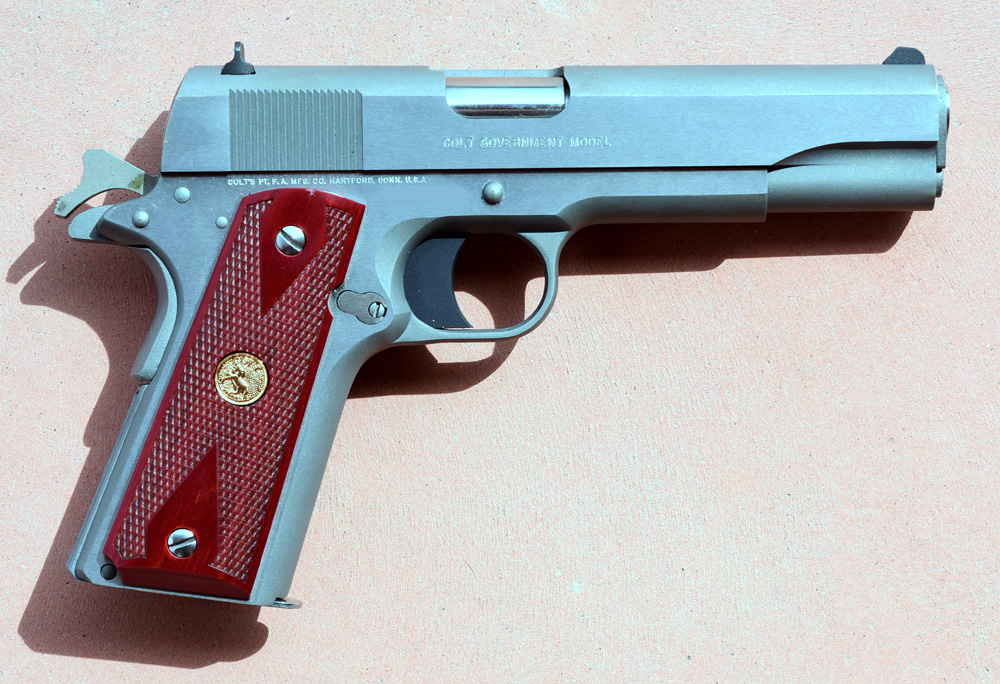
1. Colt M1911 and M1911A1
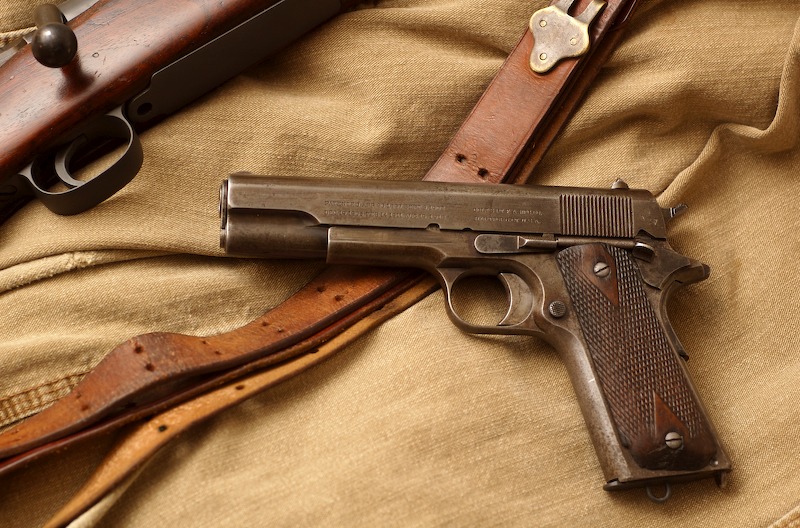
The M1911 became the American benchmark because it turned the semi-automatic pistol from a promising concept into a dependable service standard. Adopted in 1911, it followed a period when the Army had lost confidence in smaller-caliber revolvers and demanded a sidearm in .45 caliber. That requirement shaped not only the pistol itself, but the Army’s broader thinking about stopping power, combat sidearms, and test criteria for decades.
The design also mattered mechanically. Browning’s short-recoil, locked-breech system gave the Army a pistol that could be built in quantity, field-stripped without tools, and kept serviceable through long institutional use. During pre-adoption testing, the platform endured 6,000 rounds in grueling trials, helping establish the idea that a military handgun had to prove reliability under sustained stress rather than simply perform well on a clean range.
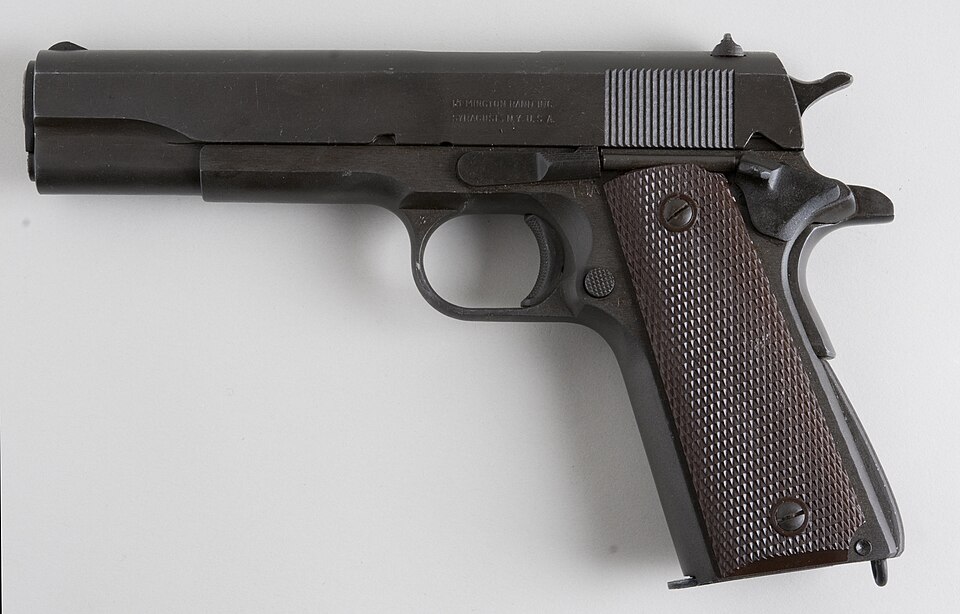
The later M1911A1 revisions showed another lesson the Army would keep revisiting: a successful sidearm can be modernized without discarding its whole training and support ecosystem. Changes to the trigger, grip shape, sights, and grip safety refined user fit while preserving the core architecture. That “improve the interface, keep the machine” logic became a recurring pattern in later sidearm programs.
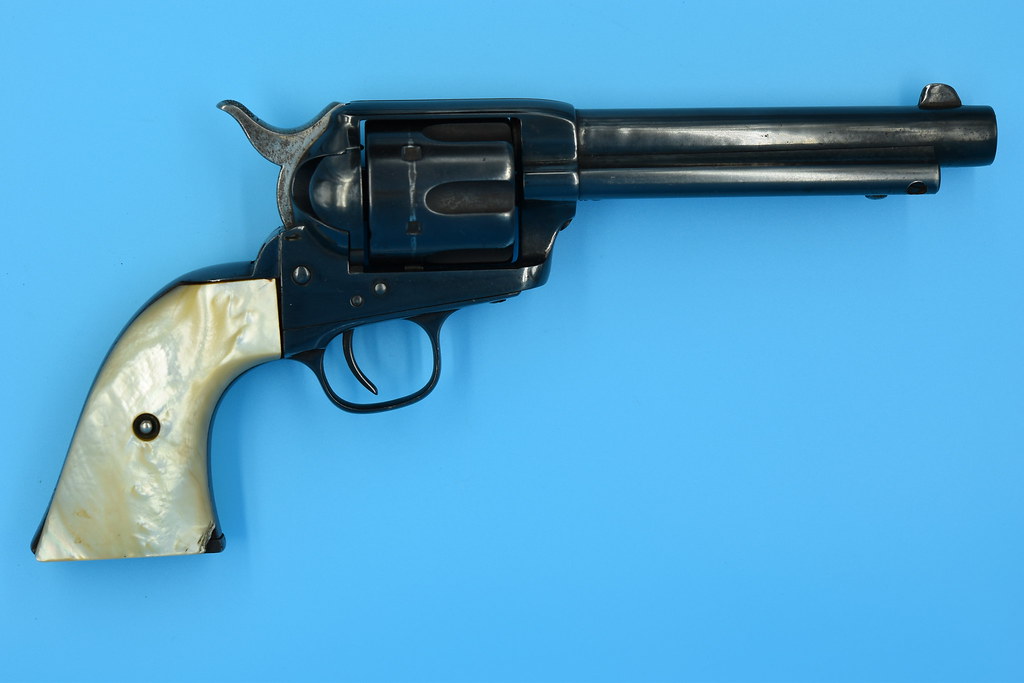
2. Colt Single Action Army Model 1873
Before self-loading pistols took over, the Model 1873 established a different rule that never fully disappeared: a service sidearm must keep working under rough handling, thin maintenance support, and uneven training standards. Its influence came less from speed than from institutional trust.
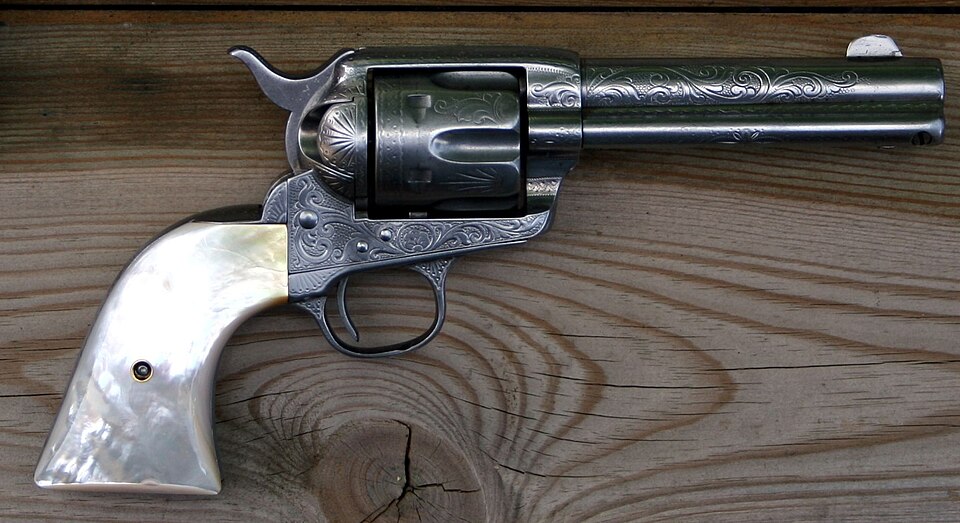
The revolver’s strong frame, metallic-cartridge operation, and straightforward manual of arms made it an Army handgun that could survive hard use in remote conditions. That mattered in an era when armorer support was limited and mechanical simplicity often outweighed theoretical performance advantages. Later pistol programs repeatedly ran into the same reality: a handgun that is easy to understand and hard to disable by neglect remains valuable even after more advanced mechanisms appear.
Its long shadow shows up whenever procurement swings back toward durability, conservative controls, and maintenance tolerance. The Single Action Army helped define the Army preference for sidearms that were less about finesse and more about predictable service life.
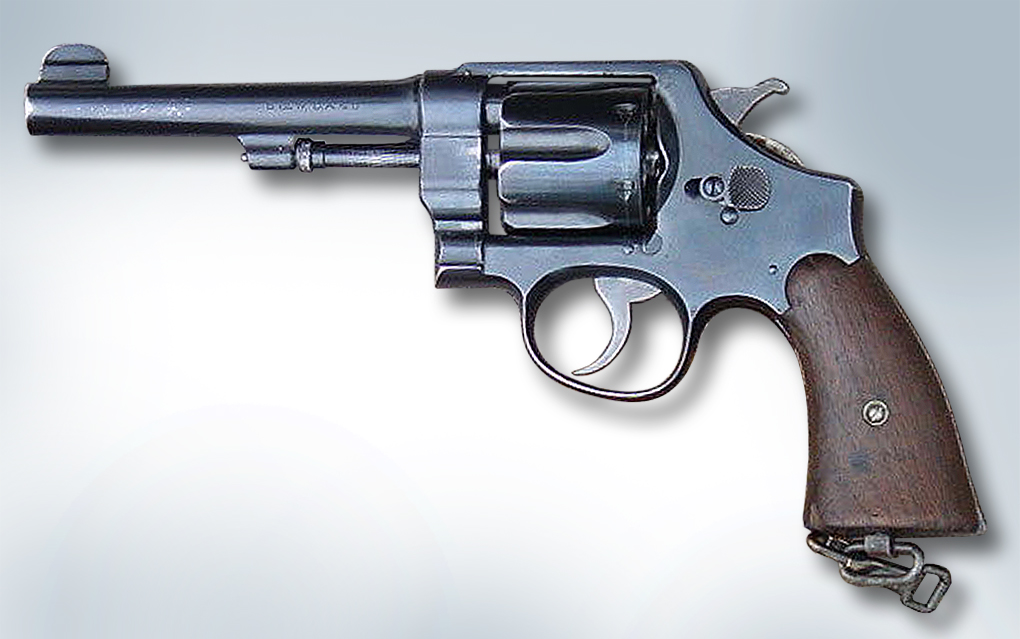
3. Colt and Smith & Wesson M1917 Revolvers
The M1917 revolvers became important because they solved a wartime production problem without creating an ammunition problem. When M1911 output could not satisfy demand, the Army did not abandon cartridge commonality. Instead, it adapted revolvers to fire .45 ACP with half-moon clips.
That was more than a stopgap. It was a lesson in interface engineering under pressure. By making a rimless automatic-pistol cartridge work in a revolver, the Army preserved supply-chain simplicity while expanding production options. In wartime, that kind of systems thinking can matter more than choosing the technically purest platform.
The scale was substantial, with production reaching more than 300,000 combined revolvers. The M1917s showed that a sidearm program could remain coherent even when the hardware had to change, provided the ammunition, training logic, and maintenance concept stayed manageable.
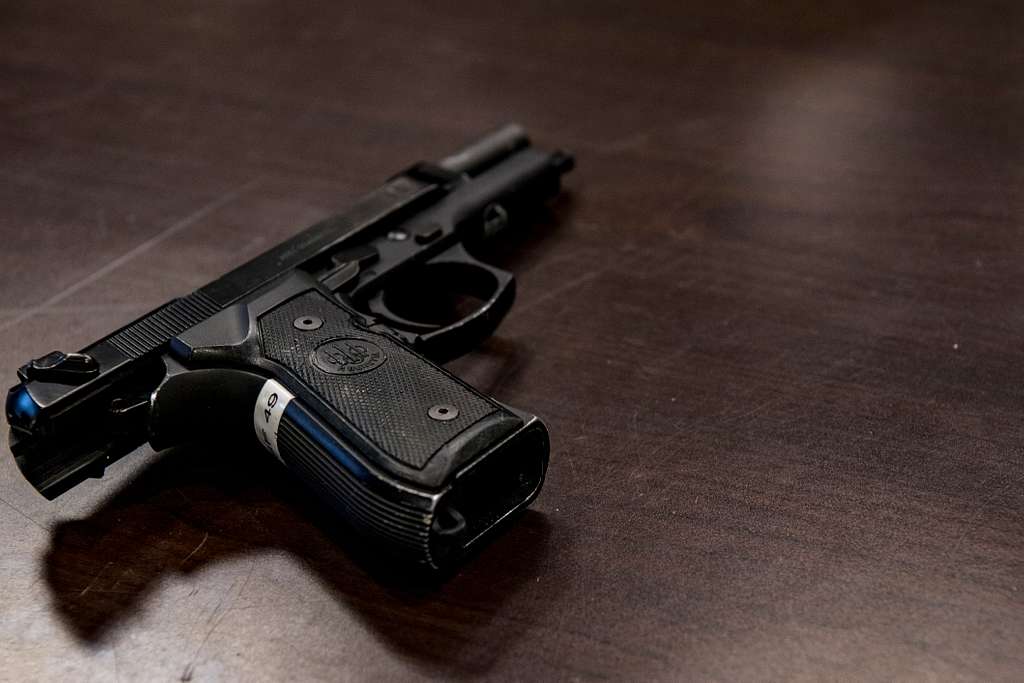
4. Beretta M9
The M9 reshaped Army pistol thinking because it arrived as part of a larger standardization problem, not just a search for a new handgun. The push behind the program included a scattered inventory of more than 25 different makes and models of handguns and over 100 ammunition types. The M9 era therefore made sidearm procurement look more like systems engineering than brand selection.
Its adoption normalized modern expectations for a high-capacity 9×19mm service pistol with double-action operation and NATO ammunition compatibility. Reliability discussion became more quantitative, centered on mean rounds between failure and parts life. Just as important, the pistol’s long service life showed that readiness does not depend on one headline number. Magazines, springs, locking blocks, inspection schedules, and ammunition all interact.
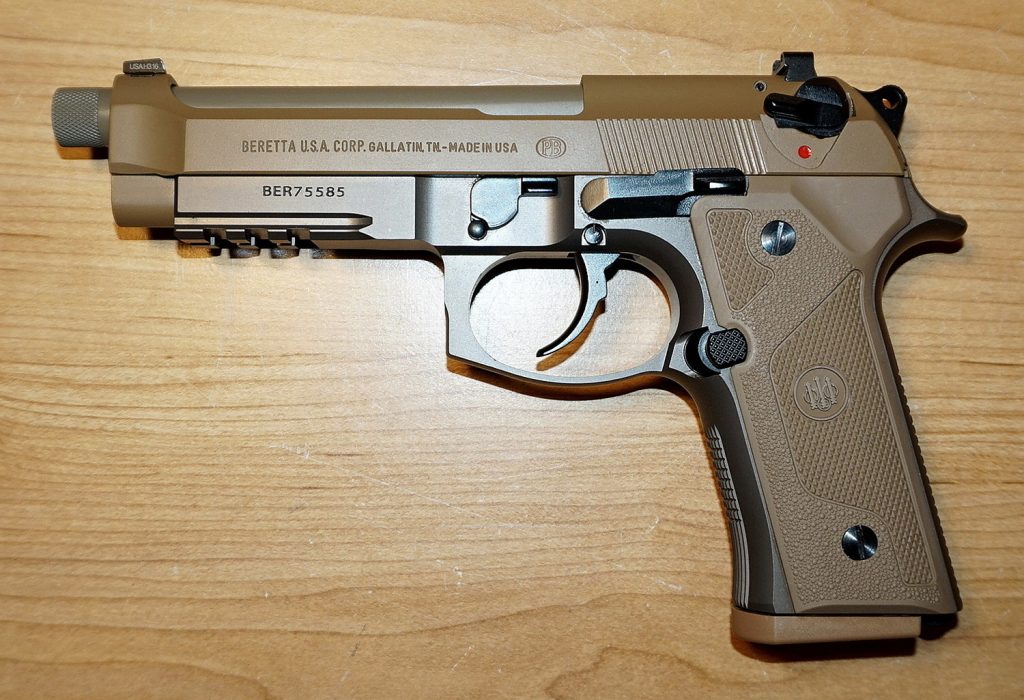
The design also forced the Army to confront fatigue and safety as long-term engineering issues rather than one-time test outcomes. Oversight records documented 14 slide failures, and the resulting fixes helped cement a broader lesson: a service pistol is a package of parts, materials, and ammunition behavior, not just a receiver and barrel. Later expectations for accessory rails, improved magazines, and sustainment planning all grew from that era.
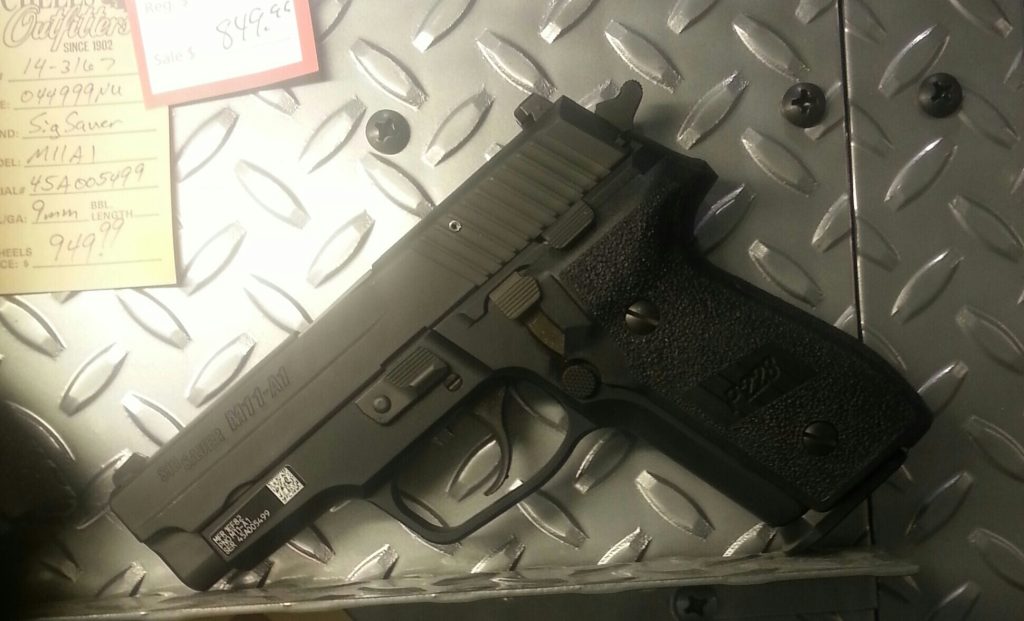
5. SIG Sauer M11
The M11 mattered because it proved the Army could support a specialized sidearm without collapsing back into pre-standardization clutter. Based on the compact P228 pattern, it served users whose missions did not always fit a full-size pistol. Its influence was less visible than the M9’s, but important. The M11 helped legitimize role-specific procurement inside a disciplined logistics structure. That balance is difficult: too much variation creates inventory chaos, but forcing every user into one size and control layout can reduce real-world effectiveness. Endurance testing gave the pistol much of its credibility. In formal evaluation, three pistols completed 15,000 rounds with one stoppage. That performance reinforced a point armorers already understood: compactness only matters if interchangeability, service life, and reliability remain intact.
There is a useful pattern across all five pistols. The Army’s most influential sidearms were not always the most glamorous, and they were not always the final answer. They mattered because each one forced a rule change. The M1911 set a baseline for power and durability, the 1873 revolver proved the value of rugged simplicity, the M1917s preserved logistics under pressure, the M9 turned reliability into a full-system discipline, and the M11 showed that specialization could exist without disorder. Together, they explain why Army pistol history is really a story about engineering standards that kept moving forward.


