Military handguns rarely stay confined to military use. Features tested in service pistols often migrate into police sidearms, commercial carry guns, and competition designs, where reliability, ergonomics, and ease of maintenance matter just as much as raw firepower.
The history of the military sidearm is also a history of engineering tradeoffs. Capacity, cartridge power, controllability, durability, and adaptability have all taken turns as the defining requirement. These pistols stand out not simply because they were issued, but because their design ideas kept showing up in the handguns that followed.
1. Colt Walker
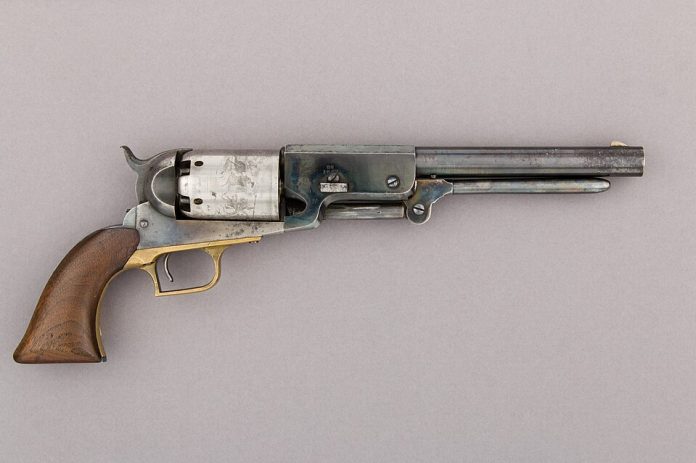
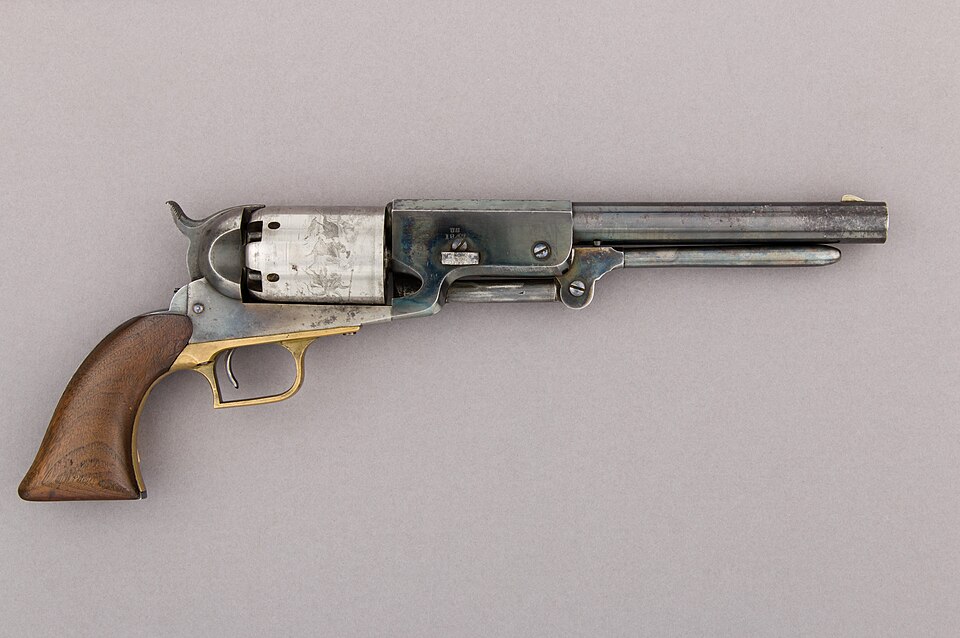
The Colt Walker helped establish the military revolver as a serious battlefield sidearm rather than a last-resort novelty. Introduced in 1847, it delivered unusual power for its era and showed what a repeating handgun could offer mounted troops operating at close range.
Its enormous size limited practicality, but its influence was real. The Walker demonstrated that soldiers valued multiple ready shots and substantial striking power in a belt weapon, a combination that shaped later cavalry revolvers and helped push handgun design away from single-shot patterns.
2. Remington New Model Army
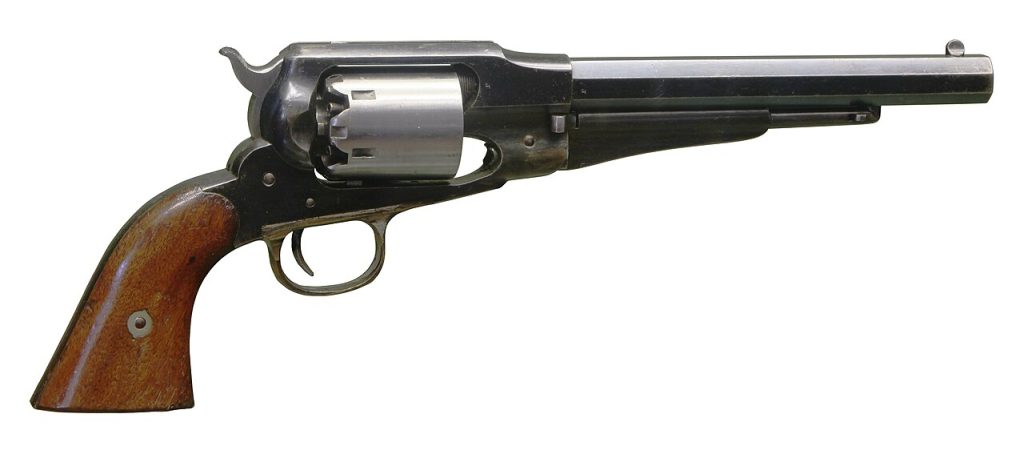
The Remington New Model Army became a benchmark for rugged revolver construction during the Civil War. Its solid-frame layout earned a reputation for field durability, and that mattered in an age when sidearms had to tolerate dirt, weather, and hard service with minimal support.
That emphasis on structural strength did not disappear with cap-and-ball revolvers. It carried forward into the broader expectation that military handguns should survive rough handling and still function, a principle that remains central to service-pistol design.
3. Colt Single Action Army
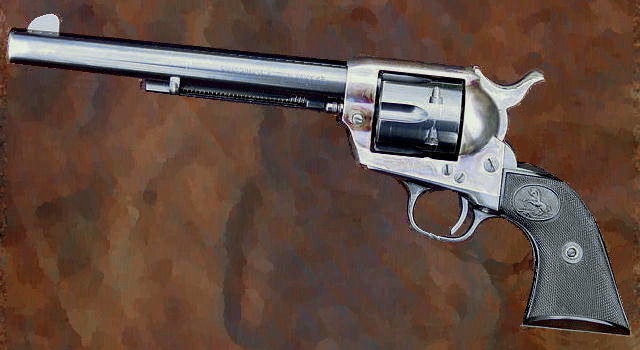
The Colt Single Action Army, adopted in 1873, became one of the defining American military sidearms of the frontier period. Chambered in .45 Colt, it paired a simple action with a durable platform that soldiers could maintain in difficult conditions.
Its long shadow falls less on direct mechanical descendants than on the military standard it set: a service handgun had to be robust, easy to understand, and chambered for a cartridge viewed as authoritative at close range. That expectation would later shape the demand for larger-caliber military pistols in the early twentieth century.
4. Colt M1892
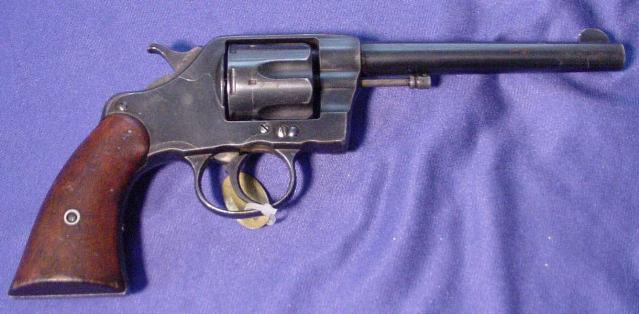
The Colt M1892 marked a clear step toward modern revolver handling. Its swing-out cylinder sped reloading compared with older gate-loaded designs, showing how military users were beginning to prioritize faster operation and more efficient manual handling.
That shift mattered. Even though later semi-automatics would eclipse revolvers in service, the M1892 reflected a broader design lesson: a combat sidearm had to reduce the user’s workload. Faster reloads, simpler manipulation, and smoother operation would become recurring themes in handgun engineering.
5. Colt M1911
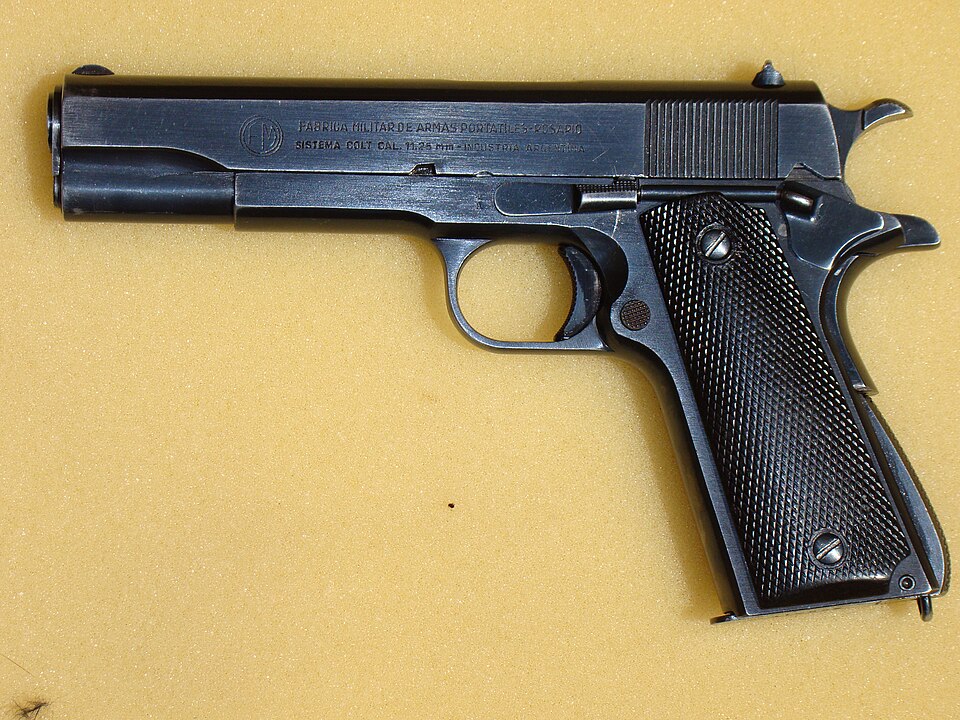
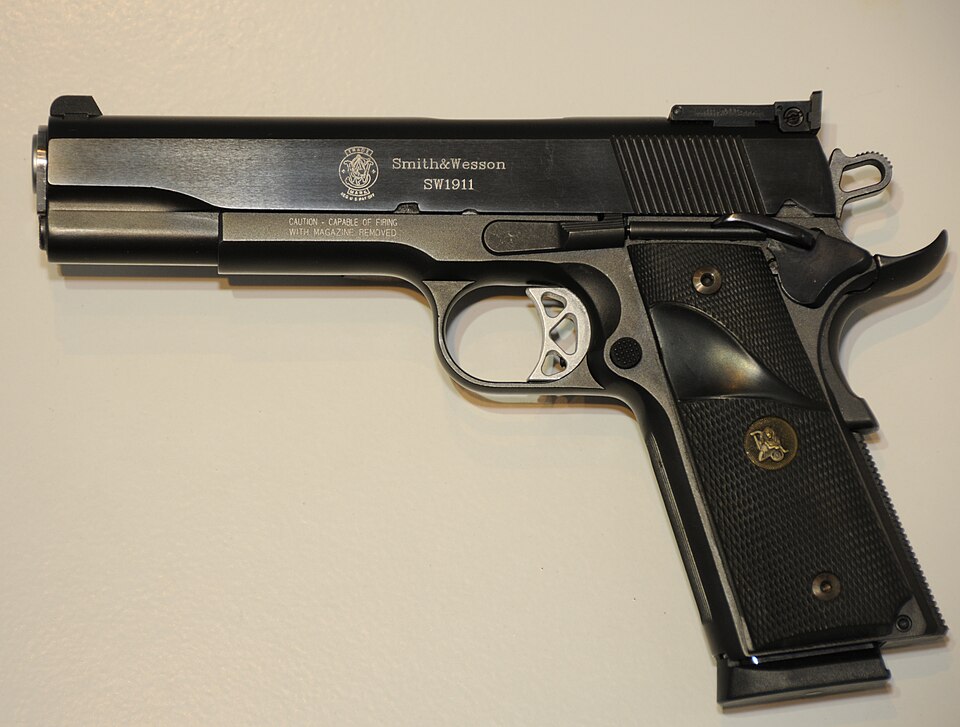
Few military pistols have shaped modern handgun design more than the M1911. Entering U.S. service in 1911 and remaining a standard sidearm for decades, it combined a detachable box magazine, a powerful .45 ACP chambering, and a slim single-stack profile that many shooters still regard as exceptionally manageable.
The pistol’s influence runs deep. Its short-recoil operating system, grip angle, frame-mounted safety, trigger geometry, and takedown layout all left a mark on later designs. Even handguns that rejected its steel frame or single-action format often borrowed lessons from its balance and shootability. According to U.S. Army sidearm service records, the platform served from 1912 to 1985, a longevity that turned it into a design reference point rather than just a period weapon.
6. Browning Hi-Power
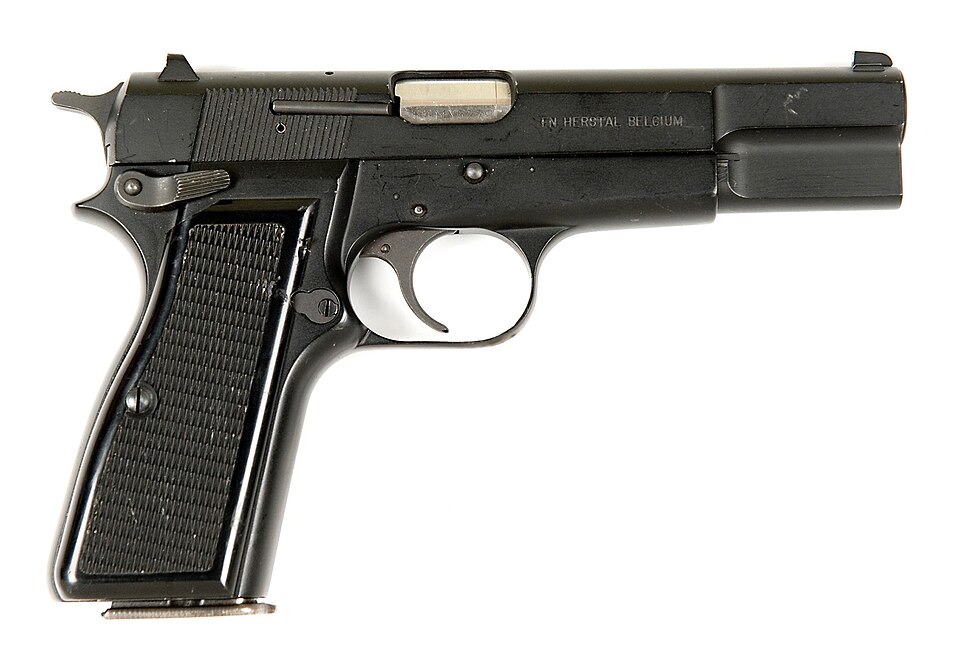
The Browning Hi-Power showed how much a military pistol could gain from higher magazine capacity without becoming unmanageable. Introduced in 1935, it helped popularize the double-stack 9mm format that would later define the modern service handgun.
Its combination of ergonomics, capacity, and relatively compact dimensions influenced generations of pistols. Long before “wonder nines” became a common term, the Hi-Power had already established the value of carrying more ammunition in a sidearm that still pointed naturally and handled well.
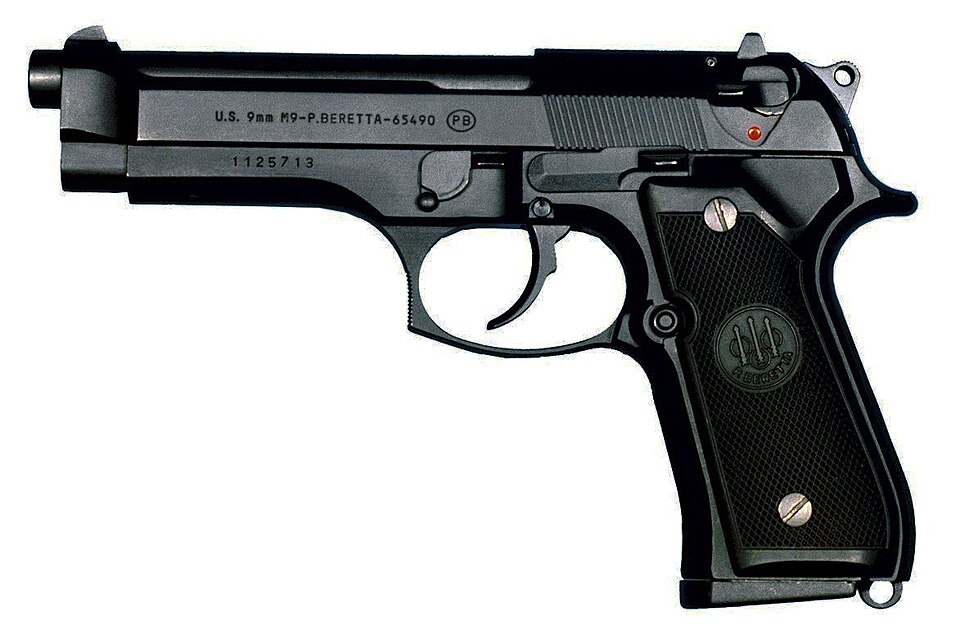
7. Beretta M9
The Beretta M9 signaled a major doctrinal and engineering shift when it replaced the M1911 as the standard U.S. military sidearm in 1985. With a higher-capacity 9mm magazine and a double-action/single-action system, it embodied the late twentieth-century move toward NATO-standard ammunition and larger onboard capacity.
Its influence reached beyond adoption numbers. The M9 familiarized generations of American service members with an alloy-frame semi-automatic pistol featuring an open-slide design, slide-mounted controls, and a high-capacity magazine. It also helped normalize 9mm as the service standard in U.S. military practice for decades. The Army ultimately moved on as the pistol fleet aged, with the replacement program noting that many M9s were approaching the end of service life.
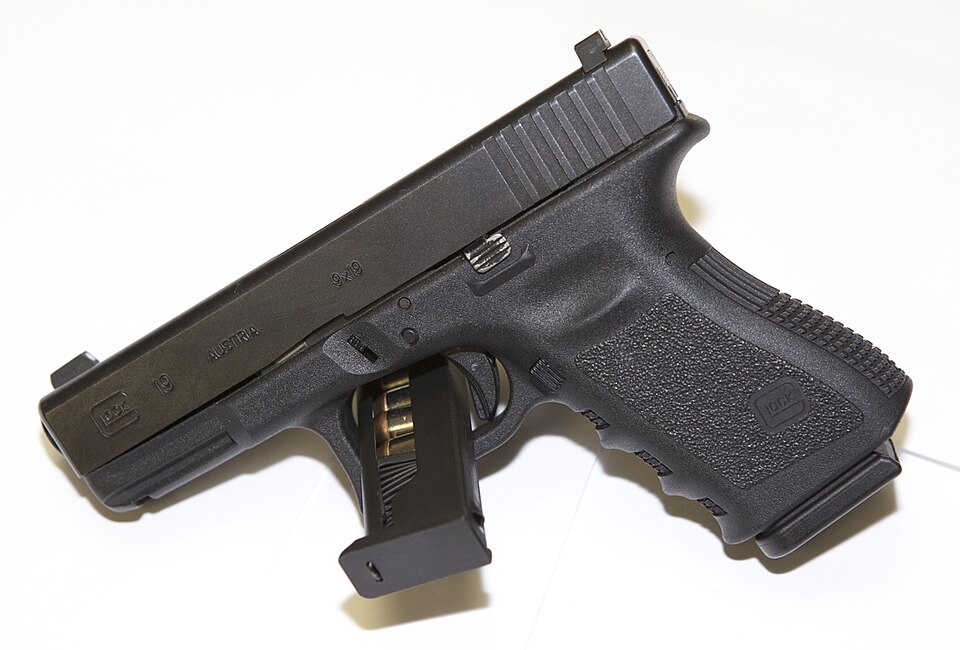
8. Glock 19
The Glock 19 was not the standard U.S. military sidearm, but it became one of the most influential military-associated pistols of the modern era through use by special operations elements and widespread institutional adoption elsewhere. Its polymer frame, striker-fired system, and low-parts-count construction became a template copied across the handgun market.
What made the design so important was not novelty alone, but execution. It proved that a lightweight pistol could also be durable, simple to maintain, and consistent in trigger operation. Many later service pistols followed the same formula, even when they added manual safeties, modular grip systems, or different ergonomics.
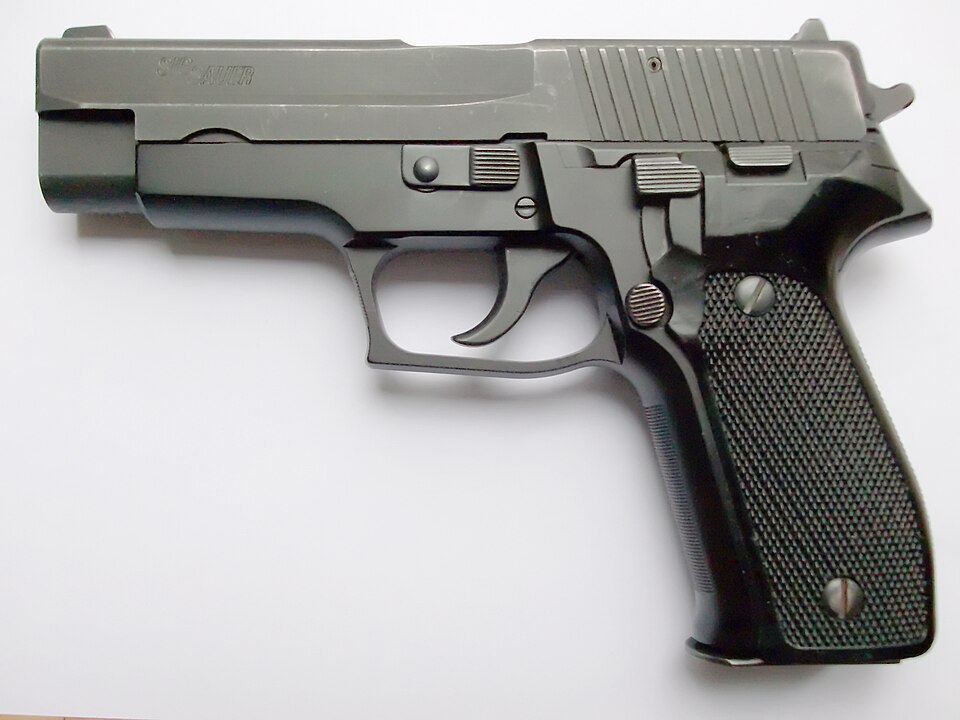
9. SIG Sauer P226
The SIG Sauer P226 earned its standing through durability, accuracy, and its association with demanding military users, especially naval special operations. It represented a mature form of the double-action/single-action service pistol, pairing full-size handling with strong reliability credentials.
Its legacy is visible in the continued respect for duty pistols built around long service life and refined metal-frame construction. Even as polymer striker-fired guns gained ground, the P226 remained proof that military sidearms were still judged by mechanical endurance and shootability under hard use.
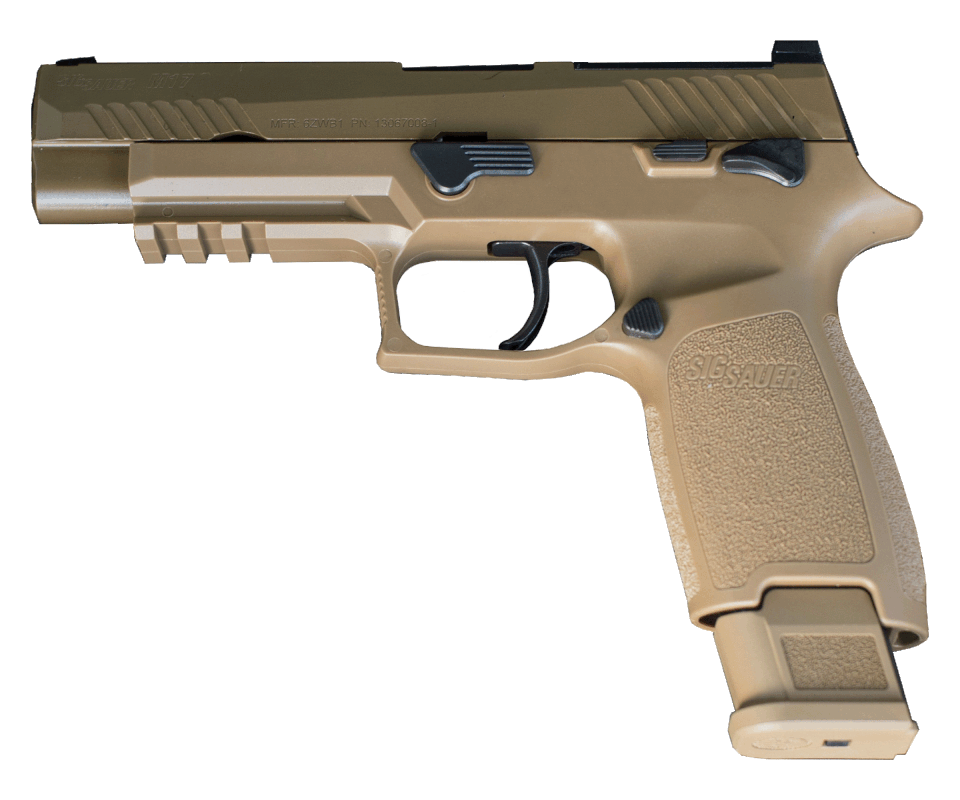
10. SIG Sauer M17 and M18
The M17 and M18 reflect the current military answer to a century of sidearm lessons: make the pistol adaptable. Selected through the XM17 Modular Handgun System competition and adopted in 2017, these pistols are built around the P320’s removable fire control unit, allowing the core serialized component to move between different grip modules and configurations.
That modularity is the defining design leap. The competition requirements emphasized ergonomics, ambidextrous controls, accessory compatibility, and performance standards that included a 90 percent hit probability on a 4-inch circle at 50 meters over the weapon’s lifespan. Those demands reflected a modern view of the handgun as a configurable system rather than a fixed object. In that sense, the M17 and M18 did more than replace the M9; they formalized adaptability as a military design priority.
Taken together, these sidearms show a clear progression. Early revolvers proved the value of repeat fire and mechanical strength, twentieth-century pistols refined reliability and capacity, and contemporary service handguns prioritize fit, accessory integration, and modular architecture.
Modern handgun design still carries those layers of influence. Even when materials, controls, and internal systems differ, the military sidearm remains a compact engineering problem shaped by the same enduring demands: durability, usability, and readiness under pressure.


