The Army’s service pistol has rarely been the center of attention, yet its design changes have repeatedly altered how soldiers train, carry gear, and solve close-range problems. A sidearm is the weapon meant for the moment a larger plan breaks down, which is why even small technical shifts can leave a long trail across doctrine and maintenance.
That pattern runs from the earliest standardized pistols to today’s modular handguns. The biggest changes were not always dramatic on the range. Many of them quietly rewired manufacturing, reliability testing, ammunition planning, and the way a compact weapon fits into modern combat.
1. Early contract pistols made the sidearm part of industrial standardization
The Army’s first major sidearm shift was not about firepower alone. Early 19th-century contract pistols helped push the idea that weapons should be repairable through interchangeable parts rather than hand-fitted craftsmanship. That reduced dependence on specialized gunsmithing at scattered posts and made the pistol part of a larger American manufacturing story.
For a military spread across long distances, that mattered as much as raw performance. A sidearm that could stay in service through standardized maintenance was already becoming a systems problem, not just a hardware problem.
2. Revolvers turned the handgun into a practical emergency weapon
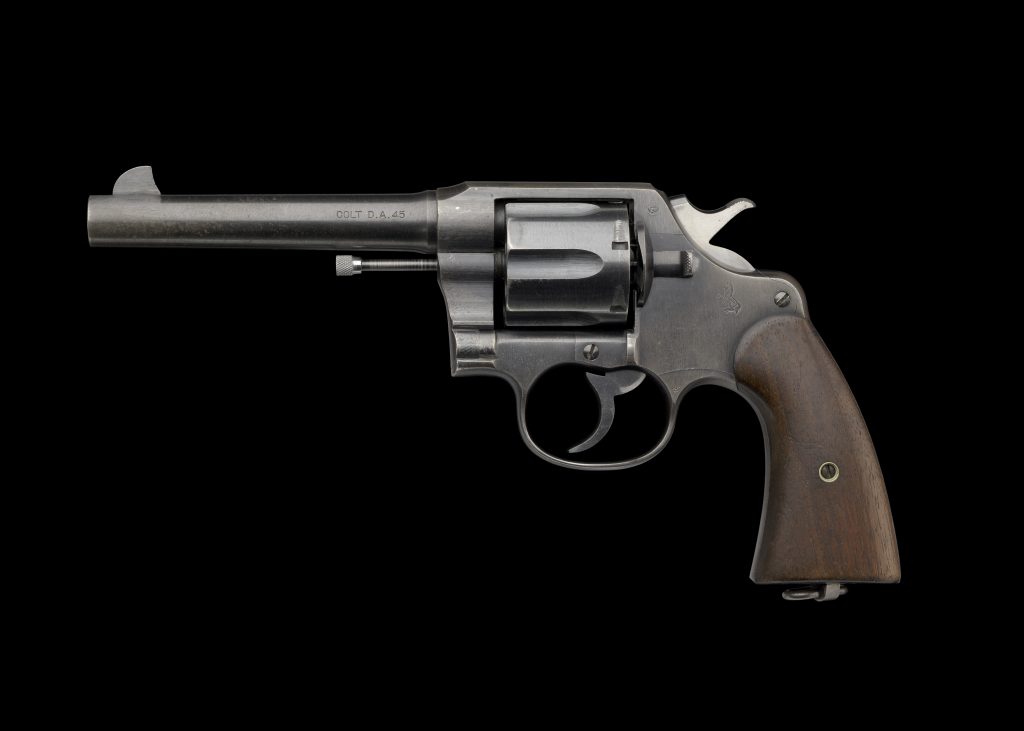
The Army’s move to revolvers in the mid-1800s delivered the clearest leap in immediate capability: multiple shots before reloading. That seems obvious now, but it changed what the pistol could do in cramped, fast-moving situations where a long gun was awkward to bring to bear.
Mounted troops benefited especially from designs that sped up handling and reloads. The Schofield’s top-break layout became known as a fast-reloading mounted sidearm, showing how mechanical layout could directly shape usefulness in motion. From that point forward, the Army no longer treated the sidearm as a single-shot afterthought.
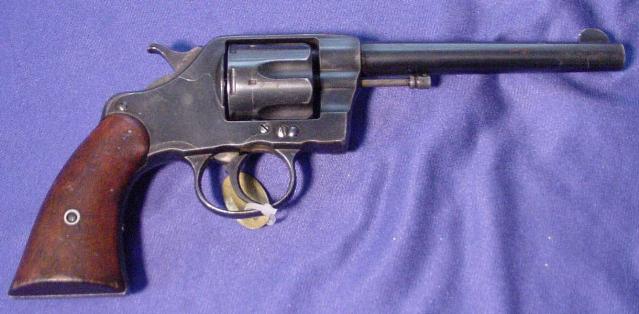
3. The Colt M1892 proved that trigger system and cartridge had to work together
The Colt M1892 introduced a more modern revolver format with double-action fire and a swing-out cylinder. That meant a soldier could fire without changing grip and reload more efficiently than with older gate-loaded revolvers. It was a genuine handling upgrade.
But the weapon also exposed a deeper procurement lesson. The .38 Long Colt cartridge did not meet Army expectations for effectiveness, and that shortfall pushed the service to think of pistol performance as a combination of mechanism and ammunition. The handgun was no longer judged only by whether it cycled or fired; it had to deliver the desired result as a complete package.
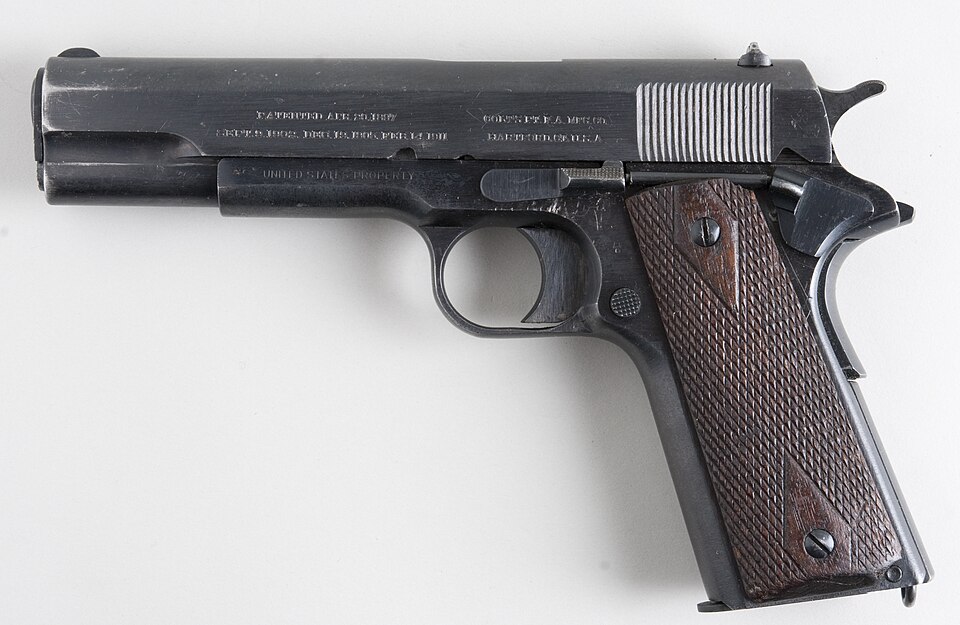
4. The M1911 locked in the semi-auto template for generations
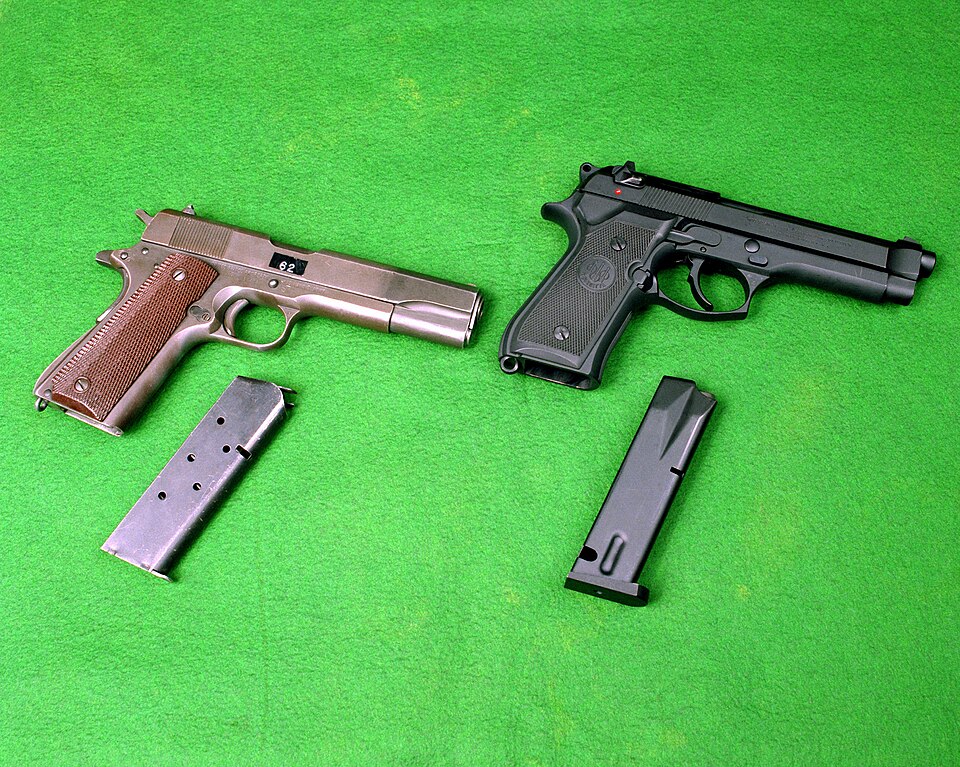
When the Army adopted the M1911, it established the service pistol formula that dominated for decades: semi-automatic, magazine-fed, and built for repeatable handling. In the famous Army test phase, Colt’s candidate reportedly fired 6,000 rounds with no stoppages while a rival design logged 37, helping cement reliability as the standard by which service pistols would be judged.
The pistol’s long service life also normalized the manual of arms that still defines handgun training. Loading from detachable magazines, clearing stoppages, managing recoil across strings of fire, and maintaining pistols at scale all became institutional habits. The later M1911A1 refinement improved ergonomics, but the larger shift had already happened: the Army had accepted the semi-auto as its long-term baseline.
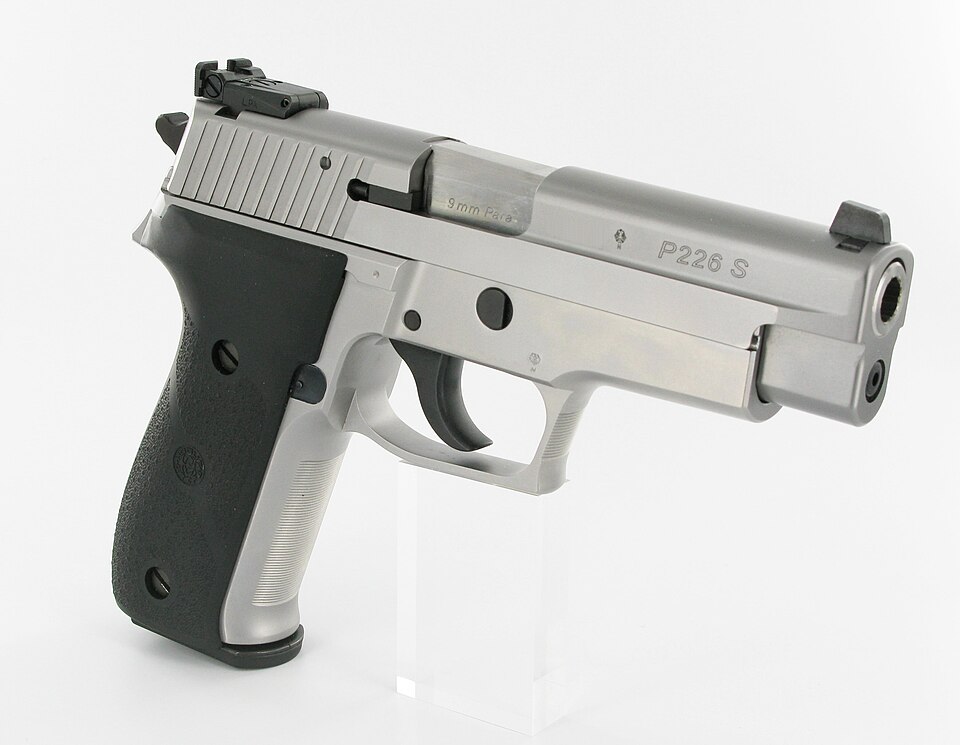
5. The XM9 trials made reliability a measurable requirement
By the 1980s, the Army was no longer choosing a pistol by reputation alone. During the XM9 process, reliability was converted into hard metrics such as mean rounds between failure. In the final phase, the SIG P226 posted 2,877 MRBF while the Beretta 92F reached 1,750.
Just as important, abuse testing became structured and comparative. Mud and salt water immersion tests, temperature extremes, and other standardized trials turned sidearm evaluation into an engineering discipline. That changed procurement language permanently. A service pistol was now expected to justify itself in numbers, not anecdotes.
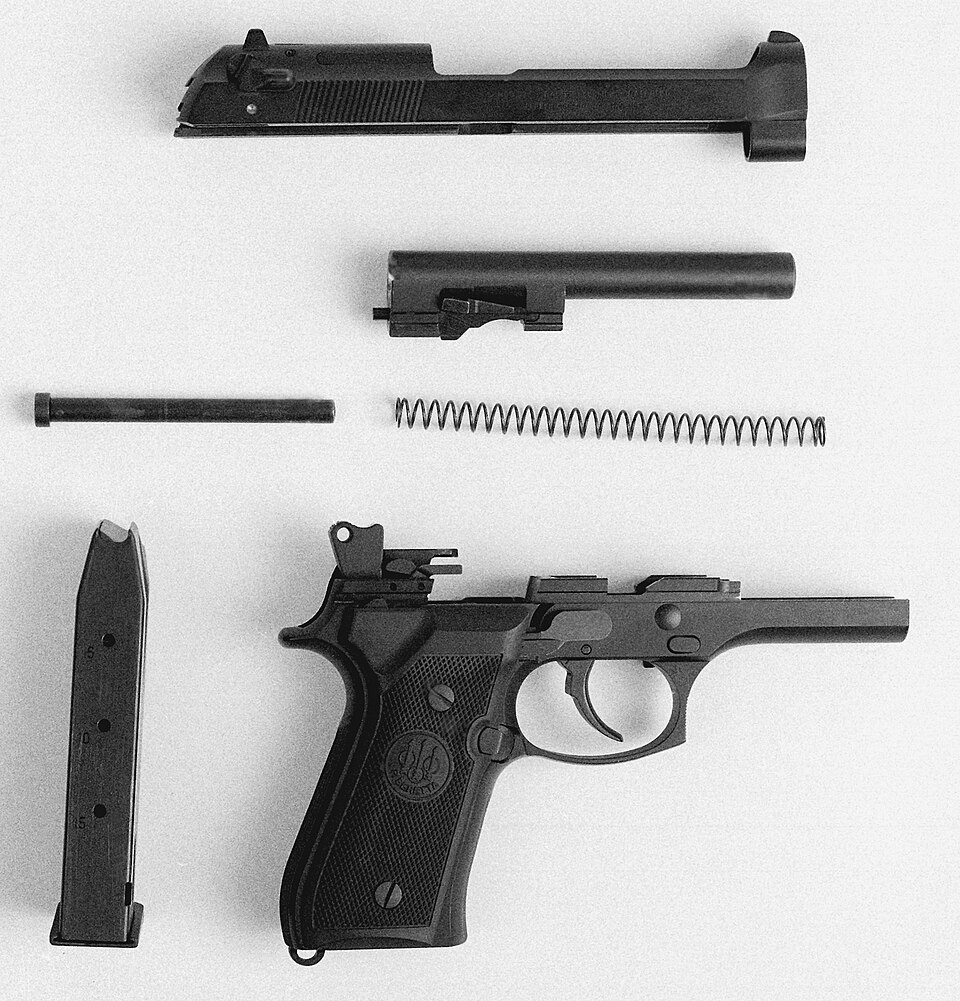
6. The M9 shifted the Army toward capacity and alliance logistics
The Beretta M9 did more than replace the .45-caliber M1911A1. It moved the Army to a 15-round 9×19mm pistol with a double-action/single-action trigger system and a decocker-safety arrangement that shaped training for a broad force. For many soldiers, safe carry and acceptable proficiency mattered as much as elite-level marksmanship.
Its adoption also tied the sidearm more tightly to NATO ammunition standardization. That simplified supply in combined operations while showing how handgun decisions could ripple far beyond the holster. The M9 era also demonstrated another truth: magazines, maintenance schedules, and parts wear could define field reputation as much as the pistol itself.
7. The M9A1 helped normalize lights on service pistols
The M9A1’s accessory rail looks modest compared with larger shifts in caliber or action type, but it changed the handgun’s role. Once a pistol could routinely carry a weapon light, it became more useful in vehicles, confined interiors, control points, and low-light movement where identification mattered as much as speed.
This was a quiet expansion of the sidearm ecosystem. The Army was no longer fielding only a pistol and ammunition. It was supporting rails, lights, magazines designed for sandy conditions, and maintenance practices built around them.
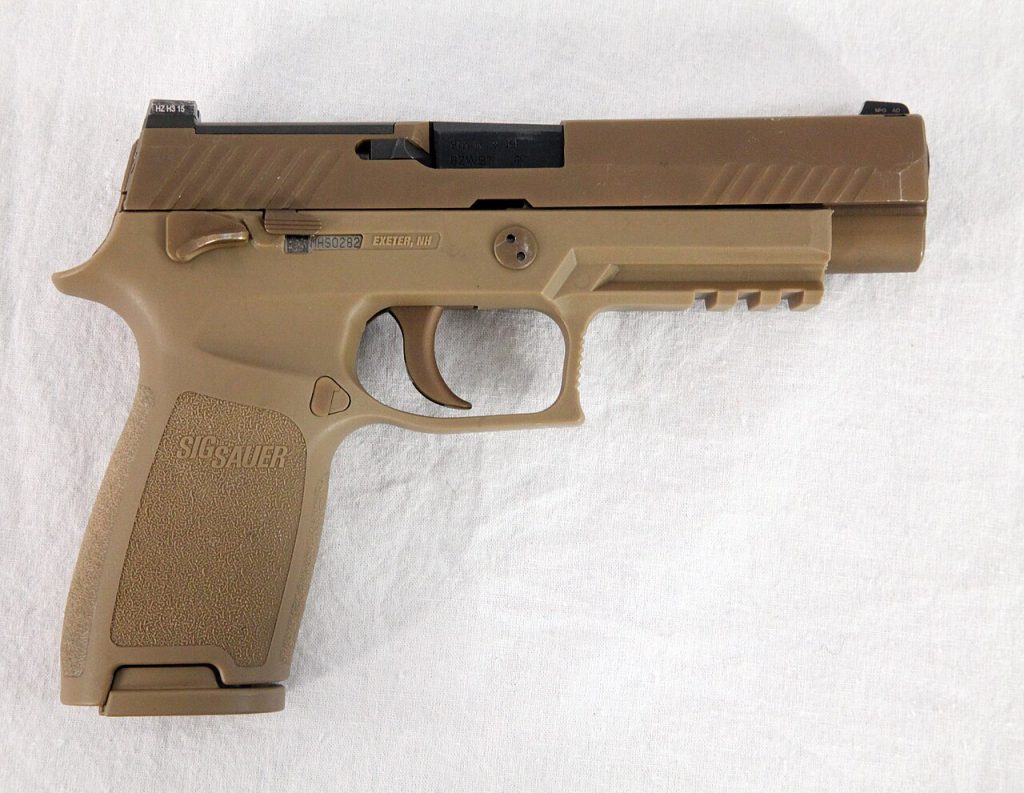
8. The M17 and M18 brought modularity into the Army mainstream
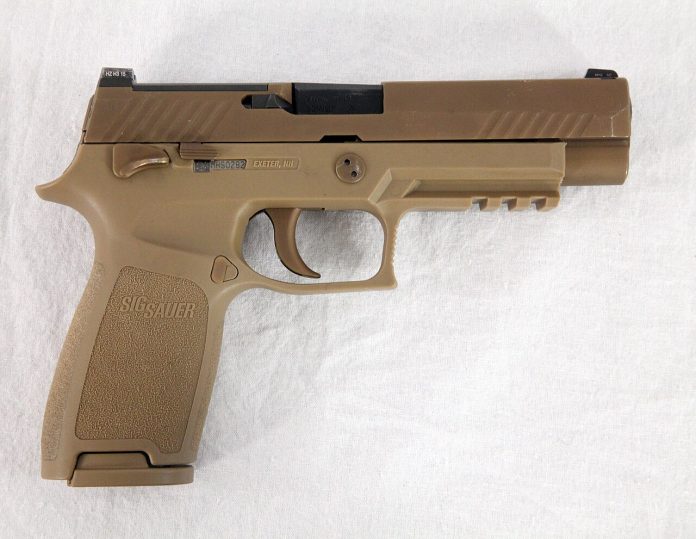
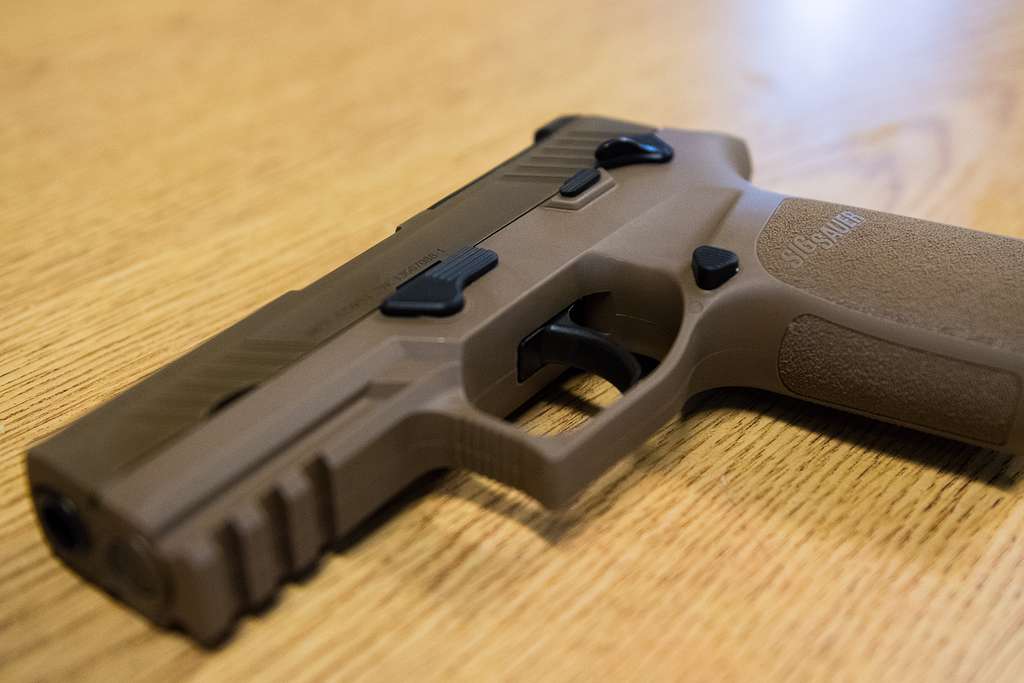
The Modular Handgun System moved the Army to the M17 and M18, built around a removable serialized fire-control unit that can fit different grip modules and configurations. In Army testing, the design showed a 93 percent and 94 percent probability of completing a 99-round mission without a stoppage, depending on ammunition type. The full-size model also uses a 17-round standard magazine.
The larger impact was ergonomic and institutional. Army developers emphasized one-handed use, faster hand switching, low-light capability, and accessory compatibility. As Lt. Col. Martin O’Donnell said, “You can close with the enemy in close quarter combat and engage the enemy with one hand. It is tough to do this with the M9.” The same modular logic also spread beyond the Army, with the Marine Corps citing more affordable and efficient pistol for maintenance as part of its rationale for following the system.
Across all of these transitions, the sidearm’s real importance has remained easy to miss. Pistols do not usually define the battlefield at long range, but they often reveal where the Army’s thinking is headed on reliability, human factors, sustainment, and close-quarters use.
That is why the quiet sidearm switch has never been just a sidearm story. It has repeatedly been a story about how soldiers are expected to fight when space tightens, time disappears, and the backup weapon suddenly becomes the only one that matters.


