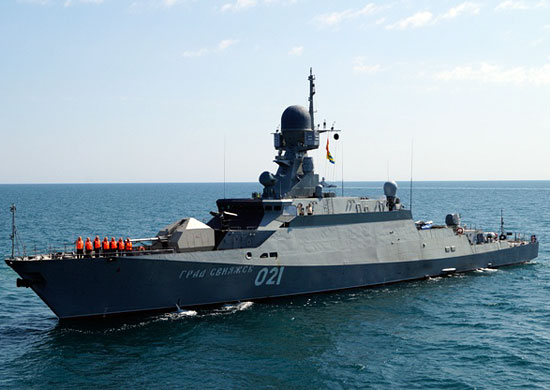
A missile corvette built for rivers, canals, and shallow coastal waters was never supposed to feel exposed on an inland lake. That assumption no longer looks durable. The strike on the Russian corvette Grad turned attention back to a class of warship that packs outsized firepower into a compact hull, while also highlighting how modern naval combat keeps erasing old notions of distance, sanctuary, and survivability. For readers tracking naval technology rather than daily headlines, the incident is most useful as a case study in how small combatants, cruise missiles, and unscrewed systems now intersect.
1. The Buyan-M was designed to make a small ship hit far above its size
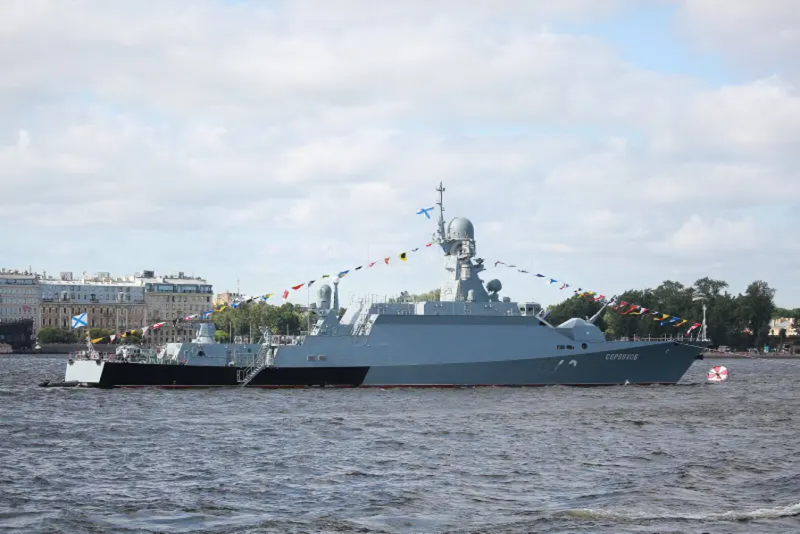
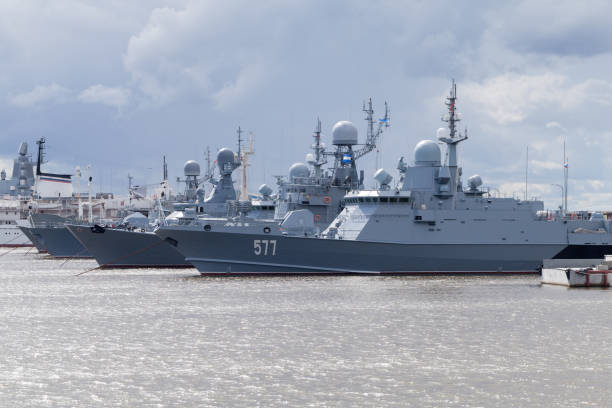
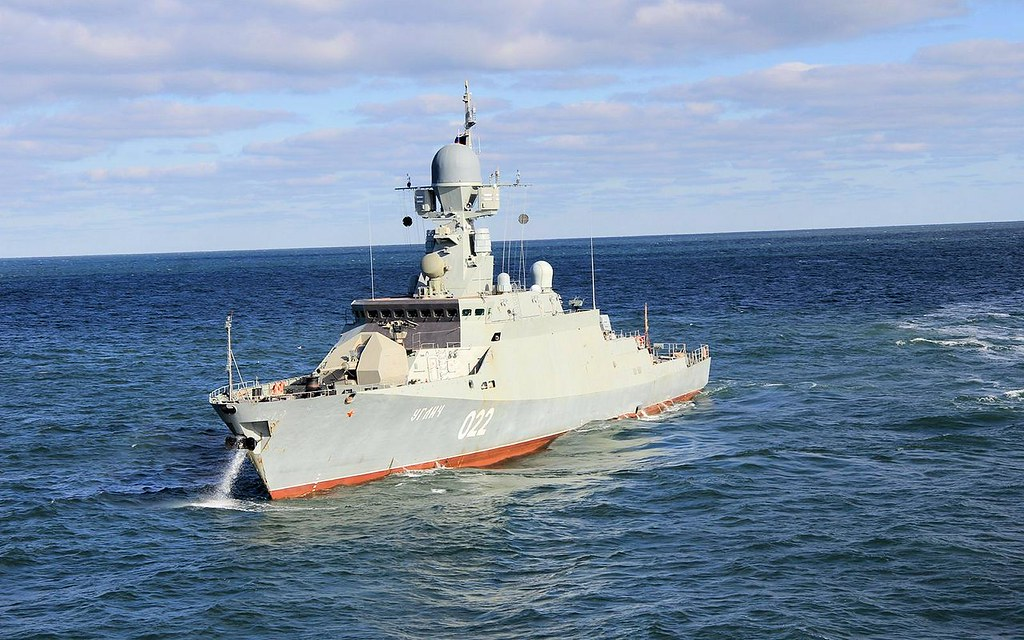
The Project 21631 Buyan-M is a compact missile corvette, but its offensive value comes from an eight-cell vertical launch system that gives it access to long-range strike weapons. The class measures about 75 meters in length and displaces roughly 950 tons, making it far smaller than the major surface combatants that usually carry strategic reach.
That design logic has been central to the class from the start. Buyan-M corvettes were built to move through Russia’s inland waterways and still field a 100 mm gun, close-in defenses, and Kalibr-capable launch cells. In practical terms, that means a ship with corvette dimensions can still threaten targets at long distance, a combination that has made the class far more strategically relevant than its size suggests.
2. Inland waterways are no longer reliable naval shelter
The most important takeaway was geographic, not just tactical. A warship moving through internal routes once benefited from distance, terrain, and the assumption that an inland transit corridor was fundamentally safer than exposed coastal waters.
That distinction has weakened. The Buyan-M concept depends heavily on mobility through canals, rivers, and protected water bodies, allowing Russia to shift light missile ships between fleets without sending them through more dangerous open seas. But a vessel optimized for that network also becomes visible within it. Restricted waterways reduce maneuver options, and fixed transit patterns make route prediction easier. A ship can be away from a traditional naval front and still remain inside a strike envelope shaped by drones, special operations, or a broader reconnaissance network.

3. Kalibr missiles make these corvettes strategically valuable targets
The Buyan-M’s significance is tied directly to the Kalibr family. The 3M14 Kalibr land-attack missile is widely assessed to have a range in the 1,500 to 2,500 kilometer bracket, depending on the variant and source. That turns even a small corvette into a mobile strike node.
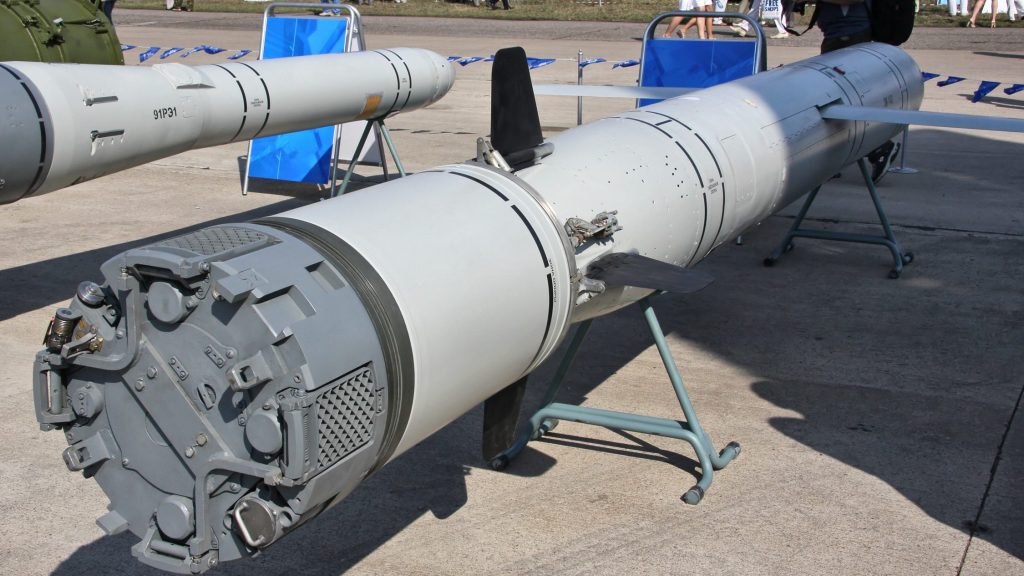
This matters because neutralizing one ship can remove more than a hull from the battlespace. It can also reduce the number of available launch platforms for deep strikes, complicate force distribution, and pressure a navy to rethink where it stages and how it moves missile shooters. In that sense, the real target is not only steel in the water, but the networked launch capacity the ship represents.
4. Waterline attacks remain one of the most efficient ways to disable a ship
Modern naval combat keeps reaffirming an old reality: hits near the waterline can be disproportionately damaging. Engine spaces, propulsion lines, electrical systems, and flooding risks all converge there.
That is one reason explosive uncrewed surface vessels have drawn so much attention. As RAND noted in its analysis of explosive USVs, these systems can strike where ships are structurally vulnerable while carrying larger payloads than many aerial drones of comparable cost. Even when a ship is not sunk, damage in that zone can leave it unable to maneuver or fight effectively. For a compact corvette with dense internal packing, that kind of hit can be especially disruptive.
5. Cheap autonomous systems keep stressing expensive naval platforms
The larger pattern extends beyond one corvette. Across maritime warfare, low-cost uncrewed systems are forcing high-cost ships into an unfavorable exchange. This is the broader logic often described as “intelligent mass” or distributed attritable capability: smaller, simpler systems can be fielded in numbers, adapted quickly, and used to create repeated pressure on ships that are harder to replace and slower to repair. Recent analysis of naval drones has pointed to the same trend, with 19 Russian ships reportedly sunk or damaged by Ukrainian USVs over several years of fighting. The exact platform used in the Grad attack remains less important than the pattern it fits.
6. Defensive systems on small corvettes face a growing detection problem
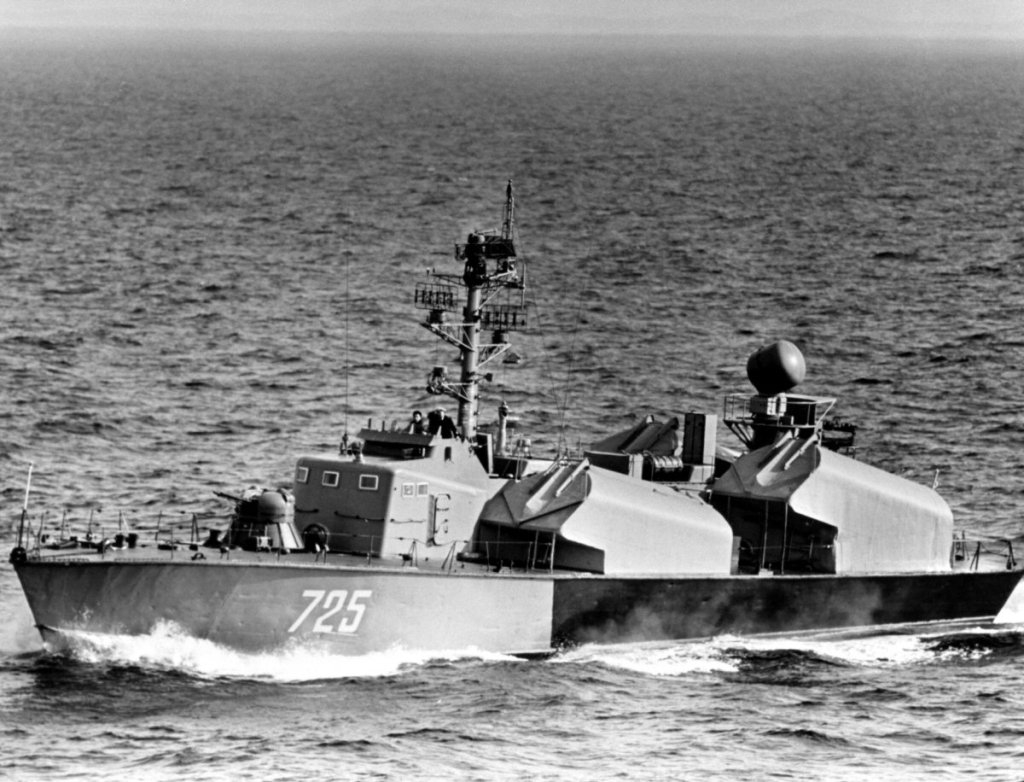
Buyan-M corvettes do carry self-defense tools, including short-range missile systems and close-in guns. On paper, that should give them a fighting chance against incoming threats. In practice, the challenge is increasingly about sensing, classifying, and engaging small signatures in time. Low-profile drones and fast, hard-to-track attack craft can compress reaction windows, particularly in cluttered littoral or inland environments. A compact missile ship can be heavily armed for its size and still struggle if the threat appears late, approaches low, or arrives in a way that saturates crew attention and fire-control capacity.
7. The future fleet problem is no longer just about bigger ships
The strike underlines a shift that many navies are already grappling with: combat power is no longer measured only by the sophistication of individual ships. It is increasingly shaped by how well a fleet can operate inside a battlespace crowded with expendable autonomous systems, persistent surveillance, and long-range precision weapons.
That pressure is showing up well beyond Eastern Europe. The U.S. Navy’s own unmanned surface vessel effort is now moving into operational fleet control, with officials saying systems such as Sea Hunter and Seahawk will deploy under fleet control in 2026. That does not mean large crewed warships are becoming obsolete. It means navies are being pushed toward a mixed architecture in which high-end platforms, smaller missile ships, and uncrewed vessels all have to function together under constant threat.
The Buyan-M was conceived as a flexible, mobile way to distribute missile firepower across Russia’s waterway network. That concept still has clear utility. What has changed is the survivability equation around it. A small corvette carrying long-range missiles remains dangerous, but it is also now part of a naval environment where inland movement offers less protection, expensive platforms are more exposed to attritable attack systems, and the line between front line and rear area keeps fading.


