Military sidearms rarely define a battlefield, but they often define an era of engineering. A service pistol has to balance reliability, safety, simplicity, manufacturability, and ease of training in a package small enough to ride on a belt every day.
That pressure has repeatedly pushed handgun design forward. From the first practical revolvers to polymer-framed striker-fired pistols, several military sidearms established features and operating concepts that later spread far beyond government issue holsters.
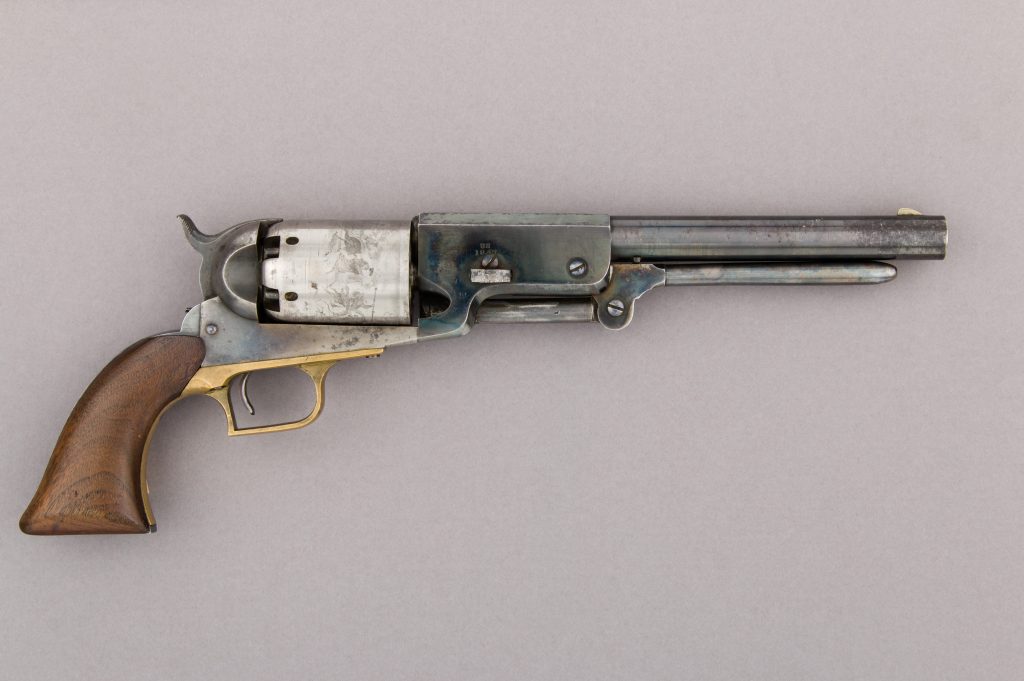
1. Colt Walker
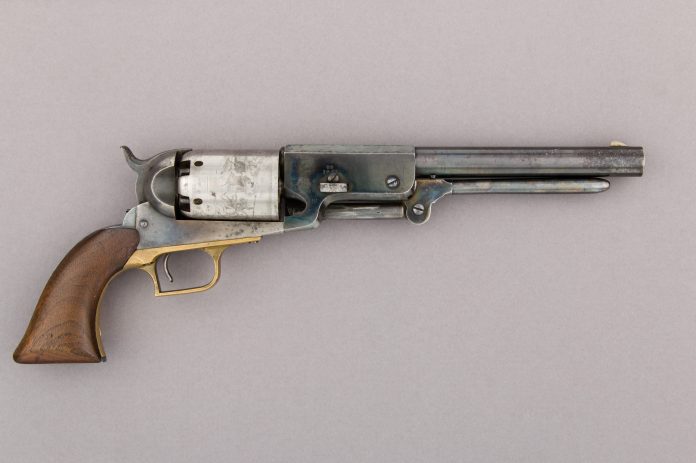
The Colt Walker helped prove that a repeating handgun could be more than a novelty. Adopted in the 1840s, it arrived at a time when mounted troops needed more firepower than single-shot pistols could offer, and its large revolver format showed why multiple ready rounds changed the sidearm’s role.
Its size was extreme, but its influence was not. The Walker and its successors established the military revolver as a practical fighting tool, setting the stage for later service handguns built around faster follow-up shots and battlefield durability. In design terms, it normalized the idea that a sidearm should provide sustained defensive capability rather than just one desperate shot.
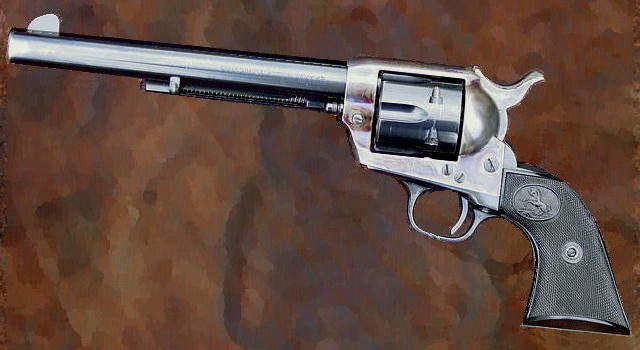
2. Colt Single Action Army
The Colt Single Action Army gave the late-19th-century service revolver its most recognizable form. Chambered in .45 caliber and built around a metallic cartridge system, it represented a major step beyond percussion revolvers in loading speed, maintenance, and field use.
Its handling and rugged lockwork made it a lasting reference point for revolver ergonomics. Even after double-action designs overtook it militarily, the Single Action Army preserved the template of a powerful belt sidearm with a strong frame, practical sights, and a cartridge system suited to mass issue. Its cultural afterlife sometimes overshadows its engineering importance.
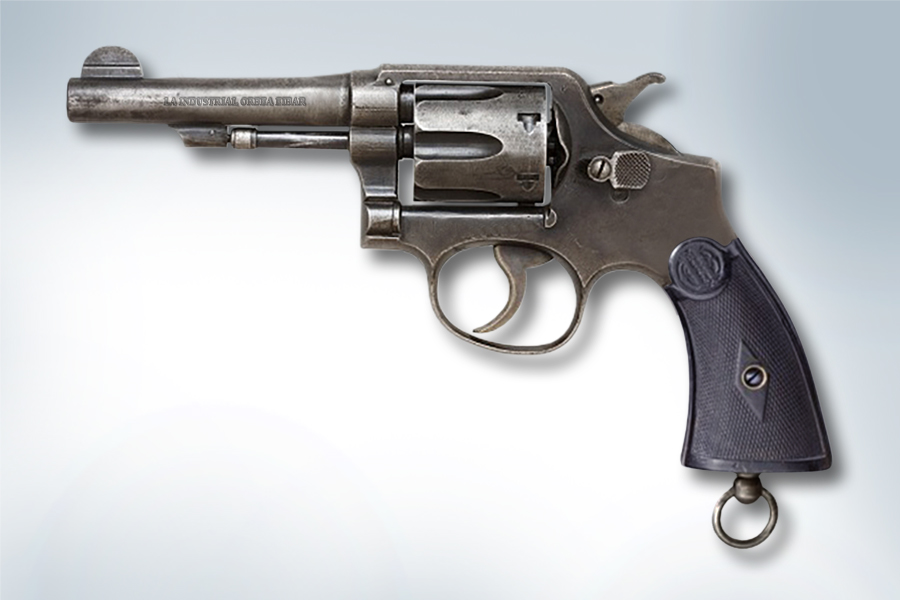
3. Colt M1892
The Colt M1892 is often overlooked because it sits between icons, but it marked a key transition. It brought a swing-out cylinder and star extractor to U.S. military service, features that made revolver reloading far quicker and more systematic than older gate-loaded designs.
That mattered because modern handgun design is often about reducing handling friction. The M1892’s cylinder latch, ejection system, and double-action operation pushed the service sidearm toward faster administrative use under stress. Even though its .38 Long Colt chambering drew criticism in later combat experience, the gun’s mechanical ideas pointed directly toward the mature military revolvers of the 20th century.
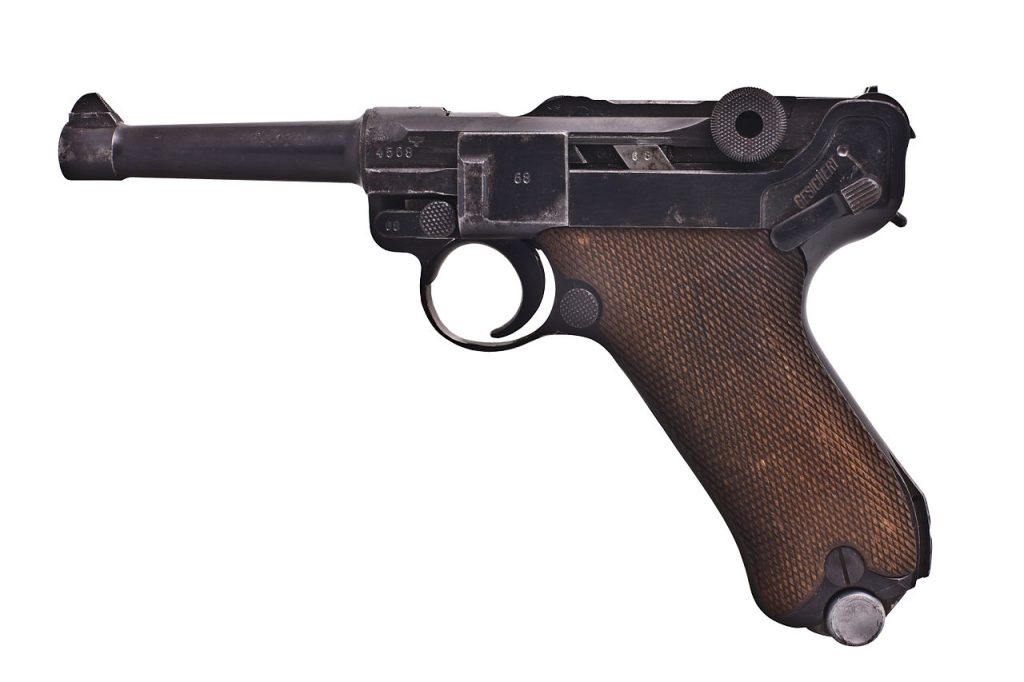
4. Luger P08
The P08 Luger was one of the first semi-automatic service pistols to achieve wide military adoption in an industrialized state, a shift noted in the broader history of the service pistol. Its toggle-lock mechanism was unusual, but its real legacy came from standardizing the idea of a self-loading sidearm as regular military equipment.
The pistol also helped cement the 9x19mm cartridge as a global standard. That caliber would go on to dominate military and law-enforcement sidearm development for generations, influencing magazine size, recoil characteristics, and training doctrine. The Luger’s sharply angled grip and compact profile also left a lasting impression on handgun ergonomics.
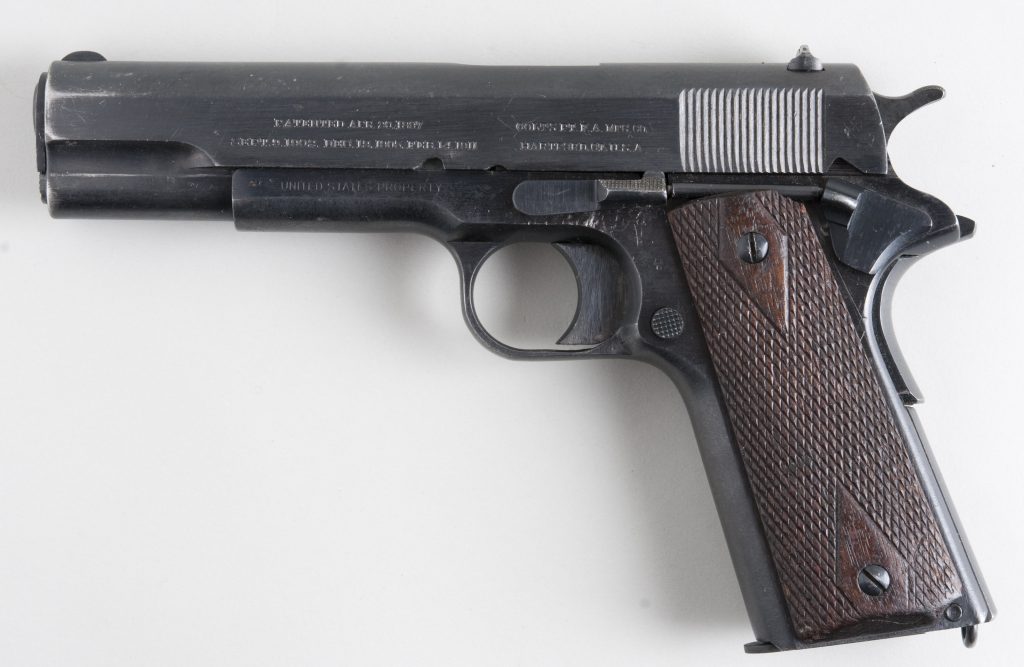
5. Colt M1911
The M1911 became one of the most influential handguns ever adopted by a military. After U.S. trials, it was adopted on March 28, 1911, beginning a service life that stretched across most of the 20th century and beyond.
Its locked-breech, short-recoil system set the pattern for countless later pistols. So did its single-action trigger, slim grip angle, detachable box magazine, and powerful .45 ACP chambering. Few handguns have influenced custom work, controls layout, and performance expectations the way the M1911 did. Even later pistols that rejected its single-action manual of arms often borrowed from its barrel locking geometry, frame-to-slide arrangement, or general service-pistol proportions.
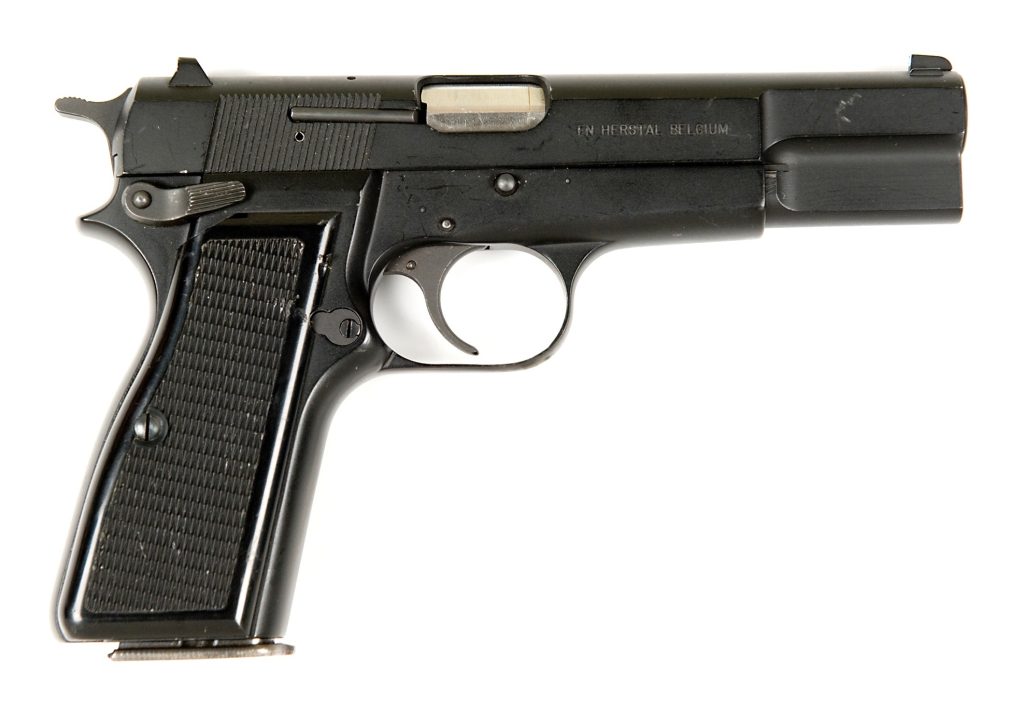
6. Browning Hi-Power
The Browning Hi-Power brought together two ideas that would shape the modern combat pistol: a high-capacity double-stack magazine and a relatively slim, controllable 9mm platform. In an era when many military handguns still emphasized power over capacity, the Hi-Power showed that carrying more rounds in a practical service pistol changed the equation.
Its influence is difficult to overstate. The “wonder nine” category that later dominated military and police adoption owes much to the Hi-Power’s balance of capacity, shootability, and manageable size. It also remained in service across many nations for decades, proving that a high-capacity pistol could be robust enough for hard institutional use.
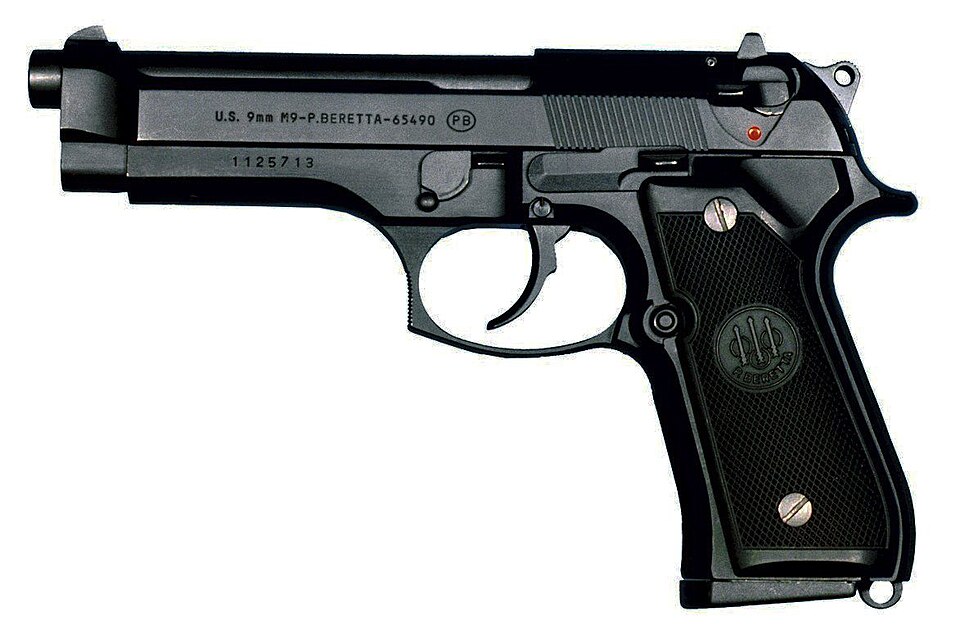
7. Beretta M9
The Beretta M9 reflected the late-Cold War move toward NATO standardization and higher-capacity 9mm sidearms. It was officially selected by the U.S. military in 1985 and fielded with a 15-round magazine, open-slide design, and double-action/single-action trigger system.
The pistol’s influence came from its scale and visibility as much as its mechanics. It normalized ambidextrous-friendly controls, large-capacity magazines, and accessory-oriented updates such as rails in later variants. The M9A1, for example, added a rail and durability improvements shaped by operational feedback. Its long U.S. service life also highlighted a central lesson of handgun design: reliability is not only about architecture, but also about parts schedules, magazines, and ammunition quality.
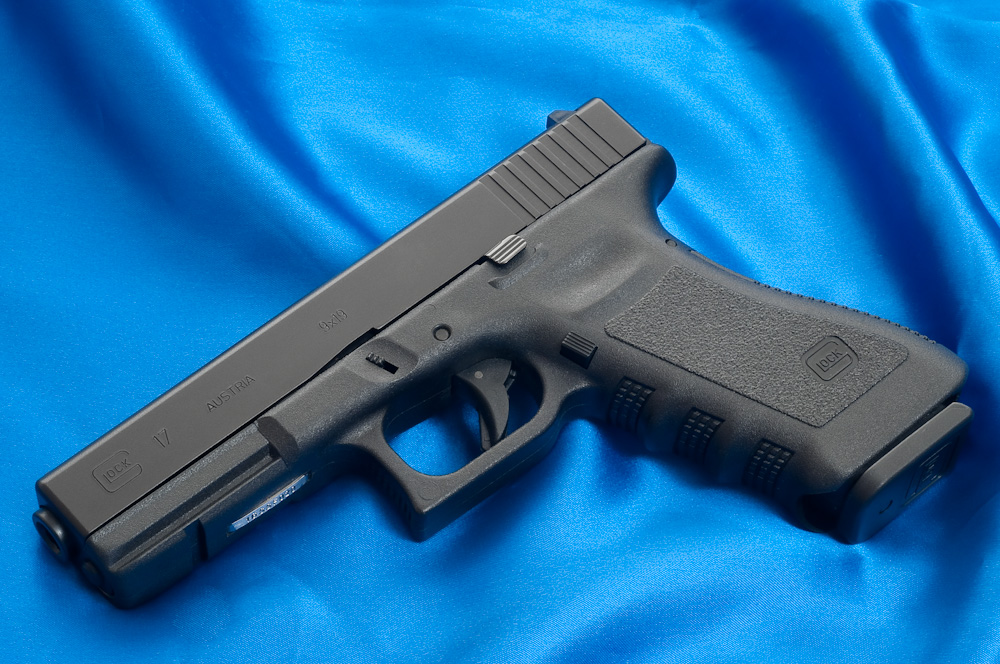
8. Glock 17
The Glock 17 changed service-pistol design by making the polymer-framed, striker-fired handgun impossible to ignore. Developed for Austrian military trials, it paired a lightweight frame with a simple internal system of just 34 separate parts, far fewer than many metal-framed rivals.
Its adoption showed that simplicity itself could be a design advantage. The Glock 17 combined a 17-round magazine, corrosion-resistant construction, consistent trigger pull, and streamlined controls in a package that was easy to maintain at scale. That formula reshaped military, police, and commercial handgun development. Modern striker-fired duty pistols from many manufacturers exist in a landscape the Glock helped create, where modularity, low parts count, and polymer construction are baseline expectations rather than radical departures.
These sidearms did more than serve armies. They established the recurring themes of modern handgun engineering: more ready ammunition, faster manipulation, simpler maintenance, safer carry, and better adaptability to different users.
Each arrived in a different technological moment, yet all left traces in today’s pistols. Modern handguns may use new materials, optics cuts, rails, and modular frames, but many of their defining ideas were first proven in military holsters.


