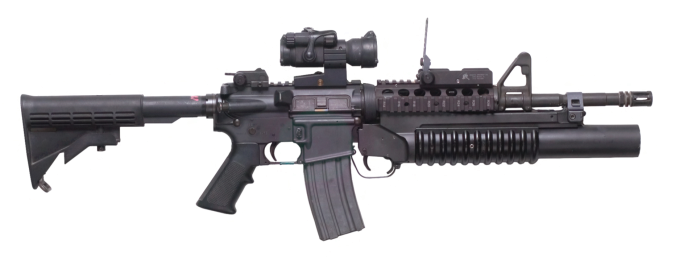
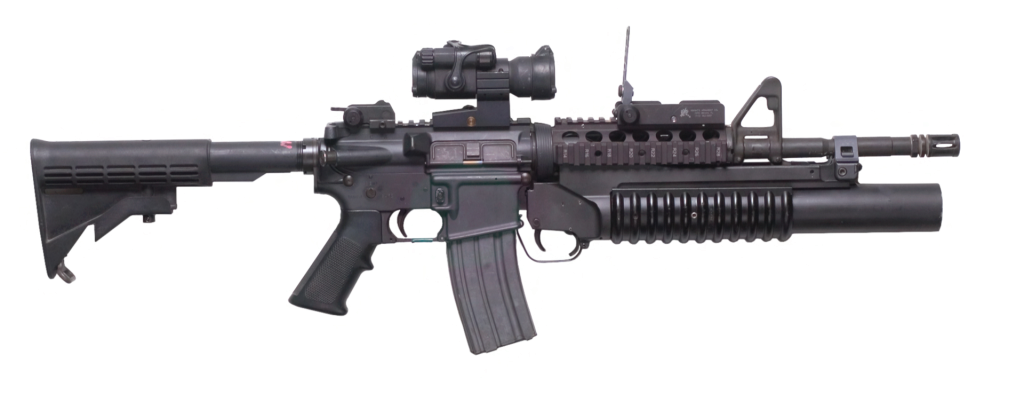
American service rifles have never been just pieces of kit. Each major shift in rifle design changed how infantry squads moved, carried ammunition, engaged targets, and balanced firepower against weight and reliability.
In U.S. military history, a handful of rifles stand out not simply because they were widely issued, but because they altered the practical mechanics of combat. From the leap to semi-automatic fire to the rise of lightweight small-caliber ammunition and the compact carbine era, these five rifles marked turning points in infantry doctrine and battlefield performance.
1. M1903 Springfield
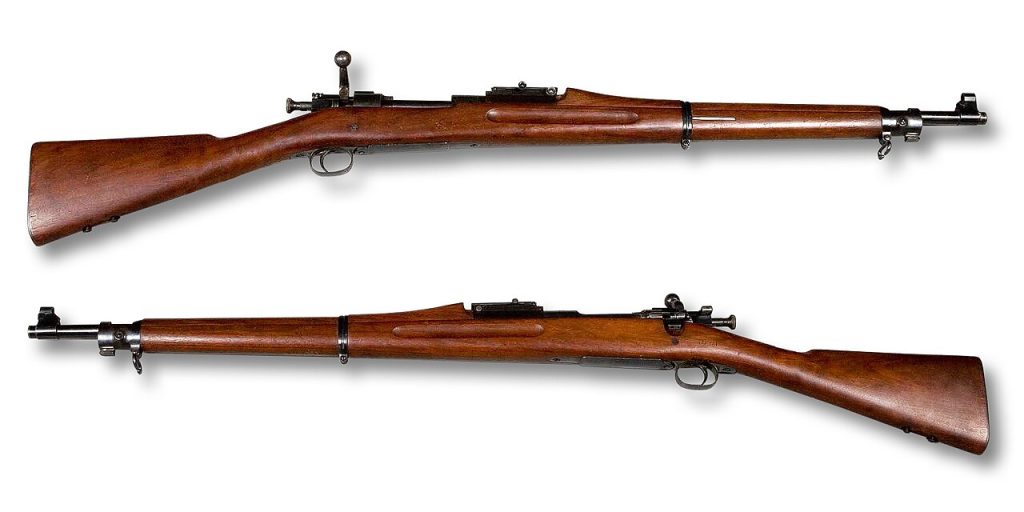
The M1903 Springfield established the baseline that later U.S. service rifles would be measured against. Chambered in .30-06, it reflected an era when long-range accuracy, penetration, and striking power mattered more than ammunition weight or volume of fire. In trench warfare and early 20th-century field conditions, that formula made sense.
Its limitations were equally important. The rifle used a bolt-action system with an internal five-round magazine, and that meant slower follow-up shots and a lower sustained rate of fire than what later infantry combat demanded. As squad tactics evolved around suppressive fire and maneuver, the Springfield’s deliberate manual operation increasingly looked like a constraint rather than a strength. It remained accurate and dependable, but its design belonged to a period before rapid individual fire became a central requirement.
2. M1 Garand
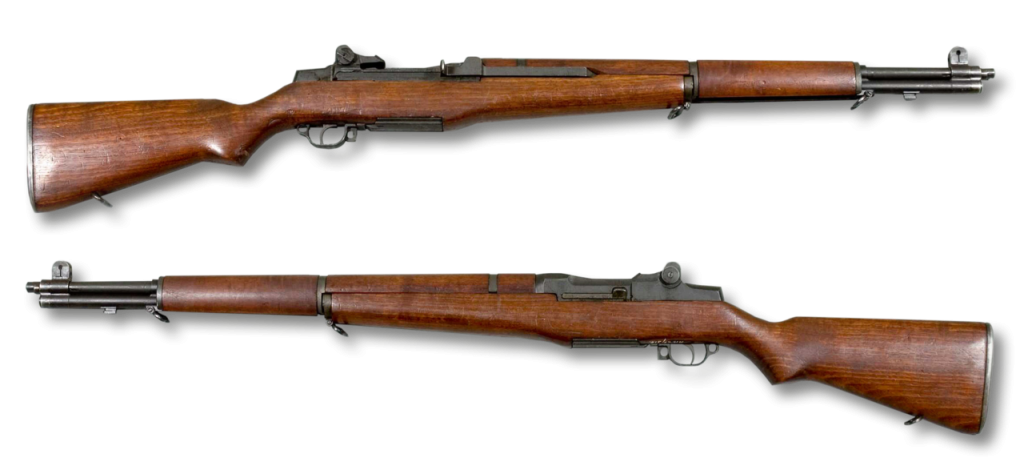
The M1 Garand changed the rhythm of the American infantryman’s fight. Adopted in 1936, it became the first standard-issue autoloading rifle for the United States and gave riflemen a major increase in practical firepower over opponents still largely armed with bolt-action designs. General George S. Patton famously called it “the greatest battle implement ever devised”. Its technical formula was straightforward but transformative: a gas-operated semi-automatic action, an eight-round en bloc clip, and the same hard-hitting .30-06 cartridge already familiar to the Army.
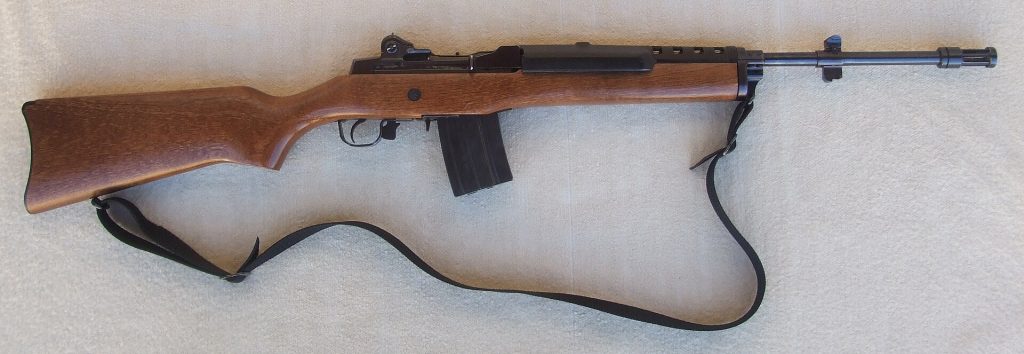
The result was a rifle that allowed much faster follow-up shots without forcing the shooter to break position between rounds. According to widely cited specifications, trained soldiers could deliver 40–50 accurate shots per minute at moderate range. That did not simply make the Garand faster; it gave U.S. infantry units a different combat tempo, especially in close engagements and during assaults where seconds mattered. It also proved that a self-loading rifle could be rugged enough for large-scale military service. The Garand’s success helped push military small-arms development away from the bolt-action standard worldwide.
3. M14
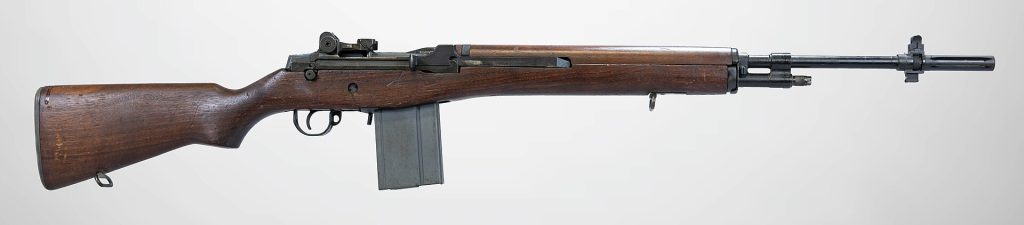
The M14 represented an attempt to merge several battlefield roles into one rifle. Built around the 7.62x51mm NATO cartridge adopted in 1954, it offered NATO ammunition commonality, a 20-round magazine, and selective-fire capability in a package intended to replace both the M1 rifle and the BAR at the squad level.
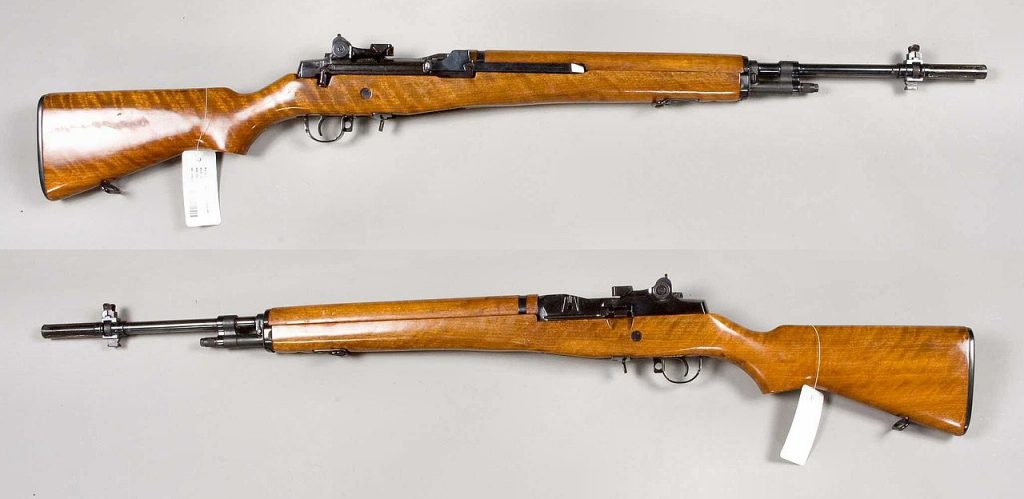
On paper, that looked like a major modernization step. In practice, the M14 revealed the limits of the full-power battle rifle concept in the postwar era. It was reliable and accurate, and it remained useful in specialized roles long after its brief standard-service run. But the weapon’s length, wood furniture, and recoil made it a poor fit for jungle fighting and difficult to control in automatic fire. Those shortcomings mattered because they exposed a larger doctrinal shift: infantry combat was moving toward lighter rifles, lighter ammunition, and higher controllable fire volume The M14’s real historical importance lies in that transition. It was the last major U.S. standard rifle built around the old full-power rifle philosophy.
4. M16
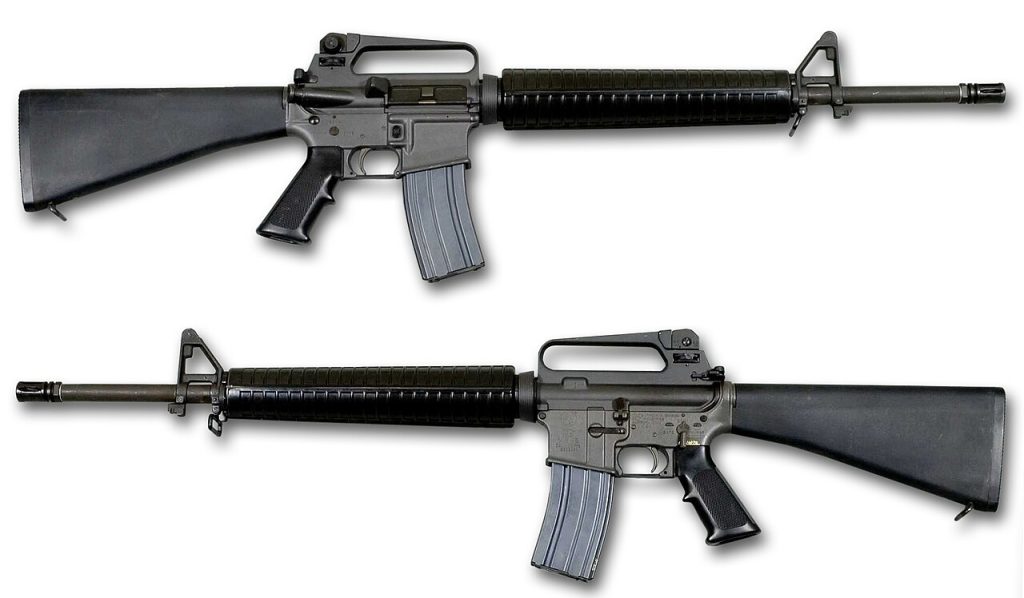
The M16 redefined what a service rifle could prioritize. When the AR-15 design was adopted in military form and the M16 family fully replaced the M14 by 1969, the shift was bigger than a simple model change. The new rifle was lighter, fired the much lighter 5.56x45mm-class cartridge, and generated less recoil, allowing soldiers to carry more ammunition and recover more quickly for follow-up shots. That combination reshaped squad-level firepower. A lighter ammunition load improved endurance and logistics, while controllable automatic fire brought the rifle into alignment with the realities of modern assault-rifle combat.
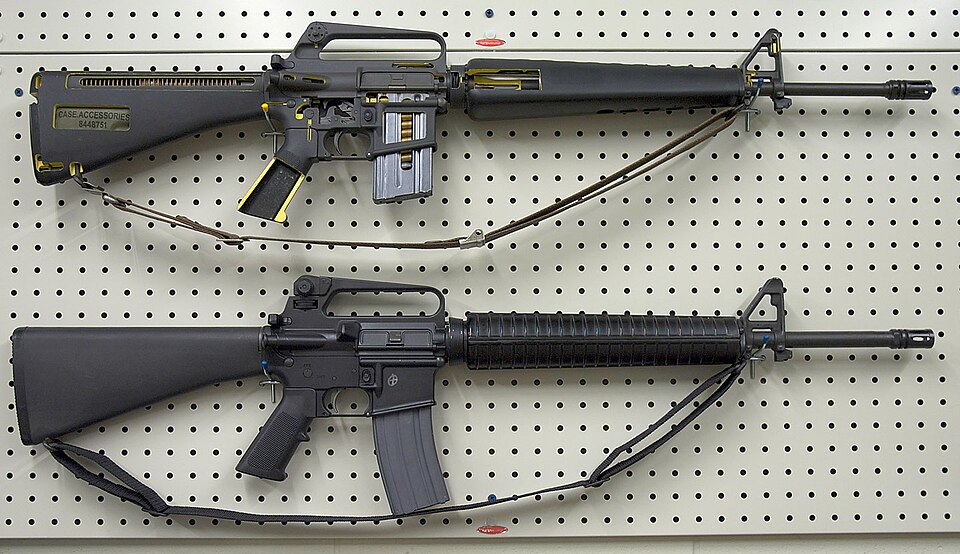
The downside is inseparable from its story: early field use exposed serious reliability problems tied to maintenance failures, ammunition changes, corrosion, and engineering decisions. Reports from the period described degraded confidence and significant malfunction rates before the platform was corrected through chrome-lined chambers and barrels, improved coatings, and other upgrades. Even so, the M16’s long-term influence is hard to overstate. It locked in the American move toward lightweight, high-velocity service rifles and became the foundation for the carbine that followed.
5. M4 Carbine
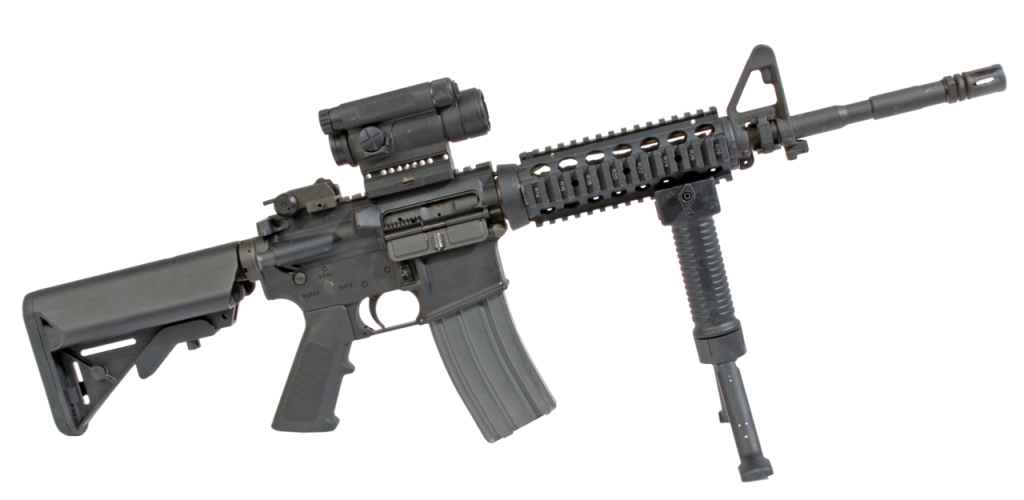
The M4 translated the M16 system into the compact age. With its 14.5-inch barrel, shorter gas system, and high parts commonality with the M16A2, it answered a problem that had grown more obvious as combat moved into vehicles, urban spaces, and tighter interior environments. A full-length rifle remained effective, but it was not always convenient.
The M4’s significance comes from how it adapted infantry firepower to mobility. Its compact form improved handling in close quarters without abandoning the familiar 5.56x45mm NATO architecture or the modularity that modern forces increasingly demanded. Later flat-top receivers and rail systems made optics and accessories easier to integrate, while the M4A1’s automatic-fire configuration reflected the rifle’s expanding combat role. Over time, the carbine stopped being a specialist’s compromise and became the dominant general-issue format.
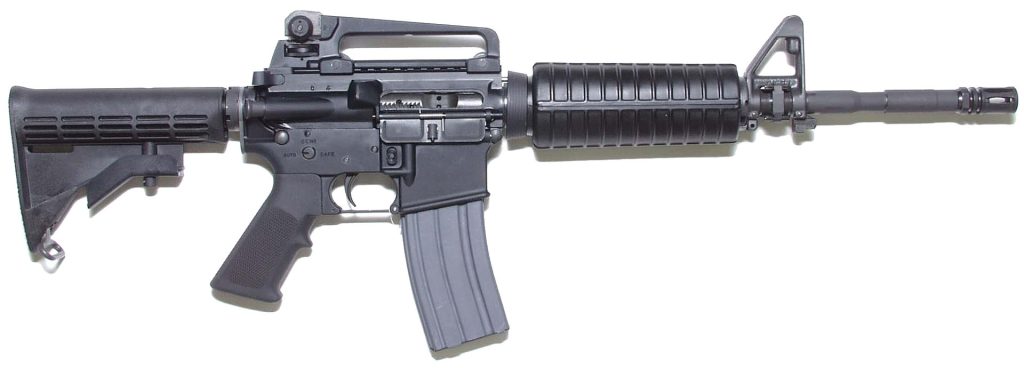
That was the major redefinition. The M4 showed that a service rifle no longer had to be full-length to serve as the primary infantry arm. Taken together, these rifles chart the evolution of U.S. infantry combat from deliberate long-range marksmanship to high-tempo, mobile, ammunition-efficient fighting. The pattern is clear: cartridge choice, operating system, and weapon length consistently drove changes in doctrine as much as the rifles themselves.
Each of these designs mattered because it changed what an infantry squad could realistically do under pressure. That is what turned them from standard-issue weapons into milestones.


