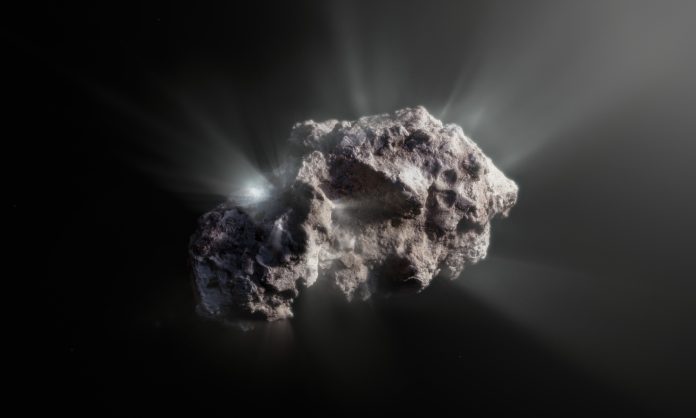
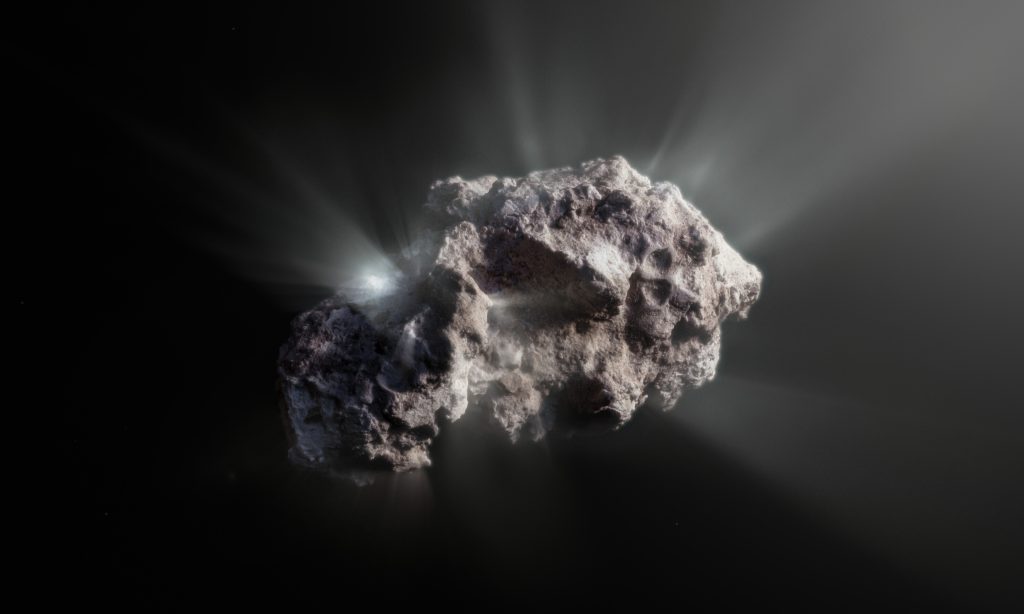
Interstellar comet 3I/ATLAS is not just passing through the solar system. It is giving astronomers a rare moving target from another planetary system, one that can be tracked by telescopes near Earth, spacecraft near Mars, and solar observatories that watch close to the Sun.
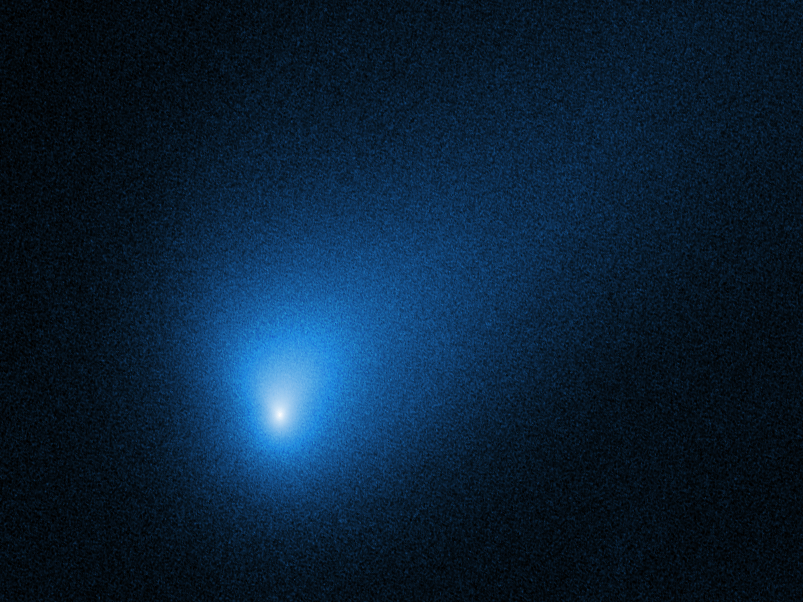
That reach matters. Because 3I/ATLAS is only the third confirmed interstellar object, nearly every clear measurement adds context that did not exist for 1I/’Oumuamua or 2I/Borisov. What makes this visitor especially compelling is that its biggest puzzles are not confined to one feature. Its path, tail, chemistry, and behavior under sunlight all point to a comet that fits the broad category, yet keeps stretching the details.

1. Its orbit confirms it came from beyond the solar system
3I/ATLAS was first reported on July 1, 2025, and astronomers quickly identified a hyperbolic orbit, meaning it is not bound to the Sun. NASA says the comet will stay far from Earth, with a closest approach of about 270 million kilometers, while its nearest point to the Sun came at about 1.4 astronomical units, just inside Mars’ orbit.
That geometry places 3I/ATLAS in a very small club. Unlike ordinary periodic comets that return on elongated loops, this object entered the solar system once and will leave it for good. That alone makes every observation unusually valuable, because astronomers are studying material that formed around another star and then spent immense spans of time crossing interstellar space.
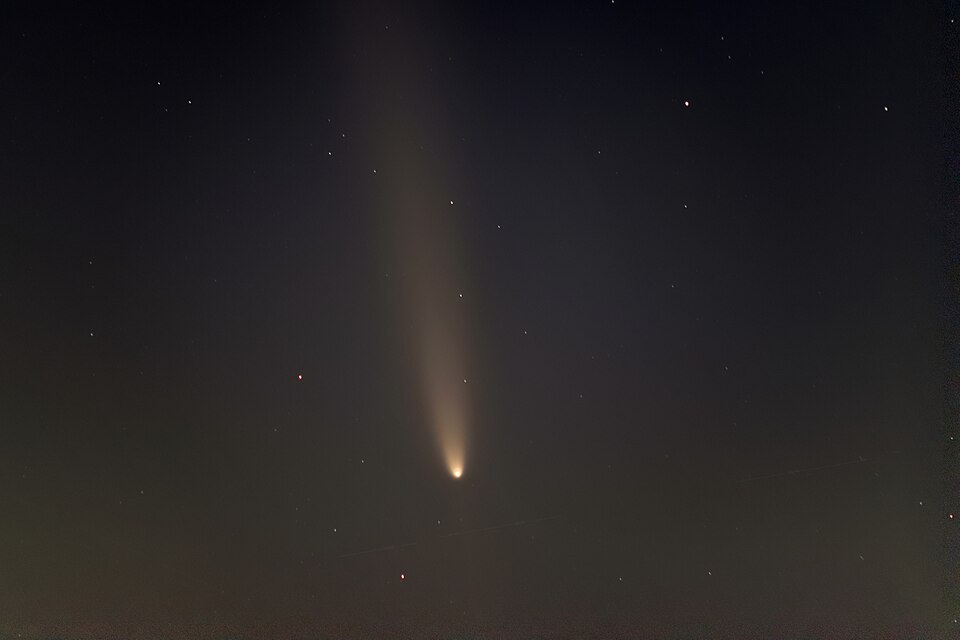
2. The sunward anti-tail drew attention, but not for the simplest reason
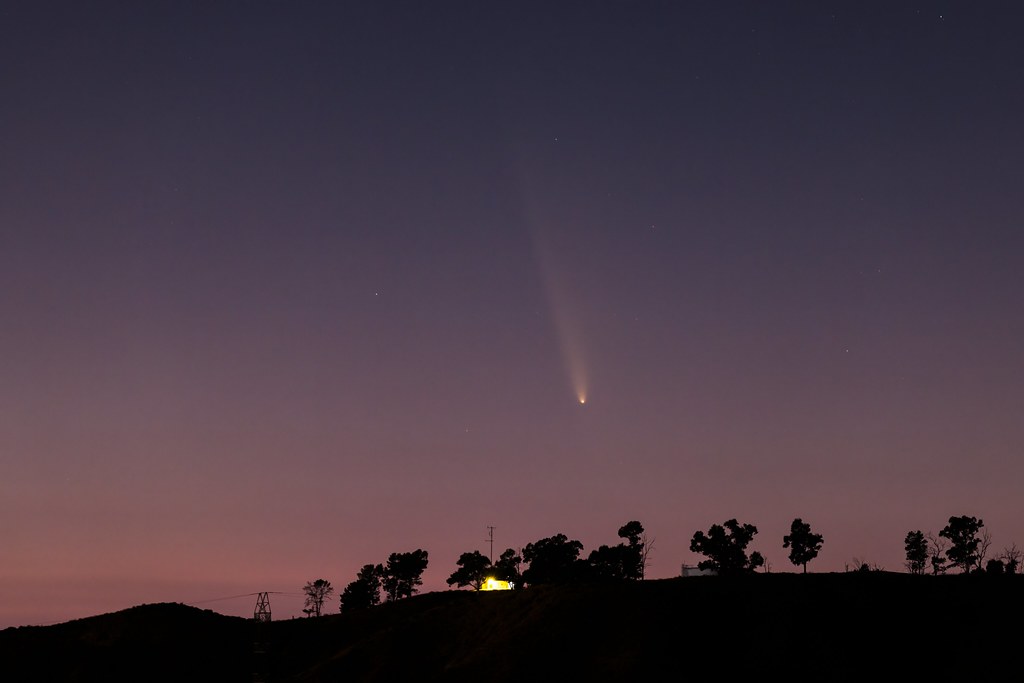
A comet tail is expected to stream away from the Sun, which is why the reported anti-tail became such a strong hook around 3I/ATLAS. In later imaging, the feature did not remain fixed: it gave way to a more familiar ion tail, and independent observers also recorded a growing, more structured tail after perihelion.
The important point is that a sunward feature is unusual, not impossible. Longstanding comet studies have documented anti-tails produced by dust geometry or by relatively large particles ejected in ways that briefly create a sun-facing structure. That keeps the phenomenon intriguing without placing it outside comet physics. In 3I/ATLAS, the value for researchers is in the speed of the change and in how clearly the transition could be watched across multiple instruments.
3. Its chemistry looks different from the usual comet recipe
One of the most discussed results is a coma apparently dominated by carbon dioxide rather than water, with the main article citing a mix of roughly 95% CO₂ and 5% water. That is a notable contrast with many well-studied solar system comets, where water tends to dominate activity at similar stages.
NASA’s later observing campaign added more support for a chemically rich coma, with SPHEREx observations tracking infrared emission from dust, water, organic molecules, and carbon dioxide. Together, those findings make 3I/ATLAS more than a trajectory story. It becomes a compositional case study, offering a direct look at how icy bodies from other stellar systems can differ from the comets formed around the Sun.
4. A possible nickel signal adds another layer to the mystery
The main article highlights a striking spectroscopic claim: nickel vapor detected without a corresponding iron signal. If sustained by follow-up analysis, that combination would stand apart from the pattern astronomers typically expect in comet observations.
This is where 3I/ATLAS becomes especially interesting for planetary chemistry. The issue is not simply whether a metal appears in the coma, but what release mechanism can produce that pattern at relatively low temperatures. Rather than pointing to a single dramatic answer, the observation pushes attention toward unfamiliar compounds, unusual thermal histories, or source material shaped in a very different protoplanetary environment.
5. NASA turned much of the solar system into one observing network
Few small bodies have been watched from so many places at once. NASA described an unprecedented solar system-wide observation campaign, with spacecraft and observatories following the comet from Earth orbit, Mars orbit, the Martian surface, heliophysics missions near the Sun, and probes already traveling outward.
That distributed view solved a practical problem as well as a scientific one. When 3I/ATLAS moved too close to the Sun for ground-based telescopes, missions such as STEREO, SOHO, and PUNCH could keep watching. Mars assets provided some of the closest imagery, while Hubble, Webb, SPHEREx, Psyche, Lucy, Parker Solar Probe, TESS, and others each captured different pieces of the comet’s behavior. For a fast one-time visitor, coverage from many vantage points is not a luxury. It is the only way to build a fuller picture.
6. It may help explain where interstellar objects come from in the galaxy
Interstellar objects are valuable because they act as samples of planetary formation elsewhere. A recent trajectory study argued that 3I/ATLAS likely originated from the Milky Way’s thick disk and may be older than the two earlier confirmed visitors. That broader galactic context changes the meaning of the comet’s chemistry and activity.
If 3I/ATLAS emerged from an older stellar population, its ices, dust, and thermal history may reflect conditions different from those that shaped younger systems. In that sense, the comet is not just a curiosity passing through local space. It is also a clue about how planetary debris is produced, altered, and expelled across the Milky Way over billions of years.
7. The Jupiter leg of its journey could become the next key test
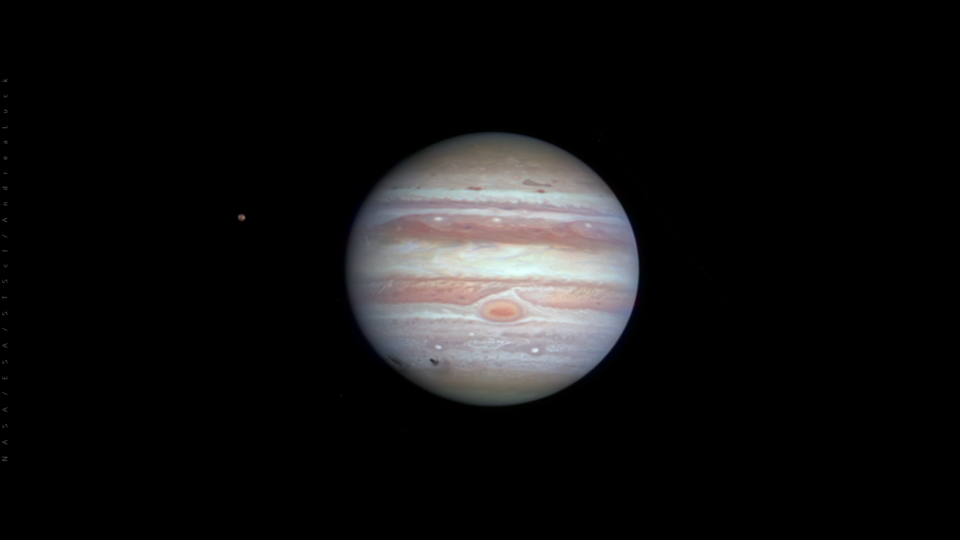
The comet’s path past Jupiter in 2026 gives scientists another natural experiment. The main article notes an expected close pass near Jupiter’s gravitational sphere of influence, a setup that could sharpen models of how fast interstellar bodies respond to giant-planet perturbations.
Even without a dedicated intercept, the encounter matters because it extends the scientific story beyond discovery and perihelion. Astronomers will be able to compare inbound and outbound behavior, refine non-gravitational acceleration estimates, and test whether the comet’s activity changes as it heads back toward deep space. That makes 3I/ATLAS useful not only as an object from elsewhere, but also as a benchmark for how the solar system itself reshapes a visitor in transit.
3I/ATLAS keeps attention because it combines several rare advantages in one target: it is interstellar, visibly active, reachable by many observatories, and varied enough to challenge simple labels. Some of its features fit known comet behavior. Others remain under active study.
That balance is what gives the comet lasting value. It does not need to fall outside comet science to expand comet science, and 3I/ATLAS is already doing that.


