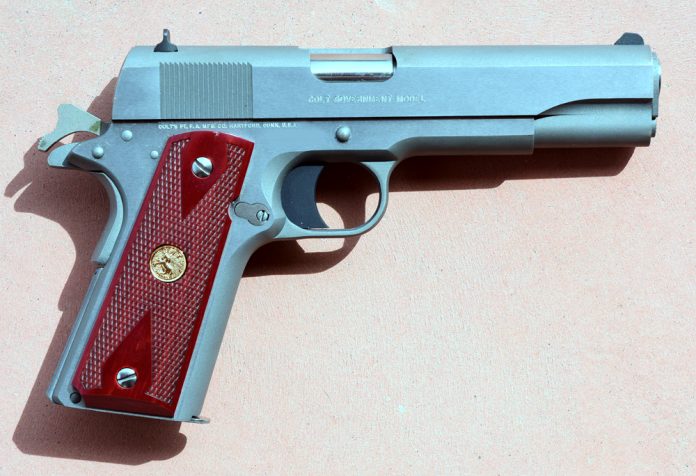
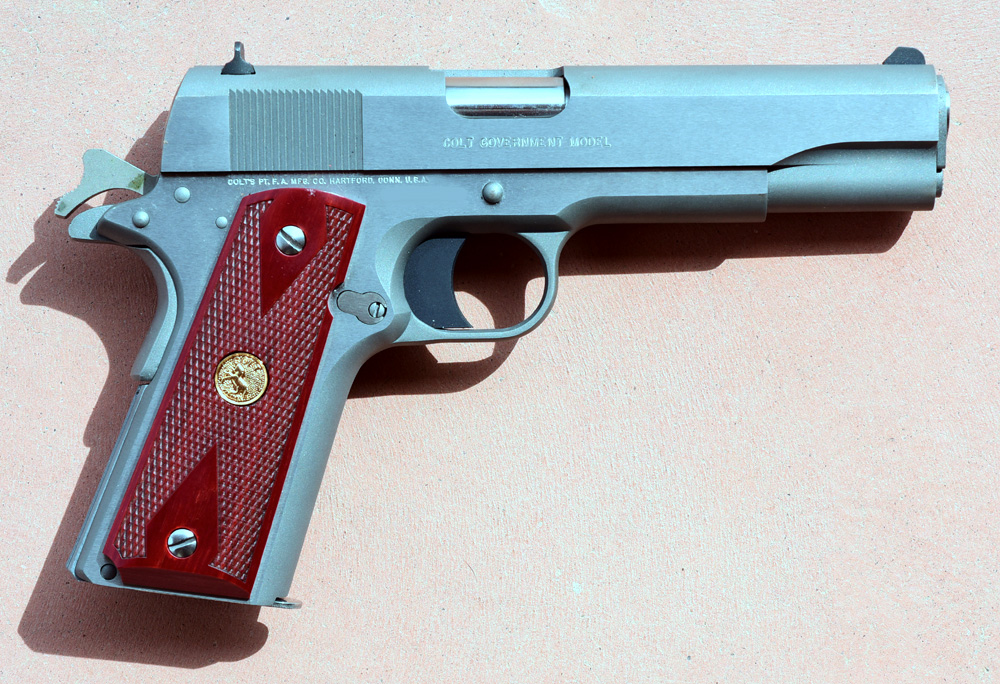
The U.S. military did not replace the M1911 with a single neat decision. It moved through years of trials, interservice disputes, changing standards, and a broader shift in how a service pistol was expected to work across a large force.
That is why the sidearm story is less about one pistol defeating another than about requirements changing under pressure. The move from .45-caliber tradition to a 9mm standard, and later from the Beretta M9 to the SIG M17/M18 family, came out of procurement logic as much as shooting performance.
1. Standardization became a problem before the pistol itself did
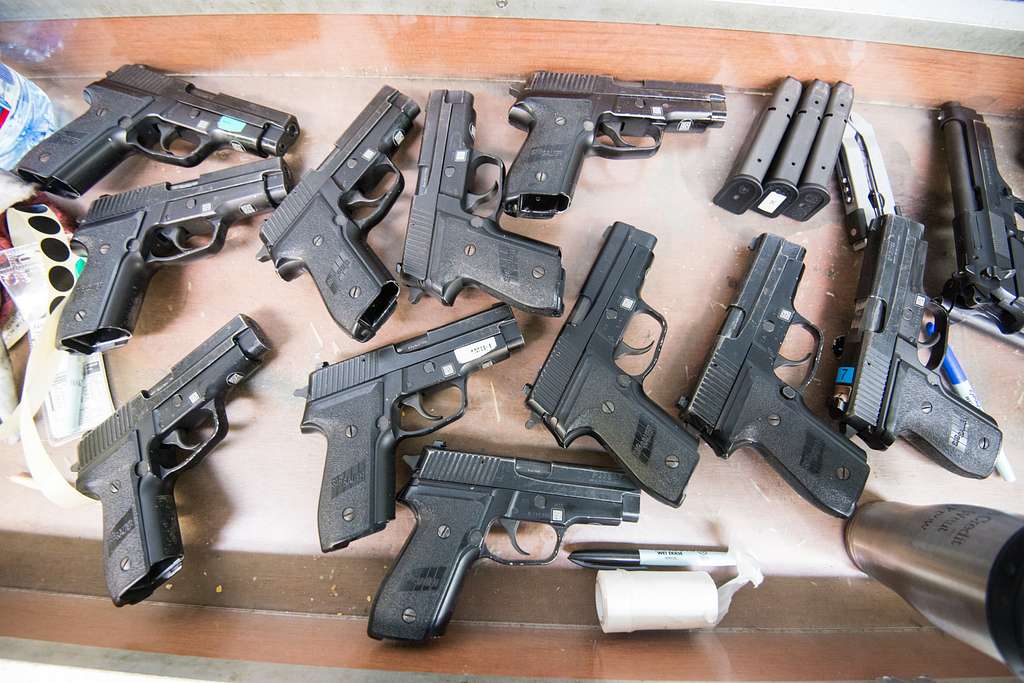
One of the biggest drivers was not pure battlefield dissatisfaction, but inventory chaos. By the late 1970s, the Pentagon was trying to reduce a scattered handgun fleet across the services, and the Joint Service Small Arms Program was created to coordinate that effort. Congress had already pushed for a standard handgun after the Air Force inventory reportedly included a wide mix of sidearms and ammunition types.
That administrative burden mattered. Training, spare parts, magazines, ammunition supply, and maintenance all become harder when multiple aging pistols remain in parallel service. A replacement sidearm therefore had to solve a logistics problem, not just a shooting problem.
2. The Army was not just replacing the M1911; it was rewriting the job description
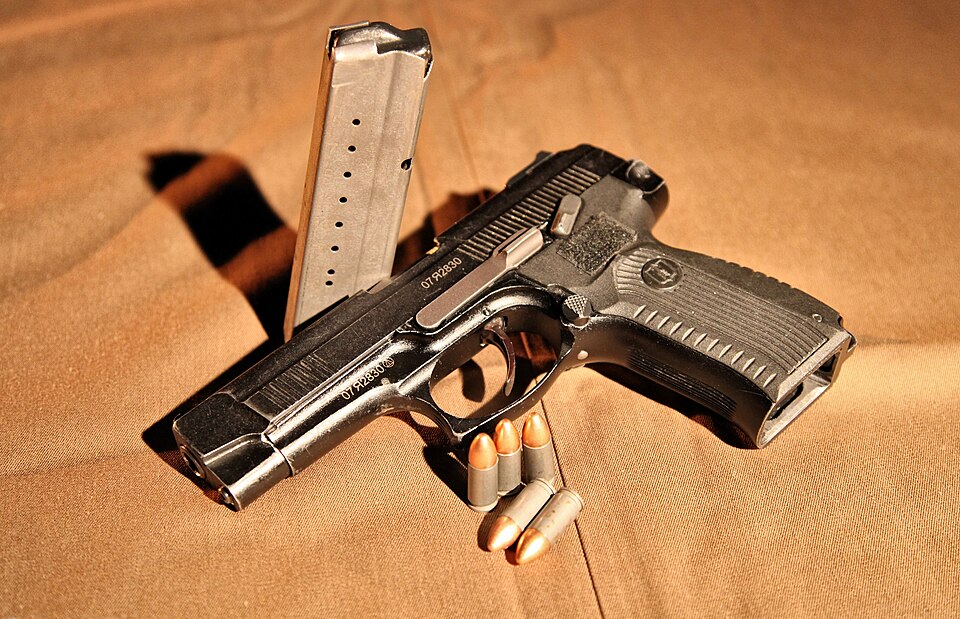
The XM9 requirement changed what counted as a modern service pistol. The new handgun had to be chambered in 9mm NATO, hold at least 13 rounds, use a double-action first shot, include a decocking device, and survive a defined durability and stoppage standard. Those criteria pushed the competition away from older single-stack, single-action thinking.
This was a major break from the 1911’s legacy. The issue was not only caliber. Capacity, ambidexterity, handling under stress, safety mechanisms, and performance in mud, dust, heat, and cold were all elevated to procurement-level requirements. In effect, the military was selecting a system for a broad force, not a sidearm for enthusiasts.
3. Early testing suggested the 9mm class offered real advantages for average shooters
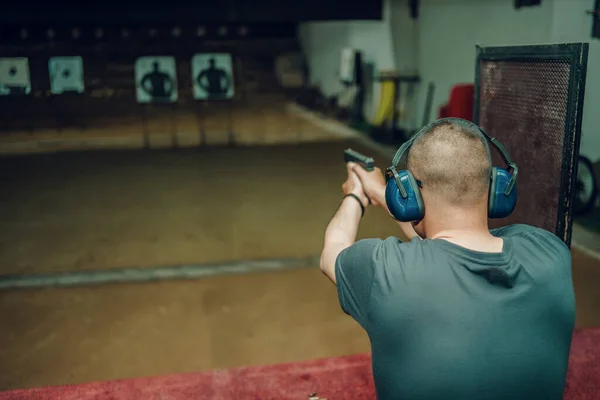
The first trials at Eglin Air Force Base did more than compare brands. They also highlighted how shooters with different skill levels performed with different pistols. According to the trial record, the newer 9mm submissions were especially effective in accuracy testing, and the advantage was pronounced with less experienced users.
That detail helps explain the caliber shift. A service pistol is issued across a very uneven population of users, many of whom are not pistol specialists. If a sidearm platform improves control and practical hit probability for the broad middle of the force, it gains value beyond raw ballistic debate.
4. The test process itself became part of the fight
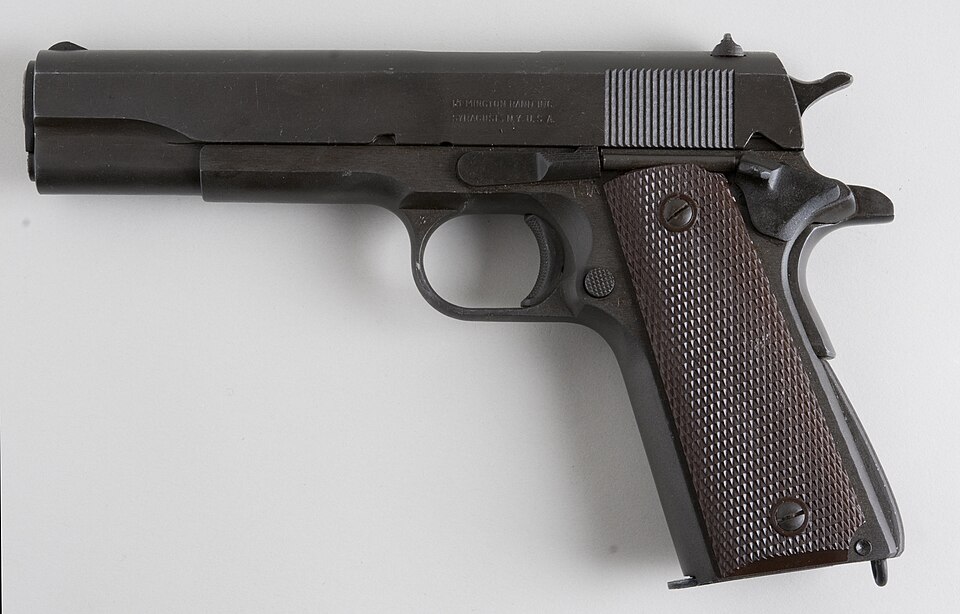
The Army’s switch was shaped by controversy as much as score sheets. Air Force testing in the early rounds was criticized, including arguments over worn magazines affecting M1911A1 performance and disputes about how mud, sand, and extreme-temperature trials were conducted. The Army rejected those results and insisted the next round be run under its authority.
That dispute did more than delay the program. It exposed a recurring truth in defense procurement: test design can be as politically sensitive as the hardware. When the criteria change, the winner can change, and when the services disagree about what matters most, the sidearm decision becomes a bureaucratic contest as well as a technical one.
5. Beretta won because it survived the full procurement equation
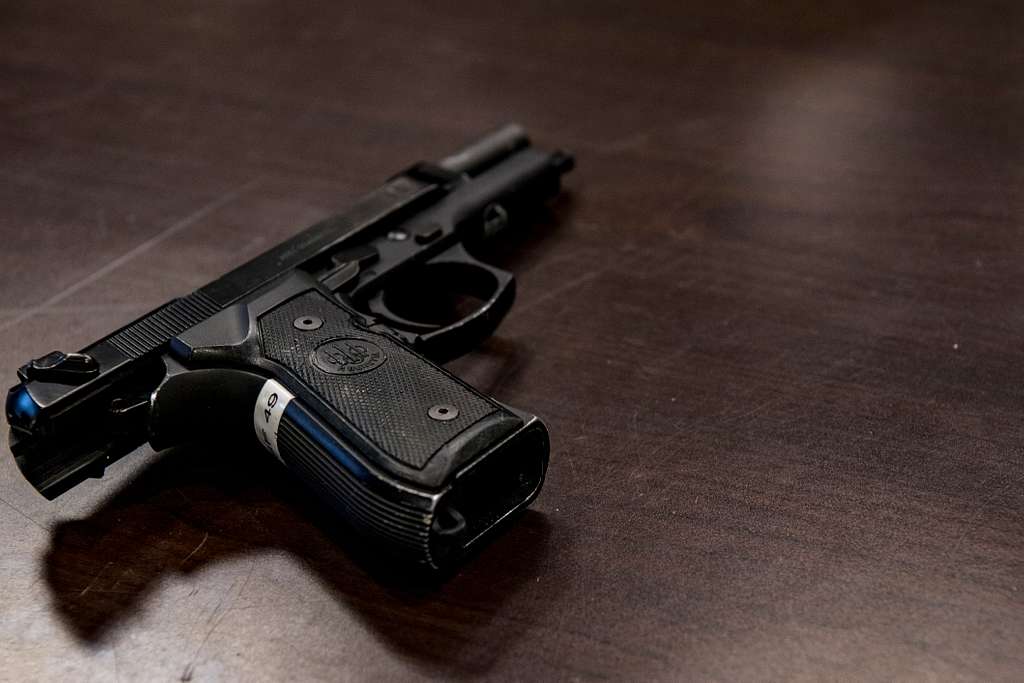
In the final XM9 competition, only the Beretta 92SB-F and SIG Sauer P226 emerged as technically acceptable finalists. Beretta ultimately secured the contract, and on January 14, 1985, the pistol that became the M9 was announced as the selection.
The result is often remembered as a pure shooting contest, but it was broader than that. Reliability, adverse-condition performance, required capacity, safety features, and contract terms all shaped the outcome. Beretta did not simply edge ahead at the range; it fit the Army’s total acquisition package at the moment the military wanted a common 9mm service pistol.
6. Some technically interesting contenders were never likely to win
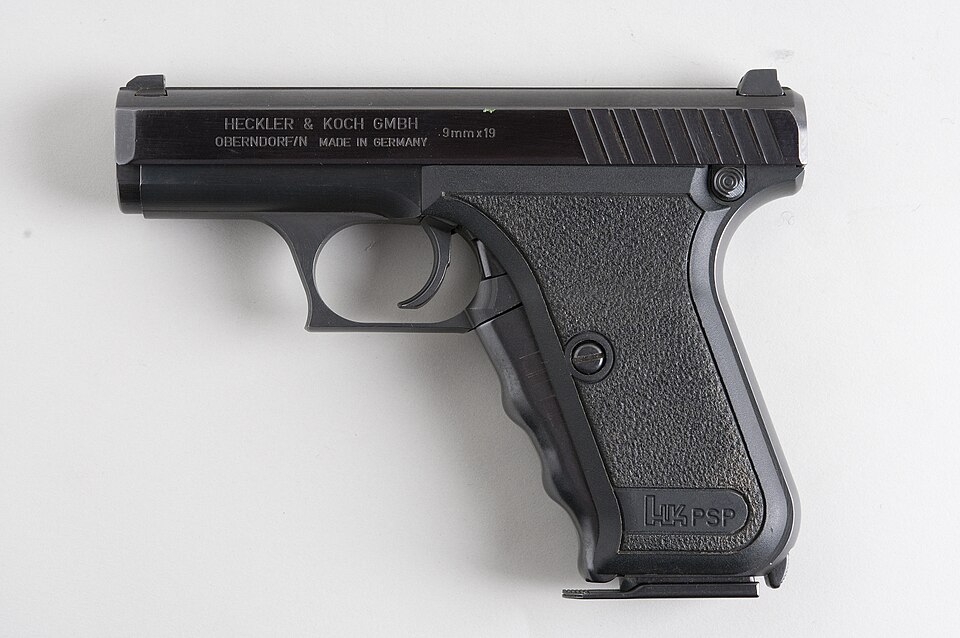
The XM9 trials included several unusual and advanced designs, but innovation alone was not enough. Heckler & Koch’s P7 family is a good example. The company kept refining its entry through multiple rounds, and the later P7A13 added a 13-round double-stack magazine, revised controls, and a heat shield.
Even so, the trials showed the limits of engineering elegance in a mass military buy. Capacity thresholds, left-handed usability, corrosion resistance, reliability, and cost all weighed heavily. A pistol could be mechanically distinctive and still fail the larger institutional test.
7. The 9mm transition reflected doctrine and force-wide practicality, not mythmaking
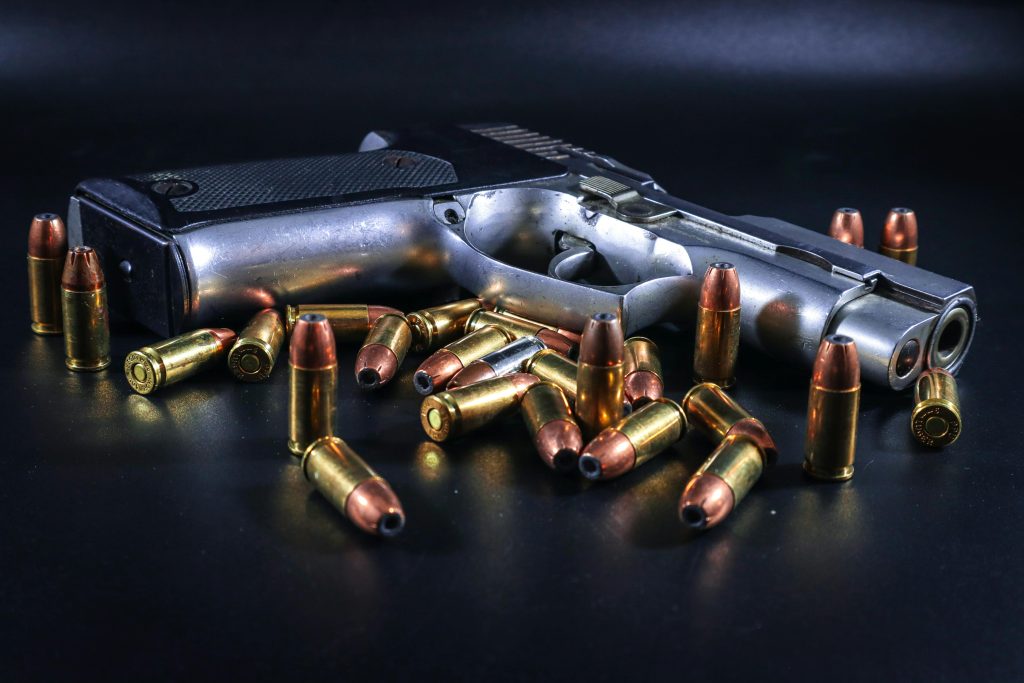
Arguments about 9mm versus .45 ACP have long dominated public discussion, but the military’s shift was grounded in service-wide practicality. Higher magazine capacity, easier handling for a larger portion of the force, and NATO commonality all worked in the 9mm’s favor. The M9 era then lasted for more than three decades, reinforcing how durable that decision became.
Later debate around caliber often focused on “stopping power,” but institutional handgun choices increasingly moved toward shootability and consistent qualification performance. That logic also matched wider law-enforcement and military trends, where sidearms were treated as secondary weapons that still needed to be controllable, easy to maintain, and simple to supply at scale.

8. The Army switched again when modularity became the new requirement
The M9 did not fail in the same way the M1911 aged out. Instead, the requirement evolved again. The Modular Handgun System trials selected the SIG Sauer P320 family, fielded as the M17 and M18, to replace the M9.
This change shows the long arc of Army sidearm procurement. First came standardization and the move to a high-capacity 9mm. Later came modularity, different fit options, and a more adaptable platform for varied users and missions. The sidearm changed because the institution changed what it wanted the pistol to do.

The Army’s sidearm history is therefore a study in requirements management. Tests mattered, but so did internal disagreement, alliance standardization, shooter ergonomics, and the reality that a service pistol has to work for thousands of people who will never treat it as a primary weapon.
That is the real reason the Army switched sidearms more than once. Each replacement followed a different lesson, and each lesson came from the intersection of engineering, doctrine, and procurement politics.


