
The FBI’s 12–18 inch standard gets quoted so often that it can sound like a simple pass-fail rule. In practice, it is better understood as a design window for handgun bullets: deep enough to reach vital structures from difficult angles, but not so deep that penetration keeps going with little effect inside the target.
That standard also explains why modern defensive handgun ammunition looks and performs differently than older hollow-point designs. The test is not a promise of real-world outcomes. It is a controlled way to compare how bullets behave when velocity, barriers, and bullet construction all start pulling in different directions.
1. The test measures consistency, not magic
The FBI protocol is built around 10% ordnance gelatin fired at close handgun distances, with rounds evaluated in bare gel and after common barriers. That matters because the goal is repeatability. A test medium that behaves the same way from one block to the next gives engineers and agencies a common yardstick.
Gelatin is not a human body, and the protocol does not claim otherwise. It is a standardized soft-tissue simulant that makes penetration, expansion, and retained bullet weight easier to compare across loads.
2. Twelve inches is a minimum, not a performance trophy
12 inches is treated as the lower boundary because a handgun bullet may have to pass through an arm, heavy clothing, or strike at an oblique angle before reaching vital anatomy. Loads that stop short in ideal conditions leave too little margin when conditions are less favorable.
This is the part often missed in casual discussion. The standard is not asking a bullet to look dramatic in gel; it is asking it to keep working when the shot path is imperfect, which is common with handguns.
3. Eighteen inches is a ceiling for a reason
The upper end of the window is 18 inches. Past that point, added penetration is generally not treated as a benefit in handgun ammunition testing, because the bullet may be carrying more depth than the task requires while giving up some of the expansion that helps slow it and enlarge its wound path.
That does not mean every bullet that reaches the far end of the window is flawed. It means designers are trying to balance two competing requirements: enough penetration to matter and enough upset to avoid acting like a narrow, unchanged solid.
4. The “ideal” zone is usually in the middle
Some industry summaries of the protocol describe 14 to 16 inches as especially desirable. That middle band gives a load room to handle clothing and intermediate barriers without drifting too close to either failure point.
In engineering terms, this is margin. A bullet designed right on the edge of minimum penetration may lose too much performance when velocity drops or the hollow point clogs. A bullet built with no regard for expansion may sail well beyond the useful range.
5. Expansion only works inside a velocity window
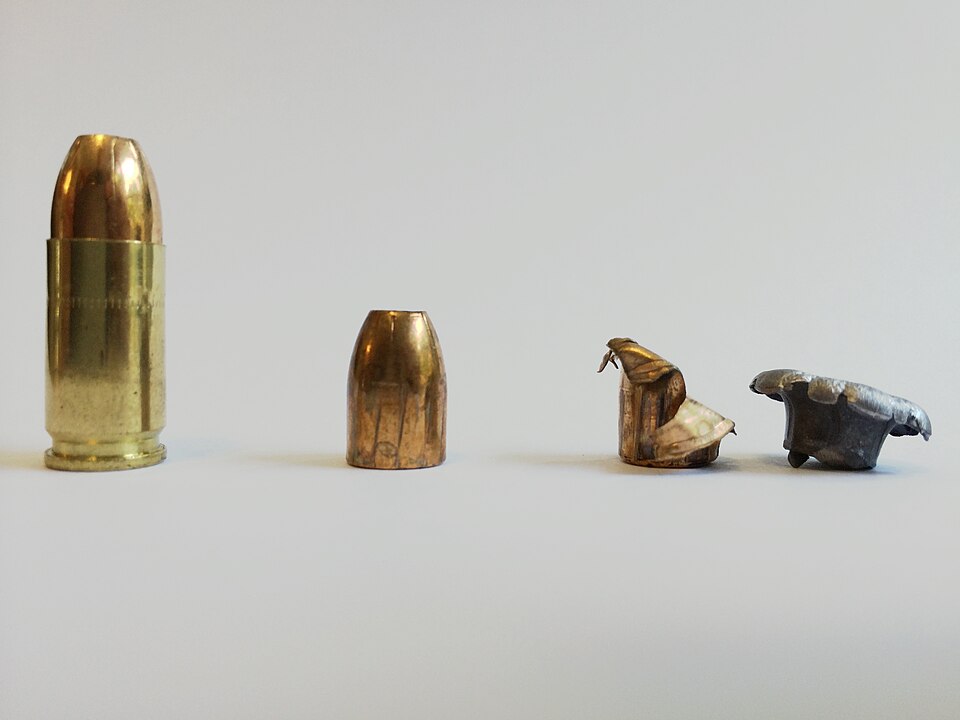
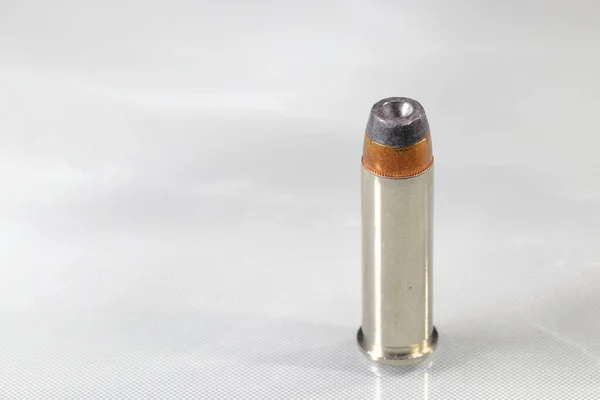
Hollow points are velocity-sensitive devices. As explained in how hollow points expand, the cavity in the nose must fill and collapse under pressure so the bullet peels back along its designed fault lines.
When speed is too low, expansion may be weak or absent. When speed is too high, the bullet can open too aggressively, lose petals or shed weight, and sacrifice penetration. That is why one load can behave differently from a compact pistol, a full-size handgun, and a pistol-caliber carbine.
6. Short barrels can push good designs below their intended performance
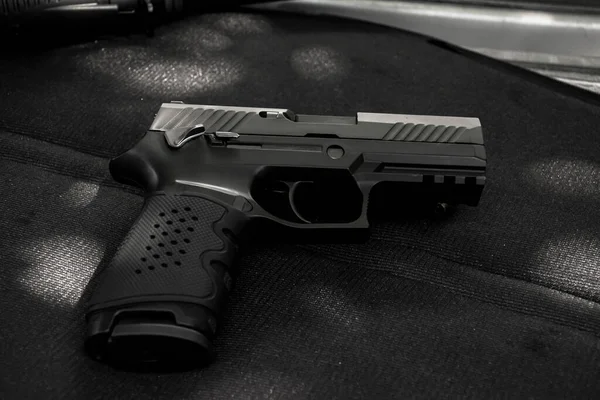
Many compact and subcompact handguns reduce muzzle velocity enough to change bullet behavior. A hollow point designed around duty-size barrel lengths may open late, open partially, or fail to open at all when fired from a much shorter tube.
That turns the 12–18 inch discussion into a system question rather than an ammunition-only question. Barrel length, caliber, and bullet design work together. A load that is balanced in one handgun can become underperforming in another.
7. Clothing and barriers are why the protocol uses multiple test events
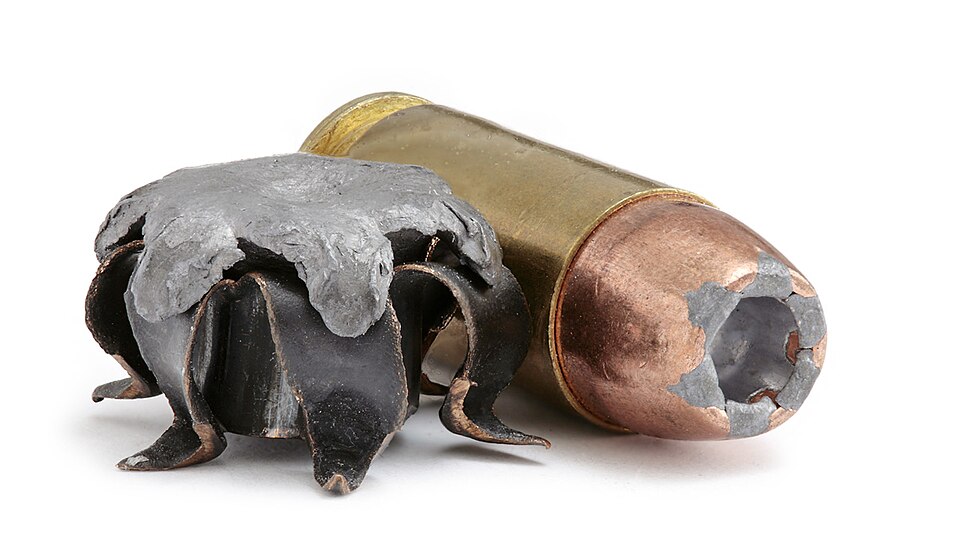
The FBI protocol does not stop with bare gelatin. It adds heavy clothing and materials such as wallboard, steel, plywood, and auto glass because these are the conditions most likely to interfere with a hollow point’s nose cavity.
A clogged cavity can block expansion and make a hollow point behave more like a non-expanding bullet. This is one reason modern designs often emphasize bonded construction, cavity geometry, and clog resistance rather than relying on wide, dramatic expansion in ideal media alone.
8. Overpenetration and underpenetration are both design failures
Handgun ammunition discussions often focus on overpenetration alone, but the protocol treats both extremes as unacceptable. A bullet that opens too fast and stops early may fail to reach what matters. A bullet that hardly changes shape may keep going with too little disruption.
That balance is central to the FBI window. It is not a contest for the widest expansion or the deepest straight-line path. It is an attempt to keep both failure modes under control.

9. The standard reshaped bullet engineering across the industry
Once agencies and consumers began using the FBI test as a benchmark, manufacturers adapted. Bonded jackets, better cavity shapes, improved skiving, and more controlled expansion profiles became common because bullets had to perform after barriers, not just in clean gelatin.
One of the clearest long-term effects was on caliber perception. As modern 9mm bullets improved under this testing culture, older assumptions about needing larger service calibers weakened, and ammunition design began carrying more of the burden that caliber once did.
10. The test is best read as a filter, not a final answer
The protocol gives a disciplined way to reject loads that are obviously too shallow, too deep, or too erratic. It does not predict every outcome in living tissue, and isolated demonstrations in synthetic dummies or one-off media tests do not erase the value of a repeatable standard.
That is the real meaning of the FBI 12–18 inch test. It is a guardrail for handgun bullet design and evaluation, not a guarantee and not a shortcut. When understood that way, it becomes one of the clearest tools available for explaining why some handgun loads remain effective across a broad range of realistic conditions while others only look impressive in narrow ones.
The lasting lesson is simple. Handgun ammunition works best when penetration, expansion, velocity, and barrier performance are treated as connected variables rather than separate selling points. The 12–18 inch window remains relevant because it forces those variables into balance.


