

The shape of everyday tasks rather than job title is recreating the office work less than the job title. The most rapid change is not the abstract notion of automation, but systems capable of following sequences of actions through tools email, calendars, ticketing systems, CRM, and document repositories without human intervention.
There are two forces used to explain the new map. First, agent-like systems are proliferating in enterprise software; it is among the most commonly cited predictions that 33-percent of enterprise software will be exploiting agentic AI by 2028. Second, research grade assessments are not in the form of exam questions but rather deliverables in the shape of actual work products such as a spreadsheet, a slide deck, a diagram, like GDPval across 44 occupations and 1,320 specialized tasks.

1. Calendar coordination and meeting logistics (vanish early)
Scheduling is a traditional low-judgment, high friction activity: it is repetitive, rule-governed, distributed. The entire chain of AI already focuses on finding availability, sending invites, adjusting time zones, and sending out reminders as the work is mostly procedural as soon as preferences and constraints are known. This is less an action as agents get older and becomes more of a service that runs in the background and keeps the calendars in sync with the ever-changing priorities. The human role becomes one of establishing constraints (who needs to be there, what needs to be decided) and not the processes of coordination.

2. Password resets and routine IT service desk tickets (vanish early)
These processes are high volume auditable workflows that are standardized. Password resets are one of the most common service desk requests in most organizations and therefore are an ideal target of end-to-end automation to verify the identity, update credentials and record the success. These have been explicitly addressed by agentic workflow design as multi-step processes capable of operating without handoffs to eliminate wait time and a frequent factor contributing to interruption-based work by IT personnel.

3. PTO approvals and basic HR transactions (vanish early)
Time-off approvals may appear as a straightforward yes/no, however, it will involve checking balances, cover, calendar, and policy. It is that combination of rules and data access that does match agentic workflows where there is planning of action, there is calling tools and checking of the outcomes. The remaining HR value is focused on exceptions, conflicts, and interpretation of the policies, which in the case of the organization is a place of organizational contexts and perceived fairness are as important as the book.

4. First-draft emails, memos, and routine internal announcements (shrink fast)
The generation of templated communication is a progressively discussed halfway stage which software is able to produce on command. The changes are not limited to speed, consistency also changes: tone, structure, and the presence of standard details are easier to impose on teams. The remaining work shifts to the meaning of an intent, choice of what is not going to be said, and confirmation of factual assertions during sending.

5. Meeting notes, action items, and “what did we decide?” retrieval (shrink fast)
Intelligence tools that meet conversation convert it to transcripts, summaries, task lists, and time-searchable. This diminishes informal power that was previously possessed by those people who remember everything and gives way to systems with the ability to answer queries faster. The administrative follow-up of meetings, typing briefs, allocating tasks, and rebuilding decisions, eventually becomes a machine process, and human beings are concerned with the quality of decisions and follow-through.

6. CRM hygiene and pipeline bookkeeping (shrink fast)
Fields, call logging, and activity note writing are predictable, time-intensive and usually delayed processes, which would be good to be automated. By recording communications and displaying them in organized formats, AI will eliminate the fifteen minutes after each call tax that costs over a week. The remaining piece of work is the interpretation layer: diagnosing deal health, selecting strategy, and dealing with edge cases when the classification of the system is incorrect or not complete.

7. Status reports and cross-team weekly updates (shrink fast)
Status reporting involves primarily synthesis: are there any changed, blocked, and next tickets, messages, and documents in a stack of tickets, messages, and documents? Once AI is able to search and summarize across platforms, then the report is generated as an artefact and not curated. The other human input is determining what risks should be considered and harmonizing the stakeholders on tradeoffs.

8. Customer support for routine questions (vanish in volume, not in entirety)
Automation increases when question and answer procedures are repetitive, and responses policy-based. The agentic systems are able to process frequent queries independently and further refer to an instance of discretion, empathy, or negotiation. The remnant work focuses on grey customer scenarios, exception management and the loop of continuous improvement, updating the policies, knowledge bases and customer product feedback on what actually customers find challenging.
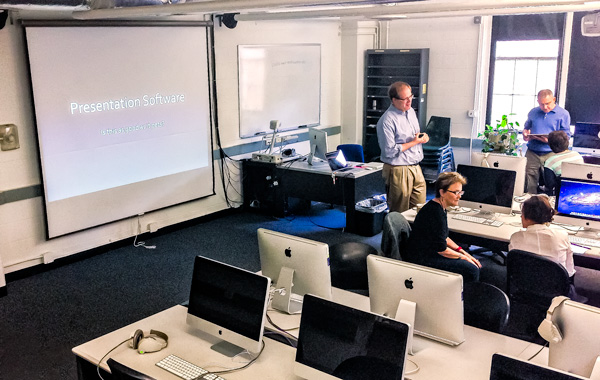
9. Document formatting, slide assembly, and “make it presentable” work (shrink fast)
Much of the working hours in offices go to creating content into a deliverable: clean slides, standardized tables, executive-friendly formatting. These practical outputs are increasingly evaluated in modern evaluations of model capability, and not raw text generation. The craft therefore changes: man continues to define the narrative, audience and stakes, but the machines turn layouts to be standardized and generate variations rapidly.

10. Work that survives: judgment under ambiguity, accountability, and relationships
Activities continue to exist when they rely on tacit context, existent conflicting incentives and irreversible outcomes. Although models can get better regarding realistic deliverables, assessments take into account boundaries concerning the interactive iteration and the type of ambiguity in which the initial question is what the task is supposed to be. The labor market statistics also give a picture that is moving slowly at the macro level; one current study is concluding that it is more of stability and not of major disruption yet. Practically, survival focuses in areas where one has to own the result: passing exceptions, tradeoffs, coaching teams, negotiating with customers, and owning the consequence of poorly made decisions.
The new trend is not a direct replacement of humans with the machines but a shift of focus. Administrative glue work decays first; interpretive and relational work is left, now it may become more apparent due to the disappearance in the background work. Companies using agentic systems at scale start to redesign workflows, putting human beings in charge, correcting, and setting direction, and letting agents do repeatable steps. The new job map can be best read at the task level, what can be specified, checked and re-run fades out of calendars first, what must be understood, defended and owned remains.


