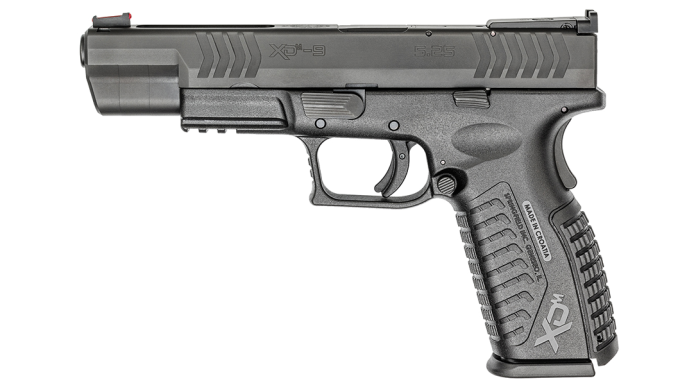
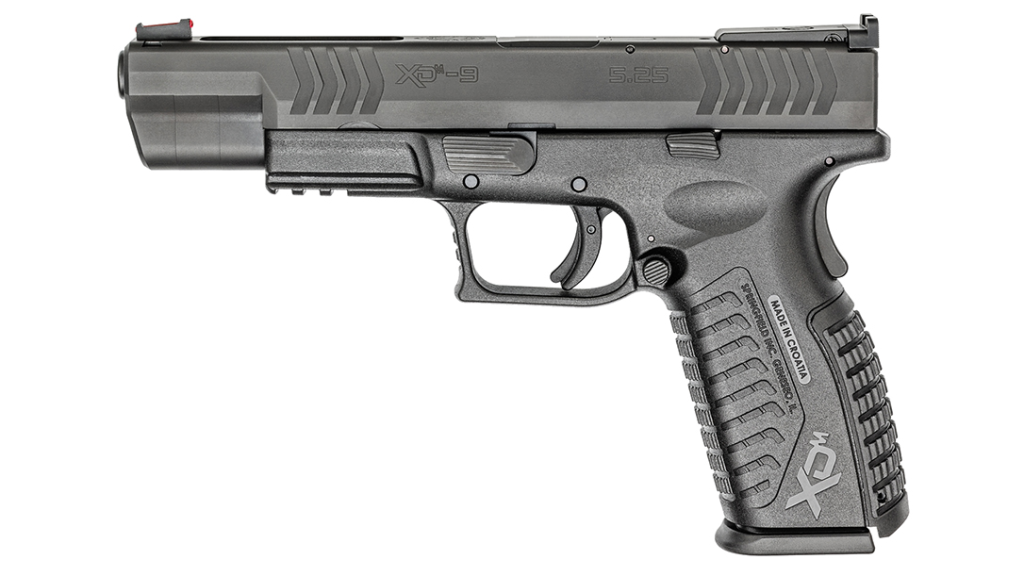
The 9x19mm did not become the cartridge of choice in a handgun by chance. It persisted because it was practical to real world limitations: it was recoil manageable, had terminal performance usefulness, and its magazine capacity could be scaled between duty guns and compact carry.
What is easy to overlook is the extent to which much of the modern common sense of the pistol was authored by a few designs that addressed certain issues, possibly crudely at first, before being imitated, advanced, and normalized. The following models emerged to win the reputation of altering the expectations in regard to weight, controls, ergonomics, and operating systems.
1. Glock 19
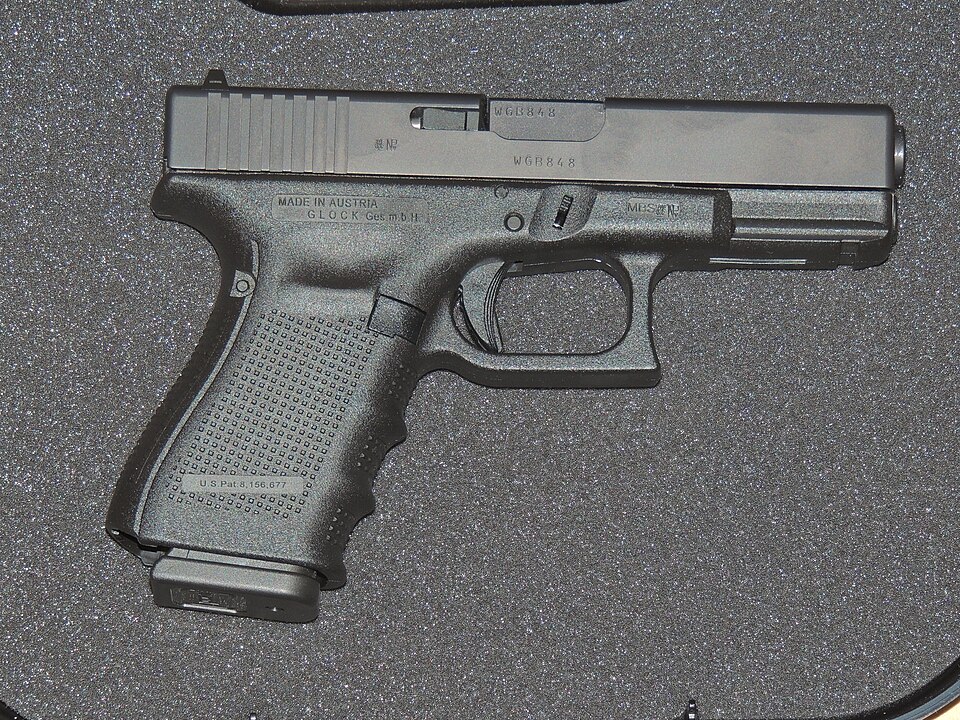
There is hardly a pistol that left the do-it-all footprint like the Glock 19. Its medium size had a balanced concealability and service-pistol shootability, and the striker-fired trigger system provided a uniform press that made training simpler. The concept that a handgun that was capable of holding a duty could yet be light enough to be carried all day without feeling weak was normalized too by the polymer frame. Not less significant, the platform disseminated an ecosystem mentality: extensive holster compatibility, similar patterns of magazines, and straightforward integration of weapon lights and swaps between user-level parts.
2. Browning Hi-Power (P.35)
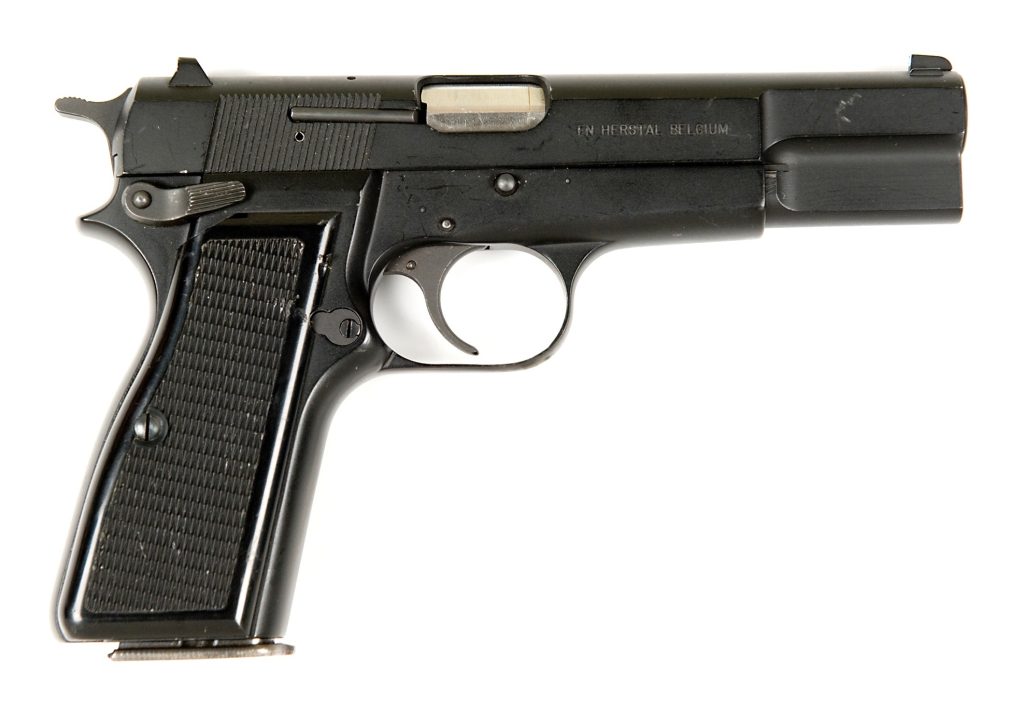
The Hi-Power also assisted in turning capacity into a necessity and not an option. It was introduced in 1935 and combined a single-action firing mechanism with a grip form that would become an ergonomic pointability benchmark most subsequent pistols tried to follow. The most successful was its demonstration that a fighting pistol could operate with a double-stack with a magazine and still have a grip that was not turned into a brick, which would reverberate through all the high capacity service guns that followed it. The durability of its service in the military as well also contributed to making 9mm a serious duty cartridge not a niche European choice.
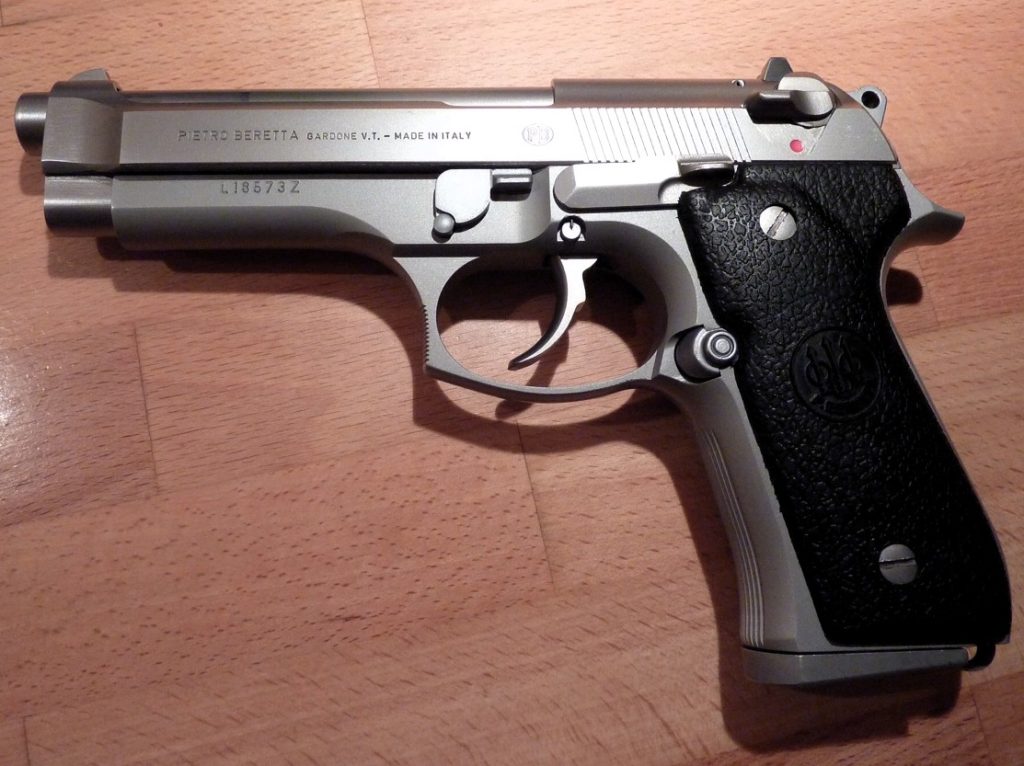
3. Beretta 92 (M9/92FS family)
Beretta 92 family turned out to be an iconic representation of the metal-frame wonder nine era. Its open-slide design provided ample ejection clearance, the locking-block mechanism and long sight radius gave controllability and practicability. The education doctrine of a generation of uniformed carry was well matched to the DA/SA trigger format, first pull long, follow-ups shorter. It is immediately identifiable in its silhouette since it had decades as a standard service sidearm, and it is now possible to compare the 92 to what the full-size 9mm is like to the grip.
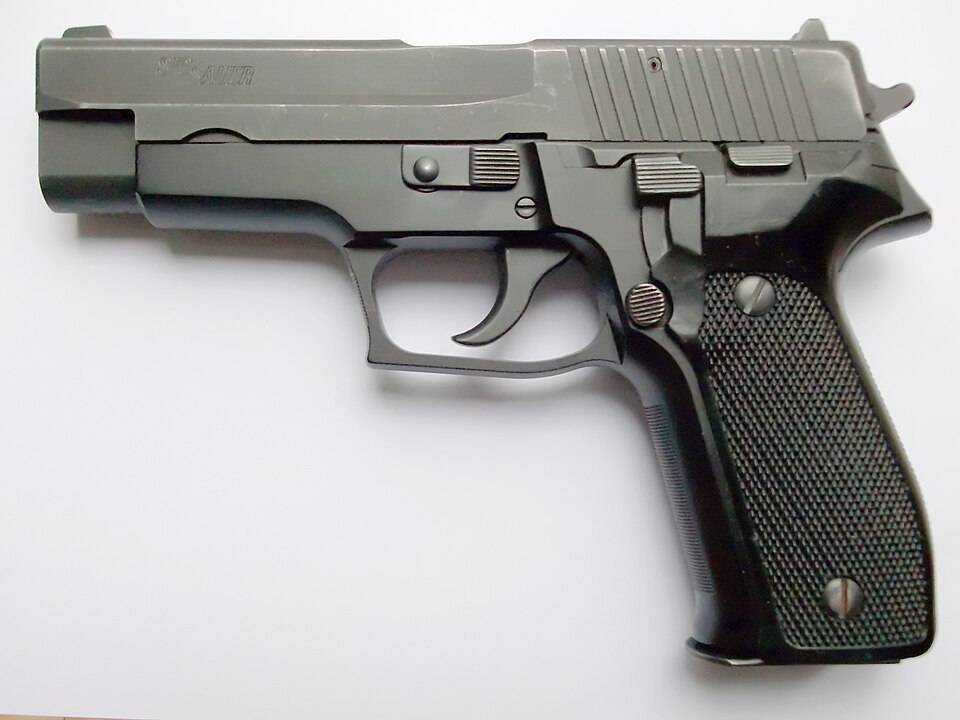
4. SIG Sauer P226
P226 got its chance being dull in the right sense: lockup durability, consistent handling, and long life with high round counts. Its weight and balance enabled quick, responsible shooting in extended training periods, in which little design requirements are exhibited in tiredness and reliability. The later models introduced optional rails and optics-ready features but the fundamental concept remains the same, it is a professional grade, hammer-fired service pistol that rewards good discipline in shooting. That is one of the reasons that the P226 is still a reference point to shooters comparing it to other 9mm-duty guns.
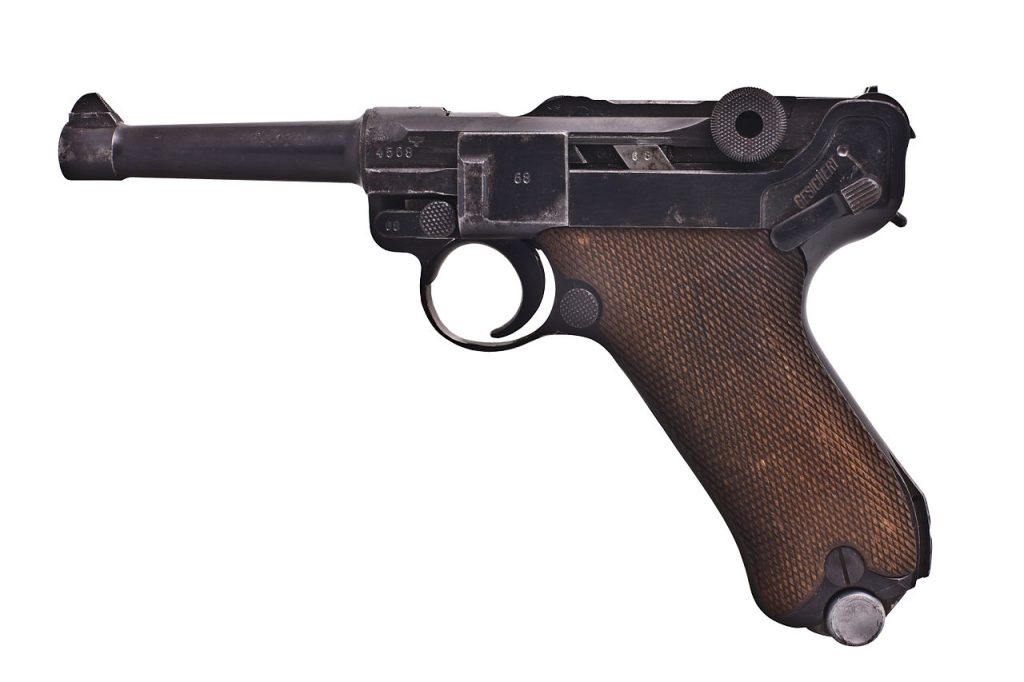
5. Luger P08
It is because of its mechanics rather than its influence that the Luger P08 is remembered. It has an engineer-stamp recipe of a toggle-lock action, yet its greater legacy is culture and ballistics: it contributed to making the 9mm Parabellum well known as a military sidearm cartridge. Field histories and evidence in initial catalog listings emphasize the popularity of the combination, the cartridge being developed when Georg Luger made it in 1902 by shortening his 7.65mm case to take the 9mm bullets. The silhouette of the design remained entrenched in the minds of people of what an early semi-auto pistol should have been even after the design was no longer used in service.
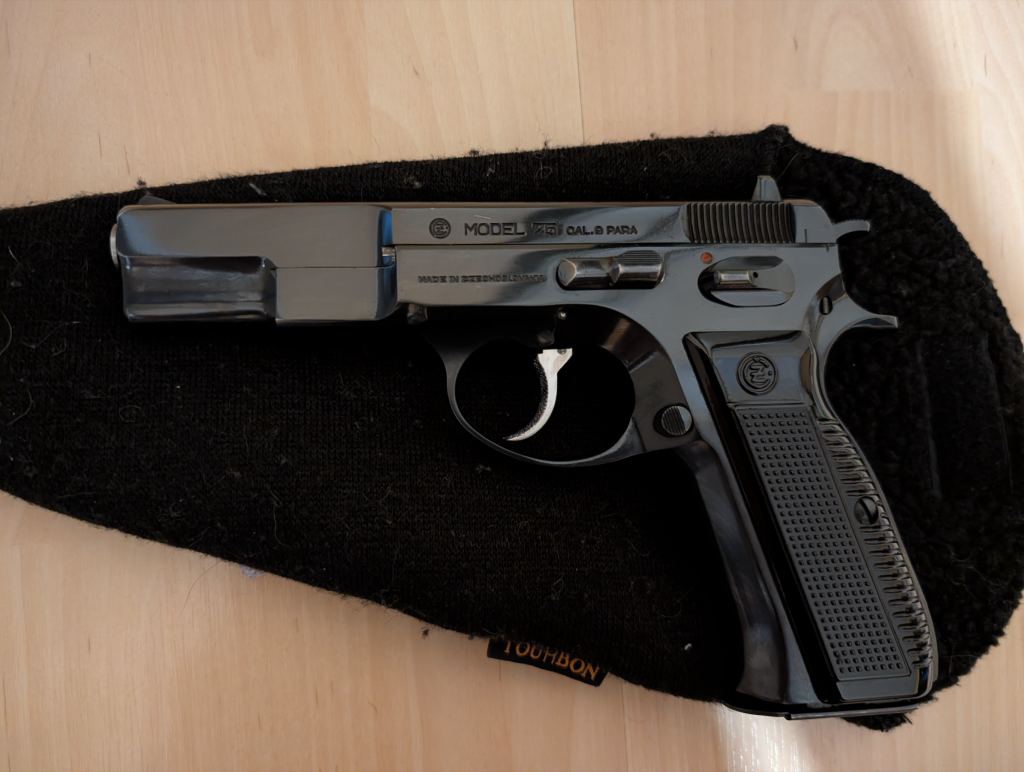
6. CZ 75
CZ 75 earned its fame through a combination of geometry and weight to easy handling. Its internal slide rails minimize the profile of the slide and adds to the lower bore axis feel helping to control recoil during rapid strings. It was introduced in 1975 and packed a high capacity DA/SA system featuring high level of steadiness that was all steel and earned the admiration of competition shooters and other professional users. The pistol also showed that ergonomic was not a marketing term in that when the grip shape, the trigger reach and the balance line are all in line, then one can achieve greater accuracy to more hands.
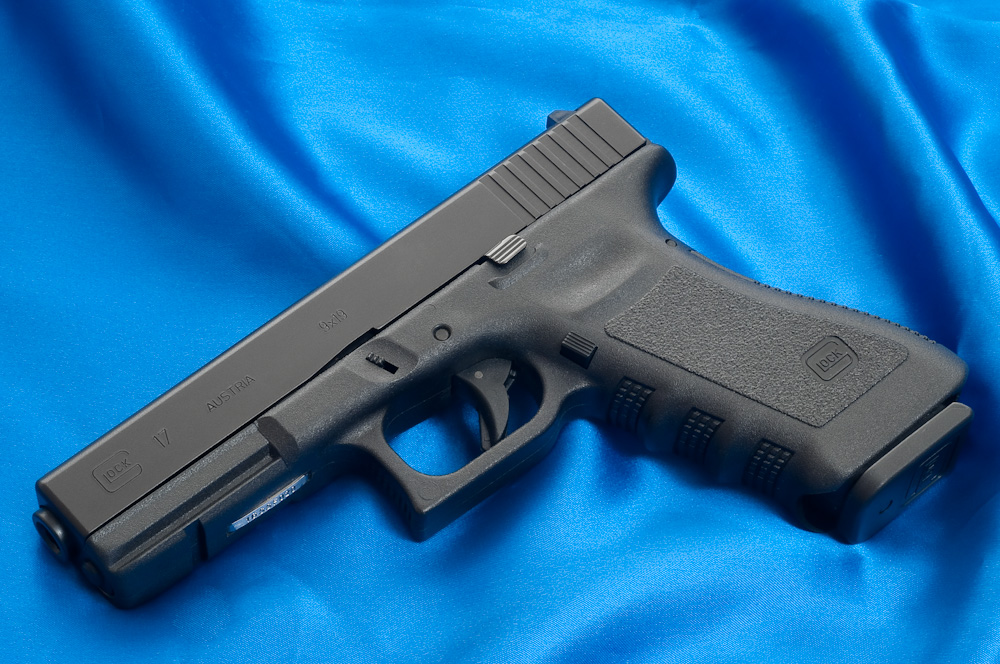
7. Glock 17
Glock 17 did not simply popularize a pistol, it authorized a manufacturing style. The striker-fired system and polymer frame reduced external controls to the greatest extent possible and gave the greatest possible durability, and even more importantly, that combination transformed the thinking of procurement concerning agencies throughout the world. It also set a new precedent when it comes to capacity-to-weight ratio in a full-size duty gun. The model is often said to have been introduced in the 1982 as a polymer-framed service pistol, such as Gaston Glock launched the Glock 17 in 1982, a moment that compelled the industry to take polymer as a viable material, rather than an experiment.
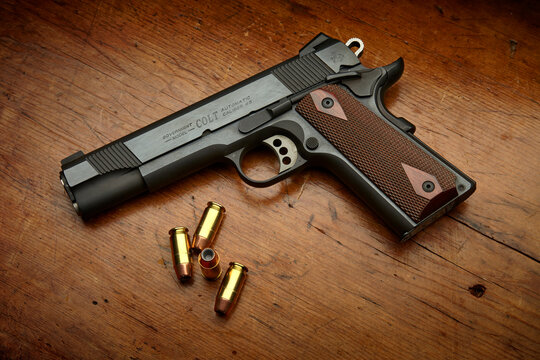
8. Colt 1911 (9mm variants)
The 1911 cannot be discussed out of context of the lore of the .45 ACP, but the 9mm models make the design shine where it always did: a straight-back triggering press, a thin ergonomics profile, and an innate pointability. Those human-interface capabilities in 9mm are combined with less recoil and quicker shot-to-shot recovery, and the format is appealing to those who wish the weight of an older firearm without the bigger push. The bigger picture is that longevity has to be engineered: good control layout, predictable trigger system, and so on, are useful no matter what chambering.
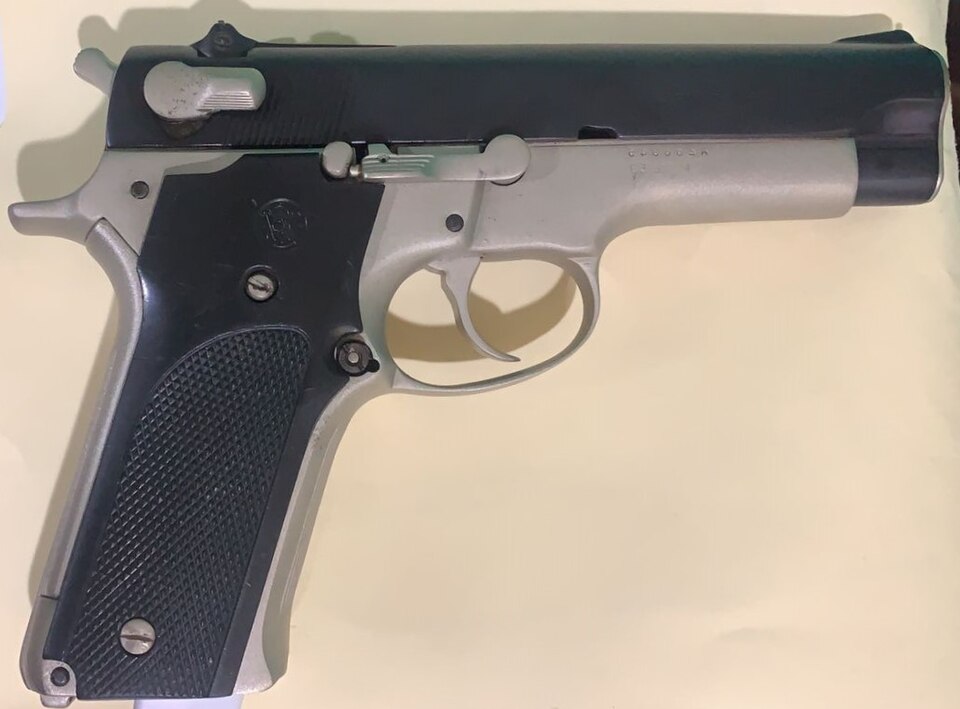
9. Smith & Wesson Model 59
Prior to the emergence of the wonder nine tag line, the Model 59 had turned high-capacity 9mm into a viable American duty choice and not an importation novelty concept. To lighten it, it added an aluminum frame with a 14-round double-stack magazine, bringing the U.S market close to service-sized semi-autos with real capacity. Its impact also can be observed in the family tree: the groundwork before it is the predecessor of subsequent DA/SA, and its role is in the bridge to further generations of S&W duty pistols. Reflectively, the Model 59 is not that much about fashion but that of time, when agencies and shooters were ready to reconsider revolvers as the default.
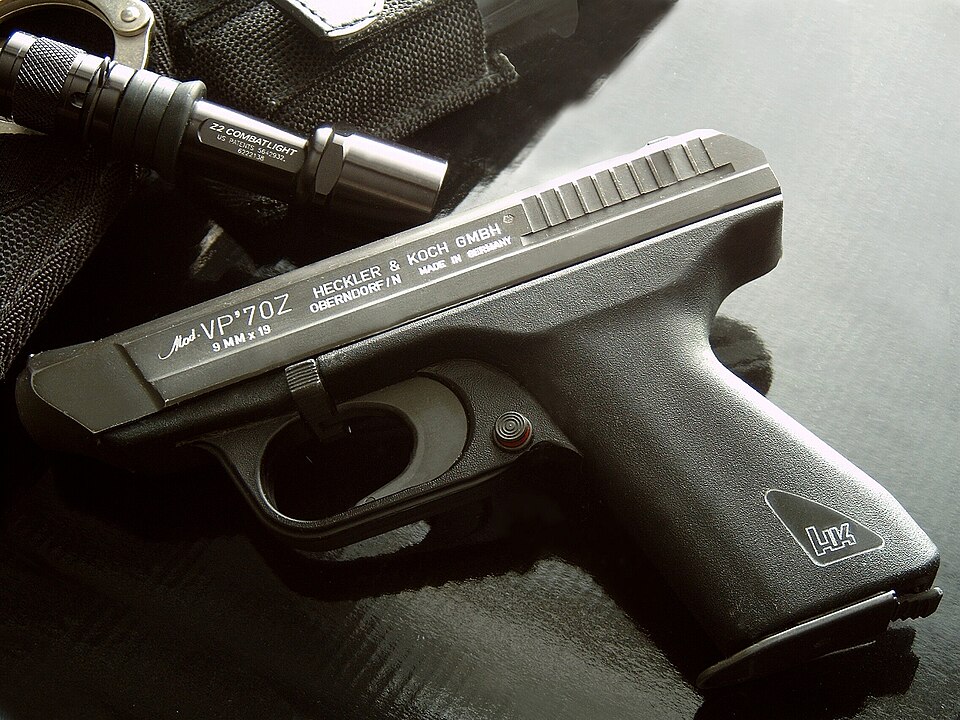
10. Heckler & Koch VP70
This VP70 reminds people that technical importance is not commercial dominance. It is frequently said to be the first polymer-framed pistol to be produced, putting lightweight materials on the table long before polymer became the new normal. It also was aggressive in pushing limits of its generation, generally with an 18-round magazine. The ergonomics and trigger nature ensured a limited usage, yet the idea turned out to be enduring: polymer frames were able to be part of serious handguns, and not prototypes only.
Across these designs, the common thread is problem-solving: capacity without bulk, reliability with simpler controls, shootability with better geometry, and weight reduction without giving up durability. Each pistol left behind at least one idea that later became “standard equipment.”
That is the quiet power of the 9mm story: the cartridge stayed constant, while the handguns around it evolved into the templates still shaping today’s sidearms.


