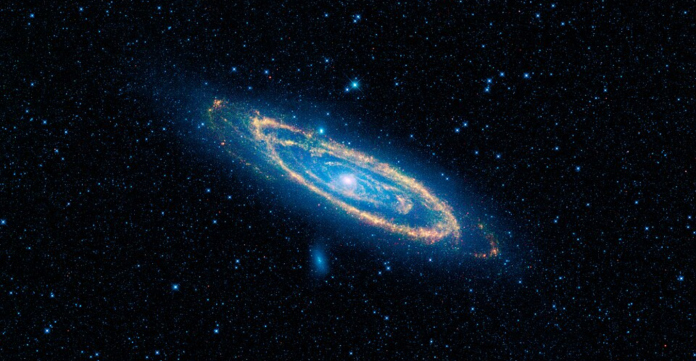
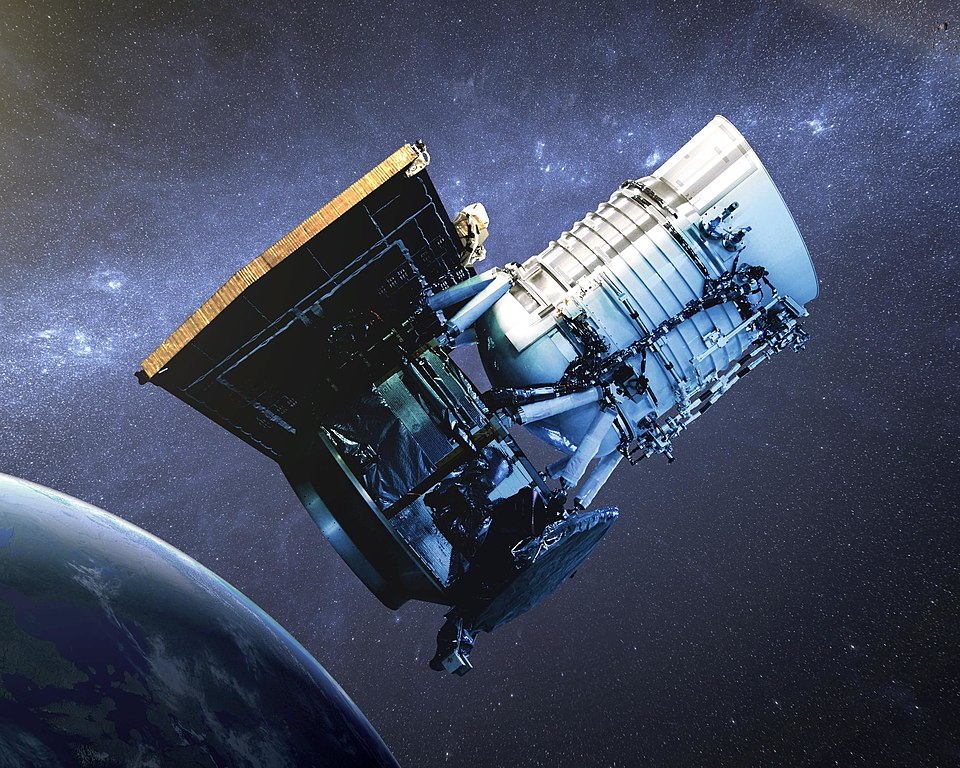
Telescopes that were unavailable ten years ago are now studying dozens of stars and at least one exoplanet worth a headline: all-sky infrared surveys, machine-learning filters, and spectroscopy precise enough to detect trace gases in a distant transmission.
It does not produce one smoking gun, but an expanding arsenal of discriminating against natural astrophysics and engineered residuals of waste heat, industrial chemistry or narrowband transmissions. Methodological is the most intriguing change: technosignature science is evolving into a solvable engineering problem (as well as astronomical) as well.
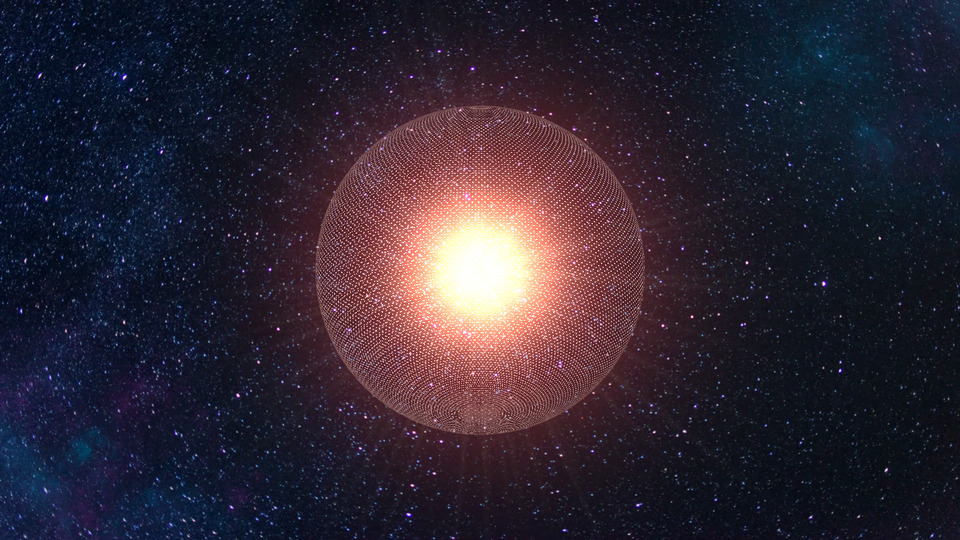
1. Intrinsic megastructure indication of mid-infrared waste heat
Excess mid-infrared emission is one of the most physical motivated technosignatures: when a civilization collects starlight on a large scale thermodynamics dictates that much of that energy must be reradiated as heat. Surveys of 60 candidate stars which have unusual strong mid-infrared have now put this concept of thought experiment into target lists. In extreme cases some candidates are appearing many times brighter than stellar models predict even in the mid-IR, up to 60x, as well as with partial, or fully, Dyson swarm, geometries instead of a shell. This is often modeled in terms of a covering fraction (what fraction of the starlight is intercepted) and a typical waste-heat temperature, since the two are the ones that dictate the location of excess in instruments such as WISE.
2. Sifting impostors using machine vision and astrophysical forensics
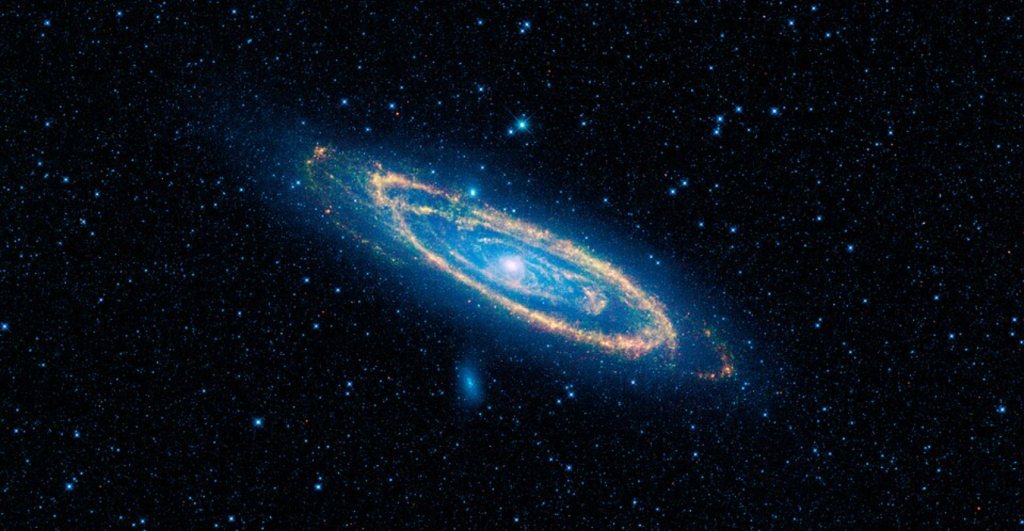
The occurrence of excess IR is not uncommon; dusty disks, recent collisions and background galaxies can be mistaken as waste heat. The difference to modern searches is the pipeline: multi stage cuts through catalogs, image vetting and learned classifiers that identify contamination patterns that humans would not have noticed on a large scale. Under Project Hephaistos style methods, WISE images are filtered by convolutional neural networks to identify nebular objectives and the background noise before the initial step of astrophysical modeling. A smaller group of objects, such as the seven red dwarfs in less than 900 light-years, passed such filters with surpluses that also are hard to understand in the context of more familiar disk scenarios, placing them on the short list to be followed up with higher resolutions.

3. K2-18b and the issue of one molecule not a biosphere
K2-18b can be seen as an attempt to condense excitement and caution into one range. Observations with JWST have revealed methane and carbon dioxide, and possibly dimethyl sulfide (DMS), a substance on Earth associated with marine life. Later re-evaluations dropped the DMS value to 2.7 sigma, which is less than the discovery criteria, and lab experiments have shown that abiotic production could plausibly take place in hydrogen rich environments. The technical lesson that has persisted is the realization that life-detection in the atmosphere requires converging information: gaseous networks that are made to cohere under conditions of photochemistry, geology, and climate as opposed to an attractive peak in a noisy data set.
4. The engineering field of spectroscopy: finding a solution to look-alike gases
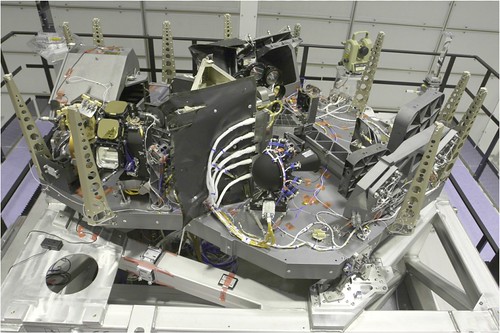
The combined NIRSpec, NIRISS, and MIRI instruments of JWST do not merely identify atmospheres, they quantify the way starlight is processed by them, making chemistry a signal-processing task. In the case of unclear species, such as DMS, the bottleneck is the separation of overlapping absorption characteristics between chemically related species and systematics of the instrument. Multi-instrument, repeat-epoch spectroscopy, which determines whether an inferred gas is stable between observing modes and whether companion gases occur in proportions consistent with a consistent atmospheric model, is the most plausible route. Exoplanet characterization Future observatories can build on this strategy by making sensitivity limits further, increasing wavelength access, and reducing control over stellar-activity confounders.

5. Technosignature: industrial pollution
The technological civilizations can be identified easier by the byproducts atmospheric and persistent that they cannot easily conceal. Studies evaluating the capability of JWST to identify industrial pollutants like chlorofluorocarbons reposition SETI as an astronomical investigation of chemical scales of planets. CFCs are important since they have long atmospheric lifetimes and no apparent natural high-flux processes of synthesis that can be compared to industrial synthesis on earth. The observational practicality is also an influence on the search: dim and small stars (and especially M dwarfs) may be more convenient to detect in transit with atmospheric features easier to measure, although the early flare histories of these stars can complicate the argument of habitability.
6. Radio searches in which exoplanets are considered moving targets
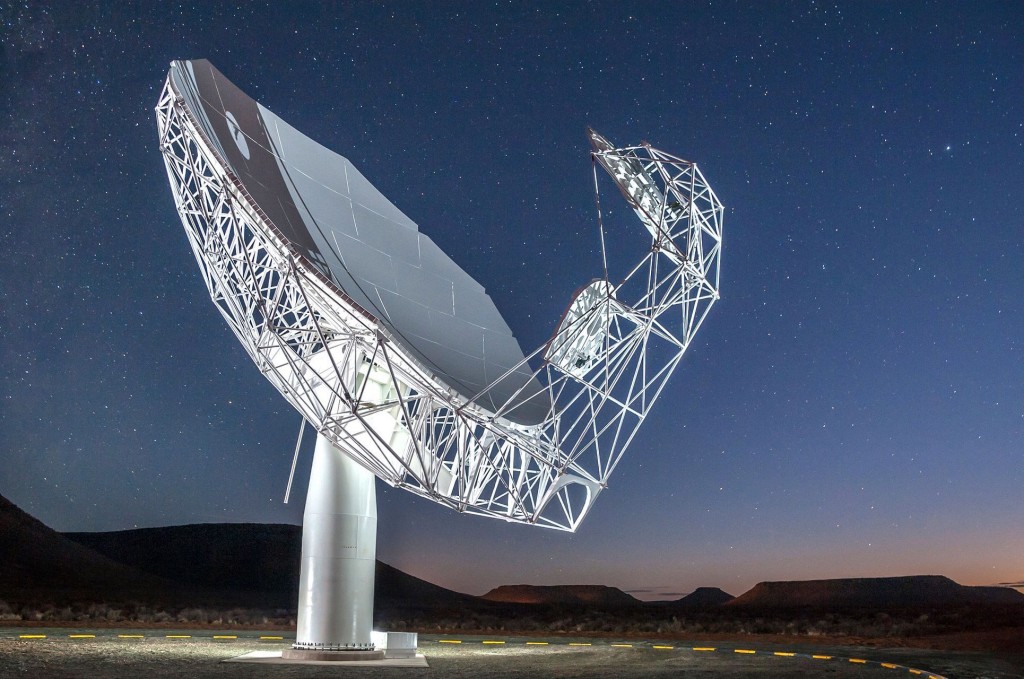
It is easy to point radio telescopes on a planet of interest; establishing that a signal is of alien origin is not. The VLA and MeerKAT at 544 MHz to 9.8 GHz (filtered to the system dynamics and observing geometry) reported no astrophysical or artificial signals above the said limits in a 2026 multi-epoch campaign towards K2-18b. The technical interest is in the structure: RFI masking guided by each observatory, drift-rate screening, multibeam spatial screening, and transit-conscious screening-techniques which more and more closely approximate disciplined fault detection in complicated engineered systems.

7. Lessons on citizen-science computing are taught to 14 billion trainees
SETI@home showed that sensitivity is not just an instrument property, but also a computing strategy. The project enlarged the possible parameter space by sharing Doppler-drift correction and spectral search results with volunteers and formed a large signal archive sufficient to require strict triage. In the last 20 years, interference rejection and consistency tests and a synthetic signals blind injection test to validate filters all helped to narrow about 14 billion candidate events down to only 100 statistical outliers. The remaining candidates are being useful just due to the fact that they are not being considered as detections; they are a controlled backlog to be re-observed with instruments like FAST, in which repeatability can be experimented under independent circumstances.
8. But how can something rare be still discerned in the wrong direction
Technological species can be scarce on paper because of more demanding requirements on their habitability. A simulation that includes the interplay of plate tectonics and a nitrogen-oxygen atmosphere in modeling the first technological civilization puts the nearest technological civilization at approximately 33,000 light-years distant with the added connotation that any discernible society is probably older than humanity. The undetected work of the Bayesians has suggested that high current detectability in proximity to Earth would need also implausibly high levels of missed events, forcing realistic searching methods to the size of a thousand or more light-years instead of the size of neighborhoods. The combination of these results does not exhaust the case, but rather elucidates what the engineering-grade survey needs to maximize: sky coverage, time coverage, interference control and sensitivity over a large search space.

In the infrared surveys, atmospheric chemistry and radio pipelines, the similarity is test design. Both methods now have explicit controls (repeat observations, injected signals, adversarial filtering against interference) that render non-detections informative and future detections justifiable.
That shift matters. Technosignature science increasingly advances not by louder claims, but by sharper constraints and better instruments for asking the same old question in ways the universe can actually answer.


