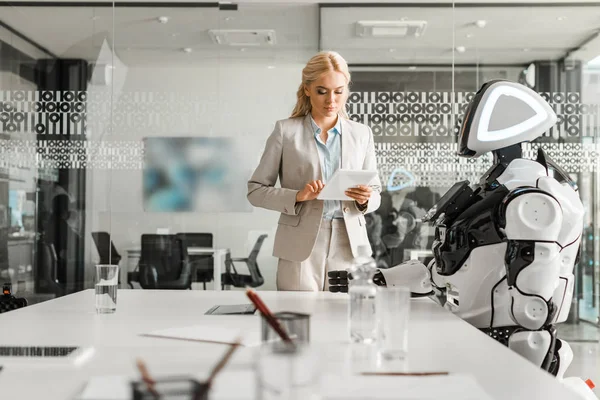
Why did CES suddenly feel like a robotics lab with better lighting? Because the industry’s center of gravity has started shifting from AI that talks to AI that moves. On show floors packed with shadowboxing humanoids, choreographed dance routines, and robots role-playing as shopkeepers, the spectacle was obvious. The engineering subtext was louder: companies want “physical AI” to become a repeatable platform, not a string of one-off demos.
That platform push showed up in the chips, the models, the simulation stacks, and the safety conversations that trailed behind every polished performance.
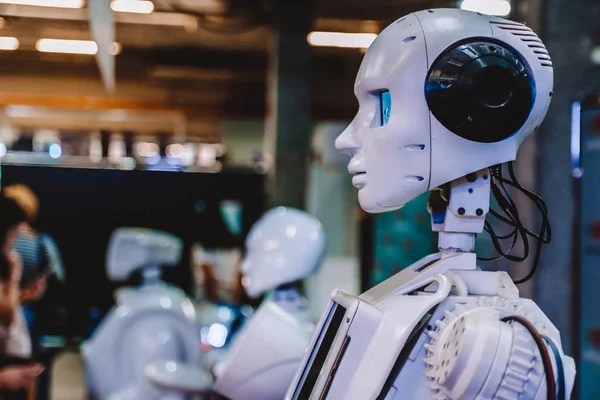
1. “Physical AI” becomes the organizing label
CES conversations increasingly clustered around “Physical AI” as shorthand for systems that perceive, reason, and act through machines rather than generate text or images. The practical definition includes sensors and actuators tied to models that can plan under tight latency and power limits, often on-device instead of in a data center. That constraint is not cosmetic: a robot that hesitates because connectivity drops behaves like a broken appliance, not an intelligent coworker.

2. Nvidia frames humanoids as a software platform problem
Nvidia used CES to argue that robotics is having its “ChatGPT moment,” with Jensen Huang saying, “The humanoid industry is riding on the work of the AI factories we’re building for other AI stuff.” The company positioned its newer robot-focused models and tooling such as Gr00t vision-language-action models and Cosmos “world models” as the missing layer between sensor input and reliable body control.
The wager is that shared model families, standardized evaluation, and repeatable training workflows can replace hand-tuned robotics development that rarely scales beyond a lab team.
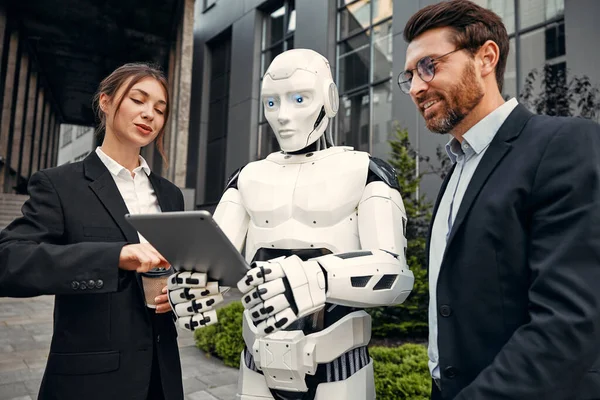
3. The show-floor gap is still the real product challenge
Humanoids grabbed attention because they are “the best kind of eye candy,” as CCS Insight’s Ben Wood put it, but he added, “we’re still a very, very long way from the commercial implementation of these.” That gap surfaced in small ways: a humanoid that can chat fluently while struggling to keep balance on plush carpet is still a systems integration problem disguised as a demo. The hard part is not a single capability; it is consistent behavior across messy environments.
4. AMD’s bet: tactile sensing and “body as compute”
AMD spotlighted an Italian concept humanoid, Gene.01, aimed at industrial deployment, with its maker describing distributed sensing and computation as the “brain.” Separately, Generative Bionics framed full-body tactile skin as a primary input for decision-making treating touch as an always-on perception layer rather than a last-ditch safety bumper. The core idea is fast local processing near sensors to enable split-second reactions, the kind that makes working near humans less precarious.
5. Qualcomm pushes “robot brains” toward edge reliability
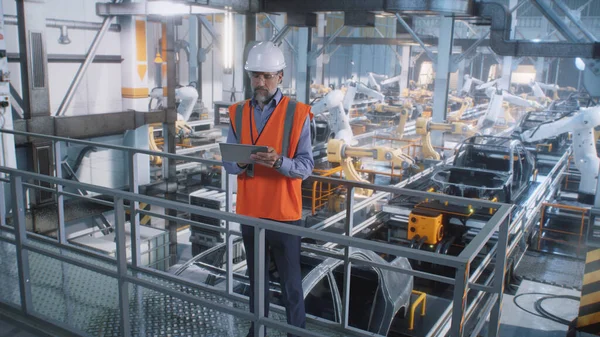
Qualcomm introduced its Dragonwing IQ10 robotics processor line and a broader robotics architecture intended to run perception and planning on efficient edge hardware. The company’s framing emphasized low-latency, safety-grade operation and toolchains that help robots keep learning through teleoperation and data flywheels. In practice, this is an attempt to make robotics feel less like bespoke engineering and more like deploying a supported compute stack that can move from service robots to full-size humanoids.
6. Boston Dynamics turns Atlas into a fleet, not a prototype
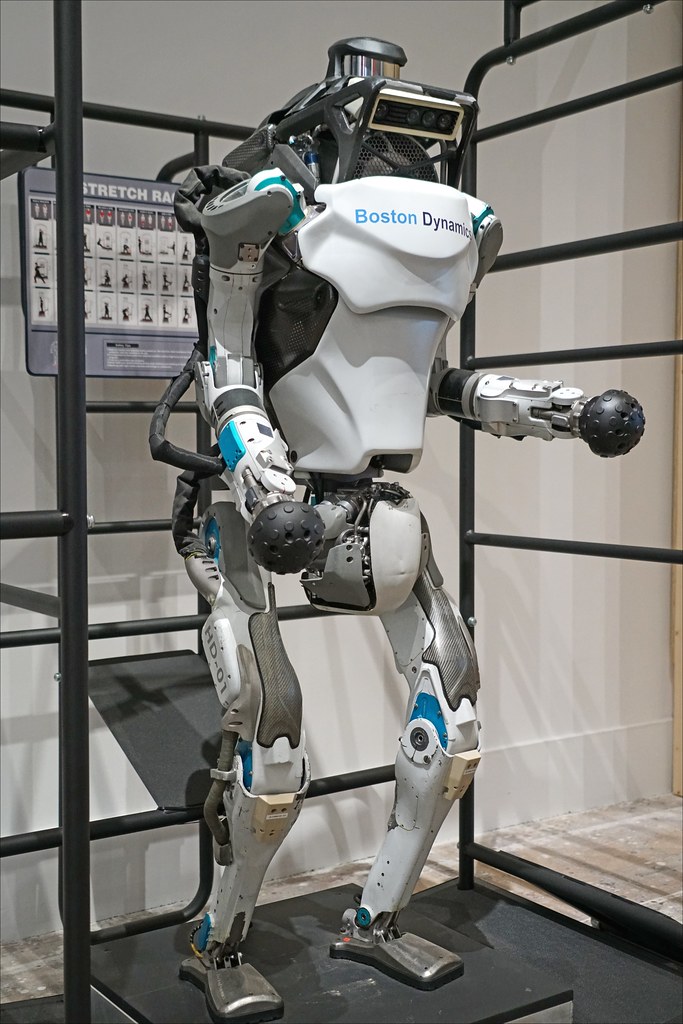
Boston Dynamics used CES to unveil a product version of its fully electric Atlas and said it will begin production immediately at its Boston headquarters. The company described an enterprise-grade machine with 56 degrees of freedom, a reach to 2.3 meters, and lifting capacity up to 50 kg, alongside modes that include autonomy and teleoperation. In parallel, it announced a partnership to integrate Google DeepMind foundation models into Atlas, pointing directly at the next bottleneck: scalable, reliable robot cognition that can be deployed across many sites.
7. The market narrative is big, but adoption hinges on four unglamorous bridges
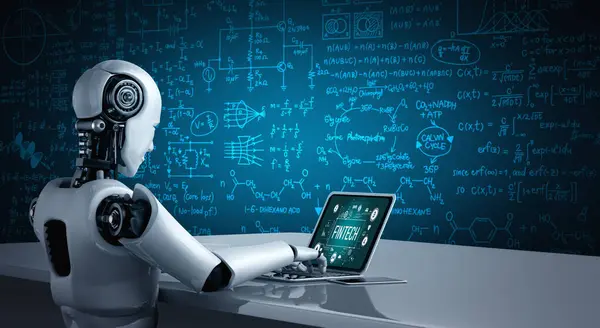
Forecasts like McKinsey’s estimate that general-purpose robotics could reach $370 billion by 2040, with use cases spanning logistics, manufacturing, retail, agriculture, and healthcare. Still, commercialization depends on basics that demos do not solve: safety in fenceless spaces, shift-length uptime, dexterity and mobility that survive real variability, and cost structures that fit operations. Even the home setting is an adversarial environment Association for Advancing Automation president Jeff Burnstein noted, “Home is very unstructured,” with edge cases as ordinary as kids or pets crossing paths.
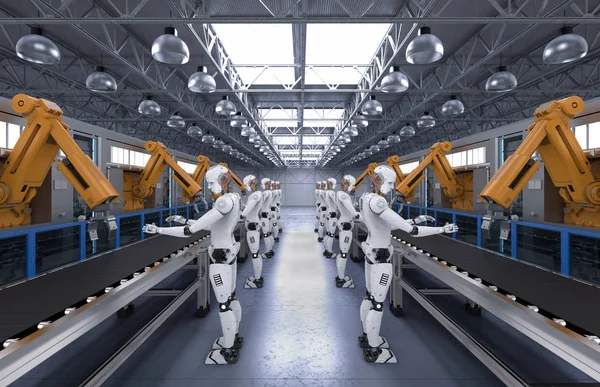
CES made humanoids feel inevitable in the cultural sense, but the engineering story is more specific. The industry is converging on stacks models, simulation, edge compute, and safety architectures that can be tested, reproduced, and certified. When those stacks stop needing perfect lighting, perfect floors, and perfect choreography, the “takeover” moves from the show floor to everywhere else.


