Climate change has become nearly a part of most design briefs, whether it is water systems or coastal roads, health services or power grids. The only thing that has changed is not that there are solutions, but that there is a growing disparity between what can be constructed and what can be managed, sustained and relied upon over decades.
The latter is most evident when engineering ambition intersects with public legitimacy. As of now, cooling down a planet, enabling infrastructure to be hardened, electrifying the economies of countries, all need technologies to be scaled, as well as the processes of decision-making to be accepted by communities at scale, as well.
1. The climate dashboard attitude
A single technology does not qualify as one of the silent facilitators of climate action, and that is because the habit of indexing: collecting lots of signals, in lots of places, and operating as a common operating picture. Places that tabulate world reporting and study make an effective map of where effects are manifesting themselves-heat, floods, sea-level rise, health pressures-and where reactions are quickening, e.g. renewable and efficiency. To the engineers and planners, this many sources, one view methodology assists in isolating structural tendencies and isolating local noise, and it prevents the long life assets to be architectured around the bases of yesterday.

2. The engineering reality check of solar geoengineering
Solar geoengineering is no longer in the fringes discussion, but is in fact in a contentious research area, due in large part to mitigation failing to keep risk abated at a pace comparable to the reduction. The best known route, stratospheric aerosol injection, is designed to reflect a few percent of sunlight to cool the planet in such a manner that it will reverberate temporary cooling observed following significant volcanic eruptions. Marine cloud brightening is another method that would attempt to enhance cloud reflectivity with the help of sea-salt particles.
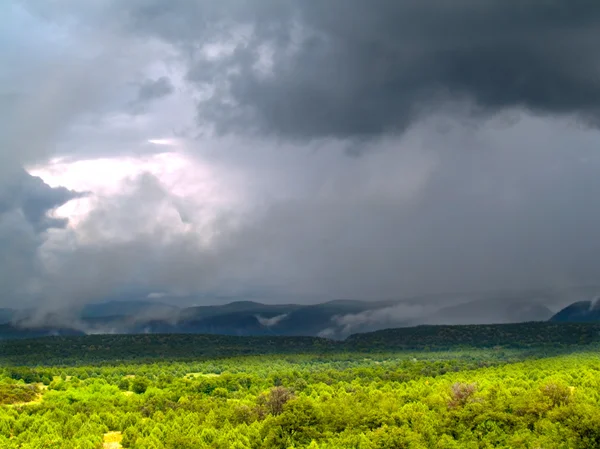
Models provide a first-order perspective on temperature effects, which is technically true. In practice, the fundamental difficulty is uncertainty in regional impacts – shifts in rainfall, disruptive monsoons, ecosystem pressures – and the lack of correspondence between high deployability and slow governance. With the growing range of outdoor experiments beyond simulation, the governance issue is constrained by engineering: what is testable, where, under what authority, and with what transparency.

3. The design requirement of governance
Research governance is taken to be a paper work which comes after technical work. In solar geoengineering, the governance is a component of the apparatus. The tools such as registries, codes of conduct, data-sharing norms, and independent assessment processes are recommended that are not new to high-stakes arena like clinical trials. Business The most operationally applicable principle is that, transparency is not an optional communications layer; it is a risk-control layer. In the absence of plausible supervision, incentives are biased toward closed experimentation and proprietary claims, and public trust is difficult to win back compared to any dataset.

4. Climate strikes engineering at the water
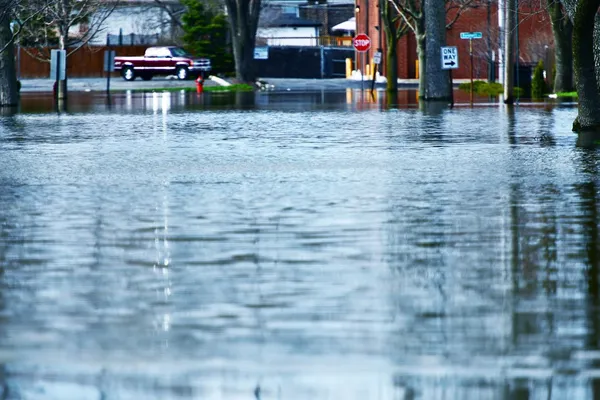
Warming changes when and how much it rains creating a split-screen world where it rains heavier and drought is deeper. Reduction in snowpack and earlier melt diminishes a natural reservoir system that most areas depend on during dry months. The floods cause stress-tests to the capacity of stress and the transport corridors, and the drought puts the agricultural demand at the wrong time as supply becomes tight. These are not edge cases, but load conditions which repeat to reveal whether the infrastructure was built with stationary climate assumptions or with a moving envelope.
5. The resilience gap is accounted in individuals
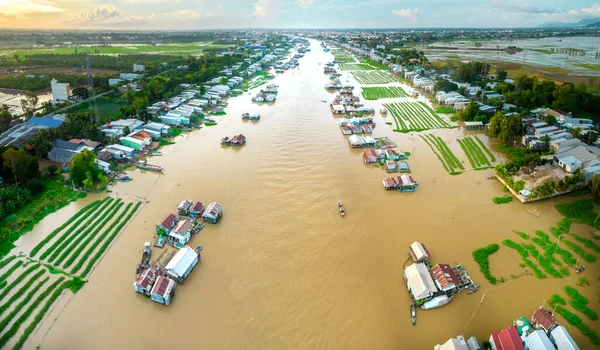
The concept of risk is becoming humanized: exposure and protection. It has been observed that approximately 40 percent of the land on the earth periodically endures intense heat, forest fires, drought or excessive flooding to impact an estimated four billion people, and it explains a resiliency gap whereby vast numbers of people have not been in place of typical adaptation strategies. At a warming level of mid-century planning, heat protection costs prevail since exposure is extensive, whereas coastal flooding has a smaller proportion of the individuals despite the fact that sea levels are still increasing with time. The planning implication direct- it will be the prioritisation based on scalable heat measures, such as cooling, urban greening, building envelopes, as well as water and flood management that aligns with hydrology as opposed to administrative boundaries.

6. Climate infrastructure now comprises health systems
The idea of climate change is becoming increasingly discussed as a health multiplier, exacerbating heat stress, enhancing the risk of water- and food-borne diseases, and causing mental health stress, as well as diminishing capacity of health systems during shocks. According to the World Health Organization, the estimates of the global population are 3.6 billion individuals who already live in very vulnerable locations and it was estimated that in the next twenty years (2030-2050), the number of people will die due to various causes in large quantities. To the engineering mind, the notable change is that hospitals, clinics, supply chains, and workforce resiliency should be treated like critical infrastructure: it must be resilient to redundancy, passive survivability, and power continuity during extreme heat and flooding.
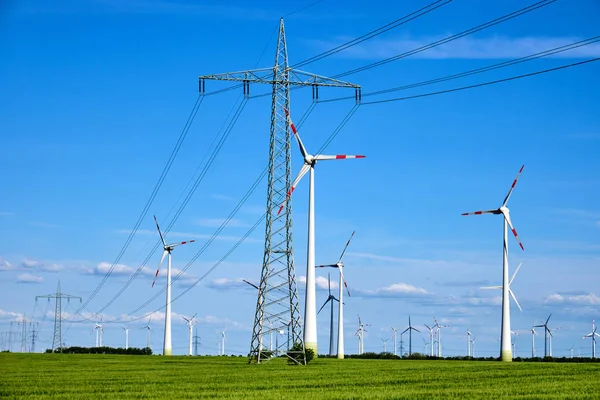
7. Clean electricity is scaling faster than demand so grids become the bottleneck
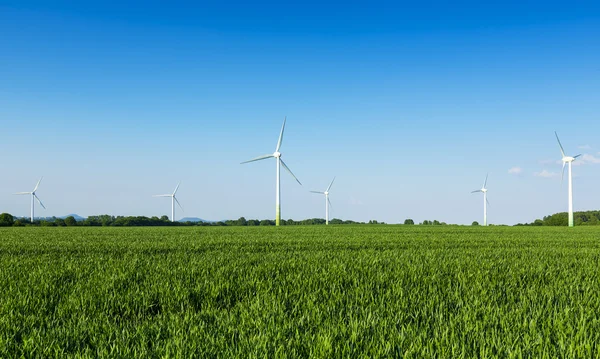
Integration, and not generation, is increasingly limiting decarbonisation. According to the Global Electricity Review 2025, two complementary trends can be outlined: the steep growth of solar and strong demand growth as transport, heating, and data centres go electric. It further reports that the solar has contributed most to new electricity in the past three years and that flexible technologies like battery storage are at the center of eliminating the need to generate electricity through fossil fuel. To the current field of engineering, the edge now lies in making interconnection queues, transmission buildout, protection equipment, and operational flexibility work: one less visible than new panels, but conclusive to reliability.
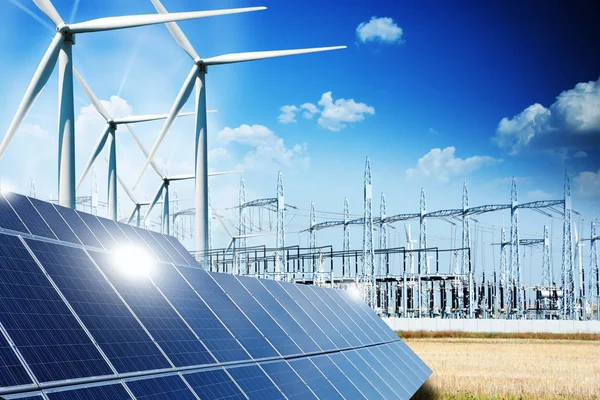
These threads, when combined, capture one engineering issue, namely balancing planet-scale risk with human-scale legitimacy. Technologies are modellable, prototable, and deployable; trust has to be built-in into the process of their deployment. The following step in climate-era engineering is being characterised more by governance and inclusion than by materials, megawatts and tonnes of carbon avoided.


