

By mid-2025, China will have an operational fleet of satellites in orbit that surpasses 1,060, a number large enough to force U.S. planners to treat orbit as an operational domain that can be coerced, interrupted and contested by surprise. For U.S. Space Force in 2026, readiness is increasingly a function of how fast architectures can take interference and keep delivering effects to joint users.
A pivotal change is doctrinal no less than technological. The service’s ”Space Warfighting: A Framework for Planners” codifies a shared lexicon and methodology to offensive and defensive counterspace operations in the orbital, electromagnetic, and cyberspace mission domains. In a foreword, Chief of Space Operations Gen. B. Chance Saltzman asserts that “space superiority” is key to unlocking superiority in other domains, fueling Coalition lethality and fortifying troop survivability.
The operational question for 2026 is, of course, which programs and capabilities most directly translate that intent into robust, repeatable operations. The above items are systems, initiatives and near-term milestones that most obviously form the Space Force’s posture of readiness during this year.
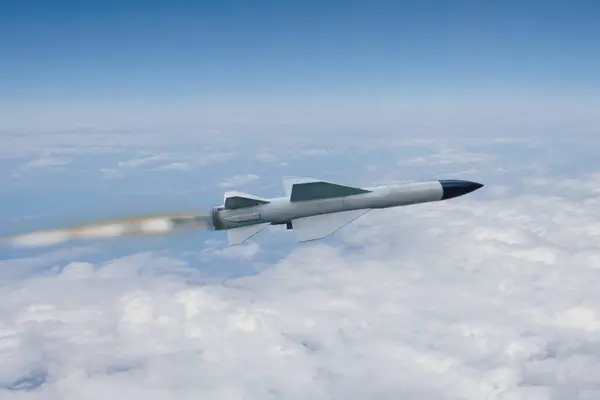
1. Missile warning system that does not lose functionality when under pressure on sensors
U.S. missile warning and tracking work are the cornerstone of joint defense planning, with hardware like the Space-Based Infrared System and still-in-development Next-Generation Overhead Persistent Infrared satellites furnishing global detection of ballistic and hypersonic launches sometimes within seconds of launch. The engineering challenge in 2026 is not to prove the physics of detection, so much as it is to provide continuity under interference that might be brief but which can become operationally important.
That resilience push is buttressed, too, by a push even in the direction of proliferated sensing such as the Space Development Agency’s tracking layers that are designed to spread out coverage and complicate targeting. The late-2025 award by the service for Tranche 3 tracking layer work a $3.5 billion commitment resulting in 72 new satellites is an example of the budgetary and architectural momentum behind “more nodes, fewer single points of failure.”

2. Secured comms and GPS for austere environments
They are not optional infrastructure, at least in current combat operations; they are the connective tissue between sensing, decision, and action. They are that, as the nation learned in Vietnam, Iraq and Afghanistan experience of battle has shown us time and again, jam-resistant systems such as the Advanced Extremely High Frequency (AEHF) constellation or the military GPS with its improved anti-jam M-code are predicated from the outset on an adversary’s inevitable determination to interfere with a judgment offinding “good enough” rather than perfect solutions being reached in order to keep command and control usable.
Under a readiness framework, 2026 highlights operational availability: terminals, waveforms, user training and being able to revert to alternative paths when links are denied. Far briefer disruptions have the potential to work their way through mission planning, timing distribution and precision navigation realms in which “mostly working” is often operationally indistinguishable from failing.

3. Space domain awareness that is able to see close and decide fast
To be sure, space domain awareness is ever more a maneuver and protect activity, not just cataloging. Maneuverable tools that the U.S. inventory includes are the Geosynchronous Space Situational Awareness Program satellites, or GSSAP, which operate in geosynchronous orbit and can move close-in to take a deeper look at objects. Upgrades to the ground-based systems such as optical sensors have also expanded the tracking capability and ability to characterize behaviors leading up to interferences.
For daily or near-daily reversible threats cited by U.S. officials jamming, dazzling and cyber activity, for example ― the value of attribution-quality observations is multiplied. Readiness, in operation, hails from blending commercial and government sensing, sustaining analyst throughput and keeping decision timelines quick enough to reposition satellites or maneuver operations before the disruption turns into mission failure.
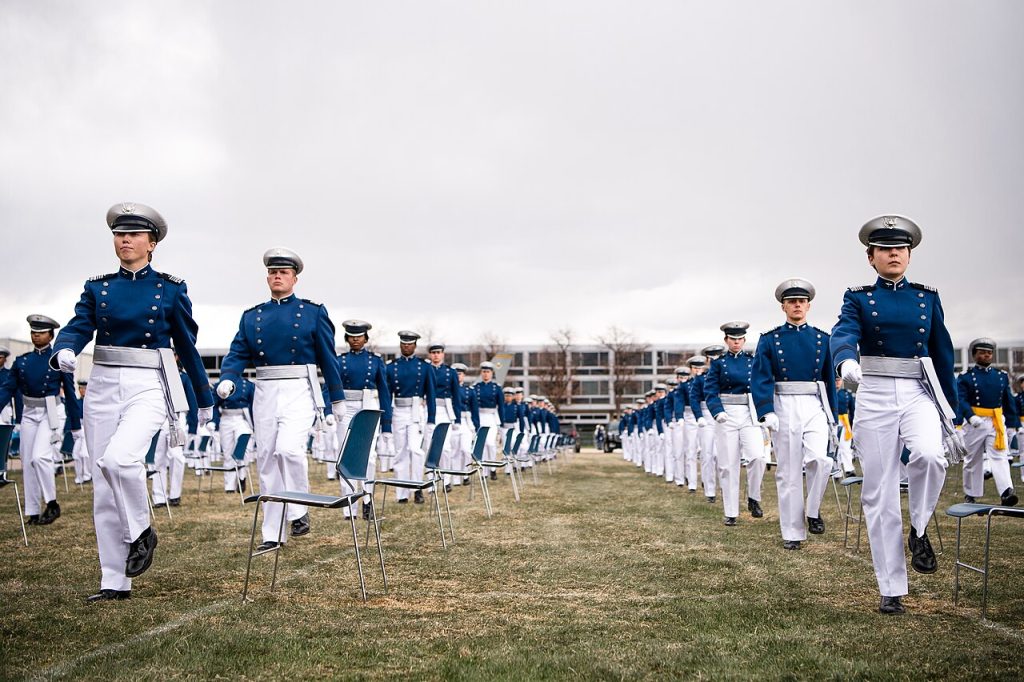
4. Space Warfighting doctrine translating into available counterspace capabilities
Doctrine does not become effective until it systematizes planning and offers guidance on unit action. The Space Force structure unifies counterspace operations through orbital, electromagnetic and cyberspace warfare and explicitly lists offensive and defensive measures used to achieve space superiority. In another articulation of the same aim, Saltzman says, “It is a formative goal of the Space Force to achieve space superiority that is, freedom of movement for our forces in orbit and denial of equivalent mobility to our adversaries.”
For the frame, planners are provided a nomenclature which embraces the vocabulary of orbital strike, space link interdiction, terrestrial strike and an active-passive defense for space. The readiness impact for 2026 is the implementation of consistent planning constructs throughout combatant commands and coalition environments, which would decrease ambiguity in requests for space control capability, tasking and feedback.

5. Golden Dome space-based interceptor prototypes put to the test in affordability push
Golden Dome adds a missile-defense-centric set of requirements that yanks on sensors, command and control, and various potential interceptors in orbit. Space Force issued competitive prototype contracts for boost-phase space-based interceptor concepts in November 2025 and kinetic midcourse prototype awards are anticipated in February 2026. This acquisition approach prototype-centered and OTA-driven reflects an effort to move fast at a time when requirements are still being fleshed out.

Gen. Michael Guetlein, director of the Golden Dome, which includes AFWERX and its team, said being technology-base was already there while fast tracking integration and execution. “The technology we require to provide Golden Dome is available today,” he said, stressing the need for combined control and command. But unless something else “moveth” (doing so on the space side, after all, is fundamental), cost and scale are still the engineering constraint that leads to everything from constellation size to interceptor “magazine depth,” because prototype demonstrations in 2026 will be as much about manufacturability and lifecycle economics as they are about intercept physics.
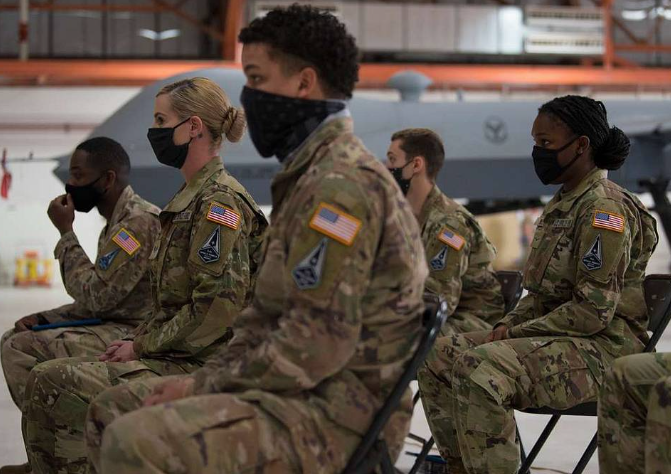
6. SWORD, the scalable distributed digital training environment
Preparation in a contested domain relies on training that can safely simulate obstruction, close-approaches, and complex multi-actor behavior without revealing sensitive tactics. The Space Force’s Space Warfighter Operational Readiness Domain was placed as the service’s distributed synthetic training environment, an enterprise-accessible platform with more realistic modeling and wider system representation than its predecessor that emerged from the old Space Flag exercise.
Col. Corey Klopstein explained the drive to move it to a cloud environment and make it available at multiple locations: “Now we want to scale that for enterprise use. We want it to be higher fidelity. We are interested in making that more precise. The 2026 marker is requirements finalization, an unglamorous but critical step that will set the pace on whether SWORD becomes a unit-level utility across the force or something simply exercised may detain.

7. On-orbit servicing demos at GEO, with the goal to launch real space logistics
In all, four planned 2026 demonstrations will test refueling, repair, inspection and maneuver-support operations in geosynchronous orbit an operationally significant realm where satellites are pricey, long-lived and fuel-thrifty.) If we can increase mission life and make “dynamic space operations” (DSOs) a reality, then survivability factors are reset due to the decrease in maneuver penalty, which allows recovery from anomalies that would otherwise disrupt and limit spacecraft service life.
Industry players have pitched GEO servicing as economically attractive, thanks to the concentration of high-value customers. “Every year about 10 to 20 reach their end of life because they run out of fuel,” said Rob Hauge, a vice president at SpaceLogistics. There is a straightforward readiness impact: servicing and refueling generate options to reposition assets, regenerate capability, and sustain coverage without awaiting replacement launches an engineering lever behind resilience as a daily operating mode rather than as merely a backup plan.
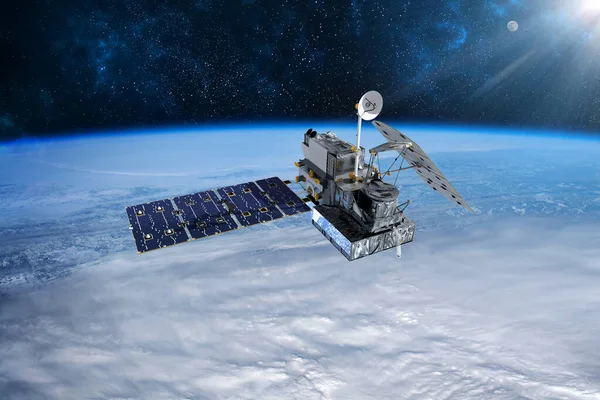
There is a common theme that runs through these efforts, an engineering concept that will define 2026 readiness: distributed architectures, training environments which accurately spoof interference in the real world and logistics concepts that make satellites reusable as opposed to disposable. The year’s events do not remove vulnerability in space systems, but they institutionalize the ability to work on through disruption.
For Modern Engineering Marvels readers who have been following the interesection of space systems design and operational utility for a while, 2026 is noteworthy because in this year several strands – doctrine, acquisition, training, commercial integration and in-space servicing – move off paper or pilot into requirements setting and prototypes and measurable demonstration.


