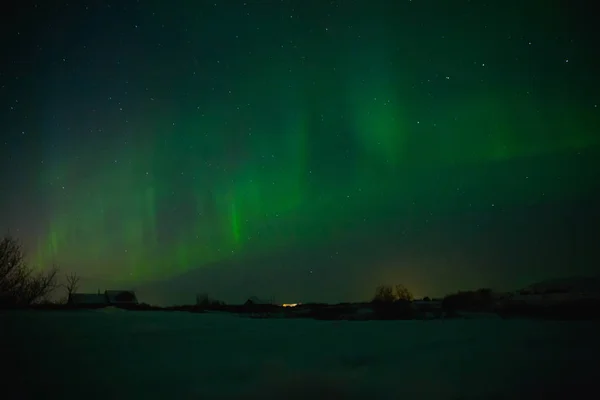
Auroras have a way of stealing the show until engineering reality checks in. The same space-weather chain that can turn the night sky electric also can bend radio signals, tug on satellites, and send crews in orbit to the most shielded corners of their spacecraft. Recent activity linked to late-2025 solar storms made that contrast hard to miss: vivid displays at unusually low latitudes on Earth, paired with operational caution on the International Space Station.

It is not the color in the sky that provides the common thread but rather the physics of how the Sun’s outbursts couple into Earth’s magnetic field and upper atmosphere. The following are the key drivers that determine when auroras become a public spectacle and when they become a systems test for modern infrastructure.
1. Coronal Mass Ejections that Physically push Earth’s Magnetic Shield
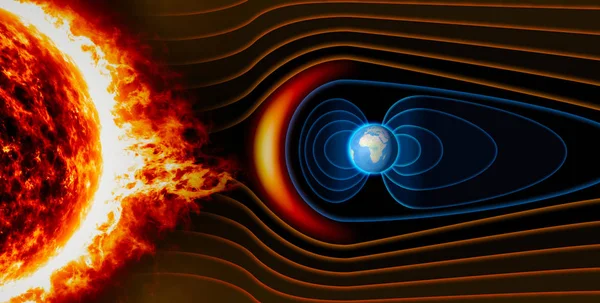
Auroras intensify when a huge cloud of magnetized plasma known as a coronal mass ejection arrives and compresses Earth’s magnetosphere. That compression assists in funnelling charged particles down magnetic field lines where they collide with atmospheric gases and emit visible light. During clustered storm periods, several CMEs can reach Earth relatively close to each other, stacking their effects and extending the period during which the magnetosphere remains disturbed. Discussions of the forecast around mid-October 2025 noted how timing is at least as important as raw power; given that CMEs launched between Oct. 11 and 13 were expected to arrive within a narrow window. When eruptions come in closely spaced timing, later material overtakes the earlier ejecta to make a more complex, denser impact structure. That configuration is one reason auroras can return across successive nights rather than peaking once and fading.
2. Sunspot Regions that Behave like Repeat Offenders
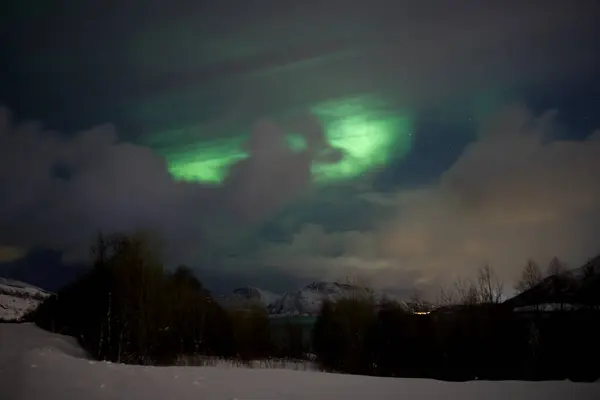
Large magnetically complex sunspot groups provide the conditions for repeated flares and Earth-directed CMEs. One single active region, AR4274, produced a sequence of intense flares over several days in November 2025, including the year’s strongest flare cited in several summaries of the period. For the aurora watcher, a prolific sunspot group is effectively a multi-day engine that keeps possibilities alive night after night; for the operators, it is essentially a planning problem: repeatability in eruptions enhances the odds that a high-radiation interval coincides with scheduled spacewalks, satellite maneuvers, or routine spacecraft maintenance windows.
3. X-class Flares that Scramble the Ionosphere on the Sunlit Side
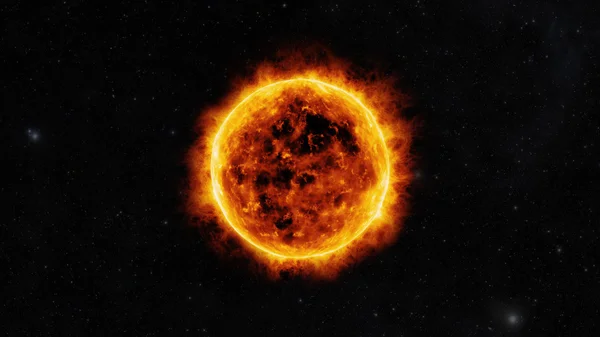
Solar flares deliver a quick punch because their electromagnetic radiation reaches Earth at the speed of light. When X-rays and extreme ultraviolet flood the sunlit atmosphere, lower ionosphere becomes more ionized, thereby increasing the absorption of high-frequency radio signals. NOAA’s radio-blackout scale ties severity to flare intensity: an R3 (Strong) radio blackout corresponds to an X-class flare threshold that can disrupt HF communications across large regions. During storm recaps, widely circulated from the November 2025 episode, for example, an X5.1-class flare was associated with shortwave disruptions across parts of Africa and Europe. The important engineering detail is that these effects can appear even before a CME arrives because ionospheric absorption is driven by flare radiation, not by the later-moving plasma cloud.
4. The Kp and G-scale Numbers which Translate Magnetism into Operational Risk
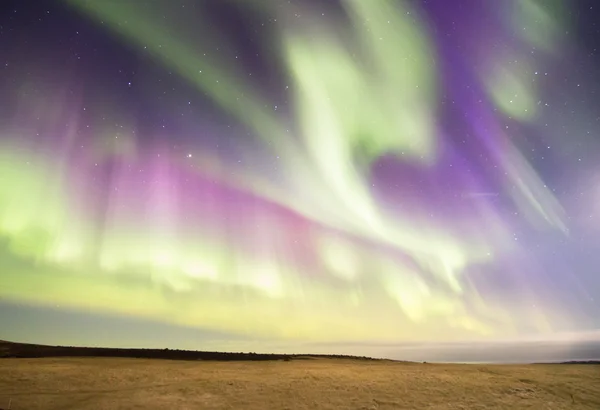
Space weather is best communicated using NOAA’s five-level geomagnetic storm scaleG1 to G5-developed around the planetary Kp index. Those levels are not simply labels for aurora excitement, but map to practical consequences: power-system disturbances, satellite charging, navigation degradation and HF propagation issues. The higher rungs of the scale describe why an aurora can be visible well outside polar regions: as storms strengthen, the auroral oval expands equatorward. NOAA’s reference descriptions note that at G4 (Severe), auroras can reach deep into mid-latitudes, while impacts to grids, navigation, and satellites become more likely. November 2025 storm summaries tied to watches that included G4 potential captured the dual nature of these events: spectacle for cameras, a stress test for systems.
5. Solar Particle Events that Turn Beautiful into Seek Shelter in Orbit
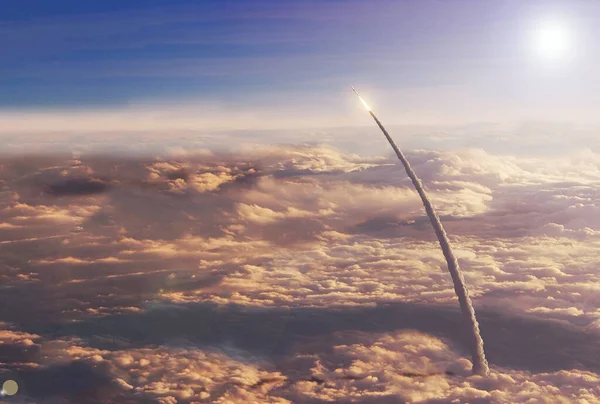
Auroras at Earth are an indication that energetic particles are being funneled into the upper atmosphere. For astronauts, similar particle populations can equate to increased radiation exposure without Earth’s atmospheric shielding. Communications recaps during mid-November of 2025 described a solar particle event that had flight controllers modify how crews used the station’s bestshielded areas. One exchange from mission control put the operational reality candidly: We entered into an energetic solar particle event this morning, and we’re going to go in and out of holes of higher than the baseline [radiation] risk, an operator told NASA astronaut Mike Fincke over the comms channel. NASA public affairs official Sandra Jones summarized the mitigation approach thusly, in an email quoted in later reporting: The USOS crew slept in their crew quarters and the Roscosmos cosmonauts camped out in the lab as a preventative measure due to the solar storm.
6. Instruments Capable of Seeing the Storm where Human Eyes Cannot
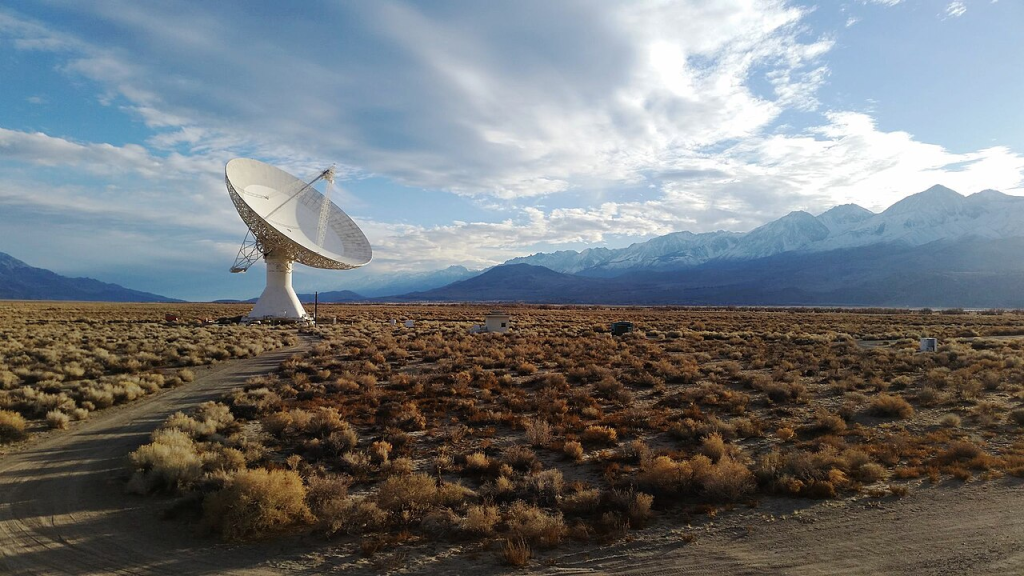
Though the auroras reveal where energy is entering the atmosphere, radio observatories can trace how that energy reshapes the ionosphere and corrupts signals. Using the Expanded Owens Valley Solar Array and the Owens Valley Radio Observatory Long Wavelength Array, researchers at NJIT’s Center for Solar-Terrestrial Research documented the impacts of the November 2025 storms: Their observations connect flare activity with disturbed radio signatures at lower frequencies-patterns that morph from neat bursts into curved, chaotic structures when the ionosphere is unsettled. The same work has elucidated how the modern monitoring stack differentiates between measurement types: Radio telescopes track the emissions of the Sun and the atmospheric response, while high-precision GNSS receivers quantify navigation phase hiccups in the case of geomagnetic disruption. To the infrastructure planner, this matters because it ties a sky event with measurable performance changes in communications and positioning systems.
7. The Design Reality: Auroras are a Byproduct of the Earth’s Protective Geometry
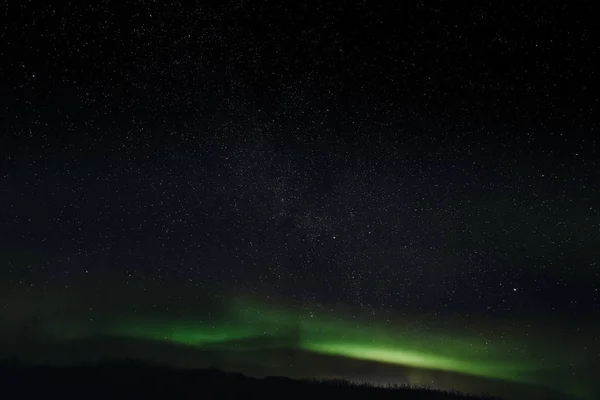
Earth’s magnetic field is such that much of the incoming solar particle population is deflected and trapped; this shapes the auroral ovals and prevents far worse radiation exposure at the surface. On the other hand, shielding is not uniform: both spacecraft and ground systems experience vulnerabilities dependent on geometry, materials, frequency bands, and operational timing. Reference material on ISS radiation risk points out that the solar particle events can persist for days and also that access to polar zones changes during strong geomagnetic activity, thereby tightening constraints on scheduling and crew movement. In practice, the auroras mark the boundary between protection and penetration.
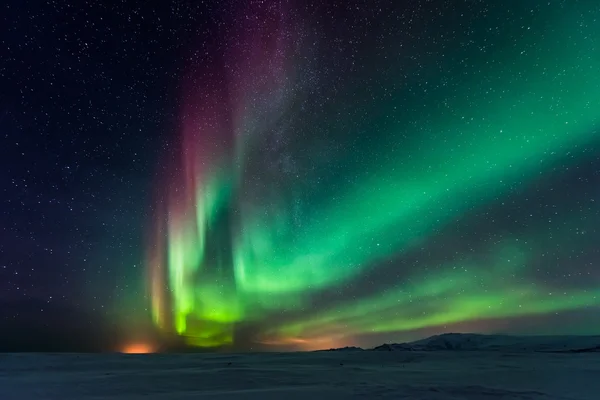
When that boundary shifts-during stronger storms-it simultaneously widens the viewing corridor for skywatchers and expands the operational footprint of space-weather effects for satellites, aviation HF links, navigation, and crews in low Earth orbit. Aurora photos tend to freeze the moment when the sky looks impossible. The more durable story sits behind the color: repeated eruptions from active regions, flare-driven radio absorption, CME-driven geomagnetic compression, and the engineering playbook that keeps critical systems functioning while the upper atmosphere and near-Earth space become temporarily less predictable.


