
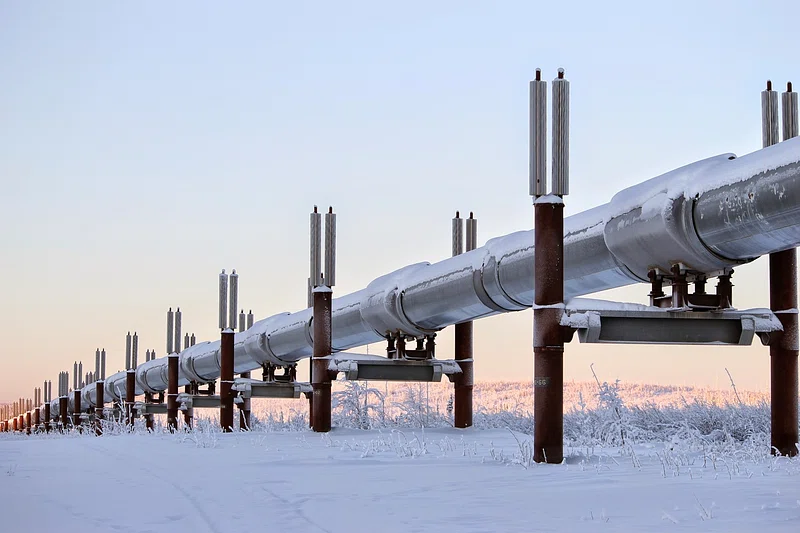
Large, modern operations never seem to conclude on the objective. Rather, they tend to ripple into air routes, shipping lanes, energy infrastructure, and the machinery of intelligence and law enforcement that made these actions possible.
In the case of Venezuela, the mechanics now matter as much as the personalities. A high-tempo extraction mission, a long-running U.S. criminal case, and a country built around petroleum and mining have combined to create a single problem set touching pilots, refiners, sanctions lawyers, and analysts writing the assessments that policymakers depend on. Following are the main forces now shaping what engineers, operators, and industry planners will be watching.

1. Mission architecture involved in “Operation Absolute Resolve”
The most significant detail for practitioners is not the name of the mission but the method: a joint, layered package designed to keep aircraft, helicopters, and an apprehension team synchronized across distance and time. U.S. officials described more than 150 aircraft launching from 20 bases across the Western Hemisphere-a scale that emphasizes command-and-control, timing discipline, and redundancy rather than raw firepower alone.

Gen. Dan Caine said the operation depended on “layer effects for a single purpose,” combining fighters, bombers, surveillance aircraft, remotely piloted drones, and rotary-wing assets with “non-kinetic effects” attributed to U.S. cyber and space organizations. The telling line was operational, not rhetorical: “Failure of one component of this well-oiled machine would have endangered the entire mission.” For readers focused on aerospace systems, that translates into a case study in integration risk fuel planning, comms deconfliction, electronic protection, target-area timing and extraction routing all treated as a single chain where weak links are mission-ending.
Caine also said the extraction helicopters approached at roughly 100 feet above the water, which underscores a classic lowobservable routing choice trading weather sensitivity and navigation workload against reduced detection. The point for industry is enduring: complex, multi-domain “interdiction” operations increasingly resemble systems engineering problems, with interfaces and failure modes treated as seriously as platforms.

2. Airspace constraints moving from a diplomatic issue to an operational reality
Once the air domain becomes contested, commercial aviation gets pulled into the same risk picture as military planning. U.S. officials said the Federal Aviation Administration had restricted airspace in the Caribbean and Venezuela and also left unclear when restrictions would lift.
For the airlines and cargo operators, that means re-routes, added fuel burn, crew duty-time complications, and disrupted bank structures at hub airports. For the engineers and fleet planners, it is a reminder that avionics capability and flight-planning sophistication do not eliminate geopolitically driven constraints-they only help manage them. Even temporary closures can shift demand toward longer-range aircraft, increase reliance on alternates, and pressure dispatch systems that must continuously recalculate safe corridors. In practice, “safety-of-flight risks” cascade into anything from maintenance scheduling to spare-parts logistics when international rotations become less predictable.

3. Venezuela’s oil endowment versus its production limits
Venezuela’s hydrocarbons remain the gravity well. The country holds roughly 303 billion barrels about 17% of estimated global reserves-according to the Energy Institute, but production has been far below historical capacity. Reuters noted output averaged about 1.1 million barrels per day last year, a long slide from peaks of about 3.5 million bpd in the 1970s.
Most of that resource base sits in heavy crude in the Orinoco belt, described as “expensive to produce” yet “technically relatively simple” in upstream terms. The technical simplicity does not remove the bottlenecks that matter most: power reliability, diluent supply chains, upgrader condition, corrosion management, and deferred maintenance across gathering systems and terminals. When infrastructure ages in a sanctions-constrained environment, the constraints become mechanical-failed pumps, unreliable substations, and limited access to OEM parts-long before they become financial models.
That is why even optimistic scenarios of recovery go slowly in engineering time. Restoring plateau production is less about drilling new holes than rebuilding industrial systems so that they can run continuously.
4. The global tug-of-war over barrels, debt and refining outlets
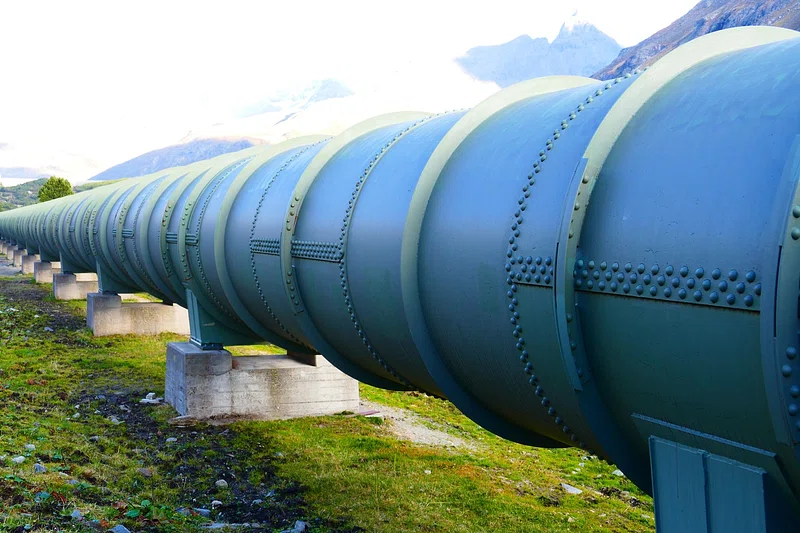
Even prior to the operational shocks, long-distance buyers and legacy obligations had already shaped Venezuela’s export picture. Reuters reported that China has become the main destination in the last decade and that Venezuela owes China around $10 billion with repayments pegged to crude shipments. It also noted that Venezuelan exports were “mostly halted” amid uncertainty in shipping, with vessels awaiting instructions.
Besides, refining and marketing links outside the country add another layer. PDVSA’s ownership of CITGO in the United States remains entangled in creditor litigation, which does matter, because downstream capacity can be as strategically valuable as reserves. For energy markets, these constraints mean “more barrels” is not simply a geological question but equally a logistics and legal question running through from tanker access, insurance, and payments to refining compatibility for heavy crude streams.
In parallel, the operational claim-that U.S. oil companies would invest to rebuild infrastructure-points to a familiar technical hurdle: heavy-oil production needs stable midstream and upgrading capacity. Capital cannot substitute for time needed to recommission neglected plants and rebuild safety culture.

5. Mining ambitions that are hard to measure and harder to power
Oil may dominate, but the mining sector in Venezuela is the other industrial base with long-run implications. A Reuters summary of a government “minerals catalog” mixed terminology of reserve and resource, complicating outside assessment of what is economically recoverable. Reported figures included coal reserves of some 3 billion metric tons, nickel reserves of 407,885 metric tons, a gold resource estimate of 644 metric tons, and an iron ore resource estimate of 14.68 billion metric tons, much of it regarded as speculative.
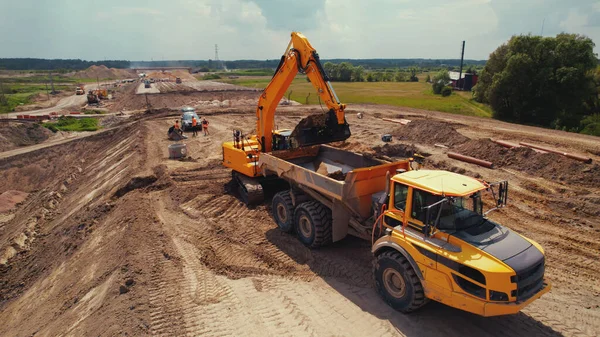
The point for the industrial reader is not whether the catalog is right, it is that inconsistent classification and old survey baselines make project finance and engineering design riskier. Mines and processing plants are power-hungry, and Venezuela’s electricity problems have repeatedly hobbled mining as well as oil operations. Without reliable grids, even well-specified equipment underperforms, maintenance backlogs grow, and safety incidents become more likely.
In other words, mining is not an “alternative to oil” unless the enabling infrastructure can be stabilized and measured with modern standards: power, roads, ports, skilled labor pipelines.

6. Intelligence and law-enforcement narratives colliding in the background
Behind the operational and industrial impacts is a quieter constraint: how governments describe and validate threats. A newly declassified U.S. Intelligence Community memo said that the Maduro regime “probably does not have a policy of cooperating with TDA and is not directing TDA movement to and operations in the United States,” though it did allow that some officials may tolerate or cooperate for financial gain.
That framing matters since it defines what is treated as organized state direction versus opportunistic corruption-two categories driving very different policy toolkits. Analysts and oversight professionals have separately pointed out internal pressure on how such judgments are articulated, from emails urging analysts to “rethink” an assessment to warnings that a document should not be “used against the DNI or POTUS.” Quoted in an extensive review by CSIS, those lines illustrate an enduring engineering-style vulnerability in analytic organizations: if requirements become outcomes, quality assurance collapses.

The real world consequence of that is degraded strategic warning, as the system becomes optimized for message discipline rather than accuracy. For industry planners, this matters because sanctions, designations, and compliance risk often rest on these narratives. When that analytic foundation is contested, the operational environment for airlines, shippers, oilfield service firms, and insurers becomes a lot harder to price. Common to these forces is the practical thread: aviation, energy, and intelligence are connected by infrastructure and systems. When those systems are stressed, the constraints materialize not as abstractions, but in the form of grounded aircraft, idle terminals, and decisions delayed by uncertain information.


