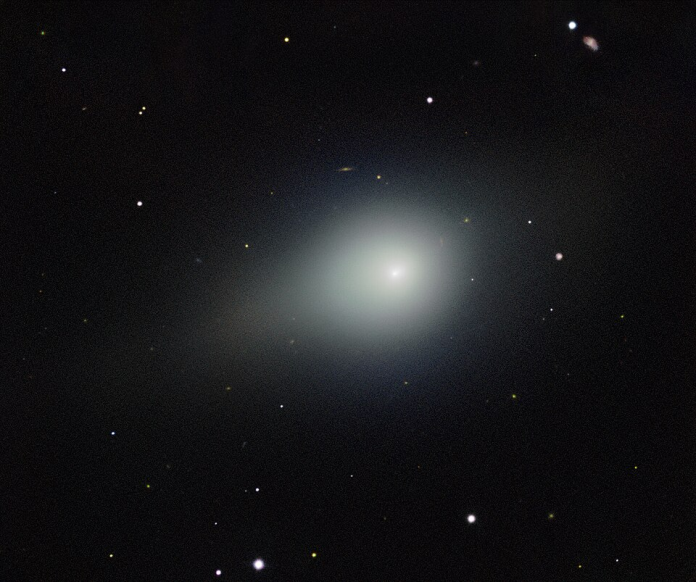
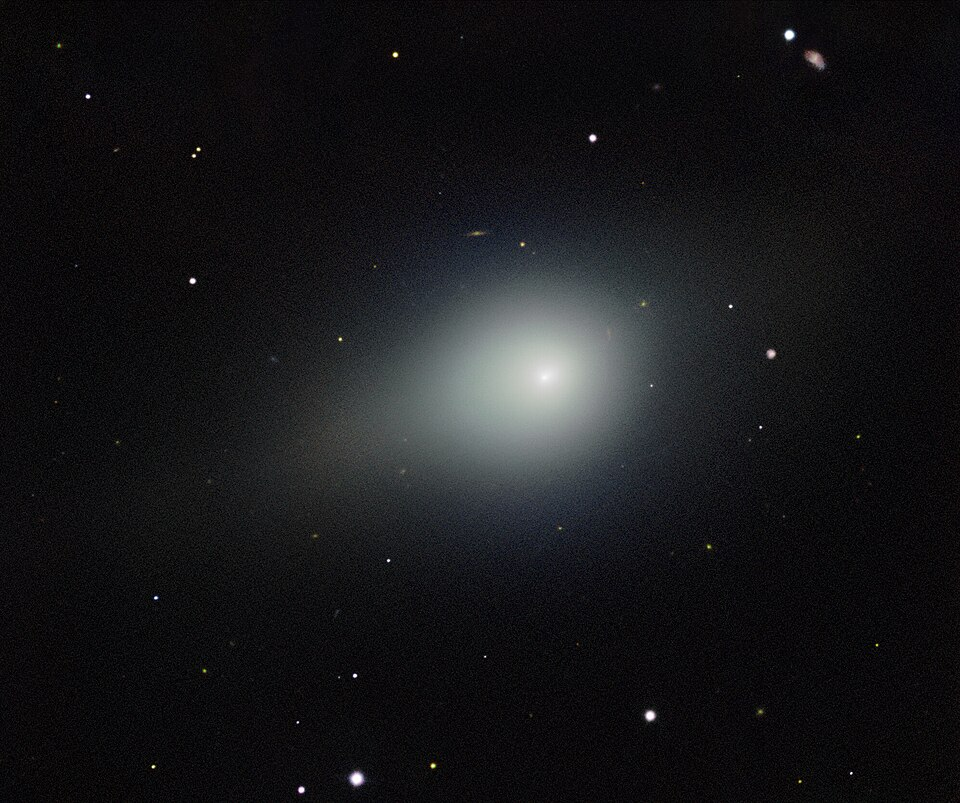
The passage of Comet 3I/ATLAS in mid-2025 has provoked one of the most ambitious and technically challenging observation campaigns ever undertaken for an interstellar object. The third confirmed visitor to originate from beyond the Solar System, this ancient body-perhaps as old as 14 billion years-has revealed unexpected activity, dual tails, and signs of cryovolcanism that challenge established cometary science.
1. A Hyperbolic Messenger from the Galactic Thick Disk
Trajectory analyses using a galactic potential model called GalPot traced 3I/ATLAS back to the thick disk of the Milky Way-a population of stars comprising ancient, low-metallicity stars. Based on Monte Carlo simulations which computed 10,000 possible trajectories for it, its median age had been estimated to be 4.6 billion years, making it the oldest among the three known interstellar objects. Its hyperbolic orbit-inbound from the direction of Sagittarius near the Galactic Center-confirms that it will never return once it departs.
2. Multi-Spacecraft Coordination across the Solar System
Unlike 1I/ʻOumuamua and 2I/Borisov, the fleet of spacecraft has been observing 3I/ATLAS from its discovery through perihelion and beyond. NASA’s Hubble and James Webb Space Telescopes, ESA’s Juice, Mars orbiters as well as missions such as Psyche, Lucy, PUNCH, SOHO and STEREO-all have contributed to the data. Coordinating all these assets required precision targeting akin to “various people in a baseball stadium all trying to take pictures of a ball in flight,” according to NASA’s Tom Statler.
3. Hubble’s High-Resolution Imaging
Hubble’s Wide Field Camera 3 captured this image of the comet on November 30, 2025, when it was seen 178 million miles away, its compact nucleus surrounded by a dust-rich coma. Estimates continue to bound the nucleus size within the range 440 meters to 5.6 kilometers, its dust-loss rates being similar to actively sublimating Solar System comets. Star trails across the background of the image demonstrate the comet’s rapid sky motion at over 130,000 mph.
4. Juice’s Dual-Tail Discovery
The ESA’s Jupiter-bound Juice spacecraft used its NavCam for a low-resolution teaser image on November 2, which showed both a plasma tail of ionized gas and a fainter dust tail. Five science instruments on the probe, JANUS, MAJIS, UVS, SWI and PEP, recorded high-quality data sets during a close approach of 66 million km that will arrive in February 2026 due to antenna constraints.
5. Cryovolcanism Due to CO₂ Sublimation
The ground-based observations with the Joan Oró Telescope revealed jets of gas and dust consistent with cryovolcanic eruptions. Where sunlight penetrated into the comet’s surface, solid CO₂ sublimated, mobilizing liquid or semi-liquid materials that could react with embedded metallic grains like iron and nickel; this exothermic corrosion would have released additional gas, feeding the activity. The spectrum of the comet fits carbonaceous chondrite meteorites, indicating a richly metallic composition not very common for comets and implying it formed in the cold, far-away part of its native system.
6. Spectroscopy and Compositional Insights
JWST and SPHEREx infrared spectroscopy confirmed a CO₂-rich coma. During the October close pass, Mars-based spectrometers attempted to characterize its volatile output. The oxygen and hydrogen features detected in November by Europa Clipper’s UVS instrument support evidence of high post-perihelion outgassing. A 400,000-km X-ray glow from solar wind interactions was identified by ESA’s XMM-Newton and JAXA’s XRISM missions.
7. Tail Morphology and Dynamics
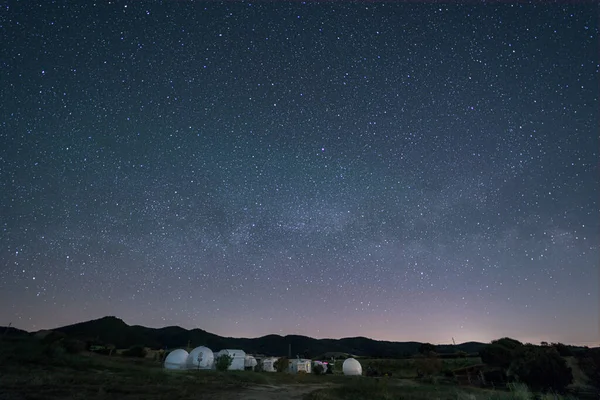
Several spacecraft and amateur astronomers have documented tail structures in evolution, including an anti-tail that points sunward due to large (~100 micron) dust particles. Whereas the orientation of the plasma tail reflects solar wind flow, the dust tail trails along the comet’s orbital path. These features provide real-time data about particle size distribution and solar wind–comet interactions in an interstellar context.
8. Orbital and Rotational Behavior
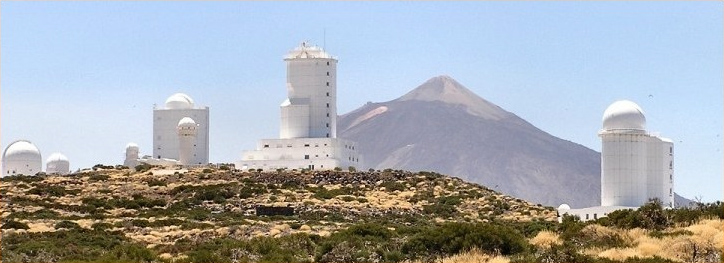
Jets observed from the Teide Observatory on Tenerife showed a slow wobble, which allowed the determination of a 14–17 hour rotation period. For the first time ever, such a rotational dynamic for an interstellar comet could be directly associated with obvious visible surface activity. Non-gravitational acceleration is still being monitored; data taken so far are compatible with those from active Solar System comets.
9. Observational Opportunities for Amateurs
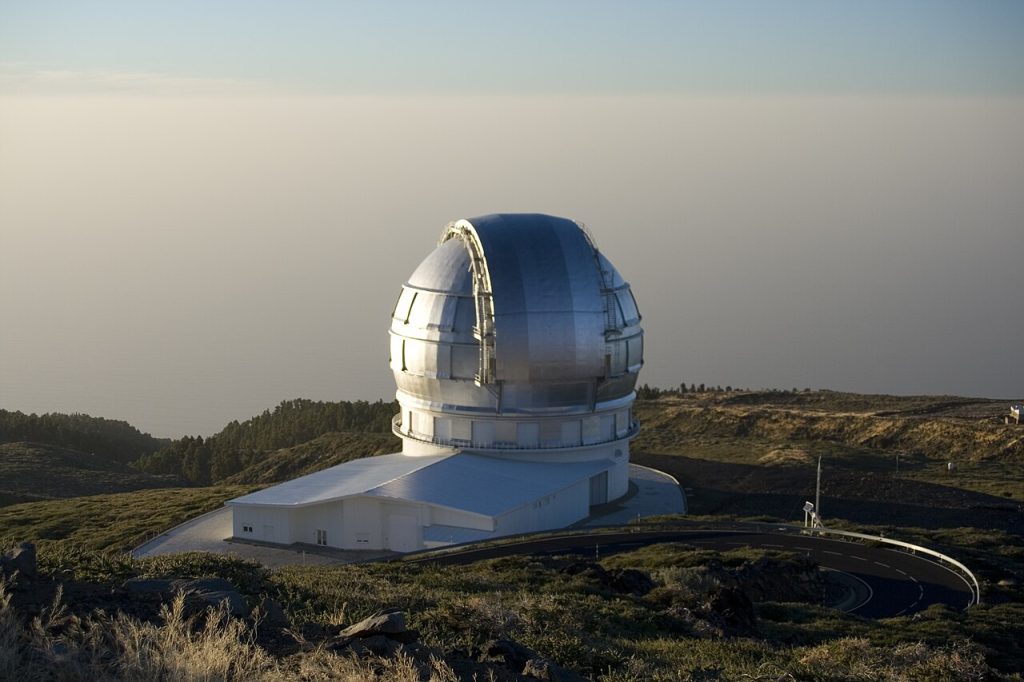
At magnitude 10–11 at its December 19 closest Earth approach of 1.8 AU, 3I/ATLAS remains accessible to small telescopes and large binoculars in dark skies. Real-time tracking is possible with NASA’s “Eyes on the Solar System” tool, while coordinated amateur imaging has supplemented professional datasets-especially during periods when major observatories were avoiding pointing near the Sun.
From its dual tails to its cryovolcanic jets, 3I/ATLAS is providing an unprecedented 3D, multi-wavelength portrait of an interstellar comet’s evolution. The synthesis of data from ground-based telescopes and spacecraft across the Solar System is not only refining models of cometary physics but also expanding the comparative framework for planetary system formation beyond our Sun.


