
“Could a single ship threaten the digital lifeline between NATO capitals? That is the alarming question raised after Finnish authorities seized the cargo vessel Fitburg, suspected of damaging a critical underwater telecommunications cable linking Helsinki and Tallinn. The incident, unfolding in Estonia’s exclusive economic zone, has amplified fears about deliberate sabotage targeting vital subsea infrastructure in the Baltic Sea.
This was not an isolated event. Since 2023, the region has endured a series of ruptures to power lines, data cables, and pipelines, many suspected to be linked to Russia’s shadow fleet and other state-aligned actors. NATO, the EU, and regional governments are now scrambling to close legal loopholes, strengthen deterrence, and coordinate patrols. The stakes are high: these cables and pipelines are the arteries of military communications, energy flows, and economic stability.
1. The Fitburg Seizure and Its Strategic Implications
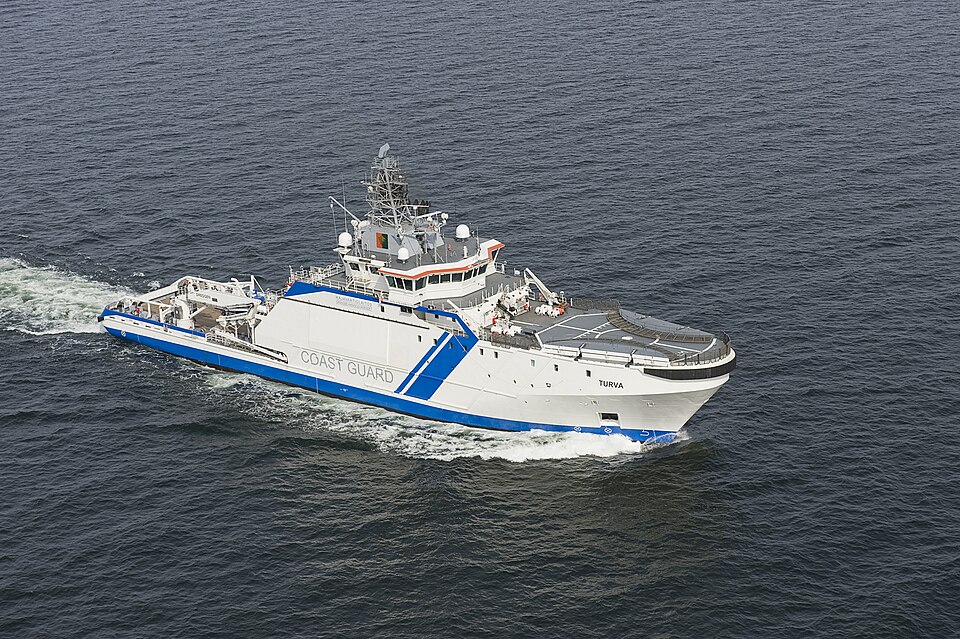
Finnish Border Guard forces intercepted the St Vincent and Grenadines–flagged Fitburg on December 31, 2025, after detecting damage to Elisa’s telecom cable. Patrol vessel Turva and a helicopter found the ship dragging its anchor chain in Estonia’s EEZ. Helsinki Police Chief Jari Liukku confirmed investigations into “aggravated disruption of telecommunications” and “aggravated sabotage.” The vessel, sailing from St Petersburg to Israel, carried a crew from Russia, Georgia, Kazakhstan, and Azerbaijan, all detained for questioning The seizure signals a shift in enforcement posture. As Thorsten Benner of the Global Public Policy Institute noted, Finnish authorities acted to “reinforce an emerging international norm about the right to stop vessels in EEZ if suspected of damaging critical infrastructure.” This norm challenges the traditional flag-state jurisdiction model, which has often left coastal states powerless when sabotage occurs outside territorial waters.

2. Escalating Pattern of Baltic Sea Sabotage
Since Russia’s full-scale invasion of Ukraine, at least 11 suspected sabotage incidents have struck Baltic Sea infrastructure. These include the Balticconnector gas pipeline rupture in October 2023 and damage to a Finland–Estonia power cable. In December 2024, the Cook Islands–flagged Eagle S was caught after allegedly striking one interconnector and four data cables, and was reportedly poised to cut more before interception. Such incidents often involve vessels dragging anchors for extended distances, damaging seabed installations. The recurrence underscores the vulnerability of critical subsea assets and the likelihood of deliberate targeting by state-linked actors.

3. Hybrid Warfare Tactics Below the Threshold of War
Russia’s hybrid strategy blends sabotage, cyberattacks, disinformation, and coercion, exploiting legal and operational gray zones. These operations aim to destabilize without triggering NATO’s Article 5. Sabotage of cables and pipelines fits this model, creating plausible deniability while inflicting economic and strategic harm. As described in NATO’s Strategic Concept, hybrid attacks on critical infrastructure may still meet the threshold for collective defense. The challenge lies in attribution and response speed, as hybrid aggressors often disguise actions as accidents a tactic that delays countermeasures and complicates deterrence.
4. Legal Loopholes in the Law of the Sea
UNCLOS Article 113 criminalizes intentional damage to submarine cables but grants enforcement primarily to the flag state or perpetrator’s home state. This leaves coastal states with limited powers in their EEZ unless the vessel enters territorial waters. Legal scholars argue this gap is incompatible with modern realities, given the heightened strategic value of undersea infrastructure. Provisions like hot pursuit (Article 111) and pollution response (Article 221) offer partial enforcement avenues, but these are narrowly defined. The Fitburg case illustrates how coastal states are testing interpretations to justify intervention when critical assets are threatened.

5. NATO’s Baltic Sentry and CTF Baltic Patrols
In 2024, Germany established Commander Task Force Baltic in Rostock to coordinate allied naval activities. NATO’s Baltic Sentry initiative added vessels, patrol aircraft, and underwater drones to monitor subsea installations. Danish Navy officer Brian Svendsen emphasized focusing on “shipping lanes, ships previously identified as a potential source of concern, and naturally monitoring the undersea installations.”These patrols integrate AI-driven systems like Nordic Warden to assess vessel risk. Since Baltic Sentry’s launch, no suspicious undersea incidents have been reported, suggesting deterrence may be working though officials caution against complacency.

6. EU Action Plan on Cable Security
The EU’s February 2025 Action Plan on Cable Security seeks to enhance information exchange, joint repair capabilities, and engagement with flag states of suspect vessels. Outreach has led some countries including Barbados, Gabon, and the Cook Islands to de-flag ships sanctioned for shadow fleet activities. While not limited to shadow vessels, the plan recognizes their opaque ownership and rule-skirting behavior as higher-risk factors for sabotage. Coordinated EU–NATO efforts aim to close gaps between economic, legal, and military responses.
7. Lessons from Past Incidents: Balticconnector and C-Lion1
The Balticconnector incident revealed the cost of slow multinational coordination. The Hong Kong–flagged Newnew Polar Bear damaged both a gas pipeline and data cables, yet sailed into Russian waters before interception. Similarly, the C-Lion1 case in November 2024 saw the Chinese-owned Yi Peng 3 suspected of cutting cables between Sweden, Lithuania, Finland, and Germany, but investigators were delayed by EEZ jurisdiction limits. These episodes prompted calls for more assertive enforcement, with Finland’s defense minister arguing that victim states “cannot be in a situation where they do not intervene” when critical infrastructure is destroyed or seriously damaged.

8. Hybrid Deterrence: Denial and Punishment
Resilience measures redundancy in cable routes, rapid repair capacity, and public awareness form deterrence-by-denial. However, analysts stress pairing these with deterrence-by-punishment: sanctions, public attribution, and legal action to raise the cost of aggression. Hybrid threats exploit ambiguity; without credible punitive tools, adversaries will continue probing vulnerabilities. Coordinated NATO–EU strategies can align military presence with economic and diplomatic levers to impose timely costs.

9. The Strategic Stakes for NATO’s Eastern Flank
Finnish President Alexander Stubb has warned of the “imperial threat” posed by Vladimir Putin to NATO’s eastern flank. Undersea infrastructure links not only economies but also military communications and energy flows. Disruption can weaken transatlantic cohesion and operational readiness. Eight NATO states border the Baltic Sea, making it a frontline for hybrid maritime threats. The Fitburg seizure, and the broader pattern of sabotage, is a test of whether regional and alliance mechanisms can protect these lifelines before a crisis escalates beyond control.
The Fitburg case is more than a criminal investigation; it is a flashpoint in the evolving contest over control and protection of critical undersea infrastructure. For NATO and its Baltic members, it underscores the urgency of closing legal gaps, enhancing patrol coordination, and pairing resilience with credible punitive measures. In the hybrid battlespace of the Baltic Sea, deterrence will hinge on the will to act decisively before damage becomes irreversible.”


