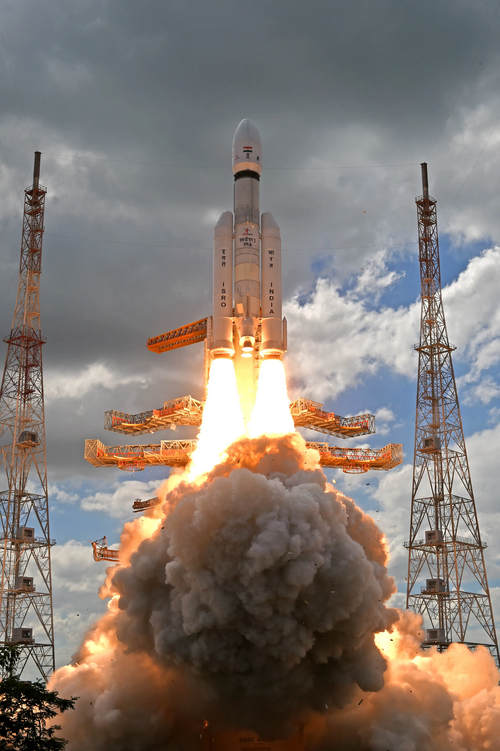
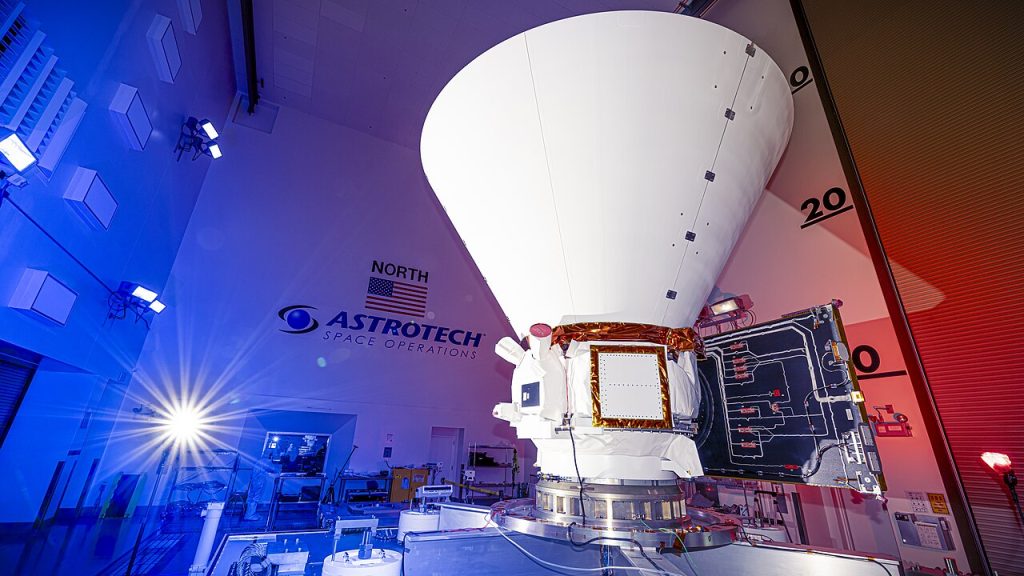
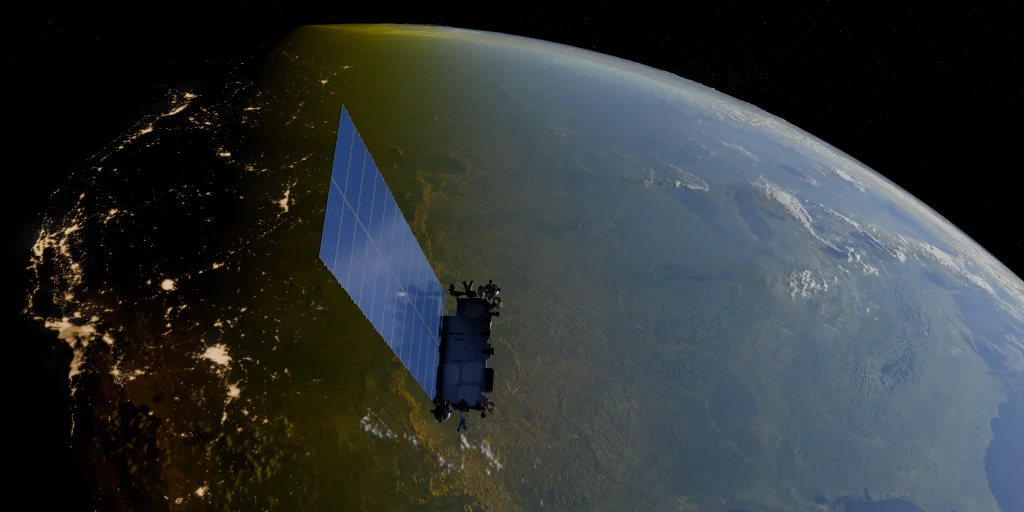
The launch of BlueBird 6 marked a turning point in the race to create communications capabilities in low-Earth orbit. AST SpaceMobile’s newest spacecraft, launched from India’s Satish Dhawan Space Centre aboard an LVM3 rocket, is both the largest commercial communications array ever placed into low-Earth orbit, stretching almost 2,400 square feet, and the first to deliver high-speed 4G and 5G directly to standard smartphones without modification. Founder and CEO Abel Avellan called it “the transition to scaled deployment,” indicating AST’s readiness to move from proof-of-concept status to global service rollout.
1. Engineering Scale and Antenna Power
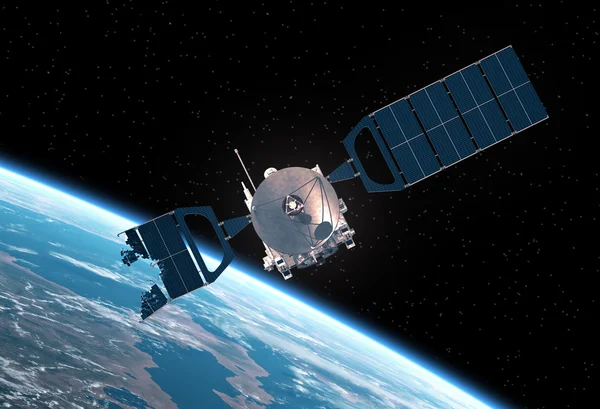
The physical size of BlueBird 6 is equivalent to a three-bedroom apartment, but the actual engineering significance is its large phased-array antenna system: over 2,000 individual cells per satellite, each of which can support delivery of 120 Mbps to unmodified handsets. Its antenna gain and beam-forming capability permit the main antenna to detect and process extremely weak uplink signals from consumer smartphones-a capability beyond the reach of small LEO satellites like Starlink, which cannot directly pick up such weak signals without intermediate ground equipment.
2. Direct-to-Device Connectivity Breakthrough
Unlike the fixed broadband-focused LEO systems, AST’s direct-to-device approach integrates seamlessly with terrestrial networks. With over 50 partnerships with mobile network operators such as AT&T, Verizon, and Vodafone, AST’s system automatically hands off connectivity from cell towers to satellites in the case of lost terrestrial coverage. With this architecture, AST hopes to provide coverage in the more than 500,000 square miles of U.S. territory with no cellular service today, as well as in remote parts of the world.
3. Deployment Roadmap and Launch Cadence
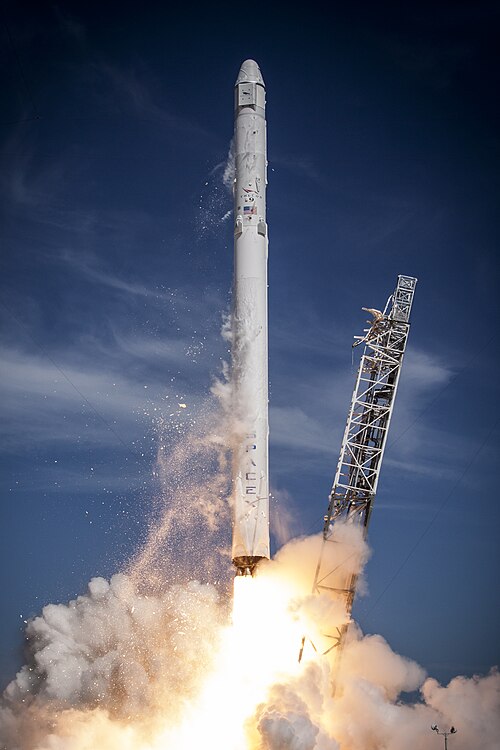
AST plans to launch between 45 and 60 satellites by the end of 2026, with a cadence of one mission every one to two months. High-capacity launch vehicles, like SpaceX’s Falcon 9-which can carry three BlueBirds at once-and Blue Origin’s New Glenn-which can carry eight-will accelerate the pace of the constellation build-out. Full global coverage will require roughly 200 Block 2 BlueBirds.
4. Collision Risk in a Crowded Orbit
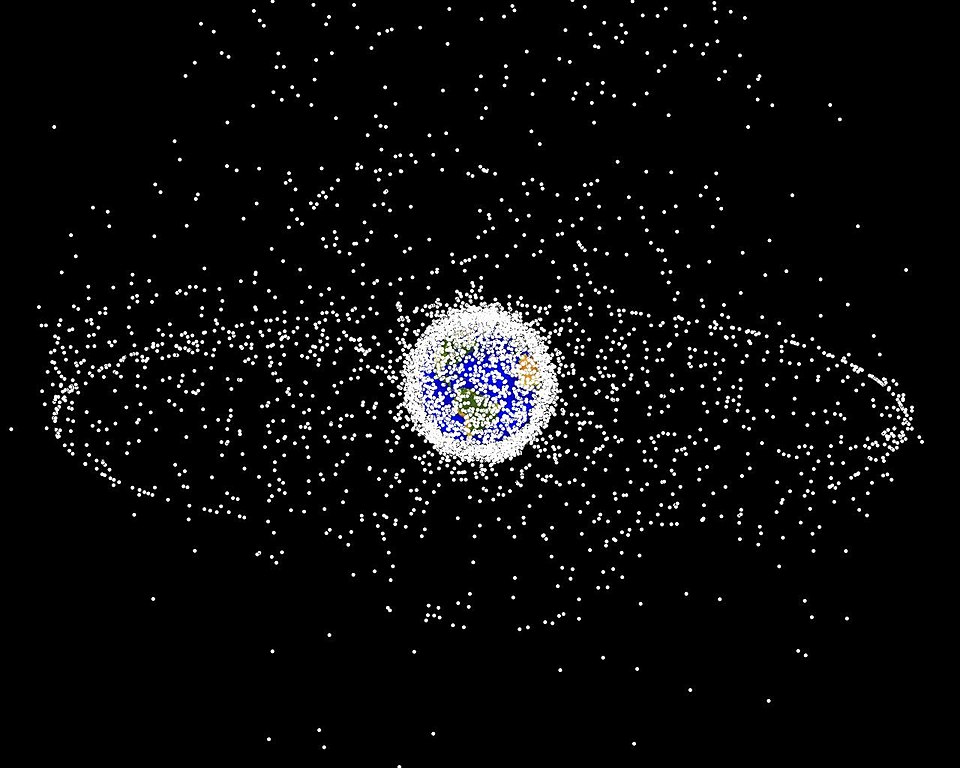
With mega-constellations proliferating, LEO congestion is increasing. The orbital shells have become saturated, which is raising the likelihood of close conjunctions and collisions due to debris. It was demonstrated that at densities of \(n={10}^{-6} \text{ km}^{-3}\), the probability for at least one collision within a year could increase up to 50% when hundreds of untracked fragments of debris pass through a shell. Active avoidance of collisions and an enhancement of situational awareness in space are very crucial, but the coordination between operators remains voluntary and inconsistent.
5. Light Pollution and Astronomical Impact
The large reflective surfaces of BlueBird 6’s amplify concerns related to light pollution. Previous AST satellites were as bright as the top ten stars in the night sky. Research led by Dr. Miroslav Kocifaj found that orbiting objects have already increased night sky brightness by at least 10% over natural levels and have crossed the threshold for “light-polluted” skies set decades ago. For space telescopes, NASA simulations predict that as much as 96% of exposures from instruments such as SPHEREx, ARRAKIHS, and Xuntian could be contaminated by satellite trails if planned constellations are completed.
6. Advances in Signal Processing
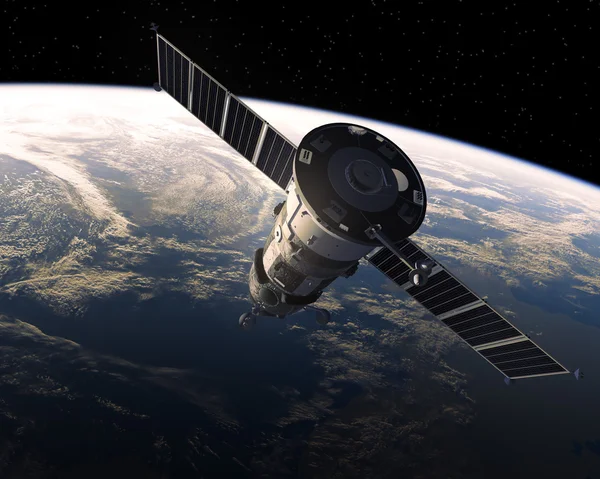
AST uses advanced digital signal processing to clean up noisy uplinks from smartphones, making direct-to-device possible. Onboard ASICs and beam-forming arrays on the satellite isolate the desired signal from background noise and interference, reliably allowing voice, data, and messaging without special user-side hardware. Full capacity per satellite will be unlocked with future ASIC upgrades, slated for integration in 2026.
7. Environmental Concerns from Mega-Constellations
More than 100 U.S. researchers called on the FCC to halt major LEO launches until environmental review can be conducted. Deployed at its peak, the Starlink constellation alone could dump 29 tons of satellite material into the upper atmosphere each day. Questions remain as to its implications for ozone depletion and climate impact. Aluminum particulates coming from reentering satellites could alter Earth’s albedo, while rocket emissions add to radiative forcing and possible mesospheric cloud changes.
8. Industry Rivalry and Strategic Positioning
Starlink currently leads in fleet size, with thousands of satellites in orbit, but its direct-to-cell offering is presently limited to beta stage text messaging. AST’s larger, higher-capacity satellites-each with 100 times the bandwidth of a Starlink D2C craft-position it to leapfrog competitors once deployment scales. The wholesaler model-selling capacity to multiple operators rather than competing directly for end users-could accelerate adoption and revenue generation.
9. Mitigation Strategies for Astronomy
Recommendations by the International Astronomical Union range from limiting satellite reflectivity to minimizing flares from orientation changes to sharing with astronomers detailed bidirectional reflectance data. Key is orbit selection: placing large constellations below the altitude of space telescopes reduces their visibility and interference. Lower orbits increase atmospheric drag and reentry rates, with associated environmental consequences.
The arrival of BlueBird 6 underlines the promise and complexity of next-generation satellite communications. Its engineering scale and technical capabilities open new frontiers for global connectivity, but on the flip side, its orbital presence heightens the call for space traffic, environmental impact, and astronomy preservation management.


