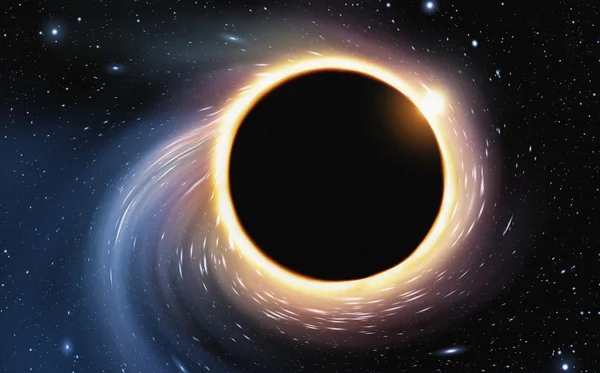
It is especially fascinating in the fact that the Hubble radius, or the size of the universe that can be seen from the existence of the universe itself, is remarkably close to what the Schwarzschild radius would have been if all the mass in the universe was compacted into a black hole. This relation not only is not a fluke, it can also conceivably mean that our entire universe exists inside a black hole in a universe with more than the usual four dimensions, and new studies are putting it into the forefront.

1. The Information Paradox at the Heart of Black Hole Physics
A classical definition of a black hole, given by Jean-Pierre Luminet, conveys the feeling that black holes are some kind of ultimate prison cells of the Universe: “For the observer outside, the transit of a matter-containing body across the event horizon implies the loss of all information about its material properties. Only the new values of M, J, and Q are known.” This loss of information appears to be incompatible with the rules of quantum physics, where the unitarity principle postulates that it is not possible to lose any information during any physical interaction, and it led to the appearance of the black hole information paradox.
2. Hawking Radiation and the Paradox Deepens
Next came the discovery of black hole radiation by Hawking in the 1970s, which made black holes undergo evolution and evaporation due to thermal radiation, further adding to this complex state of affairs. Hawking Radiation caused black holes to evaporate. This created a discrepancy because black holes had made information obsolete, whereas evaporation resulted in the loss of information, meaning that quantum mechanics was inconsistent. A way had to be found that would allow data to leak out while respecting physical laws.

3. The Holographic Principle as a Bridge
Gerard’t Hooft, together with Leonard Susskind, formulated the concept of the holographic principle. This states that the information contained within a finite region of space can be encoded on the boundary surface surrounding the region. When applied to the physics of black holes, the implication of the holographic principle is that the entropy is proportional, not to the area of the event horizon, but to the surface area of the region. It would require four Planck areas for each bit of information. This radically new idea implies that the observable universe, which has three dimensions, is only the shadow of a two-dimensional surface.
4. Quantum Gravity & Page Curve Insight
Furthermore, recent developments in research pertaining to quantum gravity have made some definite assertions with regard to the information entering black holes, which definitely escapes. By studying the entanglement entropy of Hawking Radiation, theoretical physicists were able to establish its connection to what was called “page curve,” which grows and then falls to zero, much like information recovery was complete. These results, which were attained without using string theory, isolate the gravity background, which was neglected in previous models, leading to the emergent nature of spacetime.
5. Cosmological Horizons and Black Hole Analogies
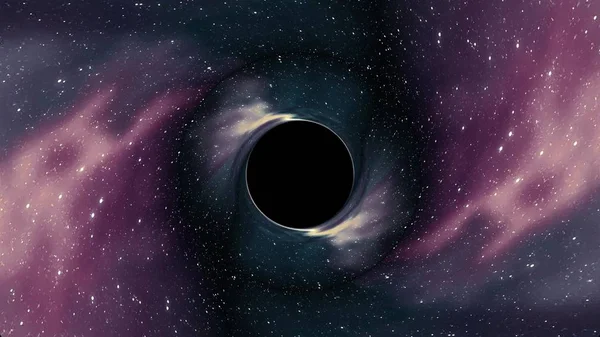
Hence, the accelerating universe has a horizon beyond which light will never pass, and this horizon shares properties analogous to black holes, related to the concepts of temperature and entropy. If the concept of holography also applies here, then the information that exists on the other side of our horizon could, at least in theory, be inscribed on the surface of the horizon. This hypothesis carries much credence in confirming our suspicion that our universe could be within the bounds of the black hole itself, where the horizon represents the boundary of the black hole.
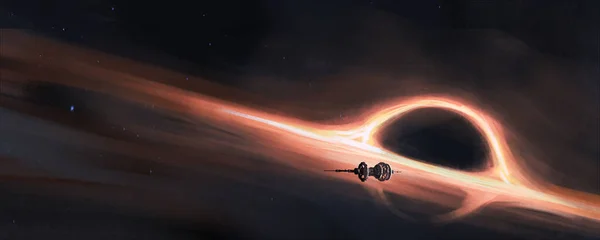
6. Higher-Dimensional Collapse and the Holographic Big Bang
The solution for the four-dimensional black hole collapse models has a great appeal to a cosmological origin: “Our universe may be a three-brane with the shape of a hypersurface mantling the event horizon of a star in the bulk universe.” Black hole collapse would work this way: ‘Our universe would be a three-brane enveloping a superstar’s event horizon in a higher-dimensional bulk universe. This refers to the black hole collapse process within a universe with more than four, or higher, dimensions. In this solution, the singularity caused by the Big Bang will be concealed within a three-dimensional horizon as opposed to a naked singularity because there are no predictions to be made within a naked singularity since this aspect implies that physics is unpredictable.

7. Bounce Cosmology Inside a Black Hole
In a different “black hole universe,” the singularity at the Big Bang is replaced with a quantum bounce. The Fermions face a limit to their compression triggered by the quantum exclusion principle, causing the end of the process, followed by the start of the expansion. The process results in two periods of accelerated change triggered by the bounce, referring to the accelerating phases of inflation and dark energy. The model results in a positive curvature, whose validation is possible through the Euclid mission.

8. Maldacena’s Holographic Universe and AdS/CFT
The AdS/CFT correspondence, proposed by Juan Maldacena, is the realization of the holographic principle. The five-dimensional gravity theory is fully described by the four-dimensional non-gravity quantum field theory. Despite the difference between the conformal structure in the anti-de Sitter space and the geometry of the universe, the anti-de Sitter space/c.scalar theory is evidence supporting the feasibility of the holographic cosmology.
9. Entanglement Islands and Experimental Prospects
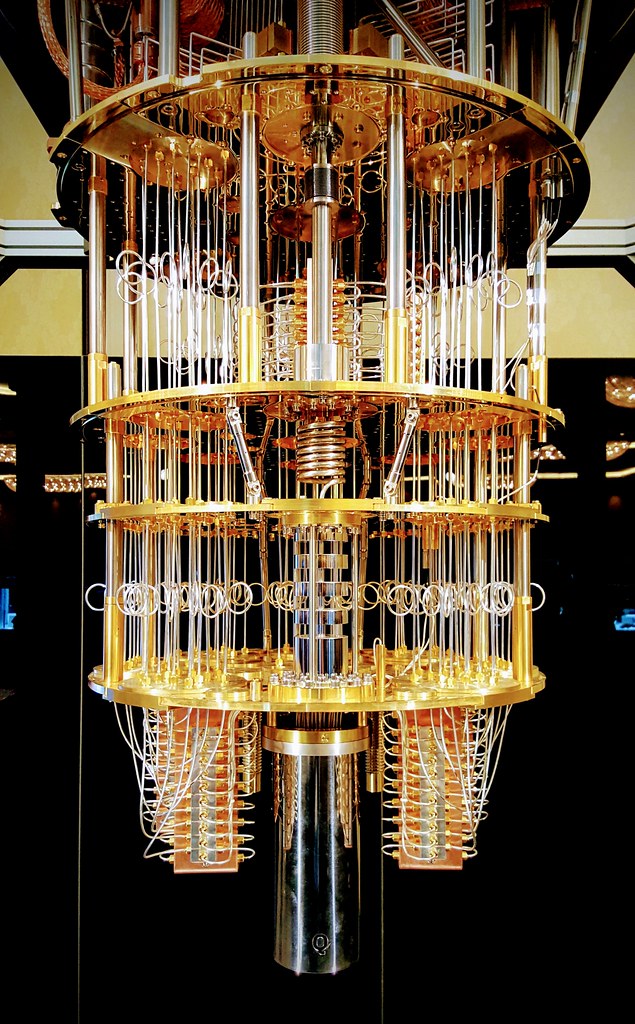
Recent numerical solutions have revealed that entanglement islands containing internal information can be larger than the event horizon of a black hole by measurable margins. Such a size would be measurable in atomic scales if it were a supermassive black hole. Although these would be extremely difficult to carry out, these types of observations would serve as a deciding factor in selecting between different solutions offered in resolving the information paradox between firewalls and entanglement scenarios. A lab-scale system or a simulation in a quantum computer with millions of qubits would be a quicker route.

10. Philosophical Shifts and the Role of the Observer
Thomas Hertog’s collaboration with Hawking re-interprets the history of the universe as an evolutionary theory in which the laws of physics are themselves variable as one move through the course of this history. The role of time in this process is to occur in the context of the holographic theory of quantum cosmology as an effect of how the correlations are encoded in the boundary surface of the universe. The observer seems to be irreducible to anything other than the universe itself, which develops as it does because of the retrocausality caused by observation, as if in the form of the delayed choice experiment.
“If this is the case, our own universe’s bang may have been when a star from a higher dimension contracted to form a black hole whose interior is our universe.” The projection of our cosmic horizon on a holographic screen may carry all the information necessary to our reality. It may thus ever unify quantum theory and the gravitational force by unlocking all the secrets of the universe.


