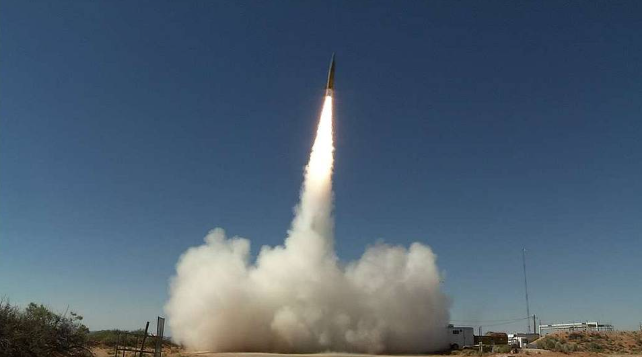
“The enemy must realize that we are prepared to take most resolute action,” warned Kremlin advisor Sergei Karaganov in early this year alone. It is a warning being echoed across Europe following new intelligence reports of Russia deploying their Oreshnik hypersonic nuclear missiles in Belarus.
Satellite observation and analysis, as well as Russian official communications, indicate that this is only one aspect, and it is part of a new strategy that Russia is following concerning its posture. With the New START treaty set to expire and the development of hypersonic weapons by NATO, the placement of the Oreshnik beyond the Russian border is unprecedented after the Cold War era.
This listicle breaks down the most salient points of the Oreshnik program, its implementation in Belarus, and the implications for the defense strategy calculations of NATO, providing defense analysts with a comprehensive understanding of the hypersonic arms race.
1. The Oreshnik’s Capabilities and Origins
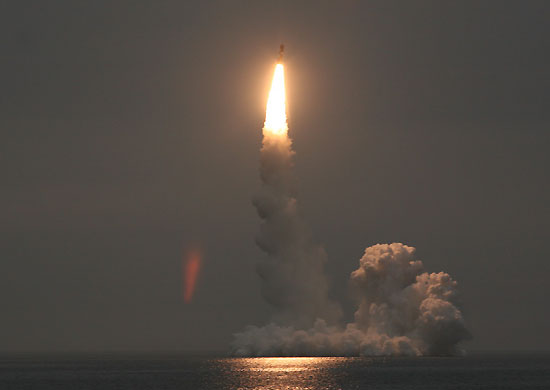
The Oreshnik translates into English as the Hazel Tree. It is a transportable missile with the ability to carry a conventional or nuclear payload. It has a range of intermediate missiles launched from the ground. The Oreshnik has a top speed of Mach 10-11 on the RS-26 Rubezh intercontinental ballistic missile interface.
It has a design based on a Multiple Independently Routable Vehicle warhead, consisting of six warheads on each missile, each delivering six submunitions, a design dating from the Cold War MIRV missiles. As Gen. Sergei Karakayev said, the range extends to any target within Europe, reportedly having a range of 5,500 km.

2. Battle Debut in the Ukraine
Russia launched this attack from Oreshnik on November 21, 2024, targeting Ukraine’s Pivdenmash plant, located in the city of Dnipro. This was a live test launched while operating at either hypersonic speeds or utilizing multiple warheads, according to Ukraine.
President Putin proudly stated that “this missile is like a meteorite. Nobody can intercept it.” Although the warheads used in this attack were dummy, kinetic energy impact alone has been estimated to carry the punch of several tons of explosives. This highlights the potential of the weapon even without nuclear warheads.

3. Belarus Deployment Strategy
Authors Jeffrey Lewis and Decker Eveleth found with a 90% confidence rate that the placement of Oreshnik missile launchers was underway at an ex-airbase near the location of Krichev, a town in Belarus. It is a convenient distance of 307km from Minsk and 478km from Moscow.
“Our president has announced that these missiles are in place now; there are plans to site 10,” noted political analyst Ainnur Gassiev regarding a military base in Belarus. Observers point out that “it looks like this infrastructure can accommodate only three missiles.”
4. Satellite Evidence of Hurried Construction
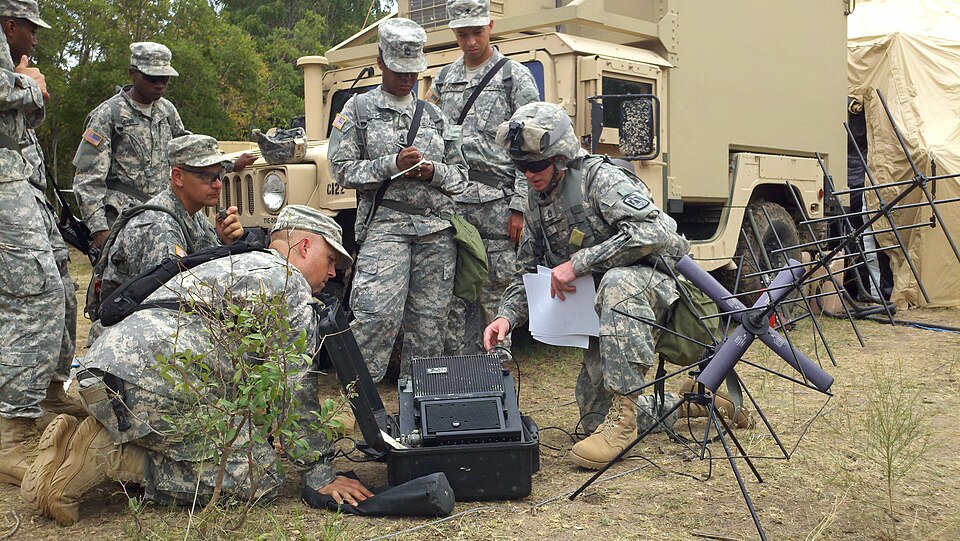
Planet Labs satellite imagery from August 4-12, 2024, showed the rapid development at the Krichev location. Significantly, these were the military-grade rail transfer station for the delivery of missiles and the camouflaged concrete launch pad.
Such patterns are also observable at another location in the Slutsk District, where large-scale redevelopment work at the former Soviet nuclear base includes storage facilities for ammunition, hangars, and bunkers. Authors such as Konrad Muzyka suggest that plans like these are indicative of strategic-level facilities, possibly including nuclear material.

5. Messages Beyond Military Utility
Others, such as Pavel Podvig, raise concerns about the effectiveness of Belarus-based Oreshniks compared to being based inside Russia. Jeffrey Lewis argues that the action has great political significance in the sense that Russia is placing nuclear-capable forces outside its territory for the first time since the Cold War.
Such positioning is reminiscent of NATO scenarios, for example, the placement of nuclear-armed Tomahawks in Germany, and seeks to emphasize Russia’s intention to shift the conventional nuclear basing paradigm in order to exert leverage over Western decision-making.
6. Hypersonic Counterpart of NATO: Dark Eagle
The U.S. Army’s hypersonic missile, known as the Dark Eagle, being developed by both Lockheed Martin and Northrop Grumman, is considered the American counterpart for the Oreshnik. The speeds it achieves are potentially at Mach 17, and it has a range of 1,725 miles.
Although most hypersonic weapons being developed in the U.S. are non-nuclear, the combination of speed, maneuverability, and altitude is intended to make them invulnerable to an enemy’s defenses, which is exactly how Russia describes its version.

7. Erosion of the INF Moratorium
The Oreshnik tests and Russian deployment of missiles challenge their voluntary moratorium on the development of intercontinental missiles. Since the middle of 2023, official declarations have implied a willingness to produce and deploy missiles within the INF range in response to U.S. moves.
Putin’s admission regarding the start of serial production and the approval by the Strategic Missile Forces indicate the end of the moratorium and the possibility of reinstating the missile arms race.
8. Hypersonics and Strategic Deter
Hypersonic weapons shrink decision-making windows in politics and defense. The reasonable ambiguity in their warhead options of either nuclear or conventional types can possibly lead to a pre-emption concern in deterrence.
By contrast, it is claimed they improve deterrence by offering viable and non-nuclear strike credentials for significant targets, hence lowering dependence on nuclear escalation.

9. Implications for NATO Defense Posture
The Belarusian deployment brings Oreshniks close enough to NATO headquarters in Brussels within 20 minutes. The current European capability of intercepting missiles has several challenges in the way of hypersonic missiles. Efforts such as the EU’s TWISTER interceptor or space-based tracking layers intend to fix the detection “gaps,” but becoming operational-capable takes years. For the time being, NATO needs to consider either offensive or defensive measures in response to the enhanced “reach” offered by Russia.
The placement of the Oreshnik missiles in Belarus represents not just a technological enhancement of the Russian arsenal but rather a geopolitical move with broad ramifications. By marrying the strengths of its hypersonic weapons with their strategic placement in other countries, the message conveyed here has all the makings of a major upset in the nuclear strategic framework of Europe – an upset for which the North Atlantic Treaty Organization has had precious little time to develop a response.


