What happens when the heart of a nation’s military command becomes a battlefield? In Moscow, the loss of high-ranking generals has turned the Russian capital into a stage for a Shadow War where the front and the back of the conflict can’t be distinguished anymore. Deaths like these mean that these aren’t simple crimes of violence but strikes that hit at the heart of the Russia-war winning machine.
This is evident in that alone, in the past year, there is a trend where high-ranking military officials are being eliminated in the capital using sophisticated methods that may involve improvised explosives. This particular incidence that culminated in the murder of Lieutenant General Fanil Sarvarov brings a threatening truth where The Kremlin elite is not long out of touch with the war it leads. In this piece, several issues associated with this conflict will be broken down and analyzed.
1. The Sarvarov Assassination and Its Symbolism
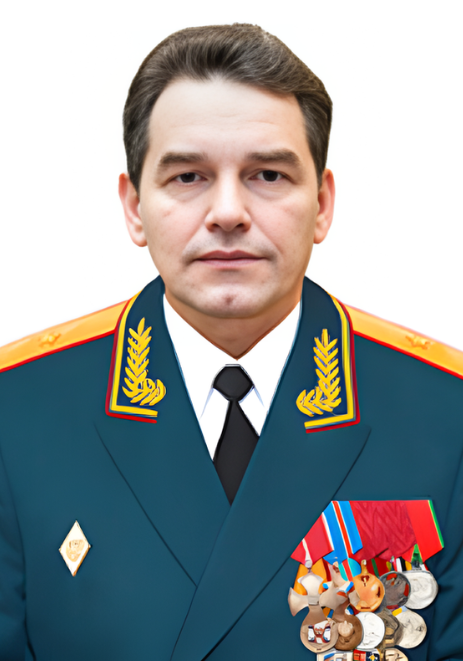
Lieutenant General Fanil Sarvarov was blown up when an explosive device detonated below his car in Southern Moscow on December 22, 2025. The Russian investigators immediately blamed the Ukraine intelligency service for this assassination, although there has been no official statement about this attack from the Kyiv government. Fanil Sarvarov took part in the conflict in Chechnya, Syria, as well as in the conflict in Ukraine. Even a tactical loss would carry a message: No one in Moscow is insulated from such a strike. In this connection, it has been said: It means every Russian commander has to wonder, ‘If this can happen here, then what does ‘rear area’ even mean?’
2. A Pattern of High-Profile Killings
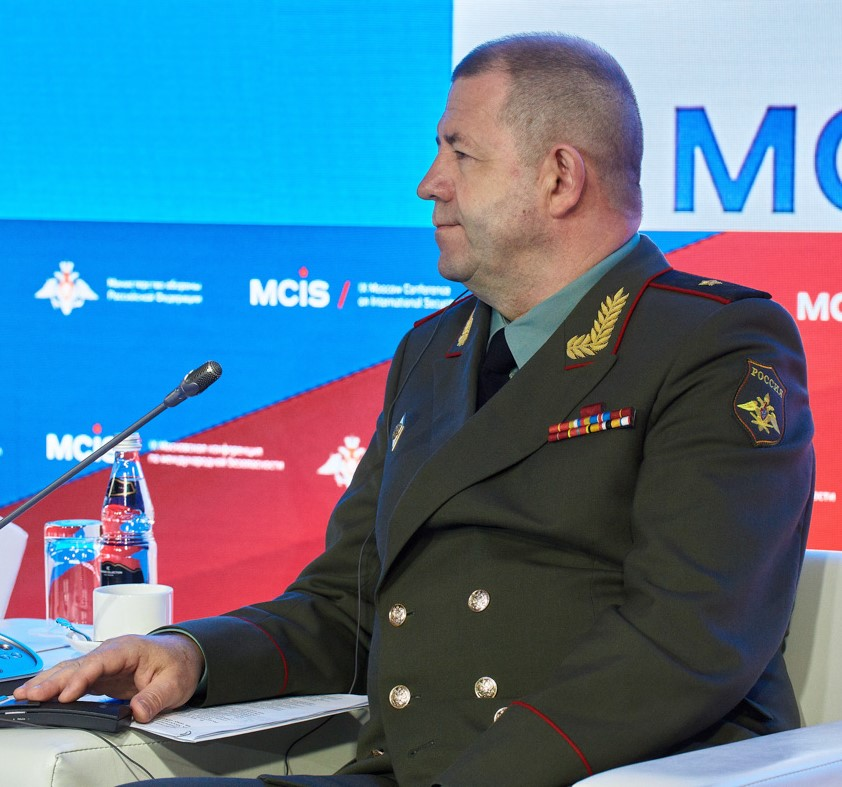
Since that incident, there have been a series of attacks where the result has been the loss of one’s life. December 2024 saw the death of a well-known Russian soldier by the name of Lieutenant General Igor Kirillov after the explosion of a bomb planted inside an electric scooter parked opposite his residing building; this act was committed by the Ukrainian security service. In April 2025, a celebrated Russian soldier by the name Yaroslav Moskalik lost his life after an explosion triggered by a bomb attached to his car went off near the Russian capital, Moscow. The aim of these operations is directed at persons for symbolic and functional reasons, targeting not only their physical security but also that of the Russian top military leaders’ perceptions.
3. The Police Blast Near the Crime Scene
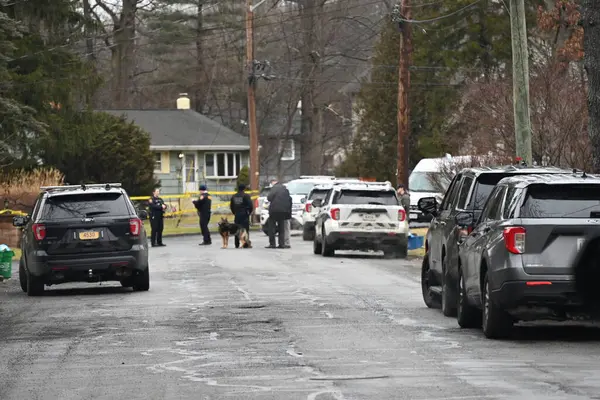
Only two days before the explosion, there was the Sarvarov murder case. Two traffic police officers and another person died when an explosion rocked the Yeletskaya Street area. According to the investigating team, the officers were approaching a suspected bomber when the bomb went off. The Russian sources believed that the suspected bomber was among those killed. It caused concerns about coordination or copycat attacks because of the proximity of the location of a Sarvarov assassination. It was another factor that contributed to a feeling of a vulnerability of security in the capital.

4. How Covert Cells Work Inside Russia
It would appear that the Ukrainian activity in the Russian network is organized in cells. Such cells are involved in very targeted activities such as surveillance, hardware bugging, as well as delivery without the need to focus on the larger picture. It is for this reason that the ultimate operation is not directly attributable to them. What is important to remember is the fact that many nations have their own ‘patron’ state models when it comes to covert action, built in such a manner as to be harmed by arrests, so as to safeguard their national security interests.
5. It is Pertinent to take Note of President Clinton’s
Although ucharinations have been hitting headlines, there could be even more destabilizing threats in infrastructure sabotage. At the end of 2025, there have been a considerable number of arson and derailment attacks directed at Russian freight and transport infrastructure. A branding related to Ukraine carried out by partisans could be identified accompanying those events in order to increase their noticeability and therefore their psychological effects.

6. Russia’s Countermeasures and Their Limits
The usual course of action for the Government would be the incorporation of security provisions with stronger counter-intelligence activities to secure the framing of information. Large disturbances will be followed by the incorporation of further security cameras and routes that ensure obedience through strongly protective security details. However, these efforts are highly intensive as well as irregular in the vast landmass of Russia, opening loopholes for possible abuse. In fact, simply accessing these lands can give Russian leaders paranoid thoughts.

7. The GRU’s Shadow War Abroad
The assassinations in Moscow take place in the context of Russian covert operations around the world. Russian attacks in Europe rose dramatically in 2024, according to a CSIS database, targeting transportation, government, critical infrastructure, and industry, nearly tripling from 2023. GRU Unit 29155 is known in operations such as the poisoning of Skripal to the sabotage of undersea cables. Such an international scenario highlights that both Russia and Ukraine in reality engage in shadow wars in parallel ways, in an attempt to benefit from the weakness of the other in distant areas away from the actual battlegrounds.
8. Strategic Incentives and Risks of Ukraine
For instance, in the capital of the state of Ukraine, Kyiv, such a snipers’ competition has various purposes in the following manner: to weaken Russia’s strength in the front lines, to strike at Russia in an attempt to have some kind of revenge, and to show to decision-making authorities in Russia and in other areas of the war in Donbas that these areas are not to be forgotten or left unprotected. On the contrary, the risks in such kind of operation are rather big. Such an event would further cement Russian public opinion, use this occurrence as an excuse to strike again, making peace talks even more tough to negotiate.
9. The Future of the Underhand Fight
The fact that these operations continue to exist in this way explains that there may be an underhand fight between people in Russia itself. For the Russians, this will mean to fight a kind of war in terms that Russia neither decided nor anticipated to accept, due to the need to make some expensive gestures of power in an attempt to regain control in their state borders. On the Ukrainian side, such an operation explains a kind of strategic insight into the use of asymmetrical power as a mean of balancing uneven strength. Whether this trend could fuel further escalation or change course depending upon risk appetites and the effectiveness of de-escalation and mitigation plans working alongside proper channels is still to be seen.
The reported death of generals within the ranks of the Russian government is not a new surprise, although it is a policy plan that includes assassination, sabotage, and psychological intimidation. These targeted killings indicate that a war is being waged that has penetrated the political and military center of Russia, calling into question the very definition of a war where the battlefield may be anywhere and a war of perceptions is being waged with equal vehemence and intensity.


