
“It was like a loud bang, like in the car a few days ago,” said Alexander, a resident of Southern Moscow, describing what happened when an explosion rocked the early morning stillness. That blast took two young officers of the traffic police and a third victim’s life, not far from where Russian General Galitski was killed by a car bomb a few days before. The spate of killings is the latest shocking event involving Russia, with most cases being attributed by Russia’s security authorities to operations carried out by the Ukrainian intelligence services.
A succession of such incidents has heightened suspicion about the links between events, despite both incidents being closely located together geographically. In our listicle, we will analyze the key facts and timelines related to the bombing in Yeletskaya Street that fall under the larger trend of targeted attacks that have characterized the conflict between Russia and Ukraine in the past four years.
1. The Fatal Encounter on Yeletskaya Street
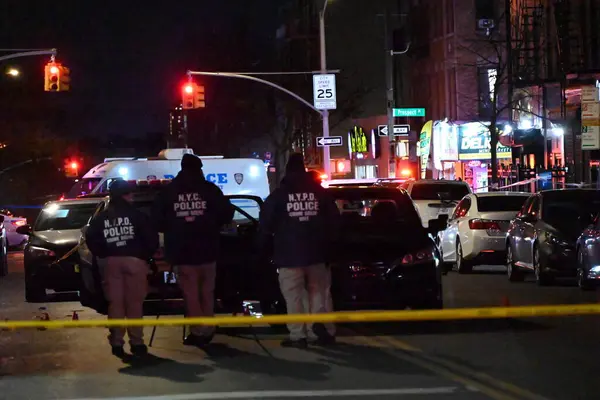
About 1:30 a.m. local time, two highway police officers approached a suspicious individual lurking around their patrol vehicle in Southern Moscow. According to Russia’s Investigative Committee, a bomb exploded when they approached him, killing both officers and a third individual who happened to be in the area. Unsourced Russian Telegram channels asserted the perpetrator was the bomber. The two officers who met their death in the attack have been identified as Lieutenant Ilya Klimanov, who was 24 years old, and Lieutenant Maxim Gorbunov, who was 25 years old. Lieutenant Maxim Gorbunov was married with a nine-month-old baby daughter.
2. Proximity to General Sarvarov’s Assassination
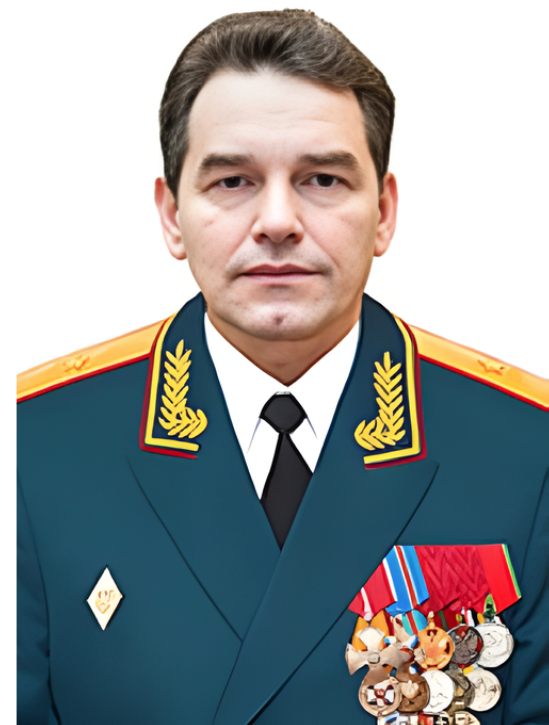
The explosion took place barely half a mile away from where Lt. Gen. Fanil Sarvarov, the Russian general staff’s operational training chief, had been slain two days prior. The explosion occurred in his car on Yasenevaya Street at about 7:00 a.m. on Monday, allegedly linked to Ukraine’s intelligence agency. Sarvarov, 56, had been in charge of training for Russia’s military operation in Ukraine and had previously fought in Chechnya and Syria. His death is the third assassination of a high-ranking military officer in Moscow in under a year.

3. Criminal Cases of Investigative Committee’s
The crime case opened against “attempted murder of law enforcement officials” and “illegal trafficking of explosives” in connection with the explosion at Yeletskaya Street. In the case of Sarvarov, charges included murder in a socially dangerous manner. “Forensic teams have been sent to both crime scenes,” and investigations involve orchestration by Ukrainian intelligence services and several lines of inquiry, according to spokesperson Svetlana Petrenko.

4 Ukrainian Intelligence Links and Claims
An anonymous official from the Ukrainian military intelligence agency said to the Associated Press that a part of the operation was the bombing on Yeletskaya Street. Sources from the BBC’s HUR news agency said the bomber “targeted the officers as a sign of disagreement with the Kremlin’s aggressive policy,” as the officers belonged to a military unit that took part in combat against Ukraine and abused prisoners of war. There has as yet been no official reaction to Sarvarov’s death on the part of Ukraine, following its general practice of rarely taking responsibility for targeted killings within the borders of Russia.
5. Pattern of High-Profile Assassinations
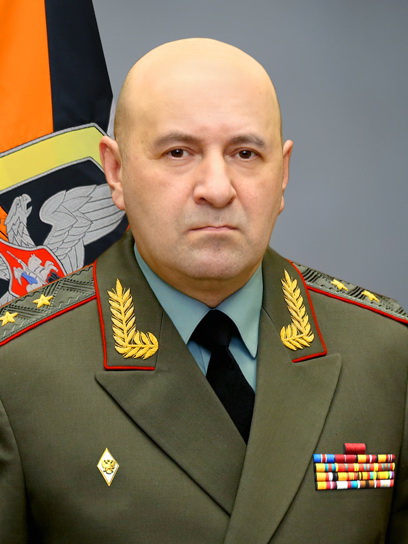
Since the end of February 2022, Russia has blamed Ukraine for various deaths of Russian military officials and so-called war patriots. These individuals include Lt. Gen. Igor Kirillov, who was murdered by a bomb planted on a scooter in December 2024, Gen. Yaroslav Moskalik, who was murdered by a car bomb in April 2025, and military blogger Vladlen Tatarsky, murdered on April 25th of 2023 after a explosion at a coffeehouse. Kyiv has sometimes taken credit for it, as in Kirillov’s case, and often simply kept mum about it and left everyone guessing.
6. Sarvarov’s Military Career and Role
Born in the Perm region of Russia in 1969, Sarvarov has fought in wars in the North Caucasus and in Syria until becoming the head of Operation Training in 2016. His ministry played a vital role in planning and being combat-ready for various military operations. Russian state media drew particular attention to his activities in preparing troops for the Ukraine campaign. This highlights the importance of his immediate loss.

7. Public and Official Reactions
People living around Yeletskaya Street remembered being woken up by the explosion. Officials and pro-war bloggers demanded instant retaliation because these events were now being seen as part of a large-scale aggression plan. Kremlin spokesman Dmitry Peskov has confirmed that President Vladimir Putin had been made aware of Sarvarov’s death. The military bloggers were not impressed with the security measures in place, as Yuri Kotenok said: “It’s hard to win when the rear is an open thoroughfare.”

8. Unconfirmed Linkages Between the two Blasts
Although both events are close in time and space, there is no confirmation of a direct link to the assassination of Sarvarov by Russian investigators at this time. Each case is being investigated independently; although, intentional targeting is still under consideration at this time. Ligovsky Blast The lack of official information allowed room to be created for speculation, especially among Russian sources and web channels that are affiliated with security services.
9. Broader Geopolitical Context
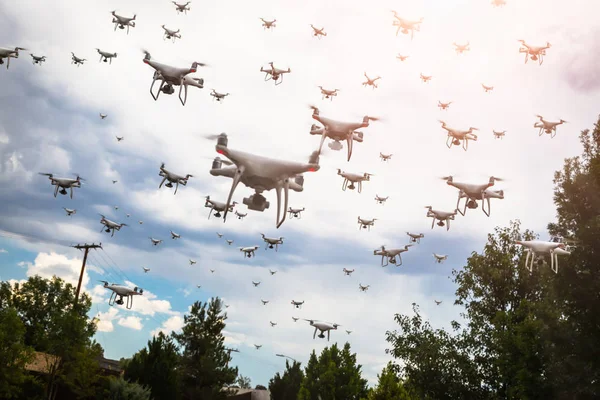
This is happening while fighting is still ongoing at the common border with Eastern Ukraine, and Kyiv has also accused Russian forces of abuses, including forced deportation. Kyiv’s forces have also launched some unconventional strikes, like swarming drones at bomber bases inside Russia. In such a context, the strategic killing of high-ranking officials can have both tactical and psychological motivations and could be impacting the conflict dynamics far away from the battlefield.
The bombing in Yeletskaya Street reveals an increasingly perilous environment found within Russia’s own walls, as law enforcement officials and high-ranking military leaders have become a target of this “shadow war.” While there appears to be a question about whether the two bombing incidents in Moscow are related, there is a continued pattern of “precision strikes” that have muddled traditional battlefield actions with clandestine operations in any case.The continued investigations into these events are inevitably expected to escalate tension between Moscow and Kyiv, as evidence of the conflict’s expansion into non-traditional fronts mounts.


