
It is a “rumor that jet planes are secretly spraying the atmosphere with poisonous chemicals”, one that has persisted for decades; if one would say so, the answer is out there in the atmospheric sciences. In the words of Steven Davis at the University of Irvine, the intent was: “We wanted to put the scientific community and the world on record, so to speak, about the scientific facts to counter rumors that the government was secretly spraying poisonous chemicals using planes.” Apparently, careful scientific analysis yields the conclusion that contrails are normal icing clouds, nontoxic, and that real weather modification, far from conspiracy theories, is regulated.
1. Physics of Contrail Formation
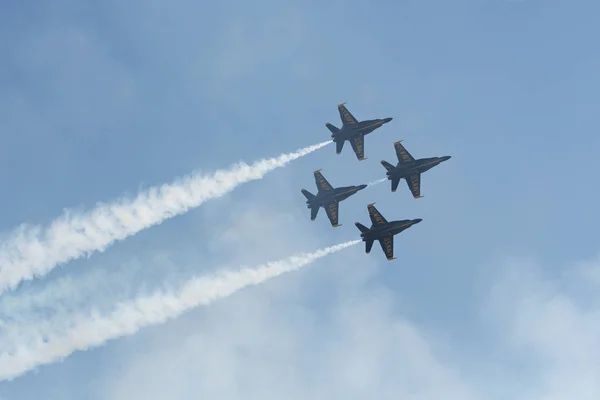
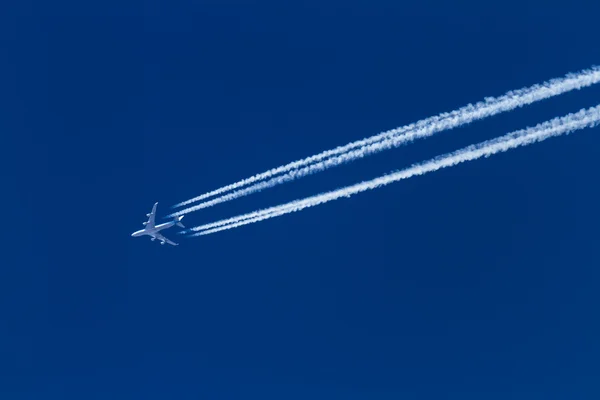
Contrails are formed by hot and humid exhaust from jet engines mixing with cold and humid air at cruising altitudes between 20 000 and 30 000 feet. Water vapor freezes into small ice crystals around particles of soot and sulfates from jet engines. The degree to which contrails persist depends on the degree of humidity and prevailing winds and NOT due to ‘secret chemicals.’ These federal environmental protection agencies insist that contrails are primarily composed of ice crystals and their appearance is due to atmospheric physics and NOT by secret spraying operations.
2. Why Persistent Contrails Are Not Proof of Spraying
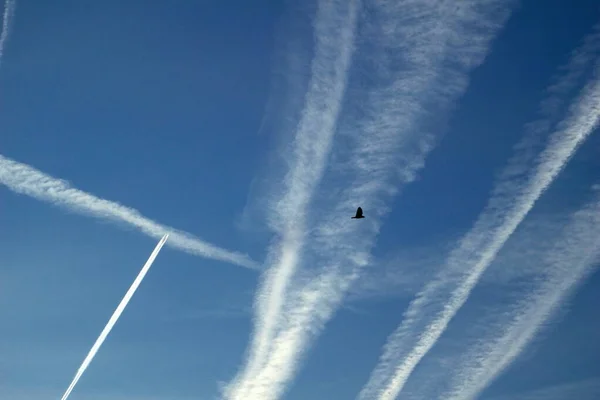
These believers will invariably cite lingering and nebulous contrails as evidence of chemical loads. Atmospherics researchers will testify that high humidity levels in upper atmosphere layers cause ice crystals to develop into cirrus clouds. Conditions that are perfectly simulated by satellite photographs and models of contrails devoid of any chemical byproducts. The scope of alleged global chemical spraying will inevitably betray chemical residues that have never been detected in air, water, or ground samples.

3. Scientific Consensus Against Chemtrail Hypothesis
A clear-cut survey of 77 atmospheric chemists and geochemists found that 76, or 98.7%, had not seen any evidence for a large-scale spraying operation. The respondents said that any supposed “proof” could be explained by the physics behind the formation of contrails or faulty sampling methods, such as using water from metal-lidded containers, which would give false samples. Carnegie’s Ken Caldeira said, “Contrails are becoming more frequent as a result of increased air travel. It is also a possibility that global warming is resulting in contrails lasting longer than they used to.”
4. Real Climate Impact of Contrails
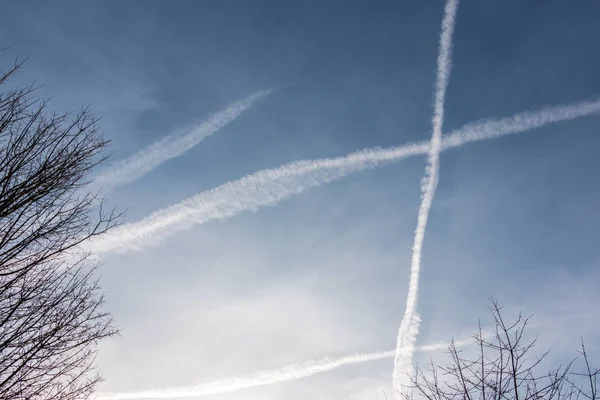
While contrails are not toxic, they have a measurable warming effect. Contrails produced by cirrus clouds tend to trap infrared radiation and affect the energy balance of the Earth. The IPCC estimated that contrails due to cirrus clouds might produce a warming effect equivalent to the total warming effect of all the historical aircraft-related CO2 emissions.
5. Engineering Solutions to Reduce Contrail Warming
Strategies for mitigation include routing planes around cold, humid regions of air that tend to create persistent contrails. Scientists find that changing the routing of a few planes by 2,000 feet can cut the effect of aviation on the climate in half for a cost of merely $1-$2 per metric ton of CO2-equivalent for the whole operation, which is less than the social cost of carbon of $190 charged by the EPA. Airlines are working on incorporating the predictive model for contrails into flight planning systems, but the biggest issue has been the lack of accurate humidity data in the cruise phase. Scientists are working on the development of humidity sensors for planes that can be retrofitted.
6. Sustainable Aviation Fuel and Contrail Reduction
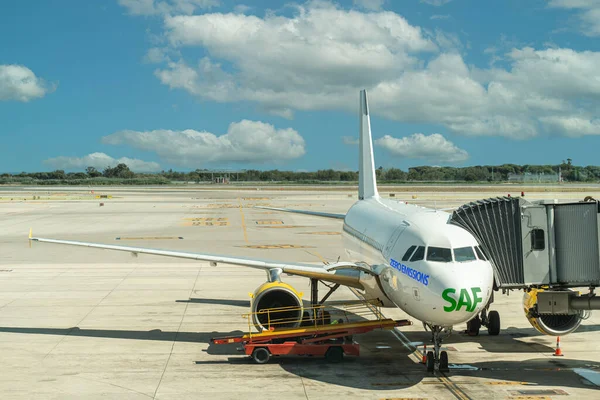
SAF will reduce soot emission, which means fewer ice crystals in contrails and reduced contrail duration. NASA’s 2023 study project with Boeing focuses on the impact of SAF on contrail occurrence. The findings will be released in 2026. This method is complementary to the contrail avoidance approach.
7. Real World Weather Modification Practices
Cloud seeding, which has included the injection of substances like silver iodide into cloud systems in attempts to generate more rainfall, is one of the very few weather modification methods ever tried on any scale in the U.S., and such operations have taken place in states like California, Nevada, and Colorado, among others. Activities dealing with this are monitored by groups like the North American Weather Modification Council and must be reported by law under the Weather Modification Reporting Act of 1972. Such projects are localized, transparent, and lack the capacity for climatic control.
8. Geoengineering Controversies and Governance
Solar radiation management, also called geoengineering, involves reflecting sunlight to cool the planet. Approaches under study include the injection of aerosols into the stratosphere, but no full-scale deployment programs are as yet underway. The 2023 White House report on SRM stressed that management of research must meet the standards of transparency of research, public participation, and international cooperation. Field-testing has been controversial because of the risks, which include “termination shock.”
9. Unpacking Online Chemtrail Stories
In fact, the examination of the conspiracy forums shows themes of pattern “grid-like” flight routes, peculiarly shaped clouds, or a high concentration of metals, which correspond to typical air traffic and atmospheric conditions. Indeed, the fact that the theory is non-falsifiable causes any disproving observations to be used as confirming testimony of a conspiracy instead. As Carl Sagan so famously coined, “Extraordinary claims demand extraordinary evidence,” and this is clearly not the case with chemtrails.

10. The Way Ahead for Science and Public Communication
The new contrail resource aims to debunk myths associated with contrail formation and their role in relation to the environment. A major concern is that misleading but dramatic stories spread faster and have greater reach and influence than scientific ones. To effectively engage with these contrails, one should focus on wedding science with public outreach and ensure that the public discourse on contrails is around their actual, rather than perceived, impacts.


