
It is not every day that a comet’s “heartbeat” becomes the talk of both observatories and ancient history circles. Yet interstellar comet 3I/ATLAS has managed just that, with its rhythmic signal shifting as it closes in on Earth, and igniting an unlikely collision between astrophysics, archaeology, and speculation about intelligent design.
1. A Heartbeat in Deep Space
Using data from both ground-based telescopes and space telescopes, Andrew Collins has found that 3I/ATLAS has a repeating cycle in its bursts of activity every 15.48 hours-down from an earlier measured value of 16.16 hours. This subtle change in periodicity was checked by Spain’s Two-Meter Twin Telescope (TTT), which followed brightness oscillations of the comet over many months. The modulation is not random: Collins remarks that the time interval matches up perfectly with several ancient timing systems, including a 144-second unit reportedly used in early Chinese clocks and in ancient Indian meditation. In his opinion, it is “too perfect to be a coincidence”; this would be a broadcast of a universal mathematical pattern.
2. Echoes of Ancient Skywatchers
The connection to the timekeeping of old is deepened by archaeological research at Göbekli Tepe, where 12,000-year-old carvings seem to encode a lunisolar calendar and perhaps even commemorate a catastrophic comet strike around 10,850 BCE. These markings track solar and lunar cycles with a precision that predates known calendars by millennia. The idea that 3I/ATLAS’s “heartbeat” might mirror such ancient systems fuels speculation that civilizations long past may have recorded-or even predicted-cosmic visitors.
3. Unusual Acceleration and Trajectory
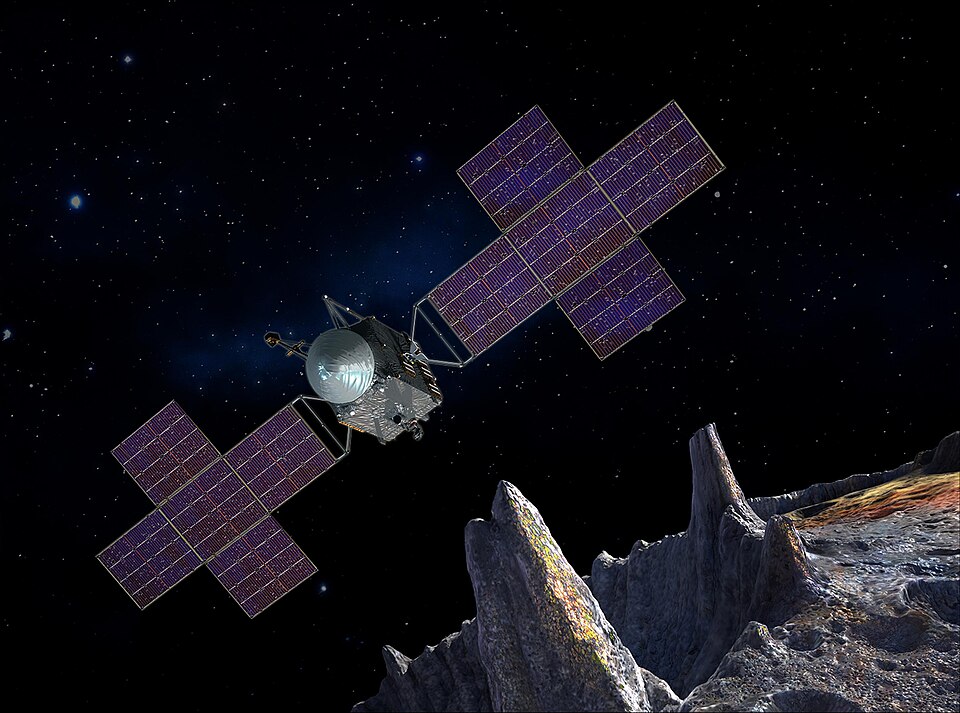
Besides its rhythmic emissions, 3I/ATLAS has also undergone non-gravitational acceleration. NASA and ESA attribute this to cometary outgassing-jets of gas and dust from sublimating ice imparting small thrusts. Measurements from NASA’s Psyche spacecraft and ESA’s Mars Trace Gas Orbiter support this, matching patterns seen in active solar system comets. However, Harvard’s Avi Loeb counters that the explanation sidesteps anomalies: a tail pointing toward the Sun rather than away, high nickel content in the plume, and a rotation axis aligned within eight degrees of the Sun’s direction-a configuration he calculates has only a 0.5% probability of occurring naturally.
4. The Sunward Jet Mystery
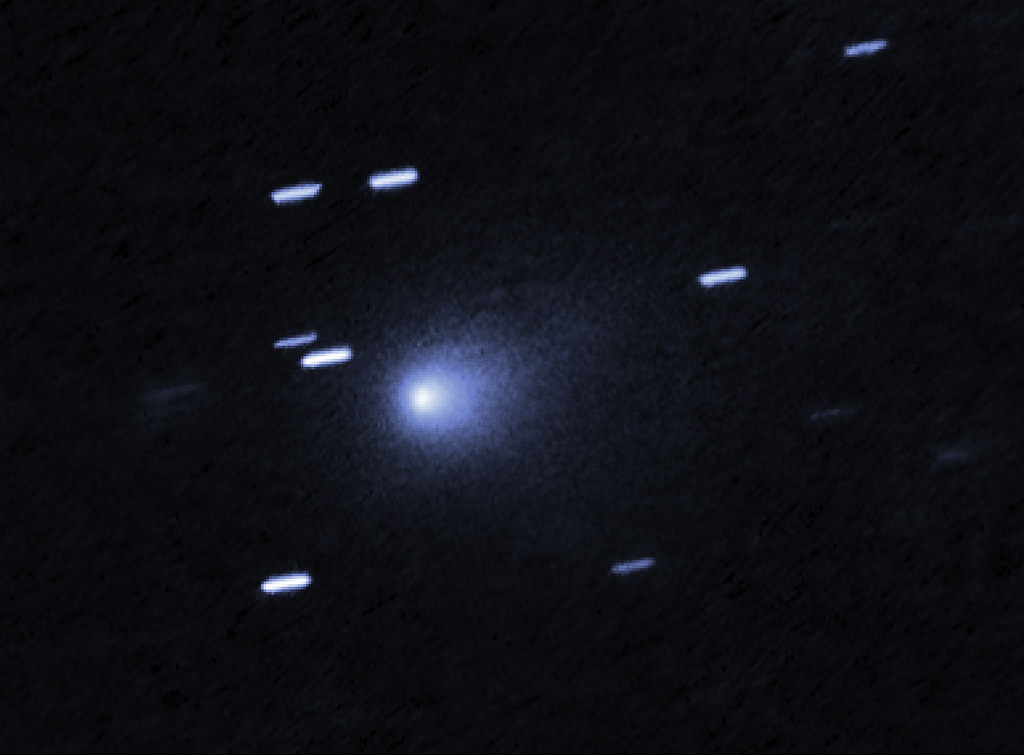
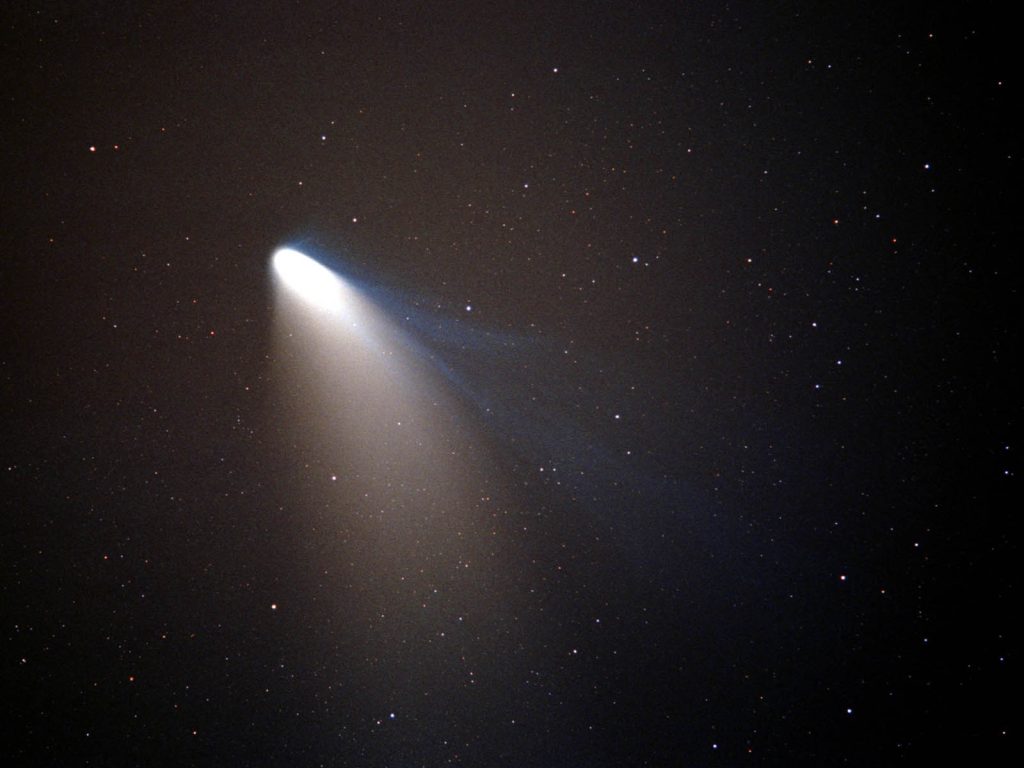
TTT observations showed a narrow, collimated jet from the Sun-facing side of the nucleus, with small oscillations associated with the comet’s rotation. This “Sunward anti-tail” remained well past perihelion on October 29, when 3I/ATLAS approached within 126 million miles from the Sun. Loeb has suggested this could be a kind of solar deflector a directed outflow to protect a technological structure from solar wind and micrometeorites. The geometry of the jet is quite unlike that from natural sublimation.
5. Rotation and Physical Properties
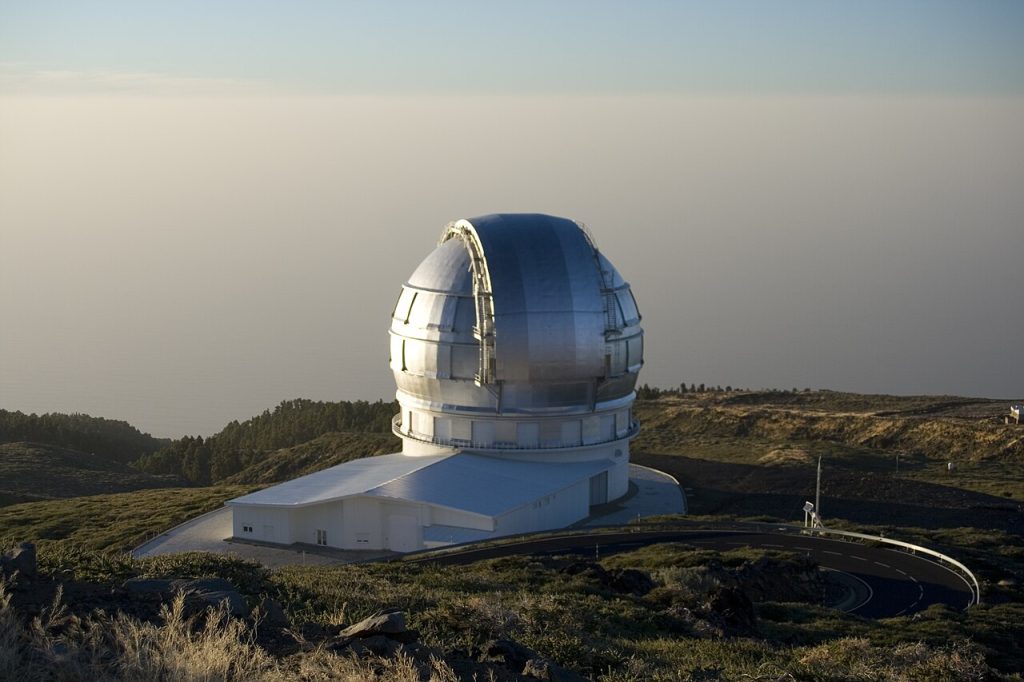
High signal-to-noise imaging and photometry from the TTT and the 10.4 m Gran Telescopio Canarias have pinned the comet’s rotation period at 16.79 ± 0.23 hours. The light curve shows only 0.2 magnitudes of variation, consistent with a coma-dominated brightness profile. Spectroscopy reveals a slightly redder slope than D-type asteroids, akin to trans-Neptunian objects and Centaurs, and no detectable CN gas emission a normal trait for comets beyond 4 AU. The dust coma is roughly 26,400 × 24,700 km across at the distance observed.
6. Interstellar Provenance
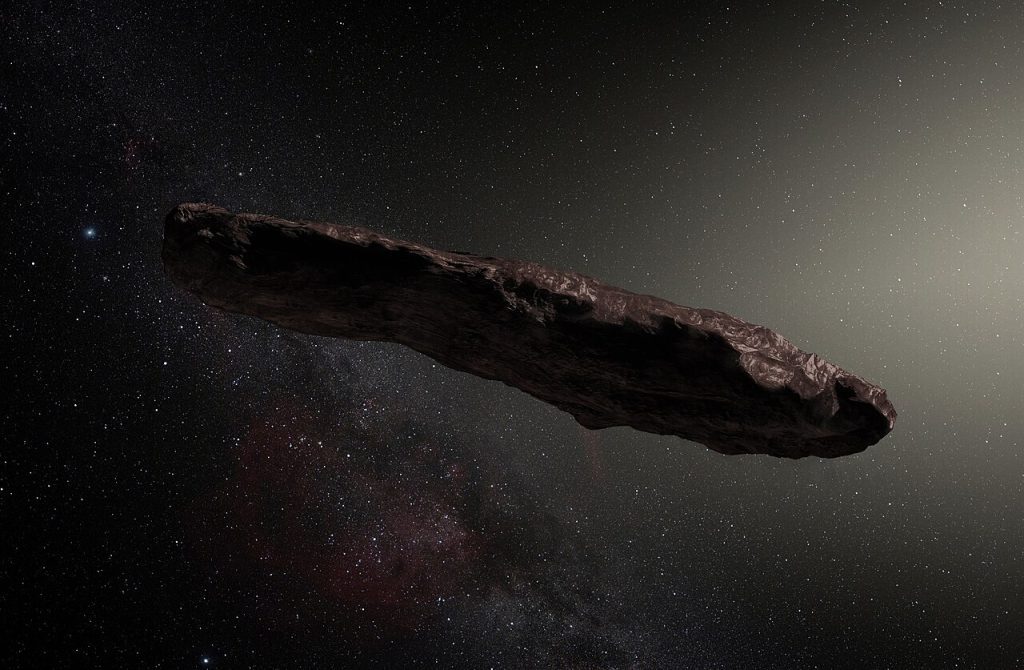
Orbital analysis confirms that 3I/ATLAS is on a hyperbolic path with eccentricity above 6, inbound from the constellation Sagittarius at ~58 km/s relative to the Sun. N-body simulations trace its origin to the Galactic thin disk-possibly from a solar-like star with slightly subsolar metallicity. After its solar flyby, it will exit toward Gemini at the same speed and never return. This makes it only the third confirmed interstellar object after 1I/’Oumuamua and 2I/Borisov-and the fastest recorded at 130,000 mph.
7. The Debate over Technosignatures
NASA’s Tom Statler insists that “the evidence is overwhelmingly pointing to this object being a natural body. It’s a comet.” Loeb, however, calls for openness: “When there are implications to society, we must consider even an unlikely event and collect as much data as possible to convince us otherwise.” The Galileo Project he leads actively searches for technosignatures-measurable indicators of extraterrestrial technology-and views 3I/ATLAS as a candidate worth scrutiny.
8. A Rare Window into Other Worlds
To planetary scientists, 3I/ATLAS represents a pristine sample of material from another planetary system. Its dust composition, jet morphology, and rotation dynamics provide a benchmark against which extrasolar debris can be compared to solar system analogs. The lack of gas emissions at large distances, the spectral slope, and coma structure are all indicative of physical processes sculpted by conditions in its parent system-processes which, despite the object’s exotic origin, appear remarkably familiar.

Whether 3I/ATLAS’ heartbeat is a quirk of cometary physics or an intentional signal, the juxtaposition of modern instrumentation and ancient sky lore makes it one of the most fascinating interstellar encounters in living memory.


