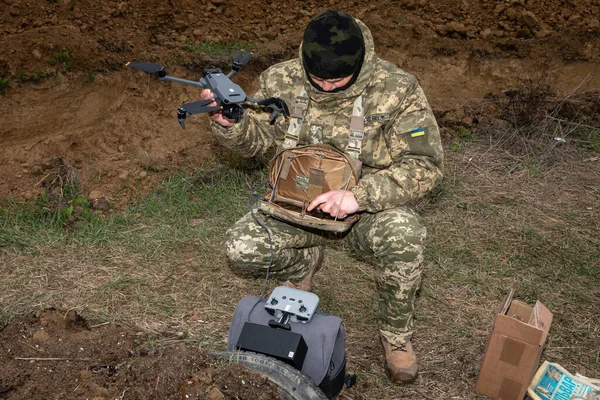
By the beginning of 2025, the skies over Ukraine had become a permanent barrage. Hundreds-strong nightly swarms of Russian Shahed drones coming in massed to overwhelm traditional air defenses were forcing impossible choices upon commanders: expensive missile interceptors were being spent on low-cost targets, while slower gun crews could not keep pace. The problem was clear: without a scalable, affordable, and fast countermeasure, Ukraine’s critical infrastructure and frontline units would remain exposed. It came in force by December. The Ukrainian defense ministry confirmed it was delivering close to 950 specialized interceptor drones to its troops every single day, an industrial and tactical milestone which only months earlier seemed out of reach.
From a volunteer-driven experiment at the outset of drone-on-drone combat, it has matured into one of the core pillars of Ukraine’s air-defense architecture by fusing state-backed mass production with battlefield ingenuity. This is more than just a surge in numbers. The headline growth conceals a rapid evolution in design, tactics, and manufacturing partnerships to counter both the propeller-driven Shahed-136 and the newer, jet-powered Geran-3. Herewith are ten key developments that put into context how Ukraine achieved this unprecedented production tempoand why it matters in the high-stakes drone war over Eastern Europe.
1. Scaling to almost 1,000 interceptors a day
The December announcement by the Ukrainian defense ministry marked a decisive leap from the 600-800 daily interceptors reported by President Volodymyr Zelenskyy in November. This output meets the July 2025 target of 1,000 per day, a figure once seen as aspirational given the prototyping stage of many designs earlier in the year. More than 10 domestic manufacturers are now under contract, assuring a supply base resistant to strikes on individual facilities. “These systems strengthen protection against drone terror while preserving resources for intercepting cruise and ballistic missiles,” said Defense Minister Denys Shmyhal. The scale allows Ukrainian units to deploy interceptors en masse, matching Russia’s own tactic of saturating defenses with Shahed waves.
2. The Sting and Volunteer-Driven Innovation
One of the most iconic interceptors, Sting, is from the volunteer-based Wild Hornets group. Tailor-made to hunt Shahed-136 drones, it costs somewhere around $2,500. With its sleek body, dome-mounted camera, and speeds upwards of 198 mph, this has been an agile hit-to-kill weapon. The 45 engineers in Wild Hornets produce about 100 drones daily; approximately 70% of the components are made locally. But more than anything else, this has been heavily reliant upon crowdfunding, also from the Sternenko Foundation, which has been integral to the fielding of these systems, underlining the manner in which grassroots innovation remains a force multiplier alongside state procurement.
3. Countering the Jet-Powered Geran-3
A new challenge arose when Russia unveiled the Geran-3, its domestic version of the Iranian Shahed-238. Outfitted with a Chinese Telefly JT80 turbojet, it achieves 185–230 mph, nearly twice as fast as its propeller-driven predecessor. That speed compresses defenders’ reaction windows and shrinks opportunities for engagements. Ukrainian developers have fielded high-speed interceptors that can meet the Geran-3 in combat. Wild Hornets confirmed last month that a Sting had successfully downed one of these jet-powered drones in flight, an event volunteer leader Serhii Sternenko termed “a bit of a historic achievement.”
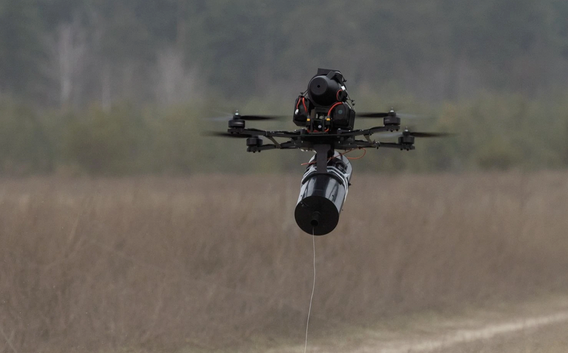
4. From FPV Racing to Air Defense Workhorse
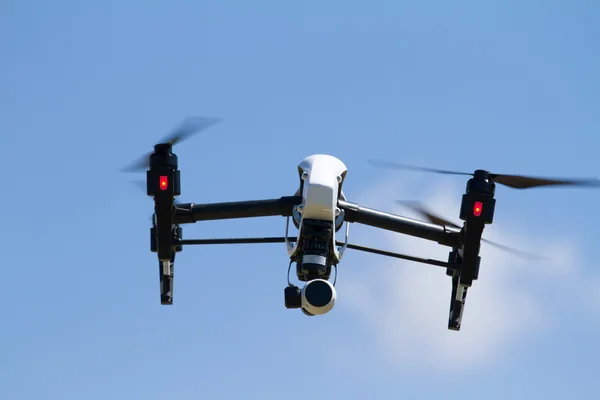
It heavily draws on First-Person View drone technology developed first for civilian racing. Ukrainian engineers adapted high-thrust quadcopter frames, powerful motors, and immersive VR-goggle piloting to create agile platforms capable of precision air-to-air strikes. That gives skilled pilots an unprecedented capability to maneuver into the path of fast-moving targets-a task far more challenging than undertaking ground strikes. Adaptation from civilian to military uses has enabled rapid scaling, with components readily available and assembly able to be decentralized.
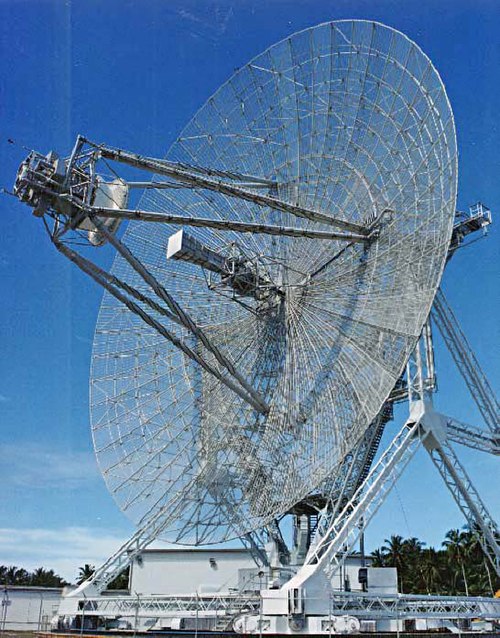
5. Tactical Integration with Radar and Recon
Interceptor operations rely on tight coordination between radar operators, reconnaissance teams, and drone pilots. Often, the crews have only about 10 minutes between detection and interception. Shaheds can fly as high as 16,000 feet, so accurate tracking data is required, relayed in real-time. Success rates vary from 30% to over 80%, depending on pilot skill, target type, and time-to-intercept. And, as Taras Tymochko, program lead for the Dronefall program, himself said, crews “can perform 9 out of 10 results” when well-trained and seasoned.
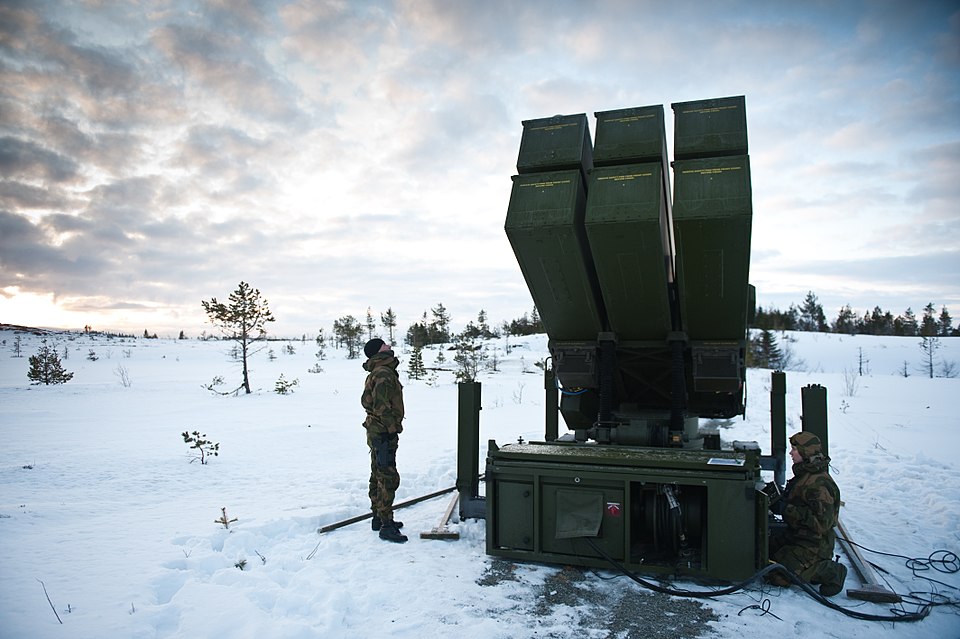
6. Save High-End Missiles for High-Priority Threats
For systems like NASAMS, a single missile costs about $1 million, while interceptors of the type of Sting are counted in several thousands. This cost asymmetry becomes crucial in a war of attrition. That Ukraine can counter Shaheds and decoys with low-cost drones preserves its scarce stocks of advanced surface-to-air missiles for faster and more destructive cruise and ballistic missiles. These tactics address not only economic sustainability but also operational readiness facing Russia’s salvo strategy.

7. NATO and Allied Interest in Low Cost Interceptors
The success of Ukraine’s interceptor program has not gone unnoticed by NATO planners: hit-to-kill drones were described by Adm. Pierre Vandier, NATO Supreme Allied Commander Transformation, as one of the most “promising” solutions for European allies. A co-development deal between the UK and Ukraine has promised thousands of low-cost interceptors. Similarly, tests over Danish airspace were said to show allied interest in cheaper alternatives to fighter jets and Patriot missiles for drone defense.
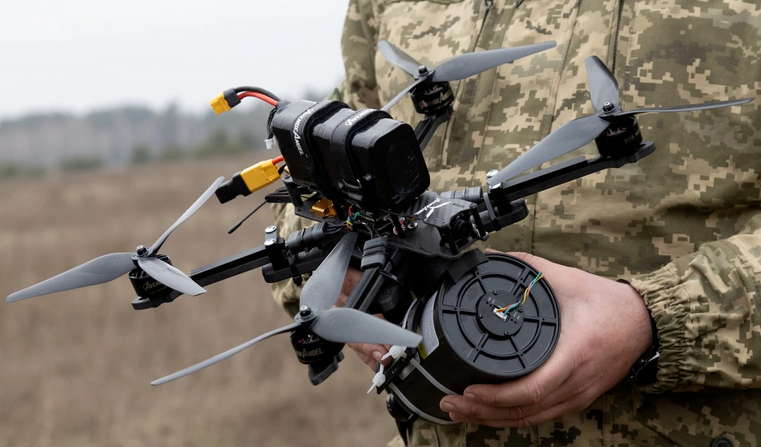
8. Countering the Fibre-Optic Drone Threat
Complicating Ukraine’s electronic warfare defenses, Russia deployed fibre-optic drones immune to radio-frequency jamming. Using a physical cable for control transmission as well as video, these devices proved resistant to traditional intercepts. Ukrainian forces have since readjusted to the threat by placing a higher reliance on visual detection, high-speed interceptors, and kinetic engagement, while looking into AI-assisted targeting to reduce pilot workload against such stealthy threats.
9. Public-Private & International Production Partnerships
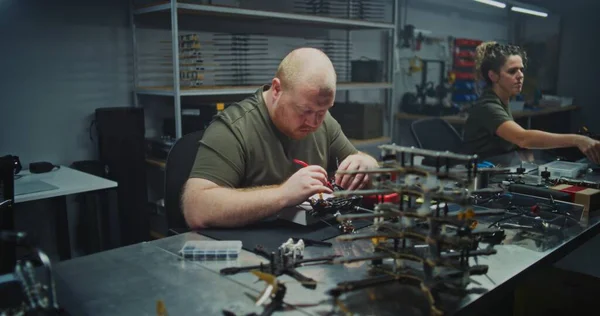
Going beyond domestic manufacturers, Ukraine has started joint production ventures, including with U.S. partners. In November, Zelenskyy announced joint Ukrainian-American production of interceptors with an expanded output goal despite the risk of Russian strikes on factories. Partnerships with European firms-like Denmark’s Terma partnering with Ukrainian company Odd Systems on AI-powered interceptors-are illustrative of how foreign investment bolsters Ukraine’s layered air defense network.
10. Preparing for the Next Phase of the Drone War
This is a drone arms race that does not show any sign of slowing. Russian planners experiment with mass deployments of Geran-3, decoy swarms, and mixed salvos of missiles and UAVs to saturate defenses. Meanwhile, Ukrainian engineers work on next-generation interceptorspossibly including jet-powered variantsto catch faster threats. As Tymochko of Come Back Alive hinted, “It’s going to be the next stage of the competition,” with future systems likely revealed only once they are already in combat use.
More than an industrial feat, what Ukraine has pulled off with near 1,000 interceptor drones a day is a strategic adaptation to an evolving aerial threat. Melding volunteer ingenuity, statebacked mass production, and international partnerships, Kyiv created a sustainable, scalable defense against one of the most persistent Russian weapons. In this race to outrun the opponent’s pace of innovation, the fight for Ukraine’s skies will keep being a defining competition of speed, cost, and creativity.”


