A single 16-day global forecast that took close to an hour to run now completes in 40 minutes and uses only 0.3% of the computing resources of NOAA’s classic Global Forecast System. This is no incremental gain but a seismic shift in operational meteorology, thanks to a suite of artificial intelligence-driven models freshly introduced at the agency. AIGFS, AIGEFS, and HGEFS are the first-ever operational AI models of their kind at NOAA, designed to speed forecast delivery, make forecasts more accurate, and cut computational cost dramatically.
1. AIGFS: Speed and Efficiency at Scale
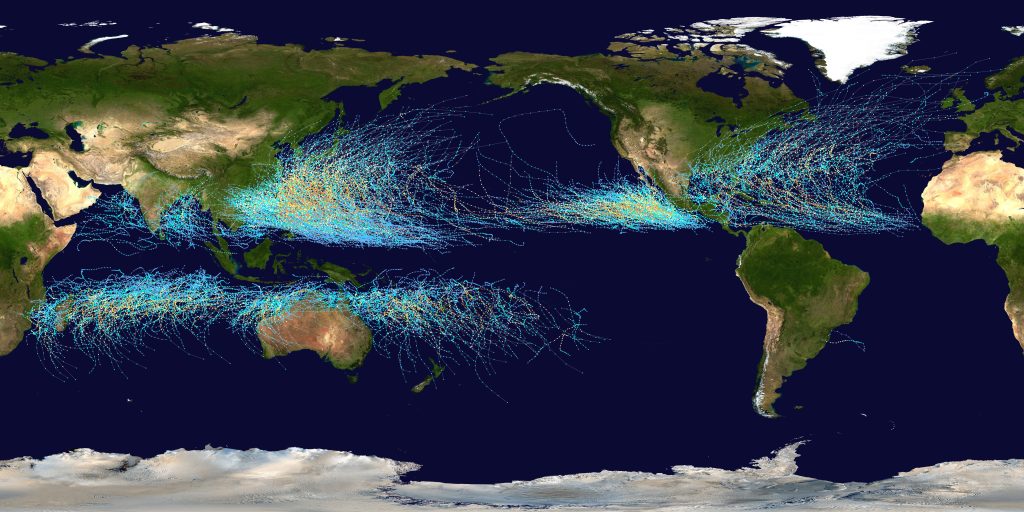
While the GFS relies on physics-laden numerical simulations, the AIGFS instead uses a machine learning architecture, trained on decades of atmospheric data-including NOAA’s own Global Data Assimilation System analyses-to identify evolving weather patterns without explicitly solving the full suite of atmospheric equations. This yields forecasts comparable to the GFS in skill for large-scale features, but shows notable reductions in tropical cyclone track errors at longer lead times. However, hurricane intensity forecasts remain in need of refinement, reflecting a challenge common to AI meteorology: accurately capturing events of rapid intensification.
2. AIGEFS: AI-Powered Ensemble Forecasting
Ensemble forecasting is one of the bedrocks of modern meteorology, giving a probabilistic guidance based on the running of multiple simulations with slightly varied initial conditions. AIGEFS takes this and brings it over to the realm of AI, creating 31 distinct forecast members at just 9% of the computational cost of the traditional GEFS. Early tests show that the AIGEFS could extend existing forecast skill from the GEFS as long as 18- to 24-hours-a significant improvement toward readiness for severe weather events. Developers are still working on ways to increase the diversity in its ensemble spread so forecasters can accordingly quantify uncertainty.
3. HGEFS: The Hybrid “Grand Ensemble”
Each system combined the best aspects of physics-based and AI-based ensembles into a single 62-member system: 31 from the legacy GEFS and 31 from the AIGEFS. Furthermore, this twin-core approach leverages both the physical robustness of numerical models with the speed of AI to produce forecasts that are consistently superior to either system in isolation for just about every metric of verification. Putting these two fundamentally different modeling paradigms together creates a more informative representation of atmospheric uncertainty-particularly desirable for complex systems like tropical cyclones. NOAA believes it to be the first operational center globally to deploy such a hybrid ensemble.
4. Machine Learning Foundations in Meteorology
These models rely on machine learning algorithms that have been trained on over 40 years of data, six hours apart in the atmosphere. This historical archive provides a basis whereby AI systems learn from the statistical relationships of current atmospheric states with their evolution in time. In contrast to physics-based models that explicitly solve fluid dynamics and thermodynamics, AI models make inferences about those processes from patterns in the data. This enables faster execution times but carries along with it possible challenges in addressing weather features outside the historical record, including unprecedented climate-driven extremes.

5. Computational Resource Optimization
Traditional global models require petaflop-scale supercomputers, where the operational runs are very expensive regarding energy consumption and hardware. NOAA estimates that this 99.7% reduction in computational load given by AIGFS significantly cuts down on operational expenses besides freeing up high-performance computing infrastructure for other scientific workloads. However, training AI models is power-hungry-a precept to which NOAA agrees when it considers the total environmental footprint.

6. AI in hurricane forecasting
Already, Google DeepMind’s GraphCast model helped forecasters have high confidence that Melissa would strengthen to Category 5 well prior to the storm’s landfall in Jamaica-a forecast that allowed for earlier warnings. According to CIRA researcher Kate Musgrave, though, AI models often do well at track prediction but less so at forecasts of intensity because of limitations in historical data-only about 100 storms occur around the world annually. NOAA seeks to bridge the gap with its hybrid systems, which integrate AI speed with physics-based intensity modeling.
7. Project EAGLE: Accelerating AI Adoption
These models represent the first family of operational products from Project EAGLE, NOAA’s Experimental AI Global and Limited-area Ensemble forecast system. EAGLE provides a conduit for the rapid testing and deployment of AI models alongside established systems, condensing the research-tooperations pipeline. Plans are underway to augment the present deterministic and ensemble test environments with ocean and ice modeling and highresolution regional forecasts. By bridging NOAA datasets with European AI libraries like Anemoi, EAGLE enables international collaboration on AI meteorology.
8. Ensemble Techniques and Forecast Uncertainty
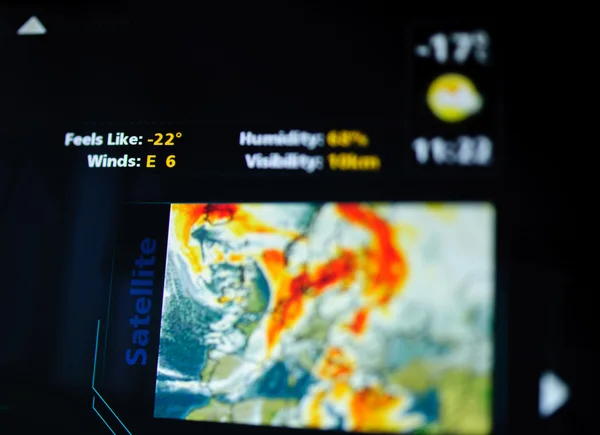
Ensemble forecasting remains, nevertheless, one of the major tools in preparedness against risks. AI-driven ensembles, such as AIGEFS, can provide hundreds of scenarios from a single starting point in minutes, as opposed to hours for traditional systems. That would allow meteorologists to better quantify the probability of extreme events and make informed decisions on evacuations and the apportionment of resources.
Hybrid ensembles further reinforce this capability by capturing both statistical and physical uncertainty, hence forming a more robust basis for high-stakes forecasts. NOAA’s AI weather models represent a watershed moment in computational meteorology, joining decades of atmospheric science with the most modern capabilities in machine learning to create faster, leaner, and more accurate forecasts. The integration of AI into operational systems via Project EAGLE offers, in the future, the ability for meteorologists to act on newly evolving weather threats with unprecedented speed and precision.


