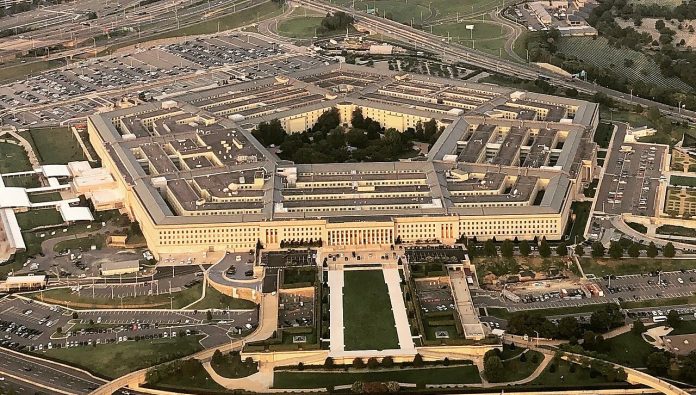
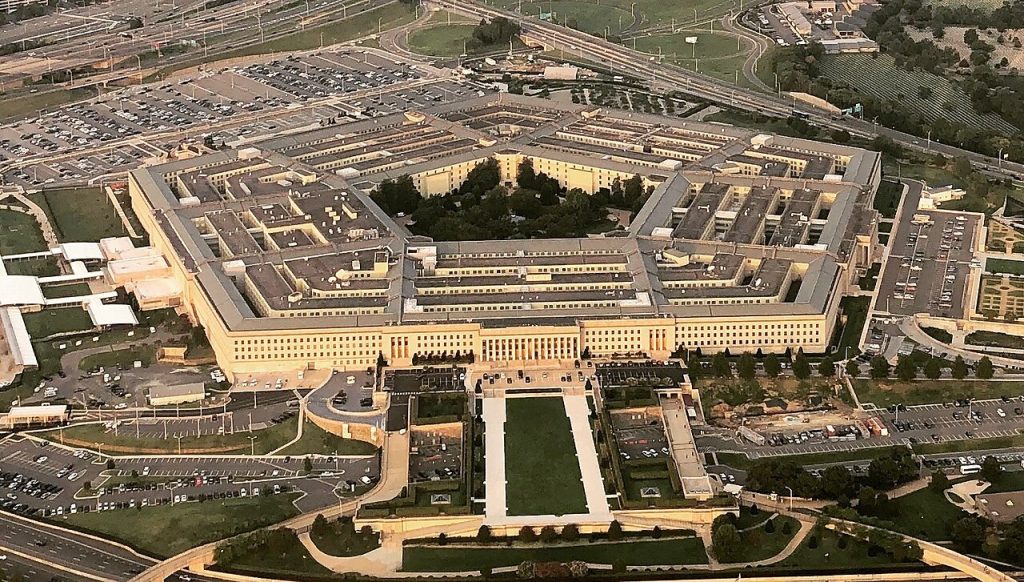
Budgets are moral documents,” the saying goes, and in Washington’s defense circles, they are also strategic roadmaps. The signing of Congressional Bill S. 1071 the National Defense Authorization Act for Fiscal Year 2026 marks one of the most consequential defense policy enactments in decades, with a record $901 billion topline and sweeping reforms that will shape U.S. military posture, procurement, and alliances for years to come.
This legislation arrives amid intensifying global competition, a shifting balance of power in the Indo-Pacific, and ongoing conflict in Ukraine. It blends near-term deterrence measures with long-term modernization goals, while embedding oversight mechanisms to restrain executive actions that could alter U.S. commitments abroad. From acquisition reform to nuclear modernization, from Baltic security to biodefense, the NDAA’s breadth reflects the complexity of America’s defense priorities. What follows is a breakdown of ten of the most significant provisions and initiatives embedded in S. 1071, revealing how they will impact U.S. strategy, allied cooperation, and the industrial base.

1. Record $901 Billion Defense Budget
The NDAA authorizes a historic $901 billion in discretionary defense spending $8 billion above the White House request. This includes $856 billion for the Department of Defense, $34 billion for Department of Energy national security programs, and $10.2 billion for other defense-related activities. The scale of this budget underscores bipartisan consensus on sustaining and expanding U.S. military capabilities, even as fiscal pressures mount. It also provides a 3.8% pay raise for service members, reinforcing personnel readiness alongside materiel investments.

2. Acquisition Reform The Most Sweeping in 60 Years
Senate Armed Services Committee Chairman Roger Wicker called the acquisition changes “the most sweeping upgrades to these business practices in 60 years.” The reforms centralize weapons program management under portfolio acquisition executives, streamline requirements, and encourage use of off-the-shelf solutions. Initiatives like the BOOST Program aim to help commercially viable technologies transition into production. By emphasizing speed, capacity, and innovation, the NDAA seeks to bridge the Pentagon’s chronic “Valley of Death” between prototype and procurement.
3. Ukraine Security Assistance Initiative Adjustments
The law allocates $400 million annually in 2026 and 2027 to the Ukraine Security Assistance Initiative (USAI), a sharp reduction from the nearly $14 billion provided in 2024. Funds remain available until 2029, and Congress has embedded safeguards to prevent diversion of Ukraine-bound arms to other theaters without replacement. New reporting requirements compel the Pentagon to notify lawmakers within 48 hours of any restriction on intelligence sharing with Kyiv, signaling legislative intent to maintain transparency and deter executive leverage over Ukraine.

4. Guardrails on U.S. Force Posture in Europe
To counter any rapid drawdown, the NDAA prohibits reducing U.S. troop levels in Europe below 76,000 without a detailed impact assessment and allied consultation. It also bars relinquishing the NATO Supreme Allied Commander Europe role absent certification of national interest. These provisions directly rebuke elements of the administration’s National Security Strategy that appeared more accommodating to Russia, reaffirming NATO commitments and deterring adversary opportunism.

5. Baltic Security Initiative Funding
The NDAA authorizes $175 million for the Baltic Security Initiative, supporting Estonia, Latvia, and Lithuania in acquiring U.S. defense systems. This funding arrives just months after a Pentagon proposal to cut the program, and it reinforces front-line deterrence against Russian aggression. It also creates an assistant secretary of defense for international armaments cooperation to deepen industrial integration with allies.

6. Nuclear Modernization and Deterrence Provisions
Significant funding increases target nuclear systems, including $3.8 billion for the Sentinel ICBM program, $10 billion for Columbia-class submarines, and $210 million for the Sea-Launched Cruise Missile-Nuclear (SLCM-N). The NDAA codifies a minimum inventory of 400 deployed ICBMs, accelerates SLCM-N initial operational capability to 2032, and mandates nuclear certification timelines for the B-21 bomber. These measures strengthen strategic deterrence while embedding oversight through the Nuclear Weapons Council.
7. Golden Dome Missile Defense Architecture
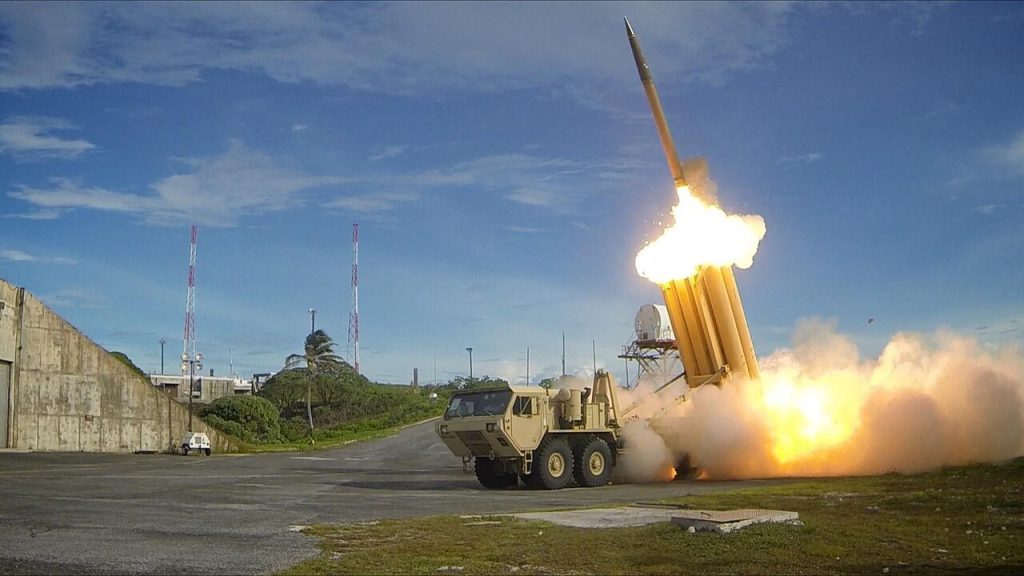
The NDAA advances the Golden Dome next-generation missile defense shield, requiring both annual reports and quarterly briefings on system development. Funding boosts include $1.9 billion for THAAD and $1.8 billion for Aegis BMD. The law prohibits privatized missile defense systems and directs feasibility studies on space-based missile defense, reflecting a comprehensive approach to homeland and theater protection against evolving aerial threats.

8. Repeal of Caesar Act Sanctions on Syria
In a major policy shift, the NDAA repeals the 2019 Caesar Act sanctions, potentially unlocking economic recovery avenues for Syria. Proponents argue this could catalyze reconstruction, restore essential services, and encourage the voluntary return of displaced populations. Critics caution that sanctions relief must be coupled with robust oversight to prevent benefits from flowing to malign actors.
9. Biodefense and Biotechnology Initiatives
Section 1207 mandates memoranda of understanding between the Pentagon and other agencies to clarify roles in international biodefense. The act also establishes a Biotechnology Management Office to coordinate military biotech development and strategy. These steps align with the National Biodefense Strategy, aiming to close capability gaps in global biological surveillance and ensure U.S. dominance in emerging biotech applications.

10. Outbound Investment Restrictions Targeting Adversaries
The Comprehensive Outbound Investment National Security Act within the NDAA restricts U.S. investments that could aid military modernization in China, Russia, Iran, North Korea, Venezuela, and Cuba. By targeting the “connective tissue” among adversaries such as Iranian drone tech in Russian use Congress seeks to limit resource flows that strengthen coordinated threats to U.S. and allied security.
The enactment of S. 1071 reflects a legislative balancing act between immediate deterrence needs and long-term modernization imperatives. Its provisions span continents and domains, from Europe’s front lines to the Indo-Pacific, from nuclear arsenals to biotech labs. For defense analysts and policymakers, the NDAA’s breadth is both a roadmap and a challenge: execution will determine whether these ambitious authorizations translate into real-world capabilities that preserve U.S. strategic advantage.”


