A lighted cigarette in the Malian village of Bourakébougou in 1987 ignited a hydrogen explosion from the local water well, which was due to the invisible component of pure hydrogen diffusing from the earth. Thirty years would follow until the same water well accessed the earth’s first “productive” reservoir of natural hydrogen to power the electricity grid in the village without emitting one molecule of green gases.
This accidental discovery in the small village in the heart of Africa challenged the earth science tradition for the better part of eight decades and began the search for the earth’s “gold” – naturally existing molecular hydrogen trapped beneath the earth’s surface.

1. A Paradigm Shift in Subsurface Energy
For a long time, hydrogen was thought to be too light and reactive to be accumulated under the earth, like oil and gas. It has now been proven opposite to the previously observed fact, since the Mali discovery demonstrated the possibility of hydrogen being accumulated in the earth’s crust when the right conditions are provided. This clean-burning fuel becomes even cleaner when used as fuel cells because the sole products of the reaction are water and heat. The requirement for hydrogen is expected to see a fivefold increase in demand by the year 2050 for the use of fuel cells in the generation of electricity in the industry sector, transportation, and electricity generation. In comparison to the “gray” hydrogen produced in the industry via the steam methane reforming method of production with a resultant CO₂ emission of 1 billion tons a year, the carbon footprints of natural hydrogen are incredibly lower since the carbon emissions are restricted to the extraction phase.
2. The Scale of the Resource
This amount of hydrogen is estimated to be sufficient to meet the demand in the Earth’s continental crust for 170,000 years. In 2024, a study carried out by the USGS estimated a most probable in-place resource of about 5.6 million megatons of hydrogen, although this is about twice the amount of gas reserves in the world. Although only 2% could be used, it shall be able to substitute fossil fuel resources for two centuries. The gas in this category could be replenished partly by some natural processes, thereby being a renewable resource.
3. Geological Factors in Hydrogen Storage
There must be a productive reservoir if:
1) Large amounts of groundwater in the top 16 km of the crust.
2) Hydrogen-producing rocks: iron-containing rocks like basaltic and gabbroic rocks that produce hydrogen by the process of hydration or uranium and thorium-containing granitic rocks that trigger the radiolysis reaction.
3) Temperatures might have been high, ranging from 250-300°C.
4) Porous reservoirs such as sandstones or fissured reservoirs to store the gas.
5) Impermeable seals, such as shale or salt, to seal hydrogen gas.
6) Low microbial activity to prevent biological uptake of hydrogen.
It applies to all the continents, although the Midcontinent Rift in North America has high prospectivity.
4. The Subsurface Potential Map
In January of 2025, a group of USGS scientists introduced the first prospectivity map ever made at the continental scale for the Lower 48 states. By using data from both gravity and magnetic surveys, they could calculate regions in which source rock, reservoir rock, and seal rock intersected. The topographic prospectivities include Kansas, Iowa, Minnesota, Michigan, Four Corners, certain portions of the California coast, as well as certain portions of the Eastern Seaboard. The USGS model contains 21 different variables using a code system referred to as “chance of sufficiency.”

5. Natural Hydrogen Generation Processses
Hydration reactions are the interactions between water and iron minerals with FeII; in this case, water results in the oxidation of iron and the evolution of hydrogen gas. Radioysis is the decomposition of water molecules by the radioactivity produced by the long-lived isotopes 238U and 232Th of uranium and thorium, respectively. In ultramafic rocks of peridotite composition, serpentinization may produce H₂ gas at concentrations of 2–4 kg/m³ per year in a temperature range of 200 to 300° C. Hydrogen-rich ophiolites include the Oman ophiolite in Oman.

6. Induced Hydrogen Production
“Stimulated generation” mimics natural processes and involves injecting water into rock formations to facilitate hydrogen production. U.S. Department of Energy projects are experimenting with this method in Omani peridotites, which are still undergoing low-temperature serpentinization and producing hydrogen. The main technical challenge in this process includes replicating the natural ratio of water to rock.
7. Carbon Footprint Advantages
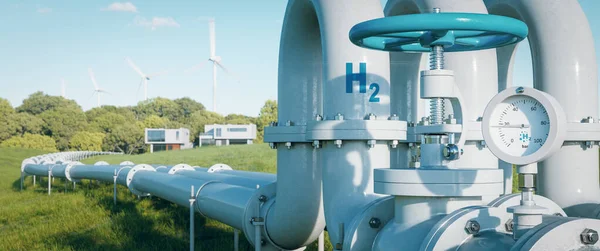
Cradle to gate emissions: Emissions of naturally produced hydrogen could potentially fall in the range of as low as 0.4 kg CO₂e per kg of H₂, provided that the emissions of any produced methane are made very low. This is much lower emission rates of blue hydrogen produced using fossil fuels with carbon capture and storage technology (~2-4 kg CO₂e/kg) and even compared to gray hydrogen (~10 kg CO₂e/kg). There is also no feedstock, land, and water required for natural hydrogen. Hence, natural hydrogen may find applications in the most difficult-to-abate sectors.
8. Economic and Technical Challenges
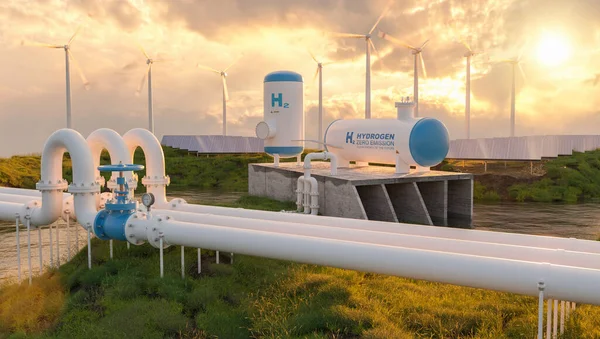
Although the Even though the estimated value of production expenses is between 0.50 to 1.00 USD per kilo, which was capable of competing with all others, there are still factors that hinder its commercialization to a wider market. The spatial distribution of these reservoirs can vary from those that are not easily accessible, smaller ones, to those that are quite deep. Additionally, not all of these reservoirs are pure; some of them contain gas, particularly methane.

9. Strategical Implication of the Energy Transition
Clearly, the hydrogen that is found to be present could potentially meet a large demand, and this gives a strong alternative to the present methods used, which have large carbon footprints. Finally, having the hydrogen present in space with helium adds to the business case. To those investing and those who make policies, there are proposals to consider hydrogen prospectivity and development.
“The smell of the well in Bourakébougou is much more than a means of producing energy in a needy community. It is a symbol of the idea that our planet’s surface may be holding a huge amount of clean fuel just ripe to be tapped in the development of the technologies and knowledge necessary to unlock it,”


