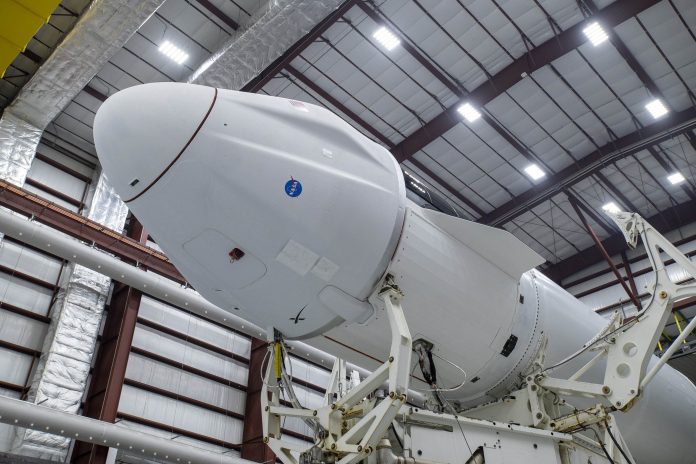
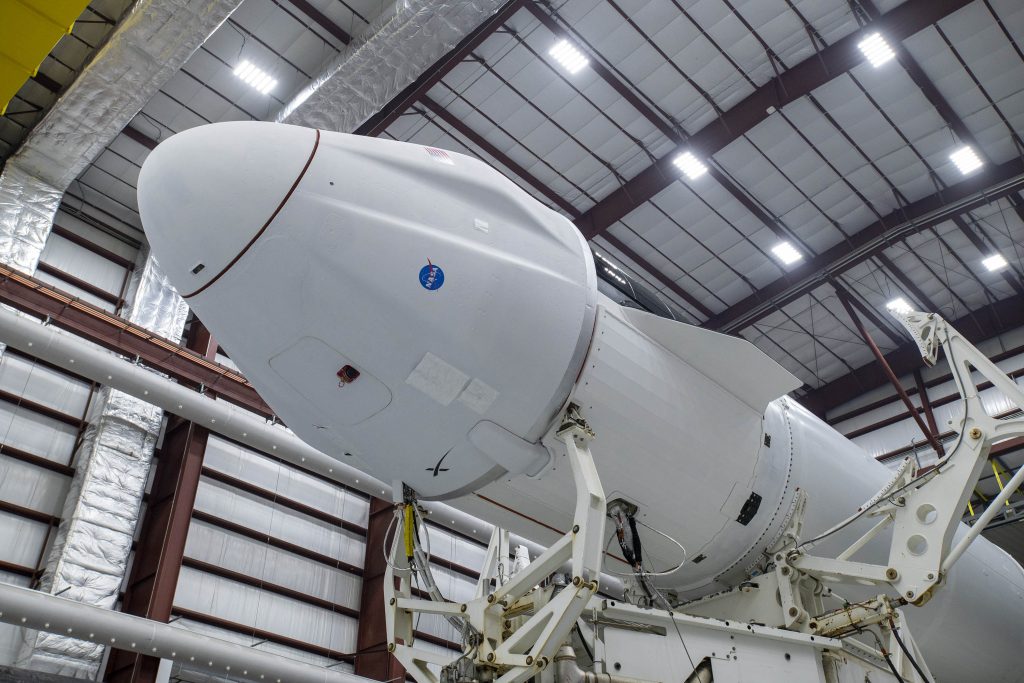
Could the next shipment of supplies to the front lines take 90 minutes to arrive from orbit? This is no longer purely theoretical for the U.S. military. The Air Force and Space Force are pouring resources into so-called “rocket cargo” solutions technologies to rocket a capsule full of supplies, or even personnel, into space and deliver them anywhere in the world in a matter of minutes.
Orbital resupply missions are prompted by the increasing instability in the Indo-Pacific theater, where competitors, including China, are developing methods to attack U.S. logistics. Breakthroughs in reusable rockets and autonomous landing technologies, and the integration of rapid launch, are driving forces in the advent of agile warfare. Here are nine critical events in understanding the future of space-enabled logistics in the military.
1. Rocket Cargo’s Strategic Advantage in Contested Environments
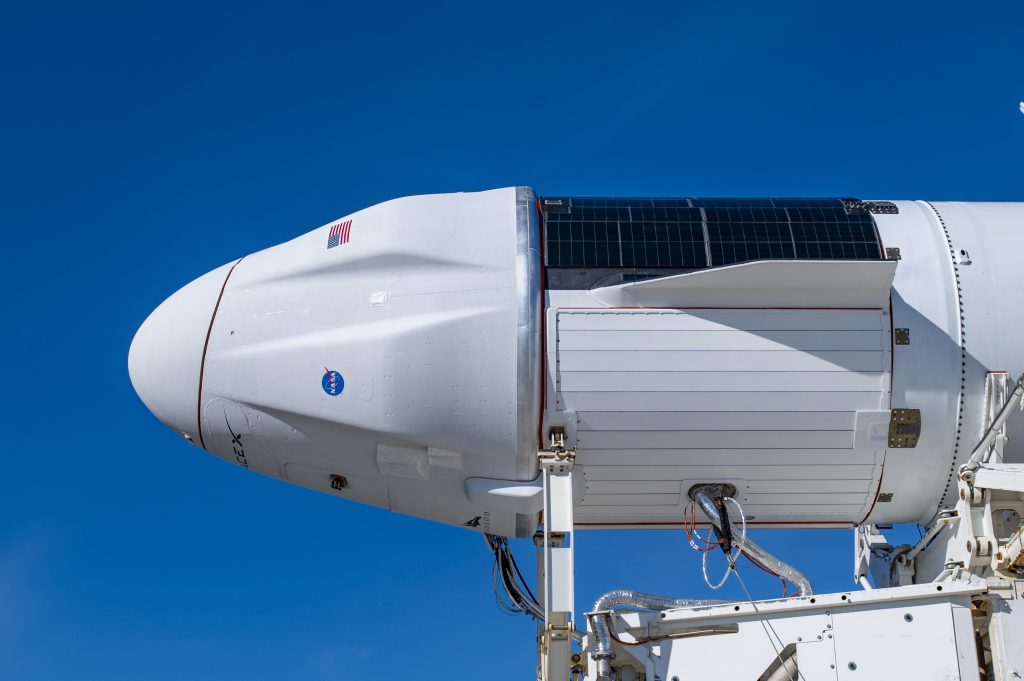
The problem with conventional transport is that it follows a predictable path that can be attacked by enemies. Rocket Cargo targets these weaknesses in transport since it flies through space, thus does not require any overflight approval whatsoever. According to Army General Stephen Lyons, who was the head of US Transportation Command at the time, developers should “think about moving 80 short tons, the equivalent of a C-17 payload, any place in the world in under an hour. That would be game-changing in a contested environment.” The idea also has survivability benefits. According to Todd Harrison of the American Enterprise Institute, “The capsules would re-enter almost straight down from orbit at hypersonic speeds until the final 10,000 to 20,000 feet, making it very hard to intercept by most surface-to-air missiles.”
2. Inversion Space’s Arc: Precision Drops from Orbit
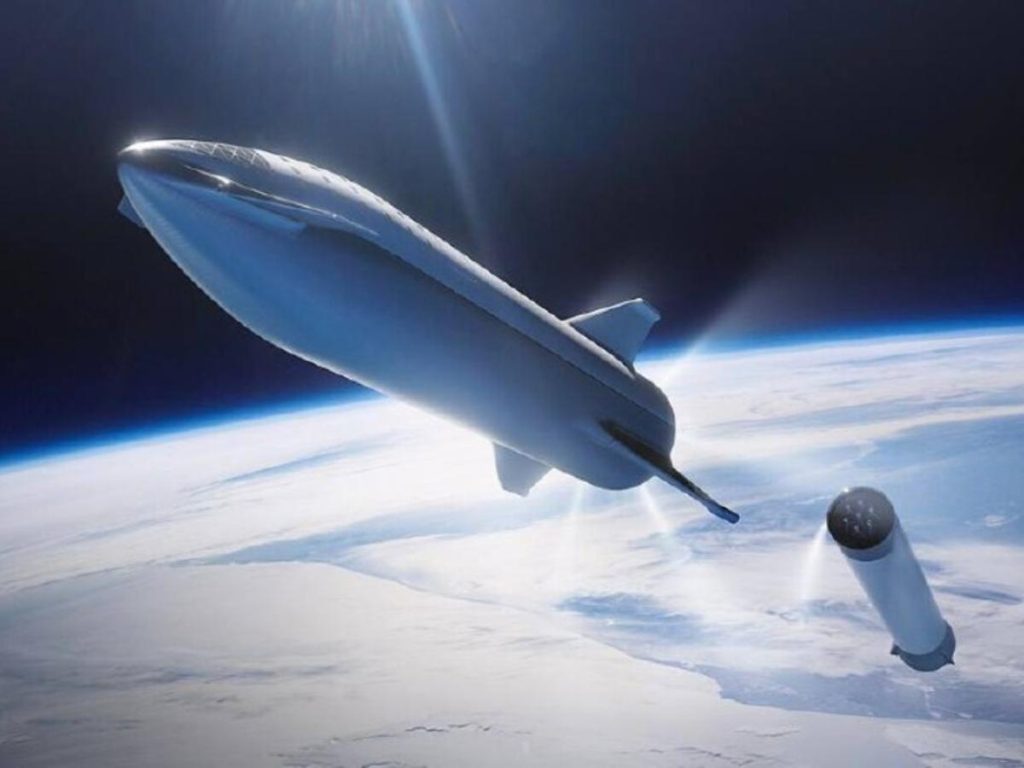
California-based startup Inversion Space is designing the Arc spacecraft, a reusable lifting-body spacecraft, with the purpose of transporting critical cargo from low earth orbit to any location in the world within one hour.
Arc uses an active control system for parachutes, meaning that the spacecraft can land with precision of up to 50 feet, covering surfaces ranging from snow to water. Arc can remain in orbit for a period of five years and is ready to deorbit upon demand. Though its 500-pound capacity is exponentially lower than that of a C-17’s capacity, it has been found that for the U.S. Navy, 90% of their mission-critical logistical operations could be addressed if products weighing below 50 pounds could reach their destinations effectively; this function could potentially be fulfilled by Arc.

3. Johnston Atoll Landing Pads: Rocket Cargo Video Testing
The Air Force’s plan for landing pads on Johnston Island is one step closer to operational rocket cargo transport. The environmental assessment suggests that up to ten reentry vehicles will land every year for four years. This offers a controlled testing environment where strategies can be improved. The increased landing capability is likely aimed at preparing the infrastructure for multiple ICBM tests. The Air Force’s ICBM In the context of the blockade of Taiwan, the rocket that could effectively transport 8,000kg of goods into protected landing sites is the Rocket Lab’s Neutron rocket but has limitations due to the weight that can be carried and the cost per unit weight that is currently costly.
4. Rapid Launch Integration: From Months to Days
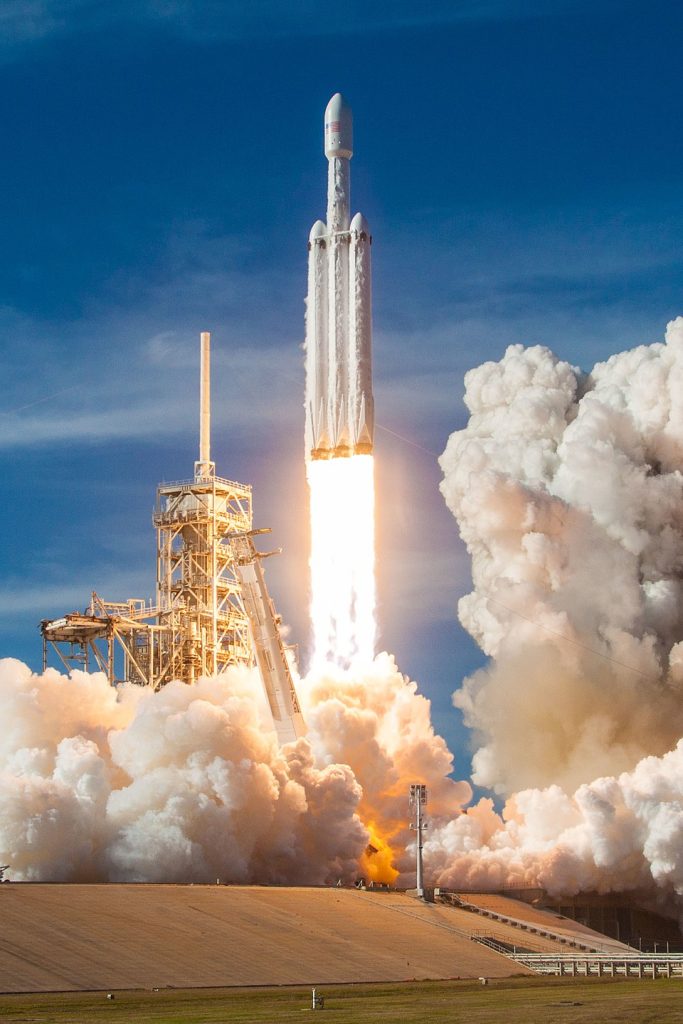
The Space Force’s Rapid Response Trailblazer program has demonstrated that it can launch large payloads within an abbreviated timeline, said Mr. Gallagher. “Recent GPS III satellite missions have reduced launch preparation times from years to as low as 90 days, utilizing multi-vehicle qualification and pre-positioned spacecraft,” he said. “This approach shows how one can react to the unexpected and support the warfighter on a shorter time-scale rather than waiting on a long procurement cycle, and this is a key aspect of our mission directorate here at NGA,” said Mission Director
5. Precision Sustainment & Predictive Logistics
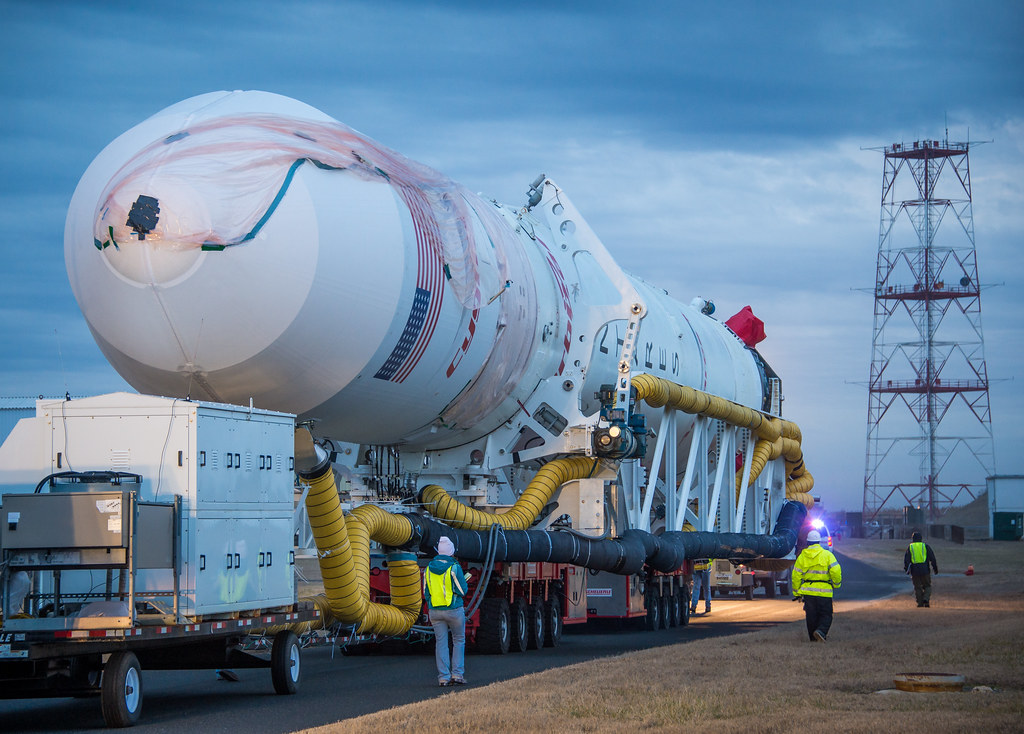
The Indo-Pacific region, in particular, “has logistics that are increasingly challenged, with a high degree of contestability to our logistics operations.” This speaks to the need for “precise sustainment providing exactly what’s needed, where and when that’s needed.” The Army’s Cross Functional Team for Contested Logistics is working to use platform sensor integration, LOGSTAT automation Such tools as Army Materiel Command Predictive Analytics Suite, and a system called Griffin, which is designed for aviation maintenance management, allow commanders to predict shortages. It seems it could offer a useful complement to rocket cargo transport, which could match orbit deliveries in real-time operations.

6. Commercial-Military Integration via Orbital Watch
The Space Force’s Front Door office launched Orbital Watch to share unclassified threat information with more than 1,200 commercial space industry participants. This promotes resilient designs and the adoption of commercial innovation solutions. Kelly Hammett, Director of the Space Rapid Capabilities Office, noted the need for “sustained space maneuver and dynamic space operations” to keep ahead of the adversaries. Meanwhile, rapid RFPs with only 10 pages have reduced evaluation times to weeks from years for acquisition reforms.

7. Improving Civil Reserve Lift Support in Contested Environments
U.S. Transportation Command is also researching carry-on kits to be used in commercial transport and sealift partners that will incorporate Link 16 communications, navigation security capabilities, and emissions control. General Jacqueline Van Ovost pointed out that the “goal of the Chinese communist Party is to deny, degrade or delay our ability to even leave the United States.” These kits might enable seafaring tankers to refueled or transport planes to fly closer to regions in dispute before engaging specialized military platforms for the last miles.
8. SDA’s Proliferated Warfighter
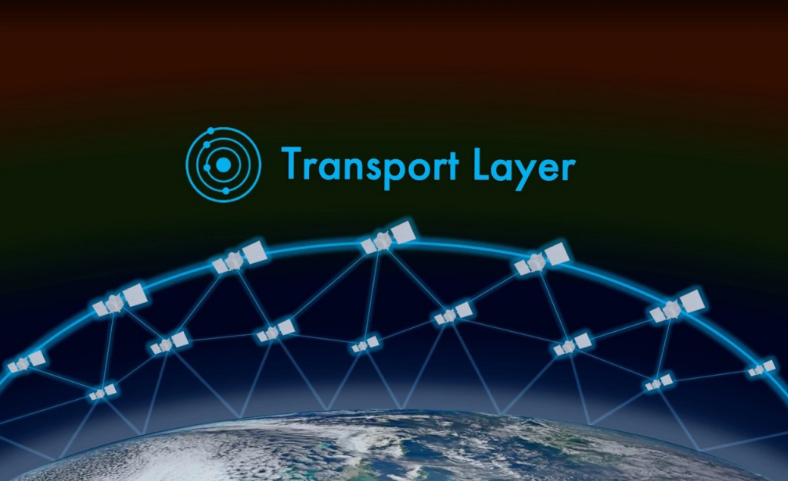
But the Space Development Agency’s Tranche 1 Transport Layer satellites are injecting an operations-ready space-based communications system into the mix. “Their Link 16 data links will prove invaluable in enhancing the secure networked data flow for Indo-Pac Command,” an insider reported. In months, not years, of going operational, this new “This will mark the ‘first time that we will have a space layer that is fully incorporated into our war fighting operations,’” said Acting Director GP Sandhoo, signaling the transition of space from being essentially an ISR and navigation community to something that operationally enables.

9. Indo-Pacific Basing and Distributed Operations
In the Indo-Pacific, the United States has 66 major defense facilities that can be reached by Chinese missiles. Concepts like ‘Agile Combat Employment’ or ‘Distributed Maritime Operations/Expeditionary Advanced Basing Operations’ are a push towards a distributed model that can evade the reach of Chinese missiles by remaining distributed on the seas. Rocket cargo could play a complementary role in these distributed models, bringing the necessary supplies directly to these remote or temporary sites in a manner that is consistent with the trend toward developing smaller, more flexible infrastructure.
Space-launched resupply is going from concept to capability, thanks to developments in reusability, quick launch integration, and predictive logistics. Although cost, payload, and logistics integration obstacles exist, there is a promising intersection of military demand and innovation. In a future conflict, providing critical supplies on demand from space could fundamentally change logistics resilience, providing a decisive advantage to U.S. forces in a contested region.


