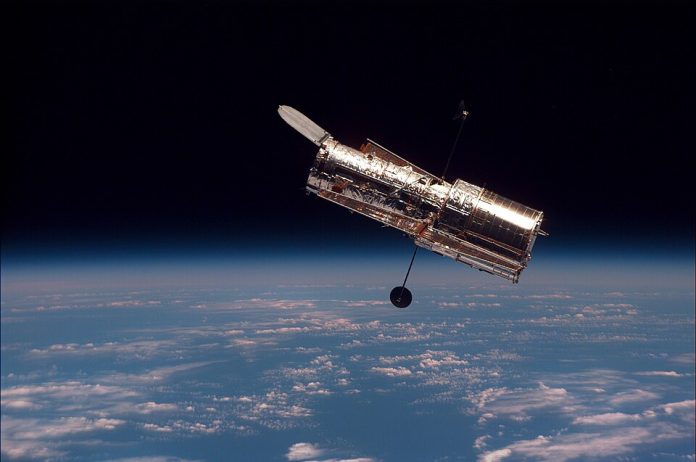
What’s the rarest thing you can see in the night sky? For astronomers right now, it’s an interstellar comet-and 3I/ATLAS is putting on a show unlike any in years. Racing through the solar system at more than 130,000 mph, this icy traveler from another star system has just made its closest pass to the Sun and is headed toward its nearest approach to Earth on December 19, 2025. The Hubble Space Telescope and ESA’s Jupiter Icy Moons Explorer-JUICE-have imaged it with unprecedented detail, revealing its glowing coma, dual tails, and tantalizing chemical clues about its distant birthplace.

1. A Visitor from Beyond the Solar System
3I/ATLAS is only the third confirmed interstellar object ever observed, after 1I/ʻOumuamua in 2017 and 2I/Borisov in 2019. Discovered on July 1, 2025, by the NASA‑funded ATLAS survey telescope in Chile, its hyperbolic trajectory and extreme velocity immediately marked it as unbound to the Sun’s gravity. Astronomers estimate it could be 7 billion years old-nearly twice the age of our Sun-carrying material forged in a planetary system far older than our own.

2. Hubble’s High-Resolution View
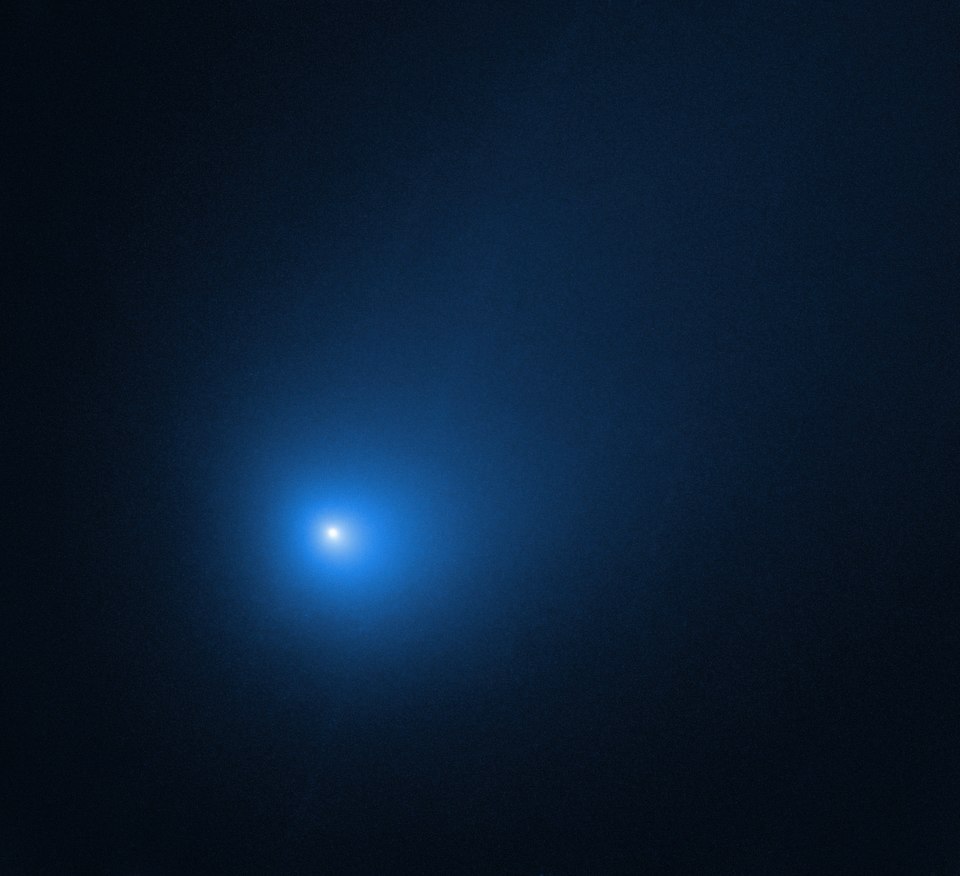
NASA’s Hubble Space Telescope first imaged 3I/ATLAS in July, which showed a faint teardrop shape. On November 30, when the comet was 178 million miles (286 million km) from Earth, Hubble’s Wide Field Camera 3 delivered a sharper, panchromatic view. The image unveiled a brilliant blue-green coma surrounding the nucleus while background stars were smeared into streaks as the telescope tracked the comet’s rapid motion. Scientists suspect that the hue may come from gases such as cyanogen and ammonia, ejected as solar heating drives sublimation.
3. Close Approach of JUICE
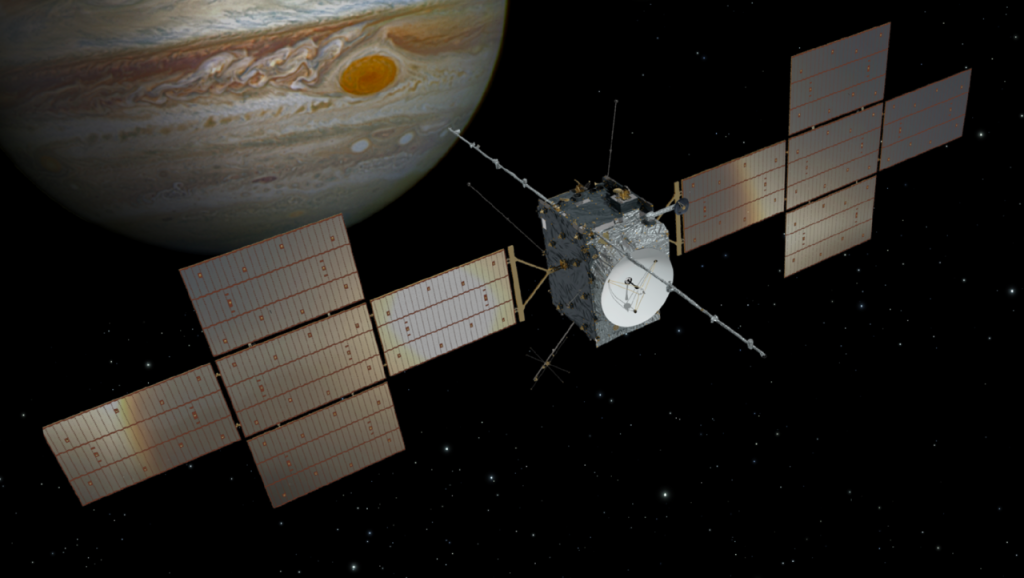
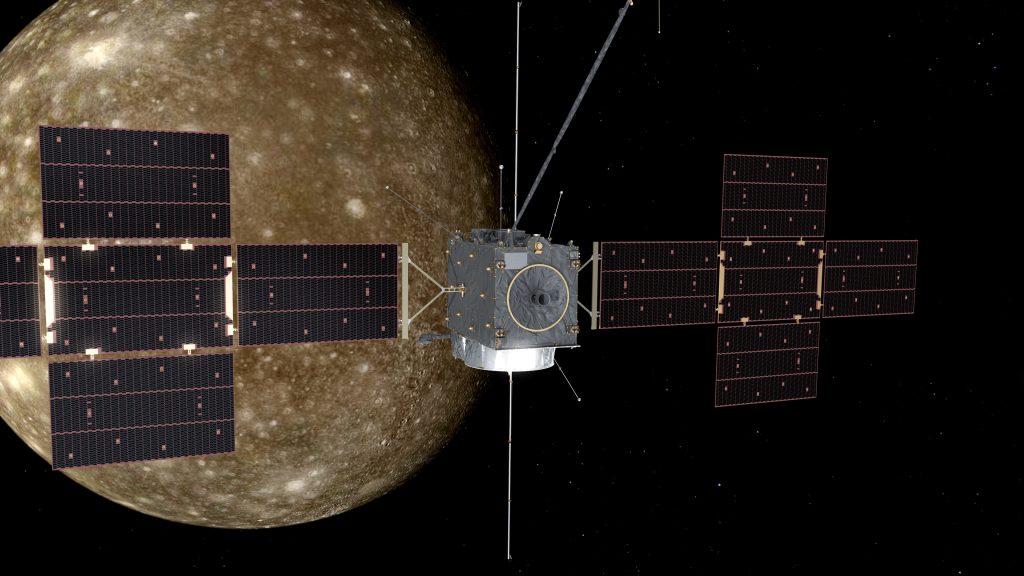
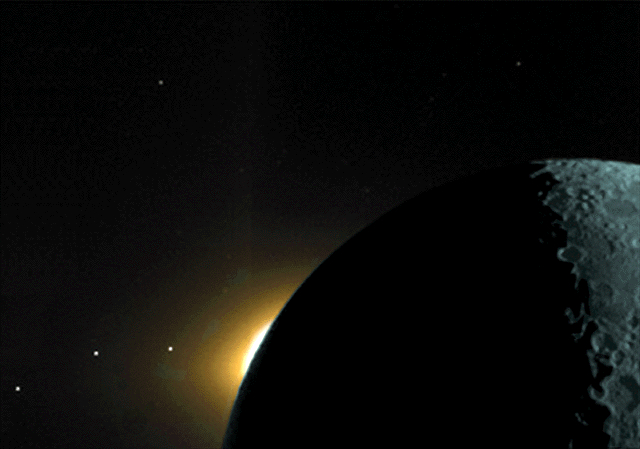
ESA’s JUICE spacecraft, en route to Jupiter’s icy moons, was only about 41 million miles (66 million km) from 3I/ATLAS when these images were captured at the start of November. The space probe used five scientific instruments and its Navigation Camera to obtain this image showing a bright coma and two tails: one plasma tail of electrically charged gas pointing directly away from the Sun, and a much fainter curving dust tail of micron-sized particles. The NavCam is intended for navigation rather than science, but it proved good enough to distinguish the above details when the comet was near peak activity just after perihelion.
4. Physics of Twin Tails
The plasma tail is formed by the solar wind-a stream of charged particles moving at about 1 million mph-ionizing gas escaping from the comet and dragging it directly away from the Sun along magnetic field lines. This is contrasted with the dust tail, sculpted by the solar radiation pressure pushing solid particles into a curved arc. The presence of both tails in 3I/ATLAS confirms active sublimation and provides a laboratory for the study of solar wind-comet interactions in an interstellar context.

5. A Solar System-Wide Observation Campaign
Because much of 3I/ATLAS’s approach kept it on the far side of the Sun from Earth, NASA and ESA coordinated more than 20 spacecraft for a multi-point view. Mars orbiters captured its coma from 90 million miles away, while MAVEN detected hydrogen from water ice sublimation in ultraviolet; JWST measured an unusually high carbon dioxide–to–water ratio. Even missions designed for asteroid studies, like Psyche and Lucy, contributed structural data on its dust environment.
6. Chemical Clues from Another Star System
Preliminary spectroscopy shows that ices in 3I/ATLAS are richer in carbon dioxide relative to water compared to typical solar system comets, while it is accompanied by nickel-rich gas. These may be manifestations of its formation in a colder environment, more exposed to radiation, perhaps in the outer parts of a primitive star system. Dust grain size distributions were also quite unlike those measured for local comets, and an unusual sequence was seen where dust initially was blown sunward before radiation pressure flipped it around.
7. Data Delays and Anticipated Discoveries
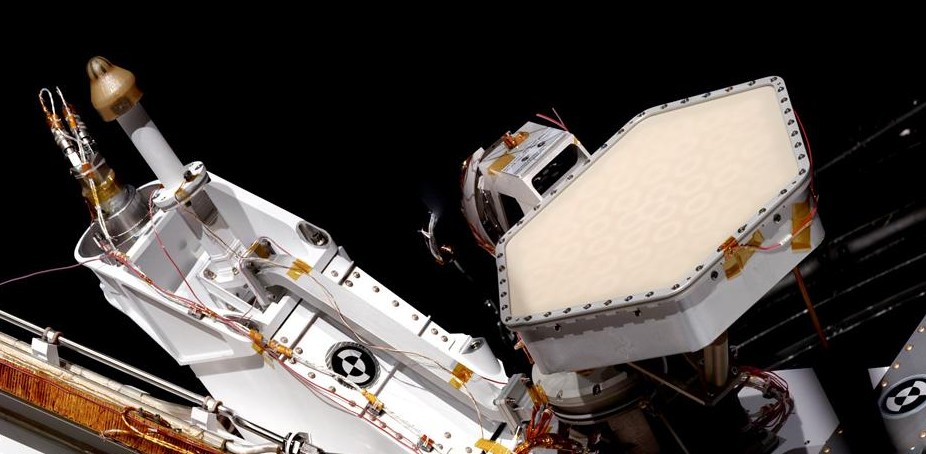
The primary high-gain antenna of JUICE is still used as a heat shield until it will be jettisoned, and data are transmitted via the smaller one at a lower rate. Only on February 18–20, 2026, will the full dataset reach-high-resolution JANUS camera images, hyperspectral and ultraviolet scans, submillimeter wave readings, and particle spectrometry. These measurements are expected to refine models of the composition of the comet, its activity cycles, and possible origin system.
8. No Threat, But a Vanishing Opportunity
On December 19, 3I/ATLAS will pass 167 million miles from Earth-nearly twice our distance from the Sun-on the opposite side of our star. It poses no danger but will fade from view in the coming months as it accelerates back into interstellar space. Its brief visit opens a narrow window to study the building blocks of distant worlds from within our solar system.
To an astronomer, 3I/ATLAS is more than a comet; it’s a messenger from deep time, carrying within its tenuous coma the frozen chemistry of a star system which perhaps coalesced billions of years before Earth. Every pixel from Hubble and JUICE brings that ancient history into sharper focus.


