
It started as a familiar playbook move-lower rates to support a weakening labour market. But in today’s economy, in which artificial intelligence is rapidly reshaping both white- and blue-collar work, the Federal Reserve’s easing cycle may be doing more than simply stimulating demand. It could be accelerating the very automation wave that is eroding the employment base the Fed seeks to protect.

1. A Labor Market Weakness Unlike Past Cycles
Recent ADP data showed private payrolls shrank by 32,000 in November, with professional services losing 26,000, information shedding 20,000, and finance losing 9,000 positions. Small firms-those with less than 50 employees-shed an unsettling 120,000 jobs. Though such cuts often portend cyclical slowdowns, research from MIT’s Iceberg Index suggests a deeper structural shift: 11.7% of the U.S. labor market, representing $1.2 trillion in wages, is already replicable by existing AI systems. This vulnerability cuts across finance, healthcare administration, HR, logistics, and professional services-positions long thought to be immune to automation.

2. The Credit Channel to Automation
Rate cuts reduce the cost of borrowing and lower the hurdle for capital-intensive investments in AI. Enterprise deployments in AI require substantial upfront spending for software, integration, and infrastructure. As debt costs drop from 6% to 5%, replacing a $60,000 salaried employee with a $40,000 subscription to an AI solution becomes financially attractive far more quickly. Mid-size firms who had been priced out of automation can suddenly justify the ROI. This is particularly potent in areas where AI can compress costs without sacrificing output-a dynamic Amazon has already demonstrated in logistics and corporate operations.
3. Amazon’s Automation Dividend
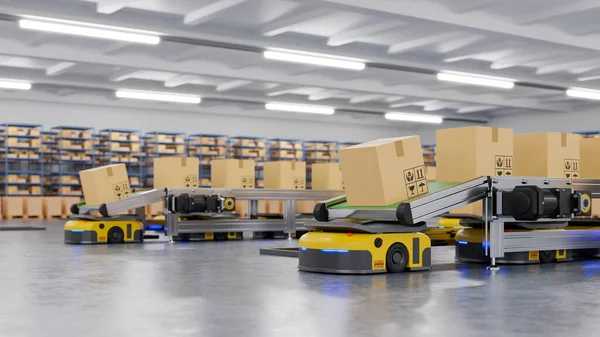
The leak of internal plans shows that Amazon is working toward automating 75% of its logistics operations by 2033, meaning it will bypass the hiring of 600,000 future workers, unlocking long-term savings of $12 billion in the process. Already, in fulfillment centers, Kiva robots belonging to the company have multiplied pick rates from 100 to 300-400 items per hour, while being integral to workforce reductions as large as 25%. New systems, like Vulcan robotic arms, also target stowing and picking tasks. Over at the corporate offices, AI tools have been behind 14,000 white-collar layoffs. These moves exemplify how AI and robotics can simultaneously reshape warehouse floors and office towers.

4. Data Center Economics and the Fed’s Role
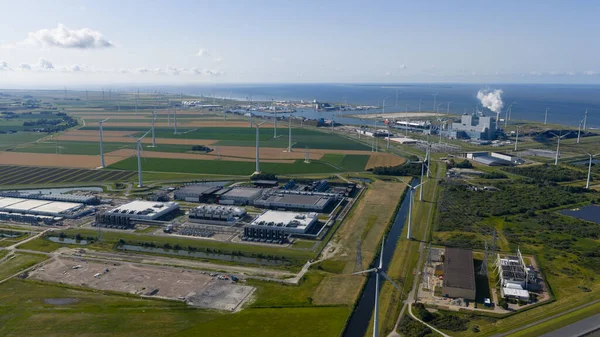
The infrastructure backbone of the AI boom is the data center; AI workloads will require $5.2 trillion of investment globally by 2030, representing 156 GW of capacity for AI applications. Lower interest rates cheapen the financing for these massive projects, accelerating the buildouts from hyperscalers and enterprises alike. For firms like OpenAI chasing a $1.4 trillion commitment to data centers, cheaper credit sustains aggressive expansion even amid uncertain times for eventual ROI timelines.
5. Energy and Grid Constraints
Data centers that power AI are voracious energy users, and in some areas, wait seven years to interconnect to the grid. Regulatory reforms, such as FERC’s “first-ready, first-served” cluster studies, could speed connections. Lower rates will incentivize more on-site generation and colocation projects with existing plants, which circumvent grid bottlenecks. Still, this diverts capital into projects that, upon deployment, will facilitate broader AI adoption and, with that, more automation capability.

6. ROI Models for Enterprise AI
Studies have shown that when AI automates most tasks in a role, the employment in that role within a firm falls by about 14%. However, partial task automation can increase headcount by freeing workers for higher-value activities. Firms that adopt AI extensively see 6% higher employment growth and 9.5% more sales growth over five years. Without targeted policy, the net effect of the Fed’s easing could be cost compression rather than job creation as its acceleration of adoption may cut both ways across displacement-prone and growth-prone roles.

7. Structural Wage Pressure and Investor Implications
Large employers automating away future headcount growth suppress structural wage inflation, even in expanding economies. For investors, this means the focus is shifting from AI model development to deployment efficiency, and determining which companies can compound productivity gains. Yet, at a macro level, widespread displacement threatens to erode consumer demand, as fewer workers mean fewer customers with disposable income.

8. Policy Blind Spots
Past Fed chairs never had to consider the risk that monetary easing would make it cheaper to replace workers just as technology made it viable. Today’s environment demands the integration of labor-market structural analysis into rate policy deliberations. Products such as the Iceberg Index provide granular exposure maps that would enable policymakers to anticipate where credit easing is likely to most accelerate automation.
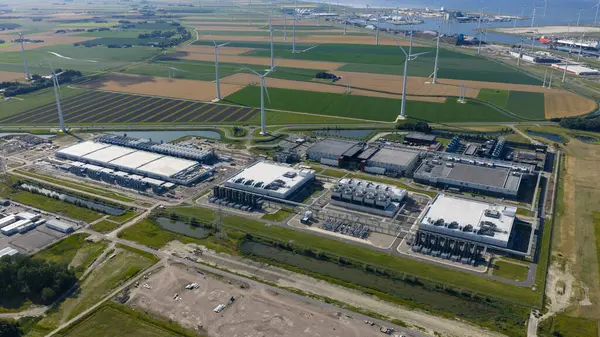
The paradox is stark: in seeking to bolster employment with lower rates, the Fed may be subsidizing an AI-driven restructuring of the labor market. As data centers rise, robots proliferate, and AI agents take on more and more tasks, the feedback loop between cheap credit and automation investment tightens, threatening to turn a well-worn policy lever into a driver of the very job losses it aims to prevent.


