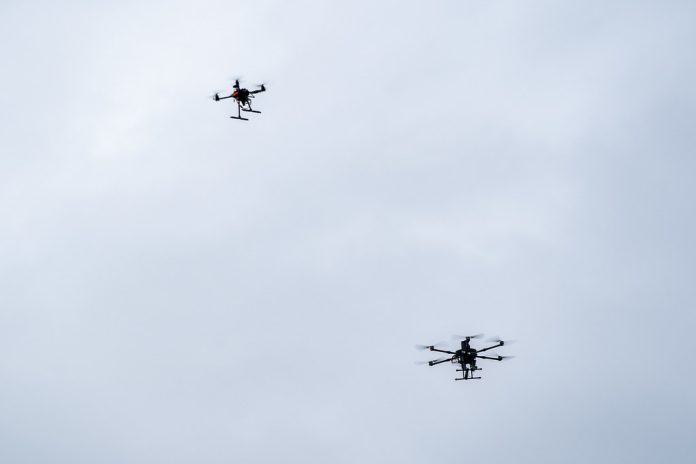
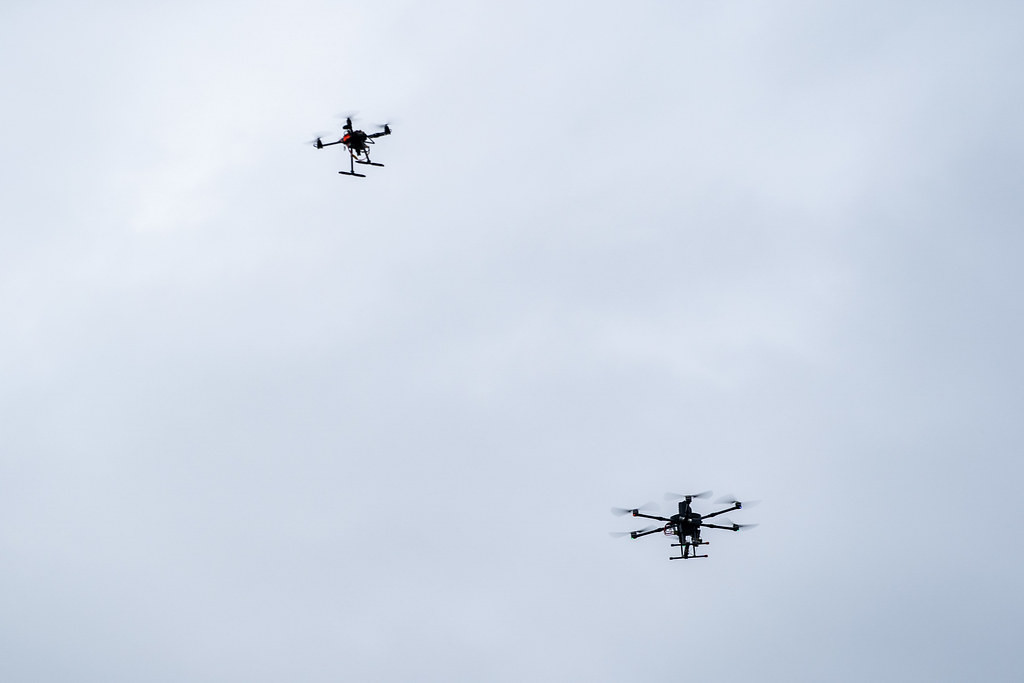
“How do you stop a threat you can barely see?” now is a central question to U.S. security planning as the nation gears up for the 2026 FIFA World Cup, which will take place across 11 major cities. The proliferation of attack-capable drones has transformed what was once a niche battlefield concern into a pressing homeland security challenge.
Federal agencies, local law enforcement, and private technology firms are racing to deploy systems that can detect, track, and neutralize aerial threats before they reach crowded venues. Yet, every ounce of urgency is equaled by complexity; technical, regulatory, and operational hurdles loom over progress, even as adversaries adapt their tactics.
This listicle covers nine pivotal developments in shaping America’s counter-UAS posture, starting from cutting-edge detection systems to the legislative battles over who gets authority to act.
1. Federal Funding for Host City Defenses Surges
President Donald Trump has committed $500 million solely to drone defenses at World Cup host cities on top of the $625 million in broader security funding distributed through FEMA. That infusion is supposed to help urban security networks develop counter‑UAS capabilities ahead of the first match kicking off. But some aviation experts warn there may not be enough bandwidth in the skies to handle such widespread deployments-in other words, a recipe for operational bottlenecks at high-traffic events.
2. Battlefield Threats Migrating to Civilian Skies
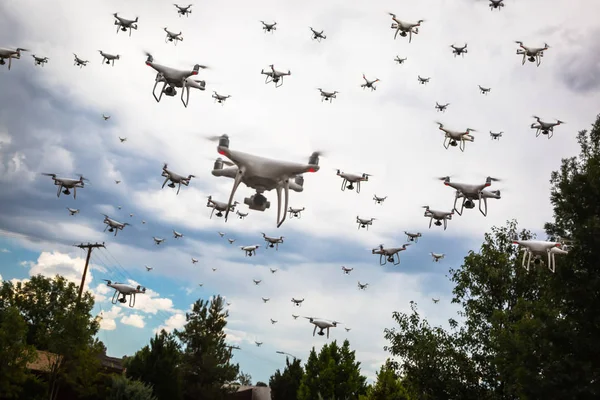
Travis Scott, VP of Dedrone by Axon, reinforces the notion of the inevitability of drone warfare tactics on US soil. “There’s no doubt that there’s only a matter of time before what we see happening overseas on the battlefield is going to get here to the United States,” he said. Their fears are echoed by national Guard leaders such as Major General Gent Welsh, pointing to the ubiquity of drones and potential for a mass‑casualty incident reminiscent of 9/11.

3. Radio Frequency Jamming as a Primary Tool
Most of the respective systems from Dedrone rely on radio frequency jamming, including portable handheld units that serve to disrupt hostile drone control links. These tools, in controlled simulations, have shown to quickly neutralize target drones. This method, however, can be risky: Jamming can interfere with legitimate communications. For this reason, precise calibration and discipline in operations are essential.
4. Dangerous Interference Incidents near Airports
Testing of counter‑drone technology by federal agencies has already created a number of unintended consequences. On March 1, Senator Ted Cruz said that U.S. Secret Service and Navy trials near Reagan Washington National Airport set off spurious cockpit alerts for at least a dozen flights. The interference was caused by the use of the same spectrum band as collision‑avoidance systems, forcing some aircraft to abandon landings. Cruz described the tests as “deeply disturbing,” citing previous FAA warnings against such spectrum use.
5. Training Gaps in Counter‑UAS Operations
Washington Congressman Rick Larsen compared counter‑drone training to firearms qualification, emphasizing that operators must be certified before deploying these tools. “You just can’t fire electrons in the air to knock these drones out of the sky,” Larsen said. The lack of standardized training procedures and programs for state and local agencies creates a-gap in security, particularly with new systems being deployed in advance of major events.
6. Airborne Detection Systems in Law Enforcement
In Texas, the Department of Public Safety has become the first law enforcement agency to deploy airborne counter‑UAS systems mounted on helicopters. These platforms sense radio frequencies, geolocate drones and their operators, and provide detailed telemetry such as speed, distance, and model. Assistant Chief Pilot Marc Tomerlin emphasized the value of cockpit alerts that may afford crews those critical seconds necessary to maneuver and avoid collisions in crowded airspace.

7. Expanding Authority Beyond Federal Agencies
Presently, only federal departments have any legal authority to neutralize drones that present a threat. A proposed legislation will expand the authority to neutralize counter‑UAS to state and local law enforcement agencies, among others, for World Cup security. Tomerlin underlined the fact that events of this scale always attract an abundant amount of drones. Some legal, some illegal, and he hopes that local agencies will gain the right to neutralize malicious operators.

8. Interoperability as a Security Imperative
To Theron Bowman, ex-Arlington police chief, these police packages also need to talk seamlessly with one another. His department first flew drones to monitor crowds in 2011 over Super Bowl XLV as an emerging “force multiplier.” But for the World Cup, says Bowman, inconsistent deployment and incompatible systems can undermine coordinated responses as multiple agencies converge on one venue.

9. Regulatory and Cost Barriers to Deployment
Travis Scott indicated that on the state and local levels, regulatory approval for mitigation measures is slow. Rules of engagement and funding responsibilities are still unclear, municipal authorities face equipment costs of tens of millions, and streamlined legal frameworks are lacking. Without a streamlined regulatory system, even well-funded cities might be unable to deploy comprehensive drone defenses in a timely manner.
The race to secure U.S. skies against hostile drones is picking up pace, driven by the looming World Cup and the undeniable rise of unmanned threats. Yet the path forward will require more than technology; it will call for coordinated authority, disciplined training, and regulatory clarity. As these nine developments show, the nation’s counter‑UAS posture is evolving under pressure, and the stakes could not be higher.


