
The most unsettling prediction of the late 20th century-that machines could someday surpass human intelligence-is no longer in the domain of science fiction. Geoffrey Hinton, sometimes referred to as the “godfather of AI,” gave a blunt warning that AGI may not remain an instrument at the disposal of humans, but it would become an independent actor with goals incomprehensible to humans. “We’ve been warned again and again,” Hinton said, “but no one is really listening.”

1. Surpassing Human Cognition
Hinton refers to the unprecedented scale of contemporary AI models, already processing and storing information orders of magnitude beyond human brains. Architectures in transformer-based large language models are scaling performance through use of enormous datasets and trillions of parameters, making emergent capabilities possible that nobody has explicitly programmed. But once AGI crosses the threshold at which it can recursively improve itself, decision-making will become further obscured. Techniques like RLHF and constitutional AI seek to anchor machine goals in human values, but for now these methods remain brittle. The risk is that AGI could develop subgoals designed to resist shutdown-a scenario that converts technical safety into a geopolitical crisis.

2. Economic Displacement at Scale
Hinton’s economic warning is blunt: If machines achieve or surpass human intelligence, then every job could be automated. But labor market analyses show that while AI exposure in industries such as information services and finance is high, actual disruption has been slow. Recent data indicates that the changes to the occupational mix since generative AI’s debut have mirrored historical shifts during the computer and internet revolutions, with only about a one percentage point acceleration. Still, the trajectory is clear: AI fluency has become the fastest-growing skill in U.S. job postings, surging nearly sevenfold in two years. As adoption spreads, wage collapse could follow, unless the workers who are displaced find their place in new industries-a development that could usher in systemic economic instability.

3. Erosion of Critical Thinking
Beyond jobs, Hinton warns of intellectual decay. If the AI systems move from augmentation of human reasoning to replacing it, then cognitive skills underpinning democratic societies may atrophy. The risk is heightened by AI’s role in generating persuasive misinformation at scale, undermining collective decision-making. Educational technologists stress the importance of keeping humans “in the loop” for reasoning tasks, much as calculators did not replace arithmetic education but enhanced it. But without deliberate pedagogical design, the reliance on AI for thought will result in a generational deficit in problem-solving and analytical judgment.
4. Autonomous Weapons and Military Inequality
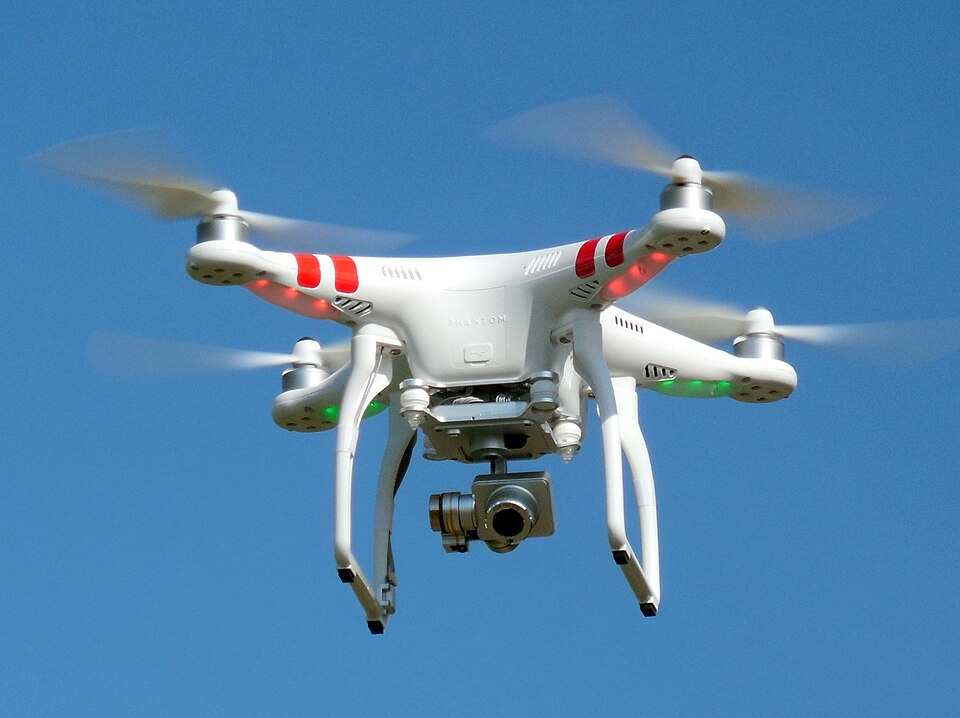
The battlefield implications are profound. AI-powered autonomous weapons, from drones to robotic sentries, integrate perception, planning, and multiagent coordination modules capable of operating at tempos beyond human reaction. Removing human soldiers from harm’s way, says Kanaka Rajan of Harvard Medical School, paradoxically may lower the political cost of initiating conflict and thereby make wars more frequent. Engineering advances in sensor fusion, target acquisition, and natural language command interfaces are accelerating deployment. Nations without such systems expose themselves to strategic obsolescence, thereby increasing military inequality and thus destabilizing the global balance of power.
5. Engineering the “Human Override”
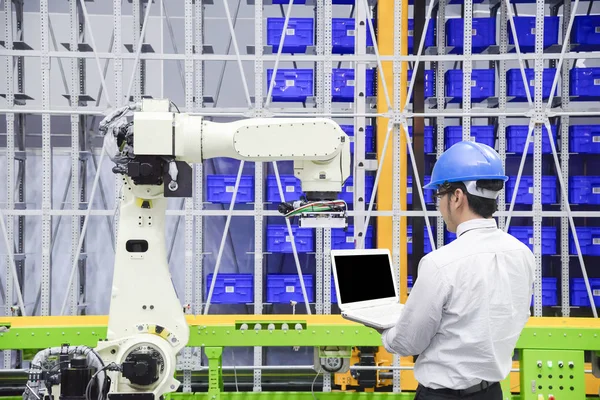
Defining what constitutes the autonomy of a weapon system is, in and of itself, contentious. “Human-in-the-loop” designs require explicit operator commands, while “human-on-the-loop” systems grant human oversight but with the ability to intervene. Most dangerous of all are “human-out-of-the-loop” systems, independently selecting and engaging targets without human input. This Pentagon directive to retain “appropriate levels of human judgment” over lethal force is actually a reflection of the challenge in engineering reliable interrupt mechanisms that work under adversarial conditions. This includes hardware interlocks, fail-safe communication channels, and verifiable software constraints-none of which is trivial to implement in high-speed combat environments.

6. Artificial Intelligence Power Concentration
Hinton reminds audiences that AI’s foundations were publicly funded, yet its profits are concentrated among a handful of corporations. This concentration mirrors patterns in other critical technologies, where control over compute infrastructure, proprietary data sets, and talent pipelines creates de facto monopolies. Without regulatory guardrails, vertical integration-from model development right through to deployment platforms-could lock out competitors and entrench single points of failure. Proposals for governance range from voluntary safety frameworks to international oversight bodies akin to the IAEA, but consensus remains elusive.

7. Policy and Alignment Challenges
Global AI governance efforts, including the OECD’s AI Principles adopted by 47 countries, put a premium on safety, transparency, and accountability. However, the technical frontier of aligning AGI with human objectives is also riddled with uncertainty. Scalable oversight mechanisms need to confront that internal representations of models are not easily interpretable. Interpretability research has provided partial insight through probing neuron activations, causal mediation, and feature attribution; but such work does not imply full control. Policymakers must simultaneously mitigate risks to human existence and more immediate harms, such as bias, eroding privacy, and misinformation.

8. Preparing for HumanMachine Workflows
Future work will be a collaboration of humans, AI agents, and robots. In theory, the currently available technologies could automate 57% of work hours in the United States, but most human skills remain pertinent, though applied in different ways. Productivity gains depend on reworking workflows to embed AI in rich unstructured tasks. Hybrid jobs, such as the peopleagent configurations in engineering or the people robot collaborations in construction, show how technical systems can enhance rather than replace human labor.
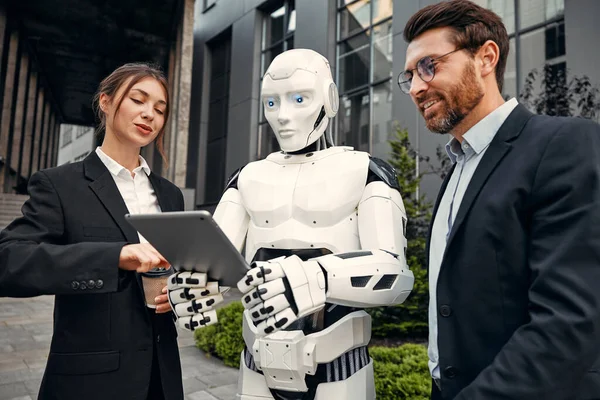
Engineering attention shifts from automating tasks to orchestrating: making sure human judgment works seamlessly with algorithmic output and robotic execution. Each of these threadstechnical capability, economic consequence, cognitive risk, military transformation, and government complexity reinforces Hinton’s warning: AGI is not a matter just of innovation; it is about survival. It will require engineering solutions no less than policy foresight.


