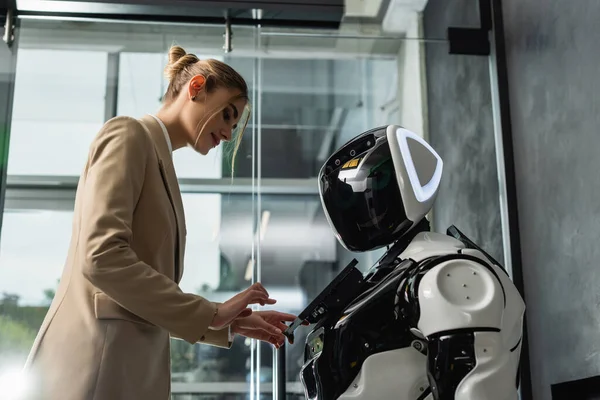
Could the next trillion‑dollar market for Apple be walking, talking maybe even folding laundry? The world’s most valuable consumer tech company is quietly positioning itself for a leap into robotics that could redefine its post-iPhone growth story, ripple through global supply chains and reshape AI research and hardware engineering.

1. Pivoting for Strategy when Products Stagnate
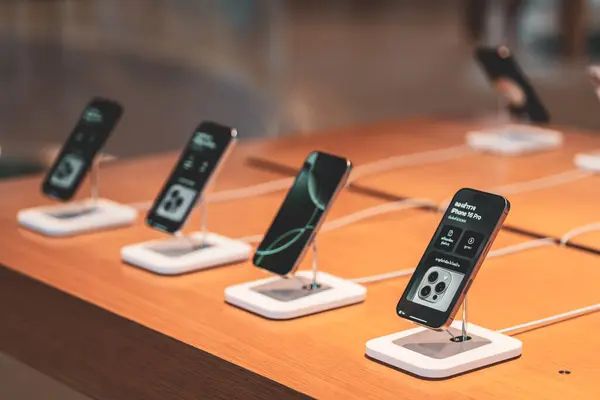
Now, after nearly 15 years under Tim Cook’s leadership, Apple faces a now-familiar but increasingly urgent challenge: its flagship iPhone line, while still dominant, has failed to create the exponential growth of its early years. Its ambitions in AI have similarly stalled. Apple Intelligence – announced mid‑2024 – is off to a slow start, as the next-generation Siri now won’t be ready until at least 2026. These setbacks have turned up the heat in the hunt for a new growth engine. Indeed, estimates by Morgan Stanley analysts suggest Apple’s robotics business could pull in $130 billion annually by 2040 with just 9 percent market share, which contextualizes the prize on offer.
2. Competitive Advantages in Robotics
Apple’s foray into robotics isn’t a standing start. The billion-strong global user base, cultivated through high-end design and privacy-centric products, undergirds a platform for adoption that is second to no other. Decades of mass-production expertise could compress the cost curve for robot hardware. Not least, lessons from the defunct Project Titan self-driving car program-in computer vision, sensor fusion, and embodied AI-remain valuable. The Vision Pro’s spatial computing stack and industrial automation in Foxconn’s “lights-out” iPhone factories further bolster Apple’s robotics know-how.
3. Embodied AI and Multimodal Integration
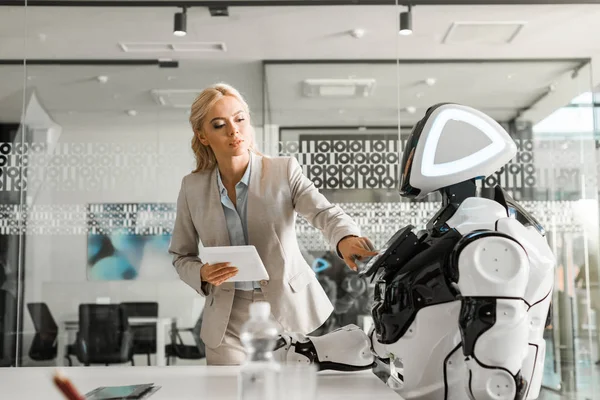
In robotics, intelligence must be grounded in the physical world. Fundamental challenges, such as motion planning in cluttered environments and non-verbal human-robot communication, represent only two aspects Apple’s research collaborations have addressed. Embodied AI systems integrate multimodal perception-vision, audio, and tactile feedback-with real-time learning to let robots adapt to dynamic household or workplace conditions. That Apple intends to embed Siri as the “personality” of its robots depends on AI models capable of contextual reasoning and proactive task initiation, a capability in which rivals like Tesla’s Optimus and Amazon’s Astro are already iterating.
4. Engineering Challenges: Precision Actuators and Supply Chain Gaps
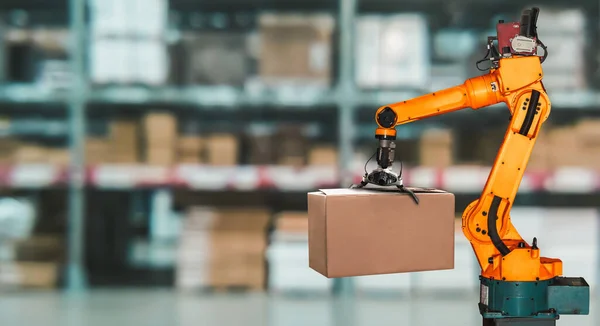
Humanoid and mobile robots need high‑torque, low‑latency actuators and precision harmonic drive systemscomponents very different from the supply chain used for smartphones. Such electromechanical systems will have to provide sub‑millimeter positional accuracy, handle millions of duty cycles without degradation, and much more. It’s precisely to fill that gap that Apple recently inked a $500‑million pact with MP Materials to secure neodymium magnet production in the United States, making sure that vital component supply for high‑performance motors is domestic and less exposed to geopolitical disruptions in supply chains.

5. Succession of Leadership and Cultural Limitations
The Financial Times says he could step down as early as next year, with hardware engineering chief John Ternus as the leading internal candidate. Ternus, who has overseen the design of most major hardware products since joining Apple in 2001, might put a more engineering‑driven focus on robotics. But Apple’s increasingly conservative culture – in which every initiative is put through rigorous financial scrutiny – may conflict with the iterative, risk‑tolerant development cycles robotics requires.

6. Lagging AI Capabilities
Despite a few high-profile hires, including former Google AI chief John Giannandrea, Apple’s AI stack lags behind Meta, Alphabet, Amazon, and Microsoft. The company has even explored licensing models from OpenAI and Anthropic to power Siri-a move that would surely undermine its goal of having full control over the robot’s “brain.” Talent attrition has compounded the problem, with senior AI engineers defecting to competitors offering larger budgets and more aggressive research agendas. If Apple can’t develop robust in-house AI, the company risks delivering robots with limited autonomy and adaptability.

7. Market Entry Strategy: Desktop Companion First
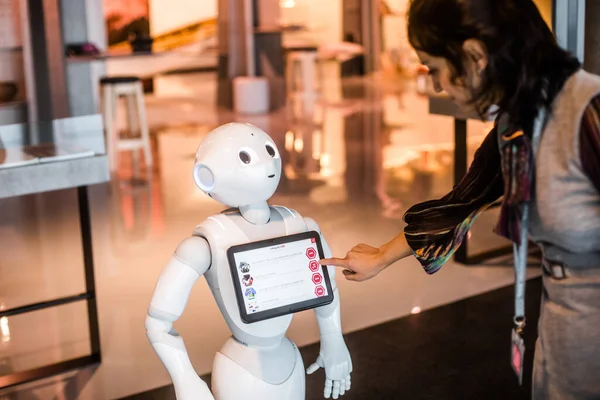
Apple’s consumer robot due for 2027 will reportedly be a desktop work and entertainment, and life management companion. Functionally, it extends the functionality of iPhones and Macs into a physical presence-proactively initiating tasks through AI. This form factor is conservative in that it avoids the high cost and complexity of full humanoid forms while Apple can refine the embodied AI in a controlled use case. Those more critical say the device, without greater household integrations, risks being viewed as no more than a “talking, somewhat mobile iPad”.
8. Industry Impact and Ecosystem Effects:
Apple’s entry may accelerate consumer robotics adoption much the same way the iPhone did for smartphones. Its hardware-plus-services model opens recurring revenue streams for robot-specific apps, cloud AI services and accessory ecosystems. Upstream, Apple’s supply-chain investments-from rare-earth magnets to advanced actuator manufacturing-could set new industry standards for vertical integration and resilience.

Downstream, its design language and UX choices will shape consumer expectations for robot interaction, potentially forcing competitors to match its seamless ecosystem integration. Given Apple’s track record for catching up from behind – say, smartphones and wearables – it’s still able to define this consumer robotics era even with a late start. Whether or not the “iPhone moment” for robots indeed comes from Cupertino depends on how fast it closes the AI gaps, navigates the leadership change and masters the unforgiving engineering of embodied machines.


