
Can an industry deliver $650 billion a year in new revenue by 2030 without breaking the economic machinery that supports it? That is the question hanging over the artificial intelligence boom, where valuations and capital flows have reached levels that demand not just technological breakthroughs, but sustained macroeconomic alignment. Under the exuberance lies a gap between market expectations and the capacity of the real economy to meet them that keeps getting wider.

1. The Scale of AI’s Financial Demands
J.P. Morgan’s estimates put the challenge in stark relief: to make a relatively modest 10% return on projected AI capital outlay, the industry needs to generate $650 billion annually by 2030. That would work out to around $34.72 every month from each iPhone user, or $180 from each Netflix subscriber worldwide. The investment wave is enormous: annual funding requirements for data centers are forecast to grow from $700 billion in 2026 to more than $1.4 trillion by 2030. With even hyperscalers reinvesting $500 billion of operating cash flow annually, the report calculates a funding gap of some $1.4 trillion, which is likely to need private credit and perhaps government intervention.
2. Energy and Infrastructure Bottlenecks
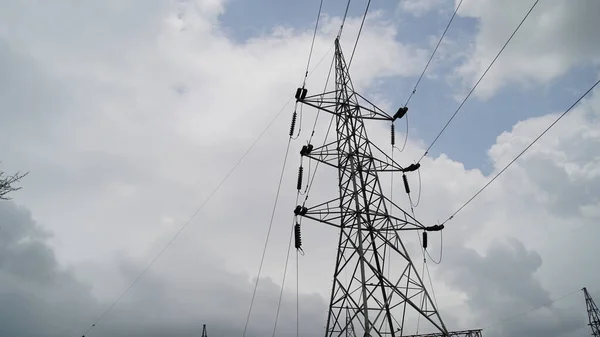
The physical demands of AI scale are equally daunting. J.P. Morgan’s base case sees 122 gigawatts of new data center capacity built between 2026 and 2030. That build-out, however, is compromised by power constraints: lead times for natural gas turbines have lengthened to three to four years while nuclear plants take more than a decade. Grid upgrades introduce yet another layer of complexity. “Adding 150GW of power in a timely manner is a remarkable challenge,” the report warns, underlining the risk that capital is sunk into idle infrastructure if demand falters.
3. Market Concentration and Systemic Risk
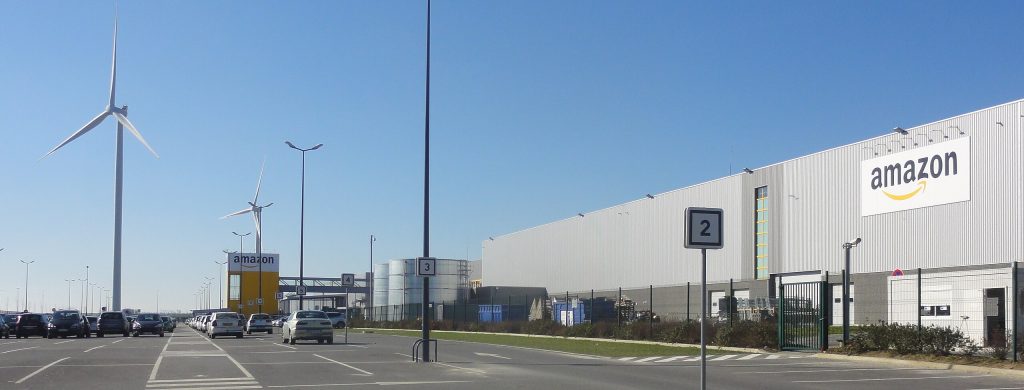
This boom in AI is inextricably linked with the fortunes of the so-called Magnificent 7 comprising Alphabet, Amazon, Apple, Meta Platforms, Microsoft, Nvidia, and Tesla, which together account for 34.25% of the market capitalization of the S&P 500. LPPLS modeling indicates that four of those firms-Alphabet, Amazon, Apple, and Microsoft-are expressing statistically significant faster-than-exponential price growth patterns, with the critical time window for potential regime shifts converging between May and June 2025. With the four representing 65% of the market cap of the Magnificent 7, any sudden correction could cascade through global equity markets.

4. Asset Bubble Mechanics
The LPPLS framework aptly describes self-reinforcing dynamics of speculative bubbles: herding promotes super-exponential price trajectories, and accelerating volatility reflects the competition of bullish and bearish expectations. Historically, other analogues-from dot-com busts to commodity crashes-have repeatedly demonstrated the increased likelihood of systemic contagion when several large-cap leaders point together toward finite-time singularities. In this context, both capital intensity and narrow leadership within the AI sector act as multipliers of vulnerability.

5. Fragile Consumer Demand
The underlying demand is showing signs of strain despite resilient headline GDP. Wealth gains from AI-driven equity surges are concentrated among high-income households, while disposable income for the bottom 80% has remained flat. In the words of Glenn Carle, “1,000 billionaires cannot buy as many cars as 100 million lower-middle-class Americans.” Retail signals would suggest that even affluent consumers are becoming cautious, from the Q3 miss of Home Depot to reports by McDonald’s of higher-income diners trading down.

6. Labor Market Disruption
With AI, there’s both a productivity promise and a risk of displacement. Goldman Sachs estimates that as many as 300 million jobs around the world could be affected, with 25-50% of current work automatable. History does indeed suggest that technology more than makes up for lost jobs in the end. The pace at which changes tied to AI are being implemented-and thereby happening simultaneously-are likely to compress adjustment periods and, therefore, heighten short-term shocks. Already partly in view is a rise in white-collar layoffs tied to the integration of AI, rewriting the conventional dynamics of recession.

7. Tariff Policy and Investment Timing
Trade policy uncertainty compounds the risk profile. Tariffs have a lagged impact-initially depressing demand and inflation before supply-side effects push prices higher. For AI, tariff-induced cost pressures on semiconductors and hardware would increase the likelihood of a deployment slowdown or supply chain shift. Unpredictable rules make CEOs defer long-term commitments-a dynamic that could dangerously intersect with the capital-intensive nature of AI infrastructure.

8. Measurement and Macroeconomic Disconnects
There are also instances where the gains of AI in knowledge work do not appear in GDP metrics, since such benefits take the intangible forms of faster problem-solving or better forecasting. If cost reductions do not lead to wage growth and hence consumption, deflationary effects mask actual efficiency gains. This gap in measurement threatens to mislead policymakers and investors by inflating optimism that does not get traction in the economy.

The convergence of these extremes of capital requirements, concentrated market leadership, infrastructure bottlenecks, and fragile demand creates a complex lattice of risk. AI may well deliver transformative productivity gains, but the route from innovation to economic returns is neither linear nor guaranteed. The trajectory of a sector will depend upon how well technological capacity synchronizes with macroeconomic fundamentals before the gap between them becomes a fault line.


