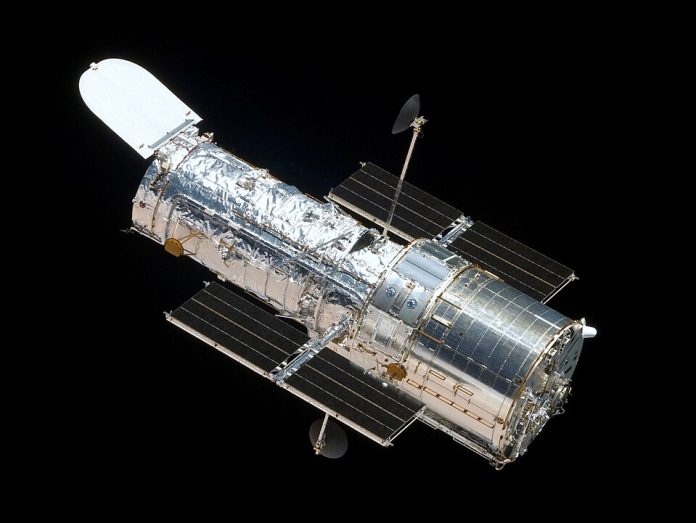
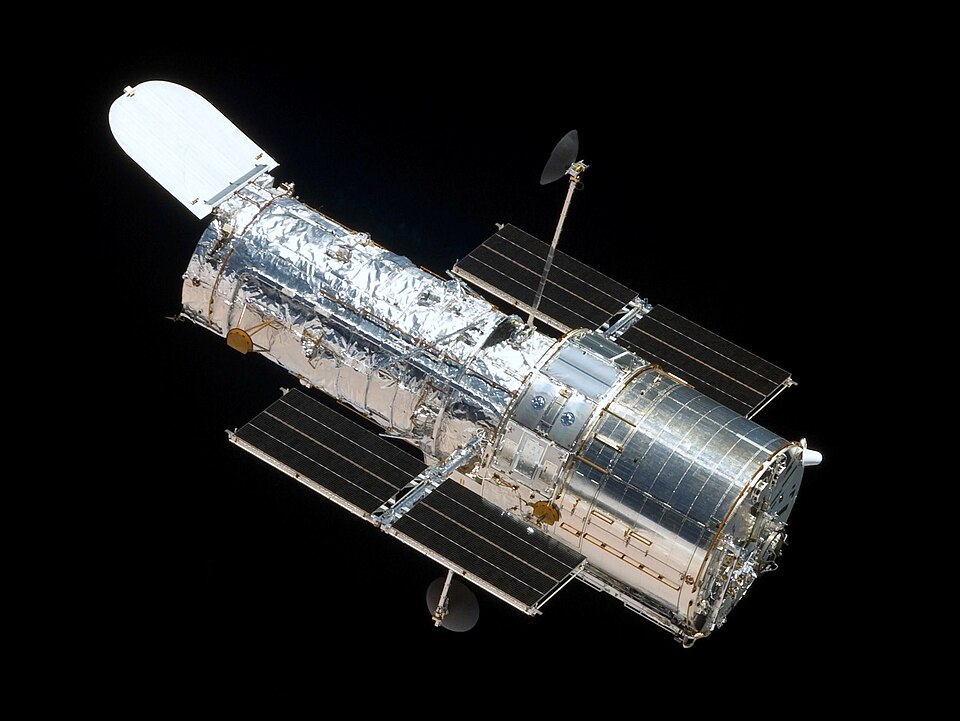
The Nancy Grace Roman Space Telescope has completed a major milestone and is now fully mechanically and optically integrated within NASA’s Goddard Space Flight Center. Engineers on Nov. 25 mated the spacecraft bus to its optical telescope assembly inside the facility’s largest clean room-a “defining moment”in the words of NASA Associate Administrator Amit Kshatriya. The observatory starts environmental and performance testing, during which it will be subjected to simulated launch stresses, deep space vacuum, and extreme temperature cycles to ensure flawless operation once deployed nearly a million miles from Earth.
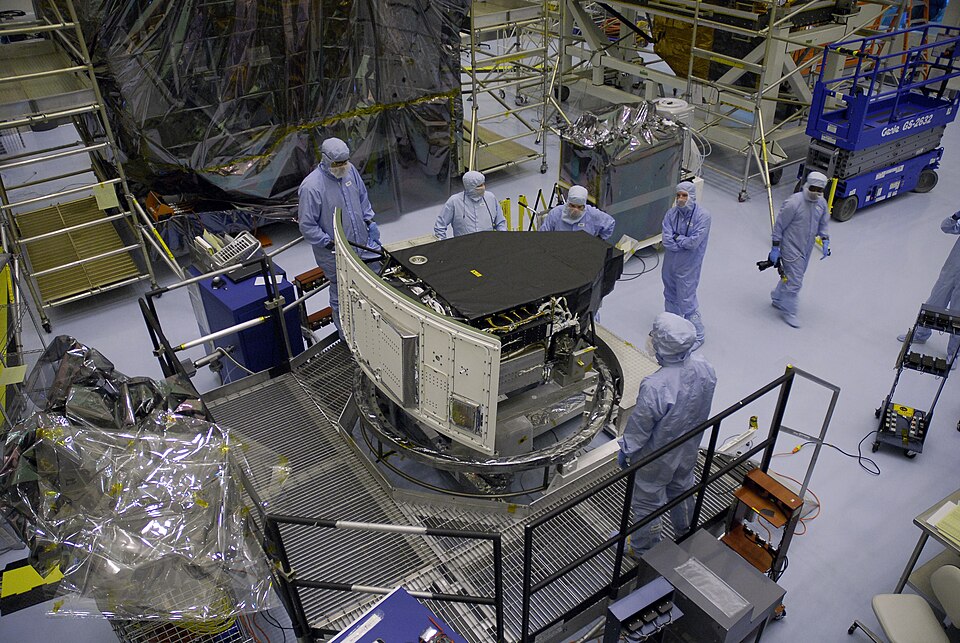
1. Wide Field Instrument: A Cosmic Survey Powerhouse
The Wide Field Instrument is at the heart of Roman’s mission: a 288‑megapixel near‑infrared camera with a field of view over 200 times greater than Hubble’s infrared channel, yet with equivalent resolution. This unprecedented reach will let Roman capture sky areas larger than the full Moon in a single frame, accruing 20 petabytes of data over its five‑year primary mission. The WFI’s High Latitude Wide‑Area Survey will map over a billion galaxies, tracing cosmic structure formation and probing dark matter through weak gravitational lensing. Its High Latitude Time‑Domain Survey will revisit fields every few days to catch transients like type Ia supernovae, extending measurements of the universe’s expansion history back 11 billion years.

2. Coronagraph Instrument: Breakthrough for Direct Imaging
Roman’s Coronagraph Instrument is a next‑generation technology demonstrator designed to block starlight using masks, prisms, and deformable mirrors that flex in real time, correcting optical imperfections to sub‑DNA‑width precision. It will suppress stellar glare by factors 100–1000 beyond previous space coronagraphs, revealing faint exoplanets and dusty disks. The system’s active wavefront control and photon‑counting detectors will enable month‑long integrations capturing Jupiter‑sized worlds in visible light that will pave the way for future missions targeting Earth‑like planets.

3. Gravitational Microlensing: Exoplanets and Dark Matter
Roman’s Galactic Bulge Time‑Domain Survey will monitor hundreds of millions of stars every 15 minutes, exploiting gravitational microlensing to detect planets far from their stars, and even free‑floating planets with masses as small as twice that of the Moon. Such observations will also identify isolated black holes and probe the distribution of dark matter through subtle lensing distortions, offering constraints on its particle properties.
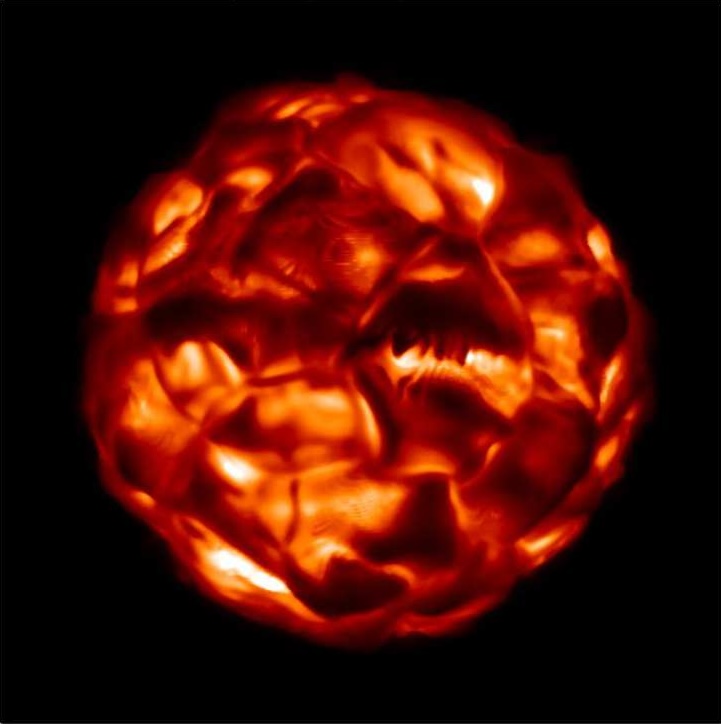
4. Asteroseismology: Probing Stellar Interiors
Roman will open asteroseismology to unprecedented scales, making oscillation measurements in over 300,000 red giant stars. Its 12‑minute cadence of bulge observations matches the hours‑to‑days vibration periods of these luminous giants and will enable astronomers to determine stellar masses, ages, and compositions. In turn, this will better characterize exoplanet host stars and show the evolutionary fate of planetary systems as their suns expand and shed outer layers.
5. Coronagraph Verification Stimulus: Precision Ground Testing
Coronagraph had already been extensively verified before integration by the Coronagraph Verification Stimulus, which is an optical simulator delivering a scaled “Roman pupil” beam with controlled tip/tilt, defocus, and spectral shaping. The CVS was built on a carbon-fiber bench with milliKelvin thermal stability, utilizing a supercontinuum laser, photonic crystal fibers, and precision-machined black silicon masks for simulation of flight conditions. Alignment repeatability within ±1 mm shear and ±1 mrad boresight has been verified to help guarantee accurate on-sky performance.

6. Spectral Calibration and Stability
Testing with CVS confirmed spectral flux stability better than 0.85% RMS per hour, which is important for coronagraph spectroscopy. Calibration also covered NIST‑traceable standards, grating spectrometers, and sub‑aperture power meters that measured absolute flux. Such procedures validated Roman’s capability to measure exoplanet spectra with wavelength accuracy of ±2 nm, meeting the stringent science requirements.
7. Launch Vehicle and Orbit
Roman is currently set to launch no later than May 2027 but could accelerate to fall 2026. The spacecraft will be sent to a Sun‑Earth L2 halo orbit-a gravitationally stable vantage point about 1.5 million kilometers away-on a SpaceX Falcon Heavy. This location provides a very stable thermal environment and unobstructed visibility for continuous deep‑space observation.

8. Data Accessibility and Community Science
All Roman data will be publicly available with no proprietary periods, enabling multiple teams to analyze the same data simultaneously. A General Investigator Program will also fund a range of research beyond core surveys, including mapping the Galactic plane to characterizing small bodies in the solar system. An open‑data policy befits the legacy of the mission’s namesake, Dr. Nancy Grace Roman, NASA’s first chief astronomer, who championed space‑based telescopes for broad scientific access.
With its integration complete and testing underway, Roman stands poised to transform astrophysics in a single observatory that will combine wide‑field infrared mapping, precision exoplanet imaging, and time‑domain monitoring. Its early readiness hints at a launch window that could open months ahead of schedule, bringing the era of its discoveries closer to reality.


