

Might we actually stand at the threshold of confirming that we are not alone in the galaxy, that other technological species exist? The search for extraterrestrial intelligence-SETI-has long been a patient exercise in scanning the skies for faint whispers. But now, with new data piling up-infrared surveys that hint at colossal star-spanning structures, space telescopes that tease possible biosignatures-the quest has taken on fresh urgency.
Recent discoveries span disciplines, from astrophysicists sifting through terabytes of stellar data for waste-heat anomalies to planetary scientists parsing exoplanet spectra for molecules linked to life, and theorists re-examining long-held assumptions about how civilizations grow. Taken together, these developments hint that the universe may be far less silent than once imagined.
What follows are nine of the most compelling threads in this emerging tapestry, each offering a distinct window into how we might finally detect our cosmic neighbors.

1. Infrared Excess and the Dyson Sphere Hypothesis
Large-scale analyses of data from Gaia DR3, 2MASS, and NASA’s WISE have found 60 stars that radiate far more mid-infrared energy than stellar models predict-some by a factor of 60. Such an excess fits the profile of partial Dyson spheres or swarms: vast arrays of collectors intercepting a fraction of starlight and re-emitting waste heat. Covering factors range from 0.1 to nearly complete enclosures, and effective temperatures have been estimated between 100 and 700 K, placing the thermal peak squarely in WISE’s W3 and W4 bands. First envisioned by physicist Freeman Dyson back in 1960, this equates to a Type II civilization on the Kardashev scale.

2. Filtering Out Natural Impostors
None of these are necessarily Dyson-like: natural phenomena can easily produce a Dyson-like infrared signature, including debris disks, planetary collision remnants, or background galaxies. Project Hephaistos addresses this with a multistage pipeline that includes convolutional neural networks trained to flag nebular contamination in the WISE imagery. Seven nearby red dwarfs within 900 light-years remained with unexplained excess after rigorous filtering. As Jason Wright put it, “This isn’t like a single solid shell around the star,” but a swarm obscuring as much as 16% of the stellar output.

3. K2‑18b and the Hycean World Hypothesis
The JWST has provided high-precision spectra for the sub-Neptune K2-18b at 124 light-years. Methane and carbon dioxide are robustly detected along with a tentative signal for DMS-a biomarker on Earth produced only by marine microorganisms. Lead investigator Nikku Madhusudhan described an “ocean teeming with life,” but the DMS confidence went down to 2.7σ in Bayesian reanalysis, less than the 5σ usually required for a discovery. Laboratory studies demonstrate that DMS can form abiotically in hydrogen-rich atmospheres-meaning confirmation of other biosignatures will be required too.
4. Mid‑Infrared Spectroscopy and Biosignature Validation
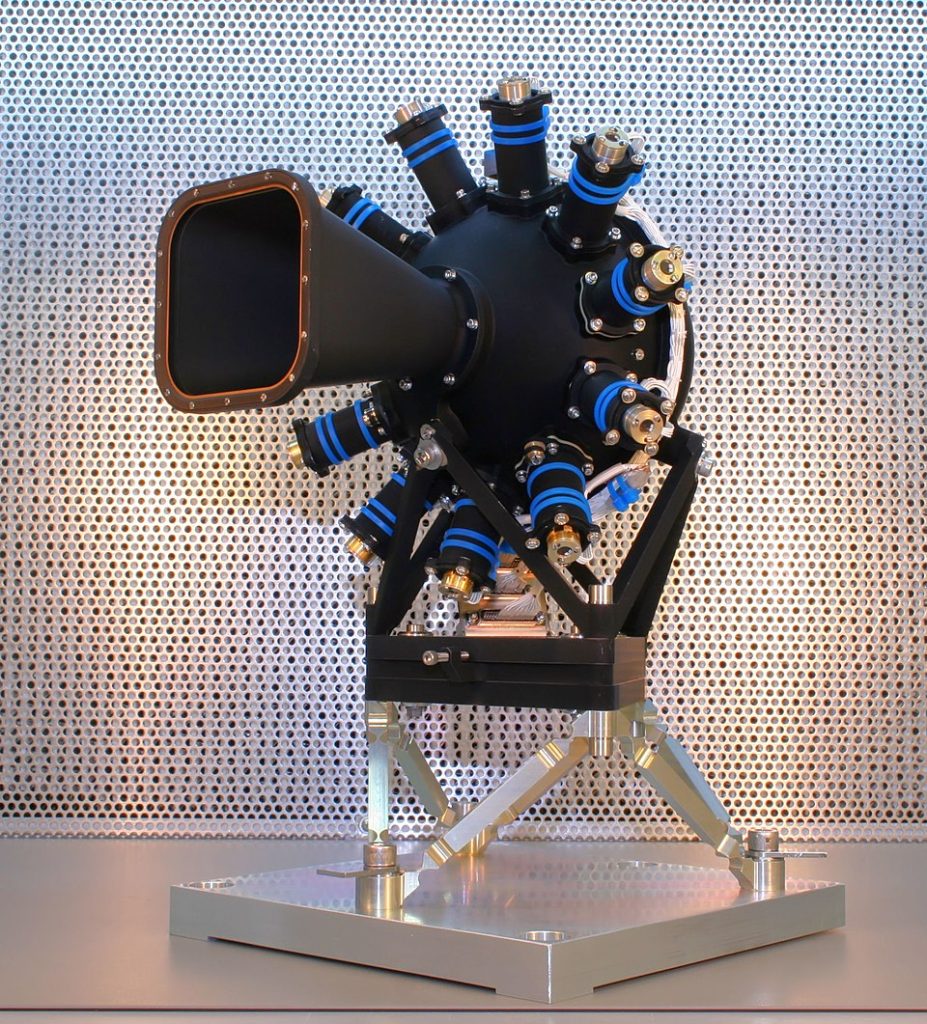
JWST’s NIRSpec, NIRISS, and MIRI instruments isolate molecular absorption features during planetary transits. In the case of K2‑18b, mid‑infrared coverage is critical to differentiate DMS from chemically similar species and to search for companion gases, such as hydrogen sulfide or ethane, which would complete a plausible biological network. Future missions, including the Habitable Worlds Observatory, will offer even higher sensitivities, possibly resolving ambiguous cases.

5. Revisiting the Kardashev Scale
Nikolai Kardashev’s 1964 framework ranks civilizations by energy control: Type I harnesses all planetary energy, Type II all stellar output, and Type III an entire galaxy. While classic SETI has sometimes concentrated on the high‑energy technosignatures of Type II/III societies, a variety of recent critiques note that not all civilizations may follow a path of exponential growth. Some may stabilize or otherwise optimize resources locally, hence producing subtler signals. This, in turn, expands the search to both grand megastructures and low‑energy, distributed technologies.
6. Alternative Channels of Communication
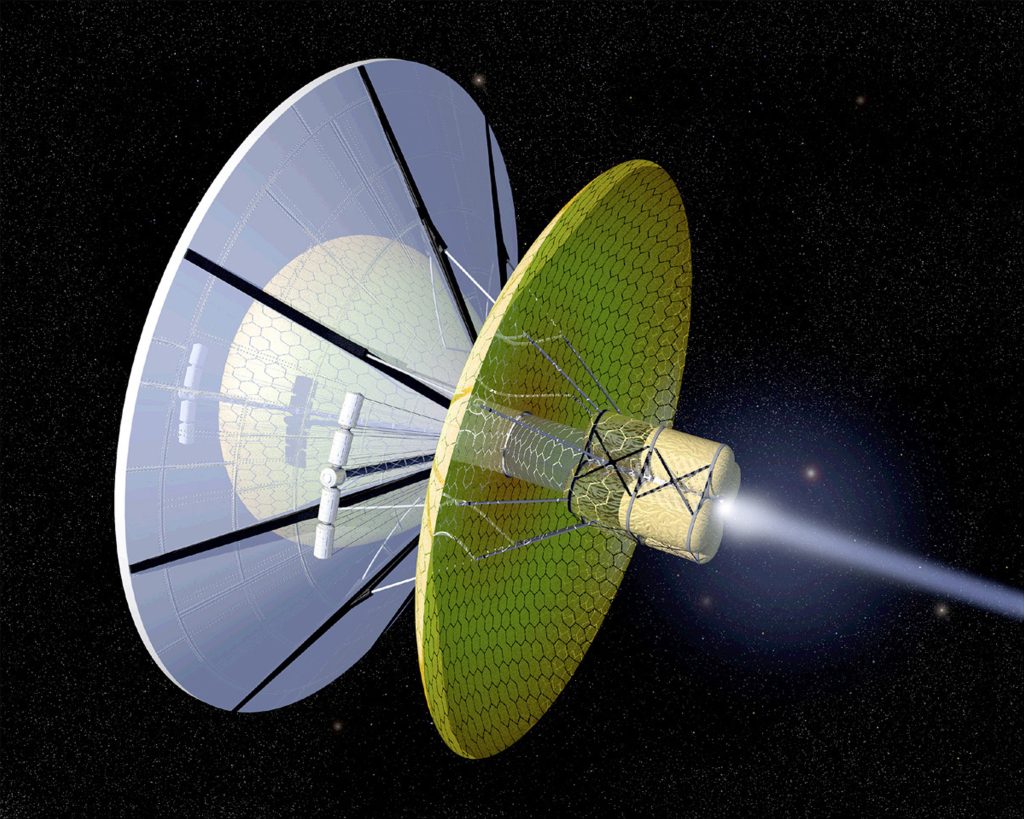
Exotic interstellar media for messaging have been proposed beyond radio. Neutrino beams, for example, would traverse stars and planets without being blocked or deflected; neutrinos would provide secure, very directional communication. Modulation of gravity waves is another highly speculative suggestion. Detection of such channels may involve specialized instruments and a change in the technical focus of SETI, but perhaps might reveal civilizations deliberately avoiding conventional, easily intercepted broadcasts.

7. Gravitational Lensing as a Signal Booster
Recent theoretical work by Slava Turyshev at JPL treats a star’s gravitational field as a lens that can amplify laser transmissions. An extraterrestrial transmitter positioned in its star’s focal region could send a beam brightened into an Einstein ring as seen from Earth. Turyshev believes that such lensed signals could be detected and reconstructed with coordinated ground‑ and space‑based telescopes using today’s technology, possibly even extracting encoded information.

8. The Zoo Hypothesis and Nearby Artifacts
Some scientists, such as Dirk Schulze‑Makuch, believe the Zoo Hypothesis can be taken seriously: advanced civilizations may make it a point to avoid contact, merely observing less developed worlds. That would be the “Great Silence,” even with abundant habitable planets. Efforts like Avi Loeb’s Galileo Project supplement the distant technosignature searches by searching for alien artifacts here at home, taking into consideration that extraterrestrial technology might well be a lot closer than has been assumed.
9. Rethinking Civilizational Futures
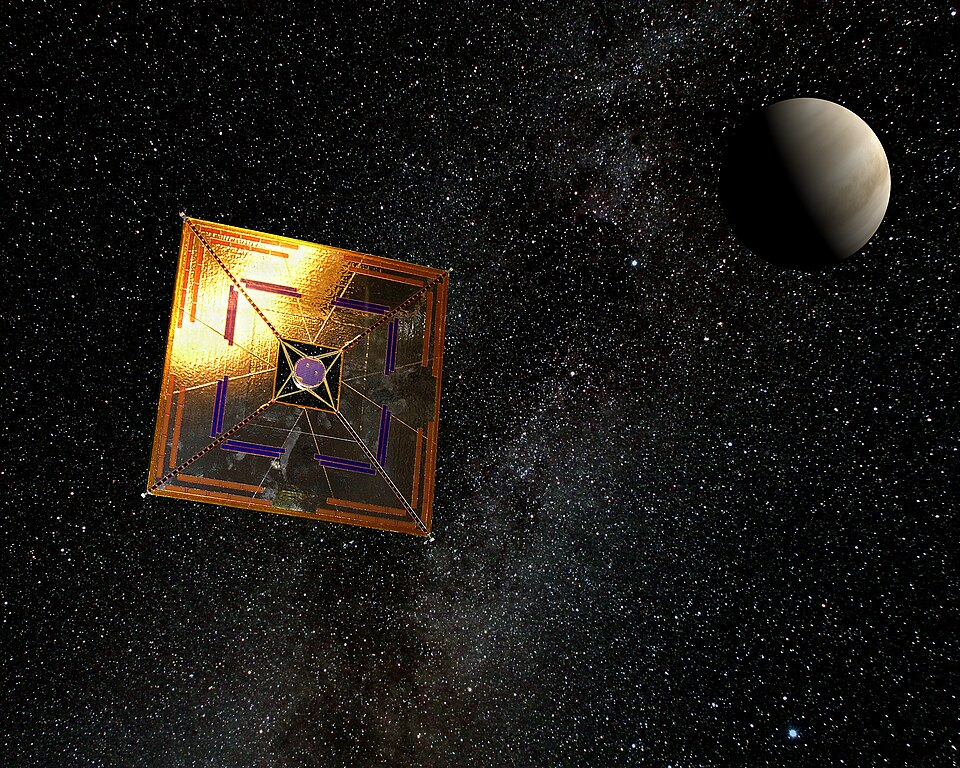
Work by Jacob Haqq‑Misra and colleagues outlines ten possible trajectories for Earth’s technosphere over the next millennium, from expansive interplanetary civilizations to sustainable, low‑energy equilibria. Only a minority reach Kardashev Type I. Many of the scenarios feature advanced technology with minimal planetary techno signatures that is to say, a thriving civilization could appear, from afar, indistinguishable from a pre‑industrial world. The variety of outcomes that could occur demands that SETI diversify its approaches to detection in order to avoid false negatives.
From infrared anomalies hinting at stellar‑scale engineering, to the chemical fingerprints of possible alien oceans, the search for extraterrestrial civilizations is entering a data‑rich phase. Each line of inquiry-hard‑won spectra, sophisticated filtering algorithms, or fresh theoretical perspectives-adds a piece to a puzzle whose full picture could redefine humanity’s place in the cosmos. The tools are sharpening, the candidate signals are emerging, and the moment of confirmation may be closer than ever.


