It is not every decade that a fragment from another star system drifts through the solar system, and rarer still that it arrives large, bright, and brimming with scientific intrigue. On December 19, 2025, interstellar comet 3I/ATLAS will make its closest approach to Earth a safe but scientifically electric 170 million miles away offering planetary scientists and skywatchers a fleeting chance to study an object forged in a completely different planetary nursery.
1. A Hyperbolic Messenger from Deep Time
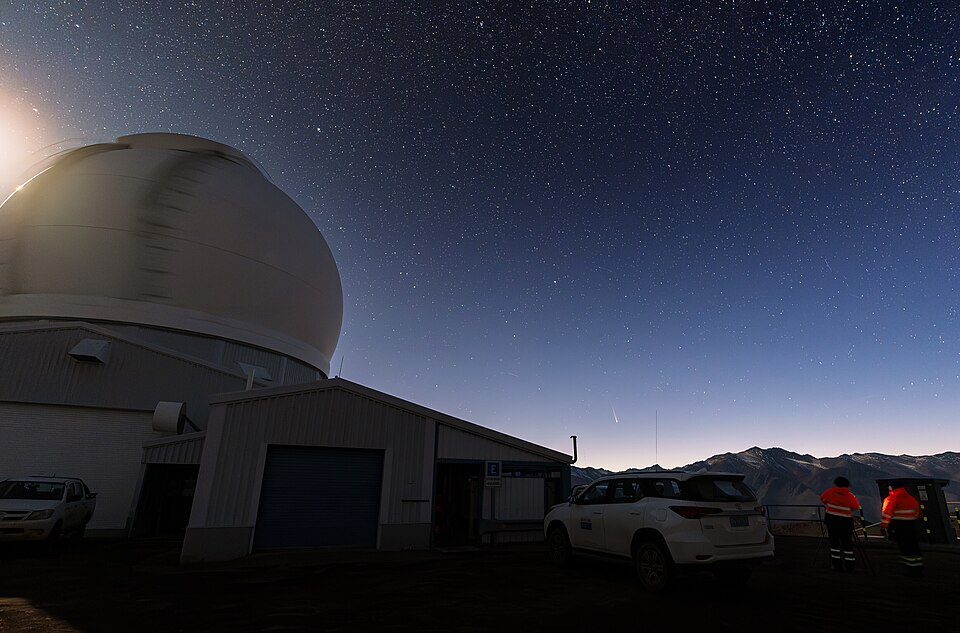
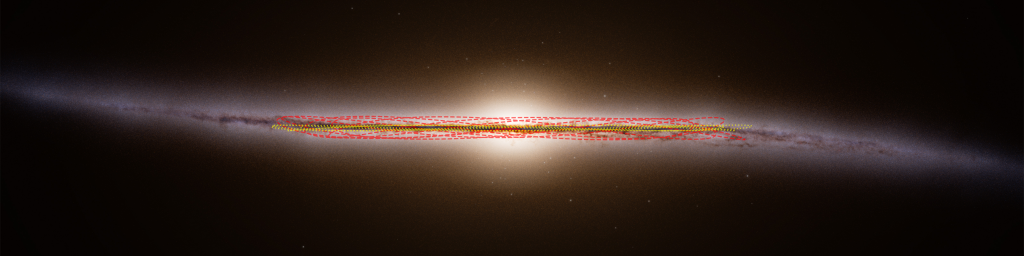
Discovered on July 1, 2025, by the NASA‑funded ATLAS survey in Chile, 3I/ATLAS immediately stood out for its hyperbolic orbit with eccentricity 6.2, far exceeding the barely unbound paths of 1I/ʻOumuamua (1.2) and 2I/Borisov (3.6). Its inbound velocity roughly 58–60 km/s relative to the Sun leaves no doubt it is unbound and will never return. Dynamical tracing points to an origin in either the Milky Way’s thick disk of ancient stars or, as new Gaia‑based encounter modeling suggests, the thin disk, with a posterior probability of 96.6%. Age estimates range from 3 to over 9 billion years, meaning this object may predate the solar system itself.
2. Size, Speed, and Composition Beyond the Norm
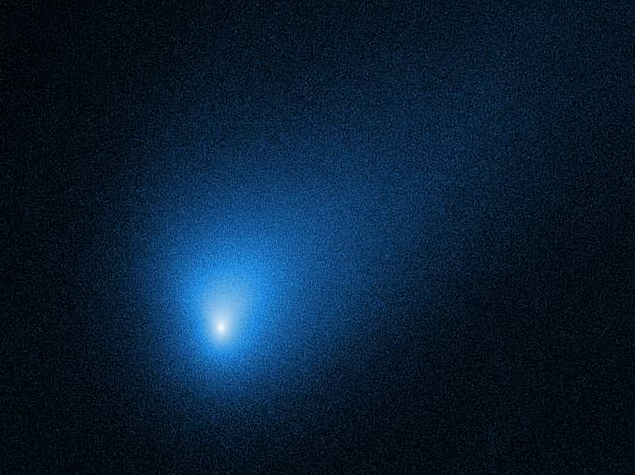
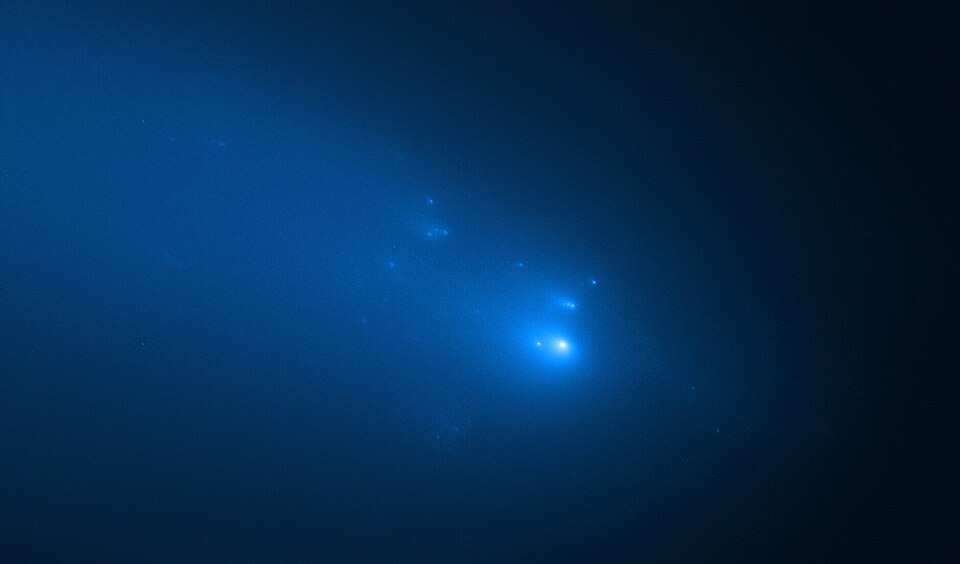
Hubble constraints place the nucleus between 440 m and 5.6 km across, cloaked in a bright coma. Spectroscopy from JWST, SPHEREx, and ground‑based telescopes reveals a composition dominated by CO₂ (~87% by mass) with only ~4% water, abundant carbon monoxide, cyanide gas, and nickel in excess of iron a pattern unlike typical chondritic bodies. This volatile mix drives activity even at large heliocentric distances, and may encode the chemical fingerprint of its natal protoplanetary disk.
3. Cryovolcanic Jets and a 16‑Hour ‘Heartbeat’
High‑resolution imaging from the Joan Oró Telescope captured spiral jets and knots in the coma, interpreted as cryovolcanic plumes erupting from subsurface volatile pockets. These jets may be responsible for a 16.16‑hour periodic brightness modulation a “heartbeat” as active vents rotate into sunlight. Modeling suggests gas outflows at ~440 m/s can loft material 25,600 km into space over one rotation. While some have speculated about artificial origins, NASA emphasizes all observed phenomena are consistent with natural cometary physics.
4. A Solar System‑Wide Observation Network
Because much of 3I/ATLAS’s path lay behind the Sun from Earth’s perspective, NASA and ESA mobilized spacecraft across the solar system. Mars Reconnaissance Orbiter imaged it from 30 million km; MAVEN recorded ultraviolet hydrogen emissions; Perseverance glimpsed it from Jezero Crater. Heliophysics missions STEREO, SOHO, and PUNCH tracked it near the Sun where ground‑based telescopes could not. Even outbound asteroid probes Psyche and Lucy contributed long‑baseline imagery of its coma and tail.
5. Triangulation Breakthrough for Planetary Defense
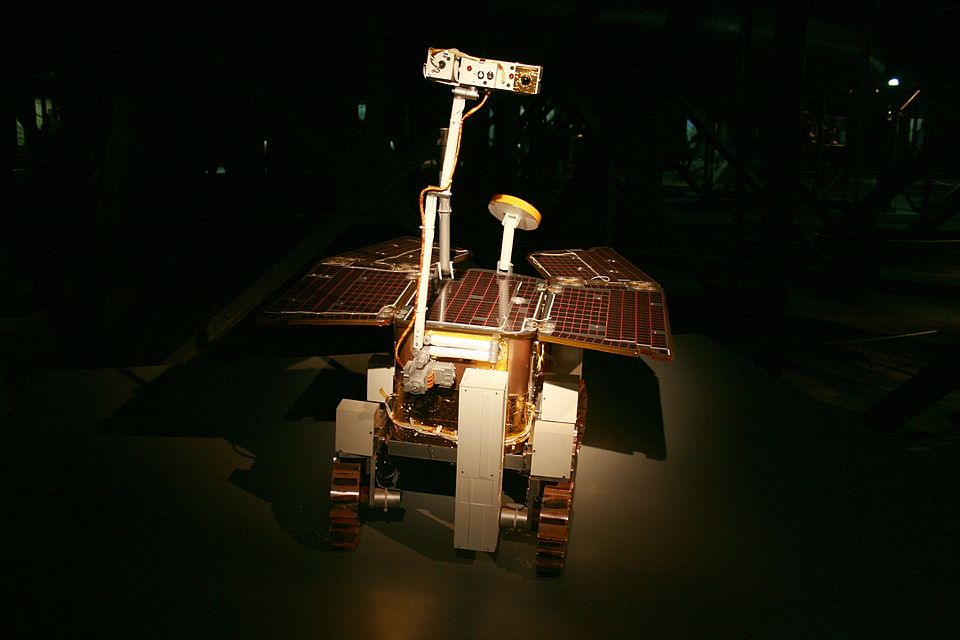
ESA’s ExoMars Trace Gas Orbiter and Mars Express provided a unique off‑Earth vantage, enabling triangulation with Earth‑based data that improved orbit predictions by a factor of ten. This is the first time a spacecraft orbiting another planet has been used to refine the trajectory of an interstellar object, underscoring the technique’s value for planetary‑defense readiness against high‑velocity bodies.
6. Comparisons with ʻOumuamua and Borisov
Where ʻOumuamua was small, inert, and enigmatic, and Borisov was a more conventional icy comet, 3I/ATLAS combines record size for an ISO with exotic chemistry and dynamic activity. Its extreme hyperbolicity, CO₂ dominance, and cryovolcanism expand the known diversity of extrasolar small bodies, hinting at planetary architectures and thermal histories unlike our own.

7. A Live Planetary‑Defense Drill
The International Asteroid Warning Network designated 3I/ATLAS as the focus of a global observing exercise from November 27, 2025, to January 27, 2026. Though harmless, its rapid motion and faintness make it an ideal stress‑test for detection, tracking, and characterization protocols that could one day be critical for a hazardous inbound object.

8. Scientific Stakes and Future ISO Exploration
Interstellar objects like 3I/ATLAS are central to a six‑dimensional research framework proposed by Avi Loeb and colleagues: population census, laboratory sample return, technosignature searches, Northern Hemisphere survey expansion, dark/fast object detection via gravitational waves, and planetary defense. The upcoming Vera C. Rubin Observatory is expected to raise ISO discovery rates from once a decade to once every few months, creating opportunities for rapid‑response missions perhaps even sample returns that could deliver alien planetary material to Earth laboratories.

9. How and When to See It
At closest approach on December 19, 3I/ATLAS will be near magnitude 9–11, requiring at least a 30 cm telescope under dark skies. Pre‑dawn observers should look east‑northeast toward Leo, just below Regulus. For those without access to large optics, the Virtual Telescope Project will stream live views starting at 04:00 UTC, and NASA’s “Eyes on the Solar System” offers real‑time tracking.
As 3I/ATLAS races outward past Jupiter in March 2026, it will fade from view, leaving behind a trove of multi‑wavelength, multi‑vantage data. Whether it proves to be a cryovolcanic relic of an ancient star system or something even stranger, it is already redefining how scientists detect, study, and prepare for visitors from the deep galactic night.


