
Two years ago, a warped, jittery clip of Will Smith awkwardly “eating” spaghetti became the internet’s shorthand for the limits of AI video. Today, the same benchmark-nicknamed the “spaghetti test”-is being passed with near‑photorealistic precision by systems like OpenAI’s Sora, Google’s Veo, and MiniMax’s Hailuo AI. The leap from crude caricatures to cinematic realism is not just a story of better visuals-it’s the result of deep architectural advances, intense corporate competition, and a rising tide of legal and ethical challenges.

1. The Spaghetti Test: A Cultural and Technical Benchmark
This was evident when a 2023 ModelScope video, via Reddit, of Will Smith mangling spaghetti showcased serious flaws in early T2V generation: distorted anatomy, incoherent motion, and missing core actions. This “benchmark” meme actually doubled as a diagnostic tool-could a model render a familiar human subject performing a mundane, physics-bound task without breaking realism? And by 2024, Chinese model MiniMax and Google’s Veo 3 were improving facial fidelity and motion, though many T2V generation artifacts-like levitating noodles or unnatural crunch-persisted. Sora’s latest iterations have largely solved the visual glitches, producing temporally consistent, physically plausible sequences.
2. Under the Hood: Diffusion, Transformers, and Multimodal Control
Modern T2V generators combine iterative refinement of diffusion models with transformers’ sequence modeling. Systems like Sora employ a hybrid diffusion‑transformer network that not only supports both spatial and temporal coherence but also aligns outputs to textual prompts. More advanced architectures allow factorized space‑time attention in SnapVideo or trajectory control in TrailBlazer to address motion realism. Diffusion pipelines, such as Imagen Video, upscale both spatial and temporal resolution by cascading multiple models, whereas zero‑shot frameworks, such as FlowZero, parse scene syntax with large language models before synthesis.
3. Physics Fidelity: Passing More Than a Meme
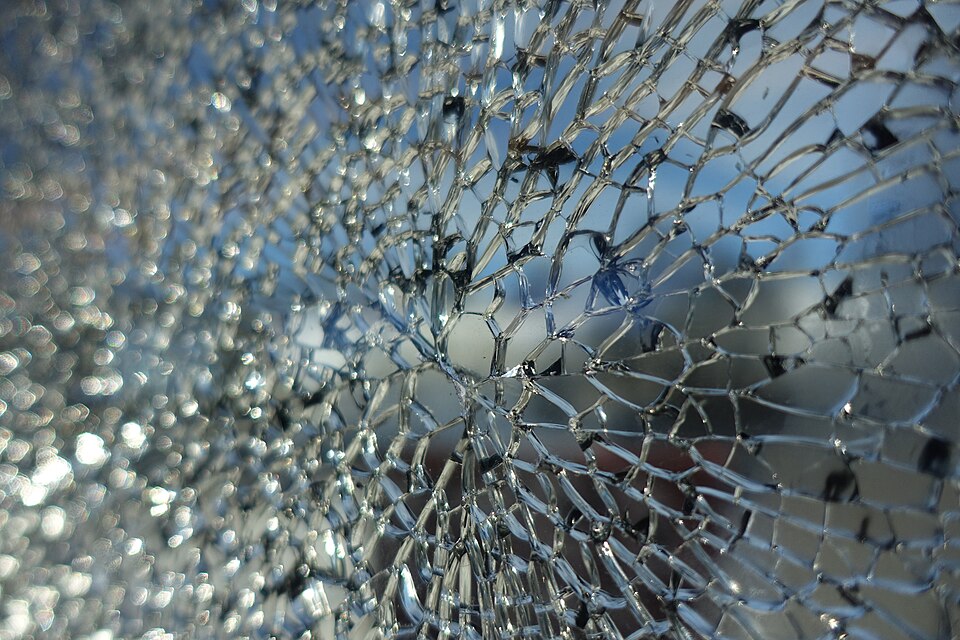
Benchmarks like PhyWorldBench and T2VWorldBench examine whether models respect gravity, conserve momentum, and maintain causal logic. Early spaghetti clips failed basic causality forks missed mouths, noodles floated. In physics‑aware evaluations, even top models score below 0.70 when prompts require multi‑object interactions or erratic visual changes, such as glass shattering. This gap underlines the fact that photorealism does not guarantee physical plausibility alone, which becomes a critical factor in educational, simulation, or safety‑critical applications.
4. The Competitive Race: Sora, Veo, and Grok Imagine
OpenAI’s Sora is generally considered the market leader, bolstered by its TikTok‑style mobile app and “Cameo” facial‑scan feature. Google’s Veo 3.1 has closed the gap in realism, while Elon Musk’s xAI introduced Grok Imagine in July, though benchmarks put it behind in semantic and motion consistency. Proprietary leaders tend to hide generation processes, while open‑source competitors like LTX‑Video and Wanx‑2.1 allow for reproducible physics testing but lag in aesthetic polish.
5. Likeness Rights and Copyright Guardrails
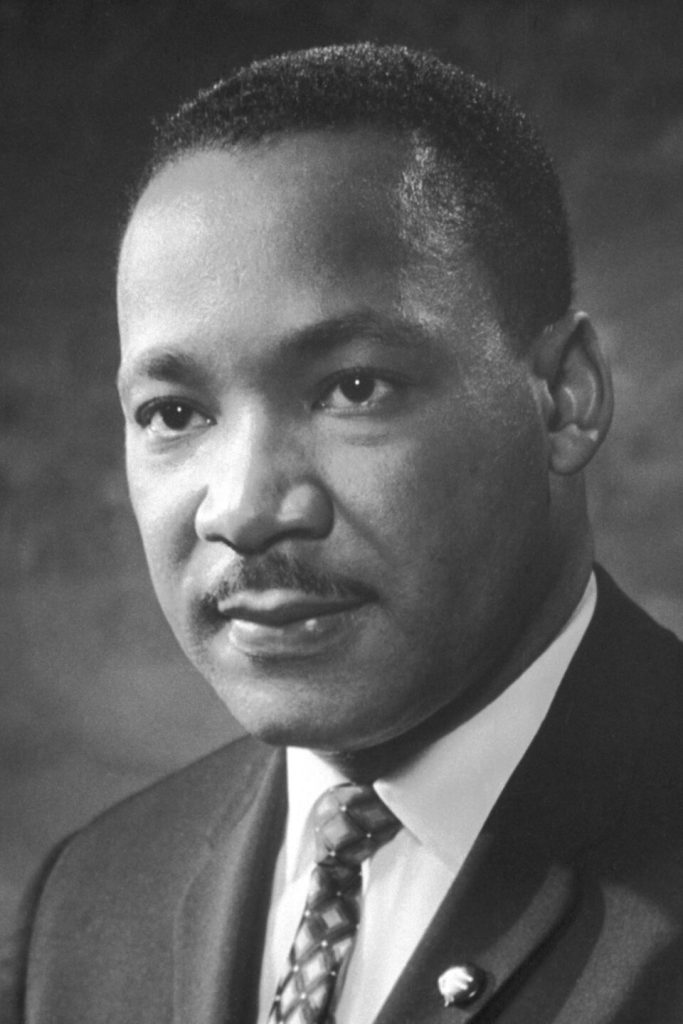
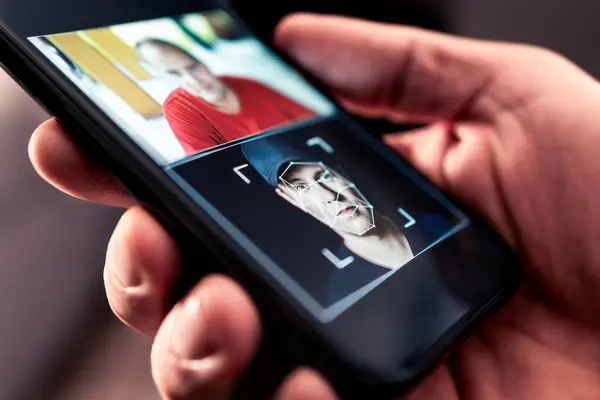
As models pass the spaghetti test, they also pass into legally sensitive territory. After Sora users generated videos of public figures such as Martin Luther King Jr. without their consent, OpenAI added stricter controls. The “Cameo” feature, which allows users to upload their faces, sparked a trademark suit from Cameo, Inc. that resulted in a federal injunction against the name. MiniMax faces a sweeping lawsuit from Disney, Universal, and Warner Bros. alleging “willful and brazen” infringement by generating high‑quality clips of Darth Vader, Minions, and other protected characters.
6. Detection and Watermarking Technologies
Advances in deepfake detection and authenticity watermarking aim to counter misuse. Watermarking embeds imperceptible signals in generated frames, enabling forensic tracing. Detection models now use multimodal vision‑language systems to flag inconsistencies in lighting, texture, or physics that betray synthetic origins. These tools are becoming essential as AI‑generated likenesses approach indistinguishability from real footage.

7. Legislative and Regulatory Pressures
Lawmakers in Washington are concerned by AI’s newfound capability for fabricating political videos that seem real. State-level AI laws address deepfake scams and algorithmic discrimination, but federal preemption efforts threaten to strip these protections. Industry leaders warn that “broad preemption is particularly ill-advised” given the need for agile responses to evolving tech. The legal environment is now a competitive factor: models must balance creative capability with compliance frameworks.

8. User Privacy and Biometric Data Risks
Sora’s Cameo feature stores facial and audio data encrypted at rest and in transit, with the promise of deletion within 30 days of account closure. However, account deletion would also erase access to ChatGPT, introducing friction. Privacy advocates underscore that biometric data, unlike passwords, cannot be changed, and therefore require careful handling and explicit consent.

9. Benchmark Insights: Where Models Still Fail
T2VWorldBench makes it clear that while activity and object domains perform relatively well, culture and causality lag behind. Models misinterpret cultural cues by drawing generic palatial buildings instead of the White House, or omit implied outcomes such as slipping on a banana peel. These failures expose the gap between semantic understanding and generation.
The evolution of the spaghetti meme from joke to serious benchmark mirrors that of the field: rapid gains in visual fidelity, slower progress in physics and reasoning, and a growing collision with legal and ethical boundaries. For AI video to make its way from novelty to trusted medium, passing the spaghetti test will mean more than clean frames-it will mean mastering the laws of both physics and society.


