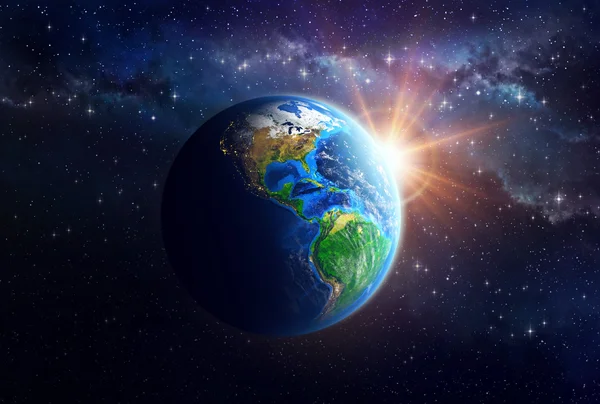
What if that “expiration date” weren’t a hazy, far‑off notion, but a calculable moment in physical terms? That’s the premise driving a new generation of habitability forecasts, which replace vague billions‑of‑years timelines with thresholds rooted in stellar physics, atmospheric chemistry, and planetary dynamics. These models now define the end of Earth’s capacity to host complex life by measurable limits in temperature, humidity, and radiation-limits that will be crossed as the Sun’s output rises and climate feedbacks cascade.
1. Solar Brightening and the Runaway Greenhouse
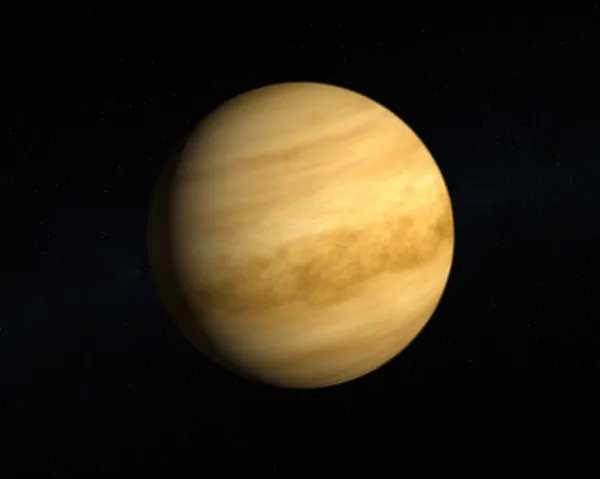
As with other main‑sequence stars, the Sun is gradually growing brighter by the conversion of hydrogen into helium. This brightening changes the relative balance between incoming and radiated energy at the Earth’s surface. Simulation studies of the climate find that, when thermal radiation exceeds some critical value, the absorption of energy outstrips radiation to produce a runaway greenhouse effect. Water vapour is the most abundant and a very powerful greenhouse gas builds up in the upper atmosphere, where it is photodissociated into hydrogen and oxygen by ultraviolet light. Hydrogen is lost to space making ocean loss irreversible. Venus represents a grim example of what this endpoint might look like: a dense atmosphere of CO₂ and surface temperatures climbing above 460 °C represent the eventual endpoint for Earth.

2. Defining the Inner Edge of Habitability
The “moist greenhouse” limit marks where the stratospheric water vapor concentrations exceed ~2 × 10⁻³, allowing for ocean evaporation over geological timescales. For an Earth-like atmosphere, this corresponds to a mean surface temperature of near 340 K. Beyond this, the runaway greenhouse can occur rather quickly-on the order of thousands to millions of years-without water needing to reach its boiling point. Revised models indicate that for planets hosted by M-dwarf stars, this transition may occur at a lower temperature due to differences in stellar spectra and atmospheric absorption.

3. Carbonate–Silicate Feedback and the Outer Edge
The long-term climate stability of Earth is accounted for mainly by a geochemical feedback-the carbonate-silicate cycle-regulating CO₂ by means of volcanic outgassing and silicate weathering. This “planetary thermostat” balances changes in solar input through adjusting the levels of greenhouse gases to maintain liquid water. But at the outer edge of the habitable zone, pressures of CO₂ become so large that Rayleigh scattering and condensation outweigh warming and yield global glaciation. For our Sun, this limit of “maximum greenhouse” lies near 1.67 AU.
4. Comparative Planetology: Lessons from Venus and Mars
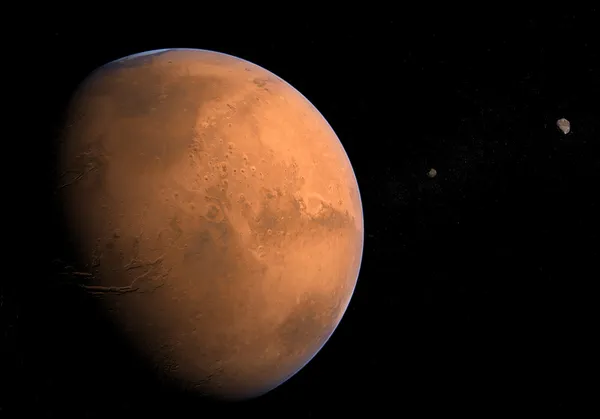
Venus probably crossed its inner habitability boundary more than a billion years ago, with the loss of any oceans due to a runaway greenhouse effect. Mars, smaller and even less geologically active, lost its magnetic field early, allowing the solar wind to strip away a great deal of its atmosphere. In both these cases, the modeled boundaries of the habitable zone are validated, and the fragility of climate stability is brought into clear focus.

5. Validation via Exoplanet Studies
Empirical tests of the runaway greenhouse models come from observations of “exo-Venuses” and terrestrial planets at or inside their stars’ inner habitable zone edge. Comparisons of their atmospheric spectra with predictions refine the limits for Earth’s future. Astrobiological systems thinking now includes stellar evolution, planetary geology and atmospheric dynamics in producing multi-parameter habitability indices.
6. Atmospheric Loss Mechanisms
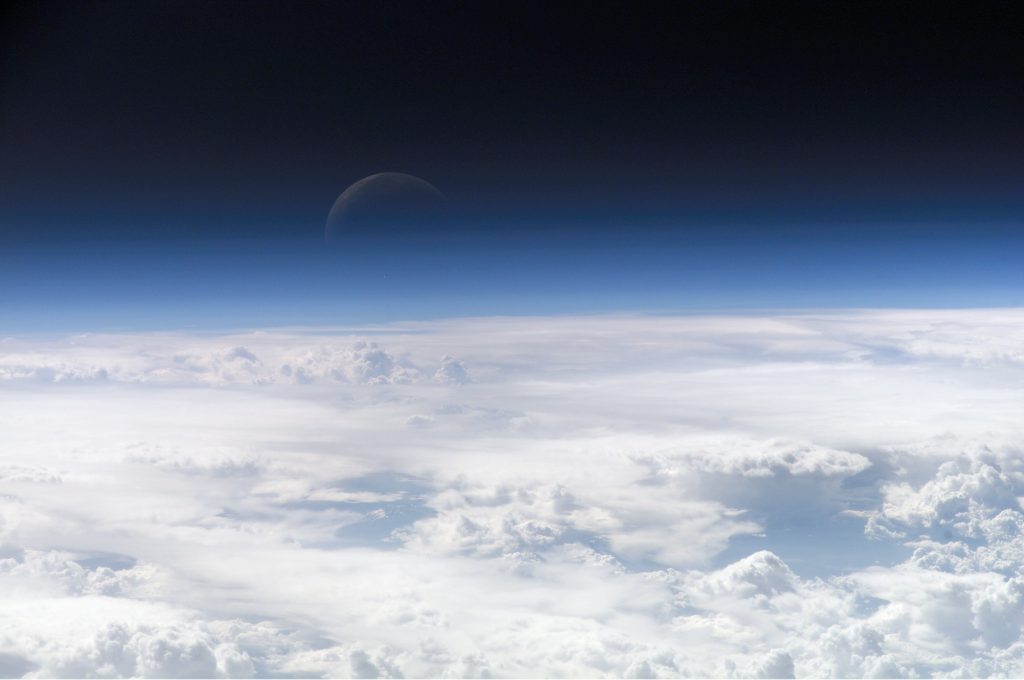
Long-term habitability loss centers on hydrogen escape because the hydrogen atoms, light and fast-moving, reach their escape velocity once upper-atmospheric water vapor has been photodissociated. This can remove the equivalent of whole ocean masses over millions of years. The rate depends on diffusion limits through the homopause and is accelerated under moist greenhouse conditions.
7. Earth’s Changing Rotation
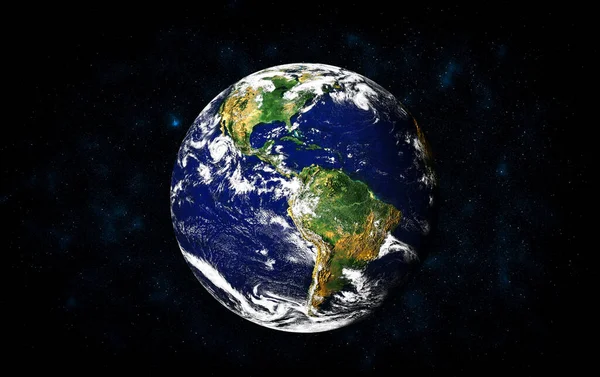
Recent geophysical measurements indicate that the Earth’s rotation rate is subtly accelerating, by shortening the day by milliseconds. Core-mantle interactions, tidal forces, and even climate-driven mass redistribution from melting ice sheets exert an influence. Although these changes are negligible on habitability timescales, they do impact precision timekeeping and may necessitate unprecedented “negative leap seconds” in Coordinated Universal Time.

8. Climate Tipping Points and Near‑Term Sensitivity
The same set of feedbacks that will lead to the termination of habitability in the distant future has its near‑term analogs. Crossing contemporary climate tipping points such as irreversible ice sheet loss or Amazon rainforest dieback can quickly alter Earth’s energy balance. According to models, even relatively slight perturbations to solar input or concentrations of greenhouse gases may elicit disproportionate shifts in climate leading to a more rapid compression of the timeline from comfortable to marginal conditions.
9. Extremophile Persistence
Extremophiles can persist in isolated refuges long after complex life has disappeared. High-temperature, high-salinity, or high-radiation microbes could linger right up until the moment that surface liquid water has disappeared altogether. Research into tardigrades and other polyextremophiles would help to better constrain the ultimate bounds on biosphere survival.

10. Implications for Humanity’s Long Game
Knowing Earth’s finite habitability window frames the need for long‑term strategies. While the modeled “end date” lies far beyond current planning horizons, the physics underlying it applies to present‑day climate risks. Technologies for off‑world survival-closed‑loop life support, radiation shielding, propulsion-gain relevance when viewed against the inevitability of planetary decline.
By rooting habitability forecasts in measurable thresholds and validated models, scientists transform a distant cosmic inevitability into a precise, testable prediction. This reframing sharpens not only our view of the future Earth but strengthens the connection with astrophysical processes to the urgent climate dynamics unfolding today.


