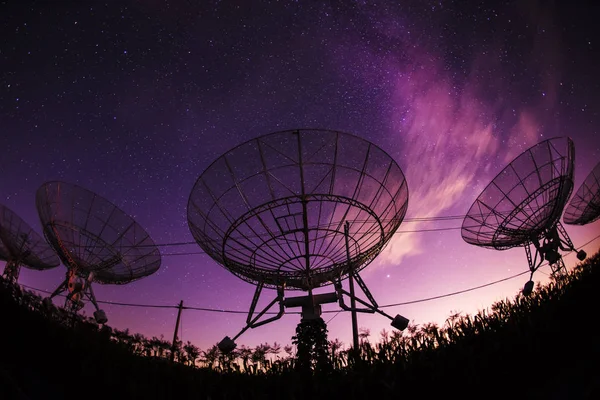
Suppose we are at an historic moment when humanity confirms that we are not alone. Thanks to the convergence of improvement in astronomical surveys, space telescopes, and unconventional theories of communication, for the first time, we are beginning to see some of the most intriguing hints yet of extraterrestrial technology and life. These are not wild speculations but data-driven findings which scientists are putting through rigorous testing.
From infrared glows that could betray star-spanning megastructures to chemical fingerprints in alien atmospheres, the search for technosignatures is reaching a new, more sophisticated phase. Researchers are also investigating channels of communication far beyond the traditional radio, from neutrino beams to quantum networks. Following are some of the most intriguing leads in this quest.
1. Infrared Excess and the Dyson Sphere Candidates
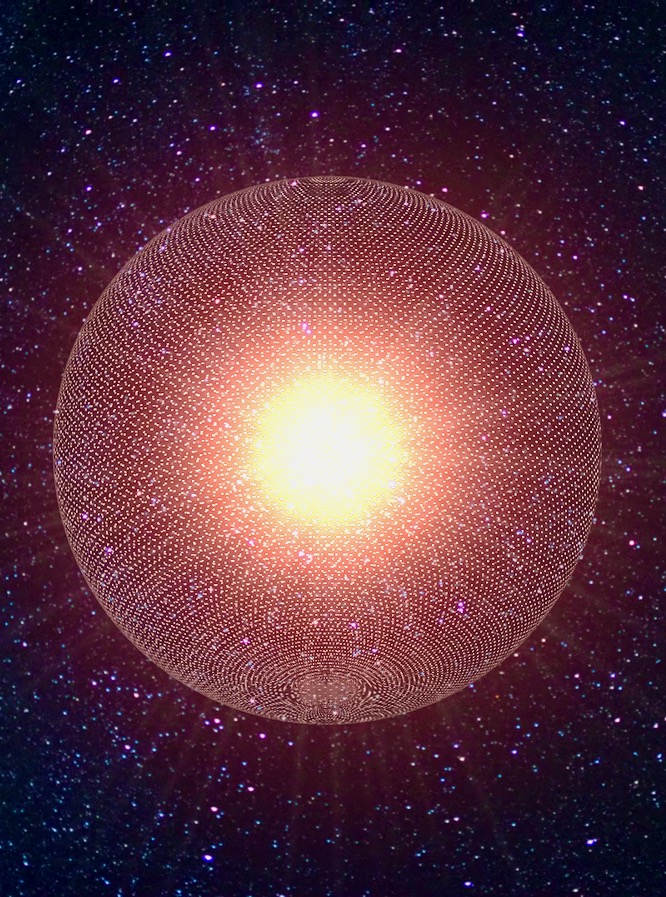
Large-scale analyses of the Gaia DR3, 2MASS, and NASA’s WISE data revealed 60 stars radiating far more mid‑infrared radiation than stellar models predict-some by a factor of 60. This is a sign consistent with partial Dyson spheres or swarms, structures first proposed by Freeman Dyson in 1960 to harvest stellar energy. Project Hephaistos modeled the SEDs for covering factors ranging from 0.1 to nearly complete enclosures for effective temperatures between 100 and 700 K, well within the peak of the waste-heat in WISE’s W3 and W4 bands. Seven nearby M‑dwarfs within 900 light years passed a set of stringent filters that make them difficult to explain via known astrophysical processes.

2. Elimination of natural impostors
Distinguishing megastructures from natural phenomena is paramount. Infrared excess can also emanate from protoplanetary disks, debris from planetary collisions, or background galaxies. For all that, the Hephaistos pipeline applies convolutional neural networks that detect and exclude nebular contamination within WISE imagery, flags in Gaia‑WISE that rule out dusty stars, and visual inspection that removes blends or irregular sources. These various stages of refinement whittled an initial sample of millions down to a handful of high‑priority targets.
3. K2‑18b and the Hycean World Hypothesis
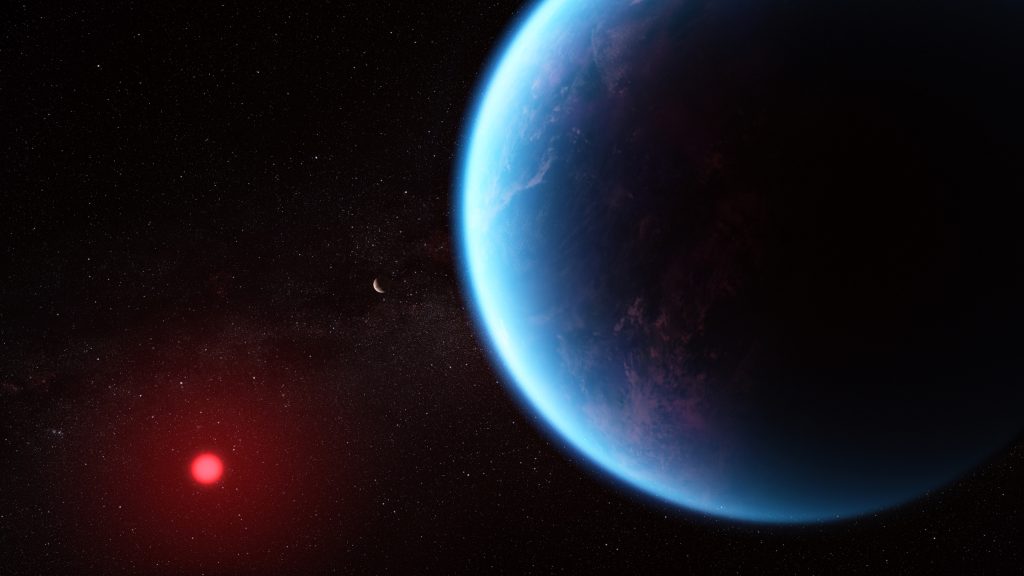
The James Webb Space Telescope peered at K2‑18b, a sub‑Neptune 124 light years away; the findings included methane and carbon dioxide and a tentative trace of DMS a molecule produced on Earth only by marine microorganisms. “An ocean teeming with life” was how lead investigator Nikku Madhusudhan described the scenario, but Bayesian reanalysis knocked the DMS confidence back to 2.7 sigma, far from the 5‑sigma needed for confirmation. Laboratory work now shows abiotic DMS production is possible under hydrogen‑rich conditions, underscoring the need for multiple lines of evidence.

4. Spectroscopy at the Limits of Current Technology
During transits, JWST’s NIRSpec, NIRISS, and MIRI will detect starlight filtered through exoplanet atmospheres, from which molecular absorption features are revealed. For distinguishing DMS from analogous molecules such as dimethyl disulfide in K2‑18b, high-resolution spectra are required. These would also provide companion gases that give confirmation of the presence of a biological network. Future observatories, like the Habitable Worlds Observatory, will push the sensitivity level at which ambiguous cases can be resolved.

5. Statistical Case for Dozens of Galactic Civilizations
Updated versions of the Drake equation using Kepler statistics on exoplanets estimate 60 advanced civilizations in the Milky Way. This estimate assumes that even a one-in-60-billion chance for technological life on a habitable planet is reasonable. As astrophysicist Adam Frank emphasizes, even pessimistic probabilities imply that humanity is unlikely to be a first technological species in our galaxy’s history.

6. Beyond Radio: Neutrino Messaging
The scientists at SETI look for any form of communication channel that does not depend on electromagnetic limits. Neutrinos-nearly massless particles that go through matter like it weren’t there-may be used for secure, directed signals. An experiment at Fermilab showed neutrino beams can do digital messaging through hundreds of meters of rock-at 0.1 bits per second. Though far from suitable for interstellar chat, such methods may be preferred by advanced civilizations whose preference is avoiding the detection by more primitive life forms.
7. Quantum Communication as a Galactic Gatekeeper
Over the years, physicist Michael Hippke has come forward with a proposal where he suggests searching for interstellar quantum communications. The encoding of information in photon polarization, time bins, or other quantum states offers advantages in security and efficiency that could serve as a technological threshold-only civilizations with quantum capability could join the “galactic channel.” Entangled photons could be detectable as spillover from targeted transmissions, considering the fact that decoherence over interstellar distances is quite a challenge.

8. Atmospheric Technosignatures Beyond Biosignatures
Some atmospheric molecules do not have any significant natural sources. On Earth, for example, CFCs are essentially industrial, and NO₂ is produced in huge quantities by combustion. Modelling shows that direct-imaging telescopes to be developed could detect NO₂ at peak Earth‑1980 levels out to 5.7 light years. Such a detection would be nearly unambiguous as a technosignature.

9. The Zoo Hypothesis and Close‑to‑Home Searches
Some scientists, like Dirk Schulze‑Makuch, believe the Zoo Hypothesis may be true-that advanced civilizations simply avoid contact and only observe us. Great distances, incompatible technologies, or alternative modes of communication could resolve the “Great Silence.” Supplementing searches of distant technosignatures, the Galileo Project of Avi Loeb searches for possible alien artifacts right here in our own Solar System.
The convergence of megastructure candidates, tentative biosignatures, unconventional communication theories, and refined statistical models make this a watershed period in the search for extraterrestrial intelligence. Each lead requires rigorous verification but together they suggest a galaxy perhaps rife with life and technology. As new instruments come online and the analytical methods improve, the coming years may transform the question of whether we are alone from speculation into empirical science.


